The recent announcement by Jack Dorsey, CEO of Block Inc., detailing plans to lay off approximately 40% of its workforce and replace them with Artificial Intelligence (AI) has sent ripples through the technology and business sectors. With over 10,000 employees, this move would translate to the displacement of around 4,000 individuals. The declaration, delivered with notable brevity and a scarcity of specific details, has ignited debate and prompted an examination of the underlying strategies and potential ramifications for both the company and the broader labor market.
Initial Announcement and Employee Uncertainty
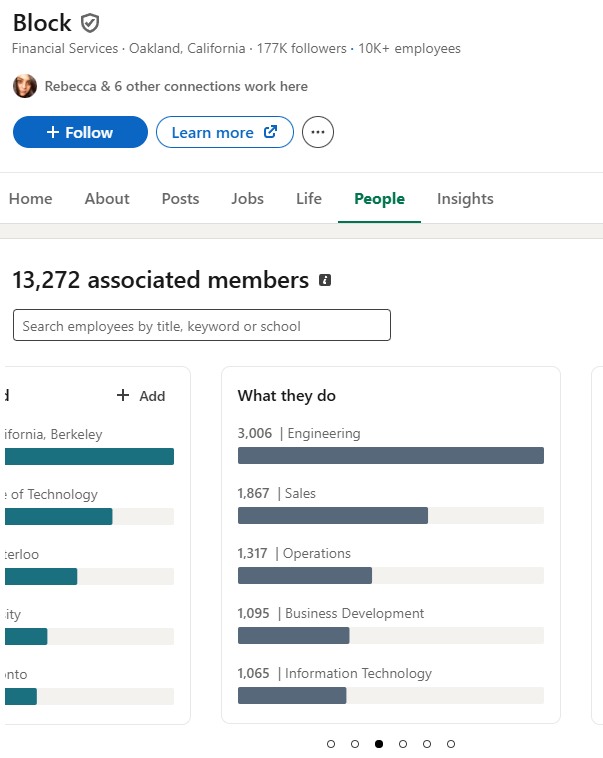
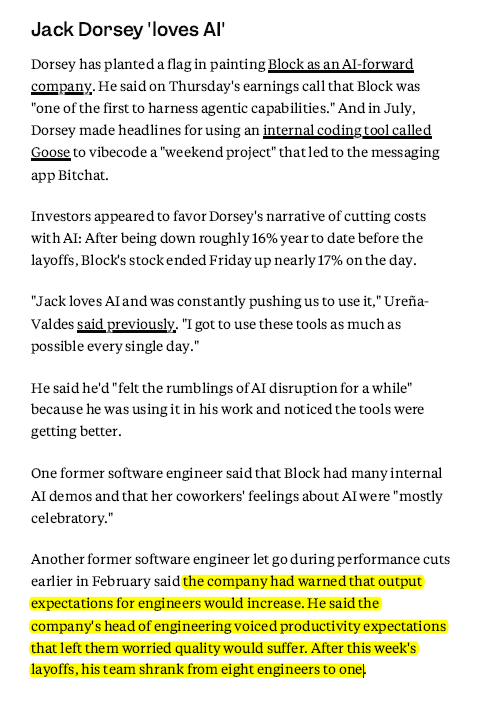
The initial announcement from Block Inc., the parent company of financial services giants Square and Cash App, was stark: a significant portion of its workforce would be replaced by AI. This broad statement left many employees and industry observers seeking clarity on the precise implementation and the specific roles targeted for automation. While LinkedIn data suggests Block Inc. employs around 13,000 individuals, with substantial numbers in engineering, IT, operations, and sales, the exact breakdown of affected positions remains largely undisclosed. This lack of transparency has fueled speculation and anxiety among those within the company and in related industries.
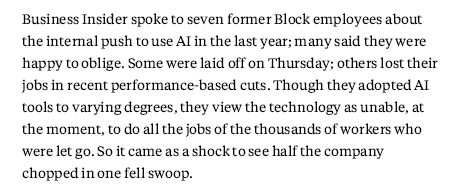
Sources close to the situation, who requested anonymity due to the sensitive nature of the announcement, indicated that many employees were caught off guard by the scale and abruptness of the news. Interviews with seven Block Inc. employees, as reported by Business Insider, revealed a shared sentiment of confusion regarding the practicalities of this AI-driven transformation. Questions persist about which specific tasks and roles are slated for automation, the timeline for these changes, and the support mechanisms in place for displaced workers.

The Role of AI in Business Transformation: Beyond Simple Replacement
The assertion that AI will directly replace 40% of a company’s workforce is a bold claim that warrants deeper scrutiny. While AI technologies are rapidly advancing and demonstrating increasing capabilities in automating tasks, the notion of a wholesale substitution of human roles is often more complex than it initially appears.
One perspective, shared by individuals working within leading AI research firms, suggests that such a large-scale displacement is a significant development. This viewpoint highlights the accelerating pace of AI integration across industries and predicts a future where a substantial number of jobs are indeed rendered obsolete. However, the practical challenges and long-term implications of such a transition are multifaceted.
Examining Block Inc.’s Financial Landscape
To understand the context behind Block Inc.’s aggressive workforce reduction strategy, a look at its financial performance compared to industry peers is illuminating. While Block operates in the fintech space, comparing its profitability and margins with established players in related, albeit distinct, sectors such as payment processing and e-commerce, can offer valuable insights.
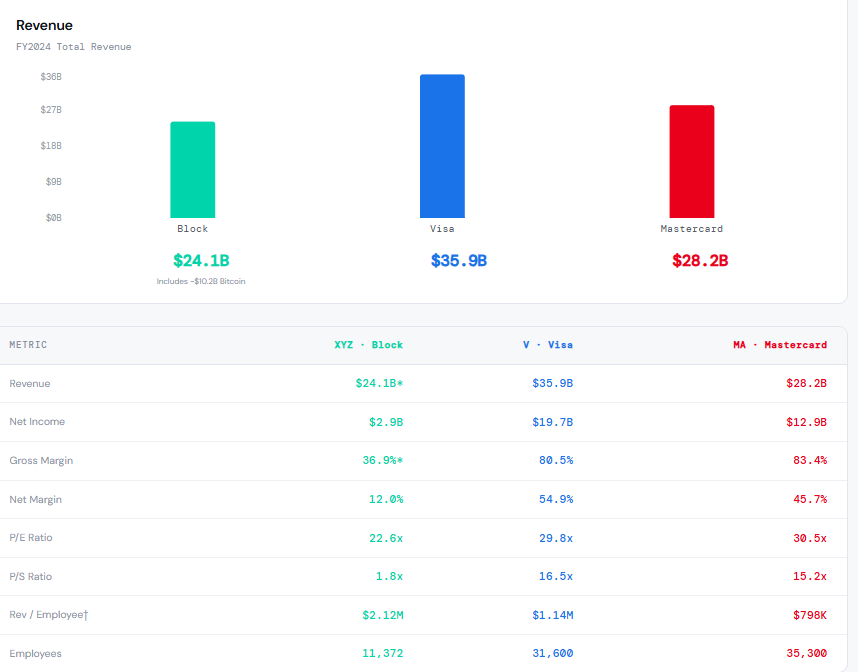
When juxtaposed with giants like Visa and Mastercard, and e-commerce leader Shopify, Block Inc. presents a less robust financial profile. Data indicates that Block is significantly less profitable and exhibits a lower gross margin compared to these counterparts. This disparity suggests that the company may not be operating at the same level of economic efficiency or "scale" as its more established competitors. This financial reality could be a driving force behind the urgent need for operational improvements and cost-cutting measures.

The stark difference in gross margins, with Block often showing less than half that of Visa or Mastercard, points to potential inefficiencies in its business model or higher operational costs relative to revenue. For instance, while Visa and Mastercard leverage vast existing payment networks, Block’s ecosystem, though growing, may still be in a developmental phase, incurring higher relative expenses. Shopify, while facing different market dynamics as an e-commerce platform provider, also demonstrates a different profit structure, often driven by subscription fees and transaction volumes on its platform.
AI as a Catalyst for Operational Efficiency and Performance Management
The narrative surrounding Block Inc.’s announcement raises questions about whether AI is being presented as a genuine solution for operational transformation or as a convenient justification for internal restructuring and performance management. The history of corporate layoffs often reveals that technological advancements, while real, can sometimes serve as a pretext for streamlining operations, addressing perceived inefficiencies, or responding to investor pressure.
Following Elon Musk’s acquisition of Twitter and the subsequent significant layoffs, there was widespread discussion about the discovery of considerable bureaucratic bloat within the social media company. This precedent suggests that substantial workforce reductions can, in some instances, be a response to identifying and rectifying organizational inefficiencies. In the case of Block Inc., it is plausible that the AI initiative is being leveraged to achieve similar organizational streamlining and improve overall efficiency, particularly in areas where performance metrics may not have met expectations.
Research on AI and Workforce Transformation
Extensive research into the impact of AI on organizational structures offers a more nuanced perspective. A comprehensive study conducted last year, involving over 70 companies, explored organizational redesigns centered around AI implementation. The findings indicated that companies primarily viewing AI as a tool to boost individual productivity often saw limited job reductions. True job displacement, on a scale comparable to what Block Inc. is suggesting, typically requires significant re-engineering of business processes and workflows.
This research, detailed in "The Rise of the Superworker" and a study on "Dynamic Work Design," suggests that simply integrating AI tools into existing frameworks may not yield substantial workforce attrition. Instead, a fundamental reimagining of how work is structured, how tasks are allocated, and how human and AI capabilities are synergistically combined is necessary to achieve such drastic changes in employment levels. Without this deeper re-engineering, AI often functions as an enhancer of human capabilities rather than a direct replacement.
Block Inc.’s Financial Performance: A Deeper Look
The comparative financial analysis of Block Inc. against Visa, Mastercard, and Shopify highlights a critical aspect of its current operational standing. The significantly lower profitability and gross margins suggest that the company is facing pressures that necessitate a strategic overhaul.
Key Financial Indicators (Illustrative Comparison – Actual figures vary based on reporting periods):
- Gross Margin: This metric represents the percentage of revenue remaining after deducting the cost of goods sold (COGS). A lower gross margin for Block Inc. compared to Visa and Mastercard implies that the cost of delivering its services is higher relative to its revenue generation. This could be due to various factors, including the cost of its technology infrastructure, customer acquisition costs, or the pricing strategies of its products.
- Profitability (Net Income/Operating Income): This reflects the company’s ability to generate profit from its operations. Lower profitability for Block Inc. could signal challenges in cost management, market competitiveness, or the efficiency of its revenue streams.
- Revenue Growth vs. Profit Growth: While Block Inc. may exhibit strong revenue growth, if its profit growth lags behind, it further underscores potential issues with operational efficiency and scalability.
This financial context is crucial for understanding why Block Inc. might be pursuing such a radical workforce strategy. The pressure to improve financial performance, particularly in response to investor sentiment, can lead companies to explore drastic measures. The AI initiative, in this light, could be interpreted as a move to significantly cut operational costs and enhance efficiency, aiming to boost profitability and satisfy shareholder expectations.
The Reality of AI Transformation: A Long-Term Strategic Imperative
The notion of AI as a short-term job-eliminating strategy is a perspective that many industry experts caution against. Building, implementing, and scaling enterprise-level AI solutions is a resource-intensive undertaking. It requires not only the development of sophisticated AI agents and "superagents" but also a dedicated team to manage these systems. This management involves ongoing training, continuous monitoring, and the establishment of new operational frameworks.
The tasks associated with managing AI systems include:
- Model Building and Training: Developing and refining AI models to ensure they perform optimally.
- Verification and Validation: Rigorously testing AI outputs to guarantee accuracy and reliability.
- System Monitoring and Maintenance: Ensuring the continuous and stable operation of AI infrastructure.
- Code and Interaction Auditing: Regularly checking the code and conversational flows of AI to prevent unexpected behaviors or errors.
The non-deterministic nature of AI technology means that it can sometimes produce unpredictable results. For a company like Block Inc., where the reliability of financial services like Cash App is paramount, ensuring consistent and error-free AI performance is a significant operational challenge. The potential for AI to "drift into errors" necessitates robust oversight and human intervention, which in turn requires skilled personnel.
The Substantial Costs Associated with AI Implementation
Beyond the human capital required for AI management, the financial investment in AI itself is considerable. Even if a company aims to automate functions like online customer support, the costs associated with building or acquiring AI solutions can be substantial.
Consider the example of replacing a customer support agent earning approximately $35,000 annually. While AI solutions promise significant cost savings, often estimated between 50% to 60% of operating expenses, the AI agent itself incurs costs. These can include:
- Compute Costs: The power required to run AI models can be significant, especially for complex tasks.
- Licensing and Development Fees: Acquiring or developing AI software and platforms.
- Training and Fine-tuning: The ongoing process of educating AI models on new data and scenarios.
- Ecosystem Management: Maintaining the infrastructure and tools that support the AI agents.
- Governance and Compliance: Ensuring data privacy, security, and adherence to regulatory standards.
Therefore, the projected savings from replacing human labor with AI are rarely a direct one-to-one replacement. The operational cost of an AI agent, even with projected decreases, can still represent a significant annual expense.
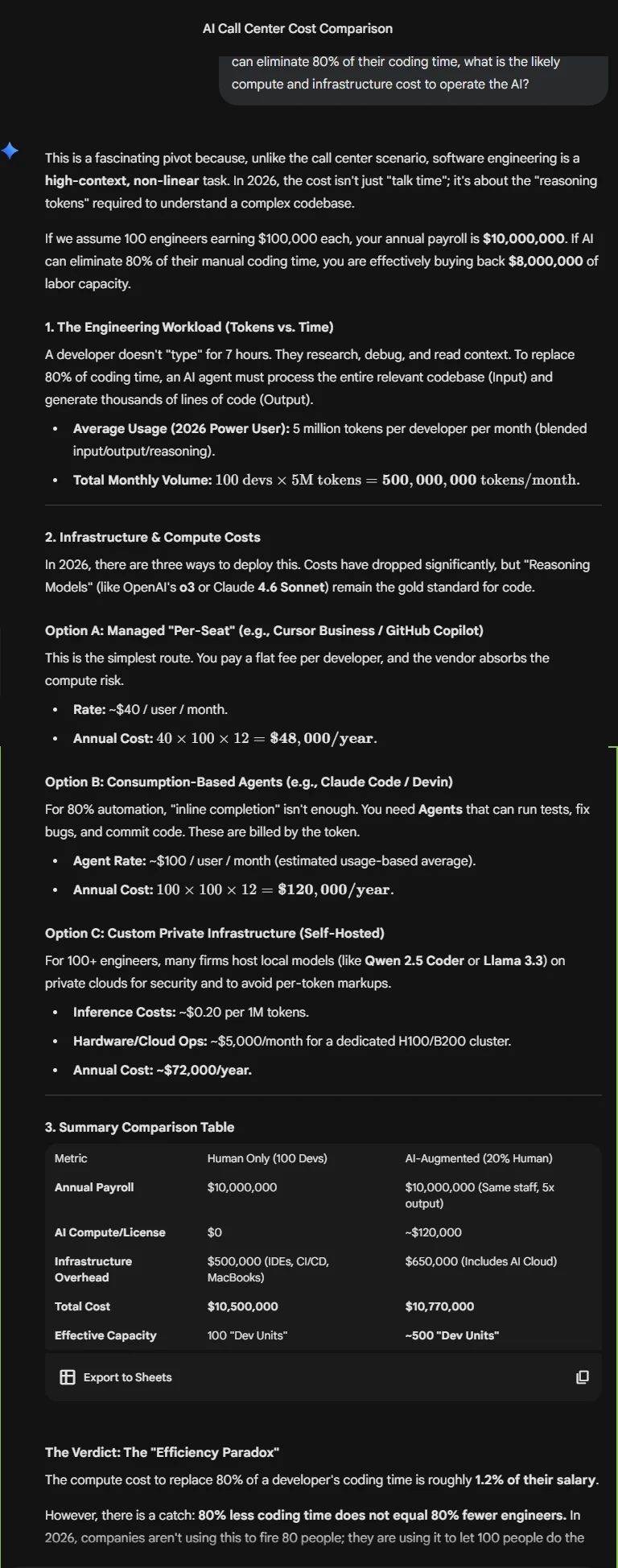
The scenario becomes even more complex when considering roles like software engineering. While an engineer might earn $100,000 per year, the operating cost of AI in this domain can sometimes exceed human labor costs, especially when factoring in the intricate nature of high-context, non-linear tasks. The "reasoning tokens" required for an AI to comprehend complex codebases can lead to substantial processing expenses.
For instance, if 100 engineers earning $100,000 annually represent a payroll of $10,000,000, and AI is estimated to reduce their manual coding time by 80%, this frees up approximately $8,000,000 in labor capacity. However, the cost of the AI tools, the compute power, and the specialized personnel needed to manage them must be factored in. Initial analyses suggest that the capital and operating expenses for AI in these sophisticated roles can indeed be one-third to half, or even higher, than the cost of human staff. This underscores the importance of a thorough cost-benefit analysis that goes beyond immediate labor savings.
Re-engineering Processes: The True ROI of AI
The most impactful transformations driven by AI are rarely initiated with the primary goal of job displacement. Instead, the true return on investment (ROI) of AI lies in its ability to re-engineer business processes, enhance productivity, and unlock new service offerings.
Numerous companies have demonstrated this principle:
- Allianz: This insurance giant has utilized digital twins to optimize claims processing and facilitate knowledge sharing, leading to improved efficiency and customer service.
- Travelers: The company is leveraging AI to scale employee enablement initiatives, accelerating the time-to-market for new products and services.
- Hubspot: This marketing and sales platform is integrating AI to develop novel services for its clients, expanding its value proposition rather than reducing its workforce.
- Galileo (Author’s AI Platform): This AI-powered platform enables exponential scaling of business operations, allowing for outreach to a significantly larger client base than would be feasible through traditional human interaction alone.
These examples illustrate that the strategic implementation of AI focuses on fundamentally rethinking how work is done, how value is created, and how organizations can achieve exponential growth. While Block Inc.’s announcement begins with layoffs, the long-term success of its AI strategy will hinge on its ability to genuinely re-engineer its business operations. Investors and observers will be keenly watching to see if this transformation leads to sustainable improvements in efficiency, profitability, and innovation.
The Broader Implications and Lessons Learned
The Block Inc. situation serves as a critical case study in the evolving landscape of AI adoption in the corporate world. It highlights several key takeaways for businesses and their leadership:
- AI Transformation is More Than Job Elimination: Companies seeking to leverage AI should focus on re-engineering processes and augmenting human capabilities rather than solely aiming for job cuts. While AI can automate tasks, its true power lies in enabling new ways of working and creating new value.
- Strategic Re-engineering is Key: The most profound impact of AI is realized when it drives fundamental business process re-engineering. This requires a holistic approach that integrates AI into the core of operations, rather than treating it as a peripheral cost-cutting tool.
- Cost-Benefit Analysis is Crucial: The financial implications of AI implementation are complex. Companies must conduct thorough analyses that account for not only potential labor savings but also the significant costs associated with AI development, implementation, maintenance, and governance.
- Talent Density and Productivity: Forward-thinking companies are constantly seeking ways to increase "talent density"—the concentration of high-performing individuals—and avoid a "hire-to-grow" model that can dilute employee productivity. AI, when strategically deployed, can contribute to this objective by freeing up human talent for higher-value activities.
For Block Inc., the path forward involves not just managing the immediate impact of layoffs but also demonstrating a clear and effective strategy for re-engineering its business around AI. The company’s ability to navigate this complex transition will be a significant determinant of its future success and its standing in the increasingly AI-driven global economy. The broader lesson for all organizations is to approach AI not as a simple replacement mechanism, but as a powerful catalyst for innovation, efficiency, and strategic growth.