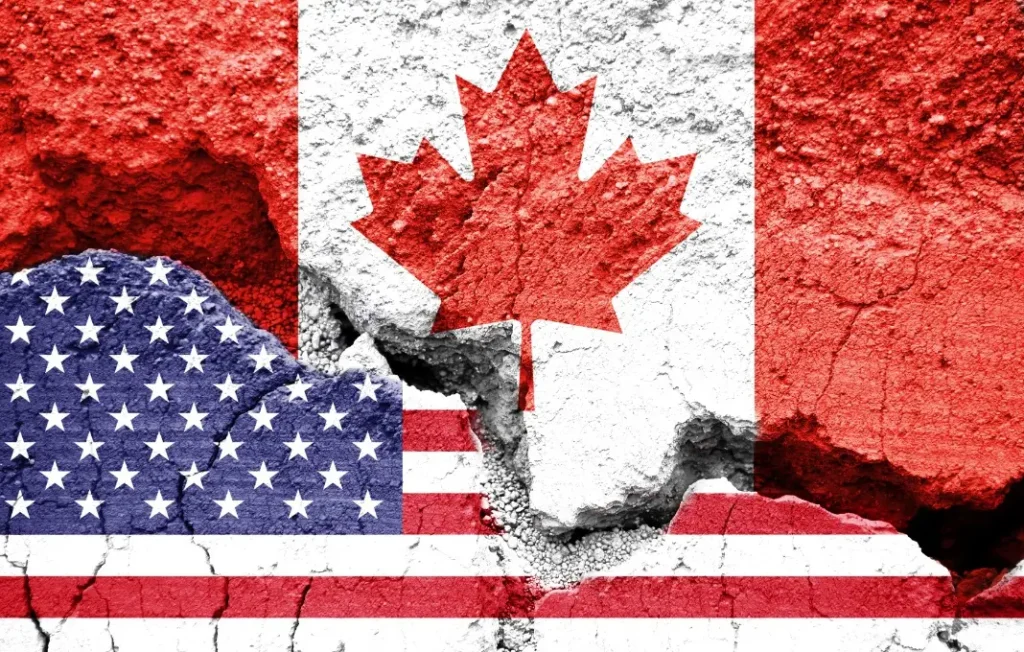
The recent imposition of 50 percent tariffs by the United States on a range of Canadian goods, effective August 22nd, has sent ripples through bilateral trade relations, with Canada poised to retaliate with its own set of tariffs on September 8th. While the initial U.S. measures target approximately $20 billion annually in Canadian exports, impacting specific sectors like cement, furniture, plywood, textiles, apparel, seeds, refrigeration equipment, cosmetics, jewelry, sporting goods, and swimming pools, the broader implications extend far beyond these immediate figures. The true concern lies in the escalating nature of the trade dispute, with potential further escalations, including a threatened 50 percent duty on Canadian automobiles and auto parts in January, casting a shadow over integrated North American supply chains. Amidst this evolving landscape, strategic analysis and proactive adaptation are paramount. Adam Echter, a partner at Simon-Kucher and a seasoned pricing strategist, offers a comprehensive playbook for businesses to not only navigate these turbulent trade waters but to potentially emerge as beneficiaries.
The Evolving Trade Landscape: From Initial Tariffs to Potential Escalation
The initial wave of U.S. tariffs, while significant in their stated percentage, affects only about 5 percent of the total value of goods Canada exports to the United States. However, the situation is far from static. The anticipated Canadian counter-tariffs, slated for September 8th, will target C$27.6 billion of American goods, including key sectors such as steel, dairy, appliances, agricultural equipment, pulp and paper, and electronics. This tit-for-tat approach signals a hardening of positions and raises the stakes considerably.
The most significant concern for many industries, particularly the automotive sector, is the U.S. threat of imposing 50 percent tariffs on cars and car parts imported from Canada in January. This measure could have a devastating impact on manufacturers with deeply integrated cross-border operations, such as Ford Motor Company, which operates extensive manufacturing facilities that span Detroit and Windsor, Ontario. Such a move would disrupt decades of established supply chains and could lead to substantial price increases for consumers, reduced production, and potential job losses.
The backdrop to these tariff impositions is a broader shift in global trade policy, often characterized by protectionist measures and a renegotiation of international trade agreements. While the specific triggers for these U.S. tariffs are varied, they align with a broader agenda to rebalance trade deficits and encourage domestic production. The ongoing negotiations surrounding the North American Free Trade Agreement (NAFTA) successor, the United States-Mexico-Canada Agreement (USMCA), have also created an environment of uncertainty, even as the agreement itself seeks to modernize and strengthen regional trade ties.
Identifying the Winners and Losers: A Strategic Imperative
Adam Echter emphasizes that the narrative often presented in the media, focusing on widespread victimhood, may not accurately reflect the reality for all businesses. "You’ll find that a lot of people are not as exposed to this stuff as the headlines are going to read," Echter observes. "They splash these big numbers on the headlines, but then they take all this stuff out. Exceptions, exceptions, exceptions, exceptions." This suggests that while broad-brush figures can be alarming, the actual impact is often nuanced and sector-specific.
Echter’s analysis highlights a crucial distinction: while large multinational corporations may be significantly exposed and therefore vulnerable, many mid-sized and regional businesses could emerge as beneficiaries. "For every loser, there’s a winner," he states. "And in a lot of these cases, there are mid-market U.S. winners. The losers are the big multinationals. But the small Texas-based manufacturer, the regional player in Michigan, those could be the winners."
The key for businesses is to accurately assess their position within this new trade dynamic. This involves scrutinizing their supply chains, understanding where their competitors might face disruptions, and identifying opportunities arising from shifts in sourcing. If a company finds itself in a position to benefit, Echter’s advice is straightforward: "go ahead and win."
Capitalizing on Opportunity: Pricing Power and Strategic Agility
For businesses identified as potential winners, the current environment presents a unique opportunity to exercise pricing power. The imposition of 50 percent tariffs is not merely a revenue-generating exercise for governments; it is a potent tool designed to alter sourcing decisions and incentivize the relocation of manufacturing operations. This shift takes time, and during this transition period, domestic producers in affected sectors can expect increased demand.
"Recognize your position of power," Echter advises. "Be aware that they’re calling because they can’t get your products anywhere else. And the people on the phone are going to be very nice when they say, ‘I have so much volume. What a great deal for you. I need it for 75 cents.’ You need to be prepared to say, ‘Thank you. I have this widget and you need this widget. It’s $1.50.’"
However, this newfound pricing leverage must be managed with caution. Echter stresses the importance of distinguishing between a temporary windfall and a long-term trend. Businesses should avoid making irreversible, large-scale capital investments based solely on the current tariff landscape. "Don’t go and get a bank loan and triple your capacity," he cautions. "There’s a high likelihood that this will resolve itself within, call it six years, if you want to put a political cycle in it, but maybe six days, who knows?"
The recommended strategy involves maximizing current capacity utilization first. By taking on increased volume and running existing facilities at peak efficiency, companies can generate significant profits. Once capacity is fully utilized, then price increases can be implemented. This approach ensures that immediate demand is met while laying the groundwork for sustained profitability.
It is also crucial to anticipate the post-tariff environment. As trade barriers are removed, customers who previously shifted their sourcing due to tariffs will likely revert to the most cost-effective suppliers. "Procurement can be ruthless," Echter notes. "They do not care about your relationship and they will move it right back to the lowest cost provider. And if the Canadians were the lowest cost provider before the tariffs went up, they will likely be the lowest cost provider after they go down." Therefore, any capital expansion decisions should be rigorously evaluated based on whether the return on investment can be realized before tariffs are potentially rescinded.
A key pricing tactic recommended by Echter is the use of surcharges rather than permanent list price increases. When temporary cost fluctuations, such as tariffs, occur, they should be communicated as surcharges tied to specific cost drivers. This approach avoids the complexity and customer confusion associated with constantly updating list prices and makes it easier to remove the surcharge when the underlying cost driver disappears. A surcharge moves with the cost, whereas a list price increase often necessitates a new negotiation once the tariff is lifted.
Strategies for the Adversely Affected: Navigating the Downturn
For businesses that find themselves on the losing end of these trade policies, the situation demands a swift and strategic response. Echter suggests revisiting existing contingency plans. "Dust off the tariff playbook that you created a year ago when tariff 1.0 happened," he advises. "So you’re not starting from scratch, hopefully. Don’t forget that you already freaked out a year ago."
This implies that many companies have already experienced similar disruptions and have likely developed strategies for price adjustments and supplier diversification. A 2015 survey by AlixPartners indicated that a significant percentage of U.S. CEOs had already raised or were considering raising prices in response to earlier trade tensions, and a similar proportion reported their vendors had done the same. Alternative suppliers that may have been considered previously are worth re-evaluating.
The critical step for affected businesses is rigorous financial modeling. The impact of tariffs needs to be analyzed not just as a margin issue but as a potential existential threat, particularly when tariffs affect core inputs. "You can no longer assume these little pass-through tariffs that you can get away with," Echter warns. "You have to ask yourself, ‘If I have to take it on the chin and double my price, what does that do to my plant from a volume perspective? And then am I in business? Am I laying off people?’"
Many companies may lack experience in modeling sudden, significant cost increases, as natural market fluctuations rarely involve such dramatic shifts without government intervention. Understanding how product demand responds to a 50 percent price increase is crucial for determining the appropriate course of action: survival, reformulation of products, or resourcing of supply chains.
Beyond Tariffs: The Enduring Impact of Macroeconomic Shifts
While the immediate focus is on the Canada-U.S. trade dispute, Echter urges businesses to consider the broader, more systemic economic trends that will shape the business landscape for years to come. He points to soaring national debt, persistent borrowing costs, and the potential for higher-than-expected inflation as factors that will fundamentally alter market behavior. These macroeconomic pressures, combined with tariff-driven cost increases, signal a durable shift away from the low-price, high-volume growth model that characterized the 2010s.
The automotive industry serves as a poignant example. Declining sales volumes, estimated at roughly 1.5 million units over recent years, have led manufacturers to abandon entry-level vehicles and focus on higher-end, higher-margin models. This strategic shift creates opportunities at the lower end of the market for new entrants.
Echter uses the example of Genesee Brewing in Rochester, New York, to illustrate the challenges of inflexibility in a fragmenting market. A large brewery designed for mass production of a single product may struggle in an environment where consumers demand smaller batches of diverse offerings. The metaphor of a "747 of a brewery" versus the demand for "Embraers" highlights the need for agility and adaptability.
The long-term solution, according to Echter, lies not in responding to transient tariff policies but in cultivating a culture of flexibility. Businesses need to transition from producing a single product in large volumes to being able to manufacture multiple products at various price points. This requires a fundamental re-evaluation of product portfolios, a constant assessment of value creation, and an agile pricing strategy.
"You can make a couple of fast actions, monitor what’s going on and try to move quickly, but the more elegant thing is being able to deconstruct your product portfolio to constantly ask yourself, ‘Where am I adding value? How is the value shifting? What is approximately that value? And how should I price for it?’ That’s a muscle that companies would always benefit by building," Echter concludes. Building this "pricing muscle" is an investment in long-term resilience and competitiveness, transcending the immediate challenges posed by international trade disputes and preparing businesses for a future defined by dynamic market shifts.