
This week, Cornerstone OnDemand, a dominant force in the corporate learning technology sector with an estimated annual revenue of $1 billion, announced a significant strategic pivot into the rapidly expanding domain of Artificial Intelligence. The move marks a critical reinvention for the company, which has long been a leader in Learning Management Systems (LMS) and Learning Experience Platforms (LXP), as it confronts a seismic shift in how organizations approach employee development. This development comes as the broader HR technology market navigates the transformative impact of AI, a trend explored in upcoming research from industry analyst Josh Bersin, who has been closely observing Cornerstone’s evolution.
Cornerstone’s Established Position and Market Dynamics
Cornerstone boasts a substantial footprint in the enterprise learning market, serving over 7,000 customers, including many of the world’s largest corporations, and impacting approximately 140 million users. While its core revenue streams originate from its robust LMS and LXP offerings, a significant portion is also derived from its comprehensive talent management suite. Founded 27 years ago as an e-learning platform provider, Cornerstone has a proven track record of innovation and strategic acquisition, outmaneuvering or absorbing numerous standalone LMS competitors over the past two and a half decades. The overall corporate learning market is estimated to be around $30 billion, though a significant share is held by broader human capital management (HCM) giants like Workday, Oracle, and SAP. Within this competitive landscape, Cornerstone has established itself as a dominant player, often lauded for its superior functionality compared to many rivals.
The company’s trajectory has seen significant structural changes, notably its transition to private ownership in 2021 following a $5.5 billion acquisition, representing approximately five times its then-current revenue. Since then, Cornerstone has strategically acquired several key players to bolster its capabilities, including EdCast for LXP expertise, Skyhive for crucial skills and labor market data, and Tailspin for virtual reality (VR) content creation, alongside other smaller content acquisition firms. While Cornerstone remains a highly profitable entity, its market valuation has not seen commensurate growth. This is largely attributed to the ongoing disruption and recalibration within the corporate learning market, a trend that has been particularly pronounced in recent years.

Recognizing these market pressures, Cornerstone has been actively working to strengthen its existing channels, promote more integrated solution sales, and expand its feature set. However, like many established technology providers, its brand identity has been perceived by some as somewhat dated. This can lead to customers exploring alternative solutions during renewal cycles, a common challenge for legacy technology providers facing rapid market evolution. This situation is not unique to Cornerstone; many organizations experience a degree of fatigue with established systems when newer, more innovative alternatives emerge. The current market, however, is experiencing a particularly rapid and profound shift, necessitating a more fundamental adaptation. Cornerstone’s leadership team, including executives like Himanshu Palsule and Michael Pawlyszyn, are seasoned professionals with a strong track record of execution, positioning the company to navigate these challenges.
The AI Disruption: Redefining Corporate Learning
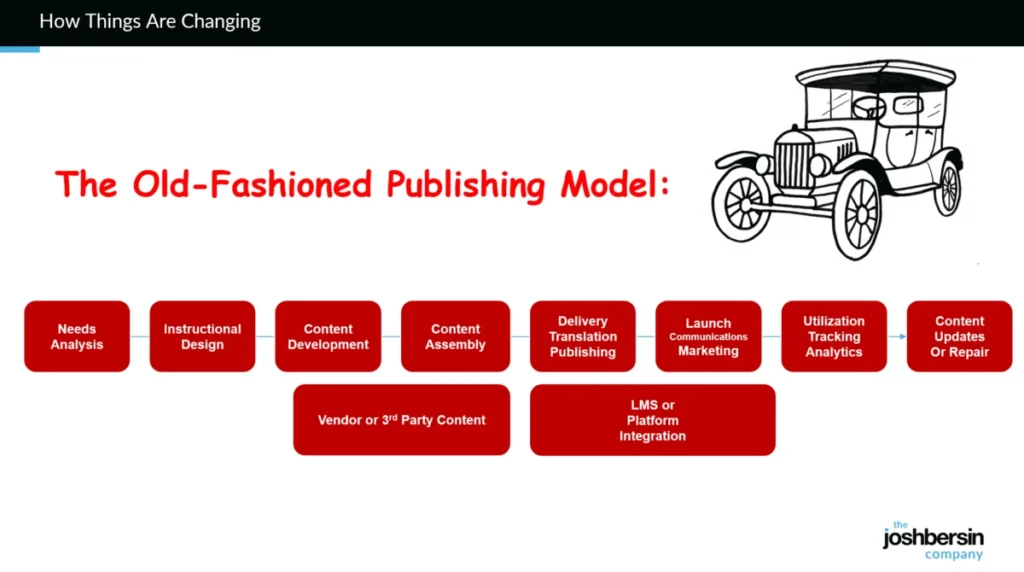
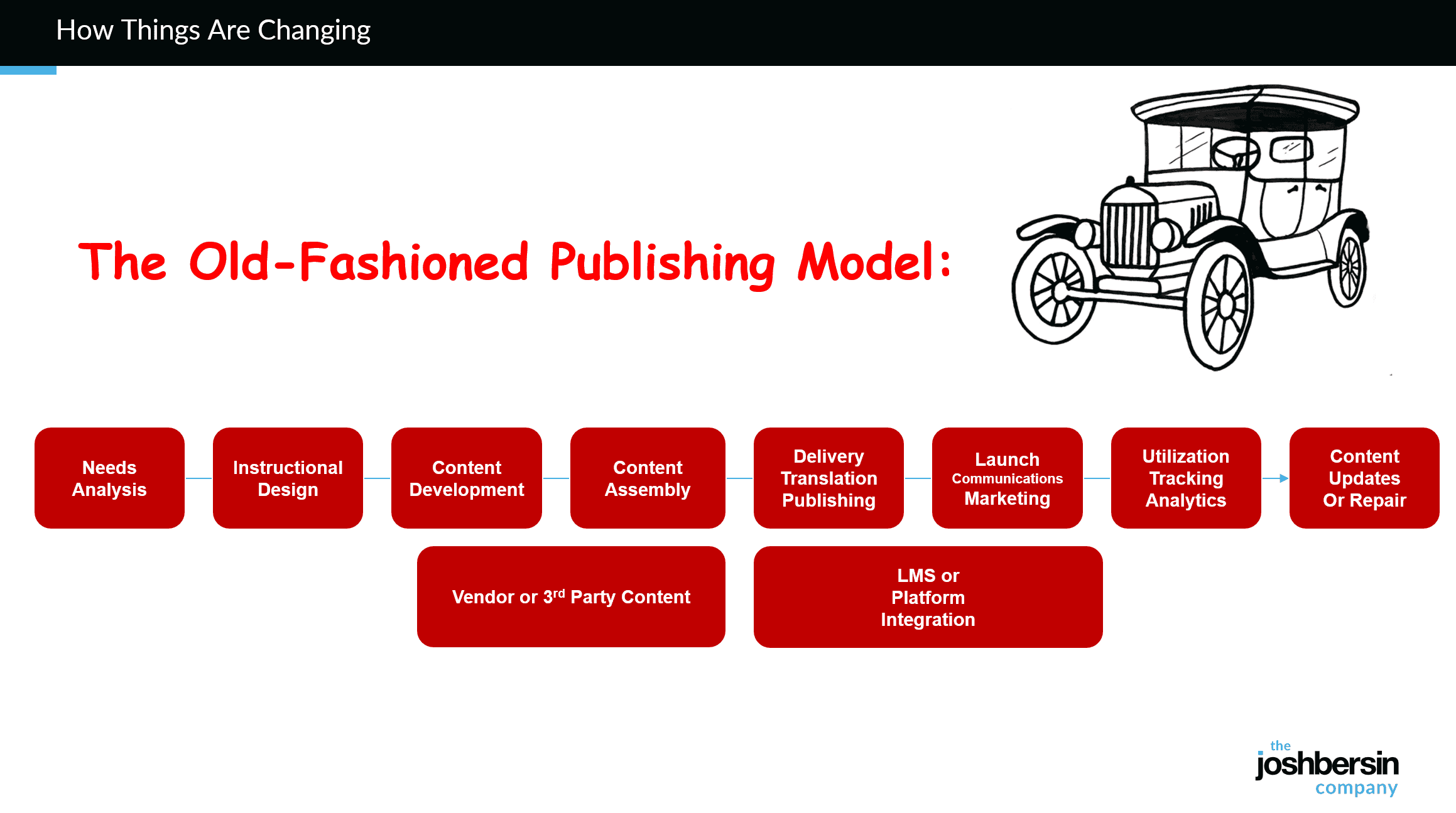
The emergence of advanced AI technologies, epitomized by the public release of tools like ChatGPT in late 2022, has fundamentally altered the landscape of corporate learning. The traditional "e-learning" or "published training content" market, a segment valued at an estimated $400 billion, is undergoing a rapid and radical reinvention. For three decades, the development of corporate training content has followed a well-established, albeit slow and resource-intensive, process. This involved the painstaking creation of courses, videos, assessments, and simulations by instructional designers, graphic artists, and subject matter experts. Hundreds of content providers, both external and internal to organizations, have historically offered solutions across diverse domains such as IT, sales, and leadership.
The creation of a single "course" was analogous to writing a book: it required extensive design, content sourcing, audience targeting, and months of development. Once built, content needed translation, rigorous testing, and integration into an LMS, often adhering to the 35-year-old SCORM tracking standard. This standard primarily tracked learner progress and completion rates, offering limited insight into actual knowledge acquisition or skill application. This entire ecosystem, which employed millions of learning professionals, is now facing obsolescence. The process is inherently slow, inflexible for updates, and prohibitively expensive, with some individual courses costing upwards of $50,000 to develop. Consequently, content creators, whether external publishers or internal L&D teams, have consistently faced constraints of time and budget, often struggling to demonstrate a clear return on investment for their lengthy development cycles.
While this industry has historically been populated by dedicated professionals, the underlying methodology is proving to be a bottleneck in the face of AI’s capabilities. The proliferation of readily accessible, high-quality content on platforms like YouTube, though not integrated into formal learning systems and lacking corporate control, highlights a growing preference for more dynamic and immediate knowledge acquisition. This presents a significant market opportunity, with an estimated $50 billion market for traditional content poised for transformation by AI.
AI’s Transformative Impact on Learning Experiences
The argument that AI-generated content might initially be of lower quality, akin to early AI-authored essays, overlooks the rapid advancements and inherent advantages of AI in this domain. AI-authored courses are not only proving to be remarkably effective but are also continuously improving. The time required for development and refinement has been drastically reduced from months to days or even hours. This allows for iterative improvements, meaning even a 70% initial quality can be rapidly refined to meet specific organizational needs.
Beyond content generation, AI is revolutionizing the learning experience itself. Instead of passively navigating through lengthy course chapters, learners can now engage with AI-powered content by asking direct questions. This transforms a static "course" into a dynamic, interactive learning resource – an almost living expert. Crucially, this enables the delivery of personalized learning experiences, where each employee receives a customized version of the information they need, a feat that SCORM-compliant materials have historically failed to achieve.
Furthermore, AI-powered learning environments facilitate seamless integration across all learning resources. If an employee in a refinery setting needs to understand the safety protocols for sulfur dioxide, they no longer need to locate a specific "sulfur dioxide safety" course. Instead, they can pose their question directly to the system, which can then retrieve the relevant information from any connected course or document. This shift aligns with the broader reality of corporate work, where learning is often secondary to immediate operational needs. The majority of an employee’s day is spent performing tasks, requiring timely access to information, tips, advice, and knowledge for effective execution. This "enablement" function, powered by AI, represents a fundamental departure from traditional "learning" paradigms.
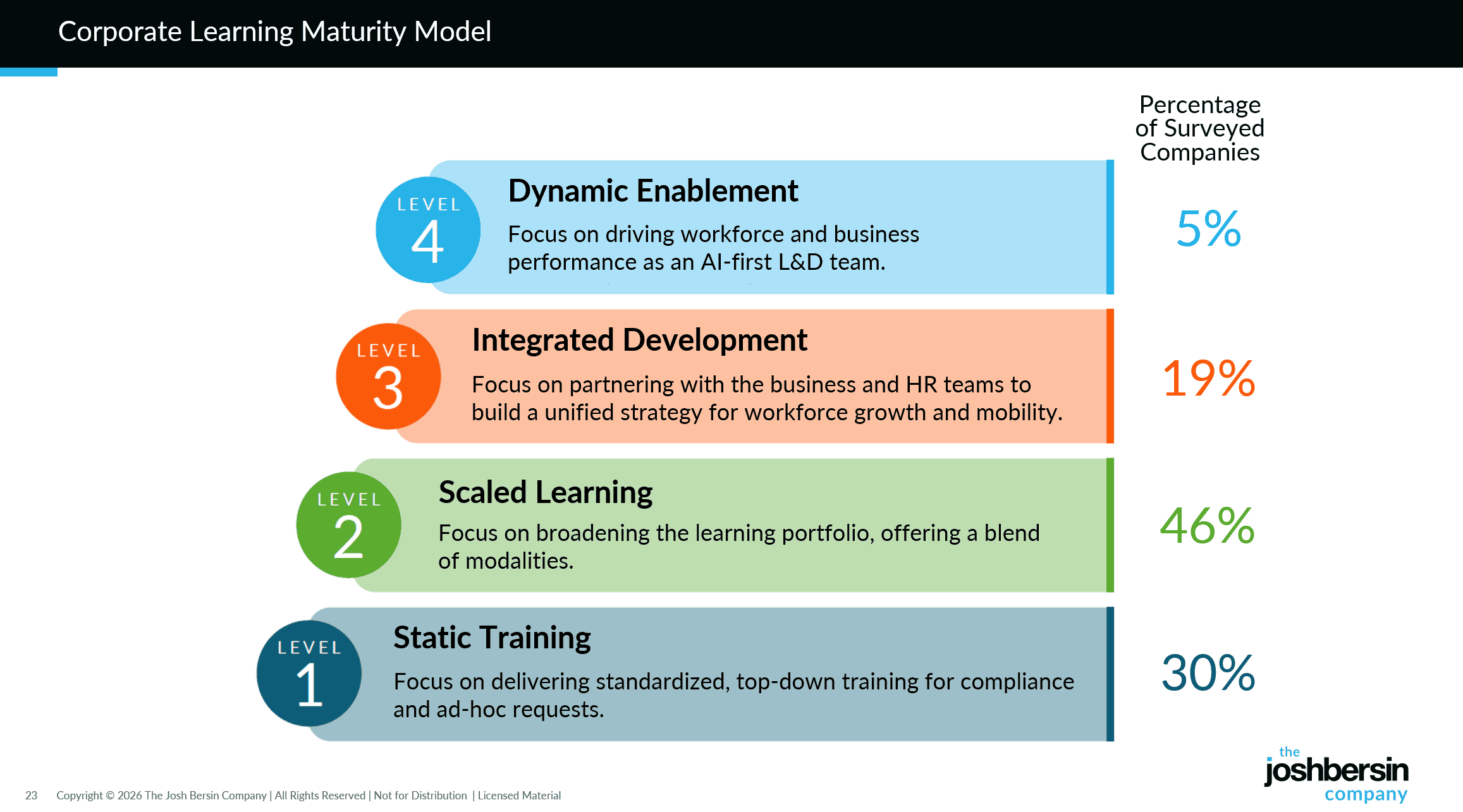
This paradigm shift is being termed the "Revolution in L&D," but its implications extend far beyond the HR department, impacting the entire business. L&D functions are expected to become significantly leaner, transforming into "enablement" operations with a substantial portion of staff embedded within business units. The reinvented L&D department may even evolve beyond its traditional HR home, becoming a direct driver of business value, with compliance remaining a key HR-centric function. Research on learning maturity models, based on surveys of over 700 companies, indicates that organizations operating at advanced maturity levels are 74% more innovative and agile in their skills development, earning significant acclaim from business leaders for their ability to rapidly generate relevant content in response to emerging challenges.
Implications for Cornerstone and the Market
The rapid ascent of AI-native learning solutions from emerging players like Sana, Docebo, Absorb, Uplimit, and Arist, alongside initiatives from tech giants like OpenAI and Anthropic, signifies a significant challenge to established vendors. The future of corporate learning points towards an environment where employees can query their systems and instantly access the precise documentation, course, or subject matter expertise required to address any given issue. AI-native learning platforms will integrate comprehensive data about an individual’s work, skills, experiences, and career aspirations, creating a deeply personalized learning ecosystem.
As explored in analyses like "HR 2030," the future workforce will likely be augmented by personal AI agents (e.g., Microsoft Copilot). These agents will possess an intimate understanding of an employee’s role, communications, meetings, and digital footprint. By analyzing this data, combined with peer feedback and performance metrics, these agents can accurately map an individual’s skills, identify strengths and weaknesses, and proactively offer nudges, onboarding plans, or coaching as needed, thereby reducing reliance on traditional, often slow, interventions like external coaches or formal assessments.
While some L&D professionals may remain skeptical, the rapid advancement of AI in skills and behavioral inference is undeniable. Platforms like Galileo are already demonstrating exceptional capabilities in this area, enabling organizations to tag skills within their own taxonomies or simply query the AI to understand an individual’s competencies. This seismic shift has two primary consequences: firstly, L&D spending is rapidly migrating from traditional tools to these new AI-powered solutions, potentially impacting Cornerstone’s revenue streams. Secondly, and more critically, L&D leaders who fail to embrace AI-native solutions risk losing their budgets, seniority, and overall relevance. The question "Why is this role consuming significant budget for content that is no longer utilized?" is becoming increasingly pertinent.
Cornerstone Workforce AI: A Strategic Reinvention
In response to these market dynamics, Cornerstone has unveiled "Cornerstone Workforce AI," a comprehensive reinvention of its platform strategy. Led by Guna Jayaraman, the new AI team has developed a foundational platform designed to address the evolving needs of the corporate learning landscape. While the offering is still in its nascent stages, it represents a significant departure and a bold step towards AI integration. Key features include sophisticated skills and capability inference, an open "People Graph" capable of ingesting data from diverse systems (HRIS, LMS, project management tools, engagement surveys, etc.), and a suite of data services, including labor market intelligence from Skyhive. The platform also incorporates "Readiness Agents" designed to provide immediate solutions to organizational challenges.
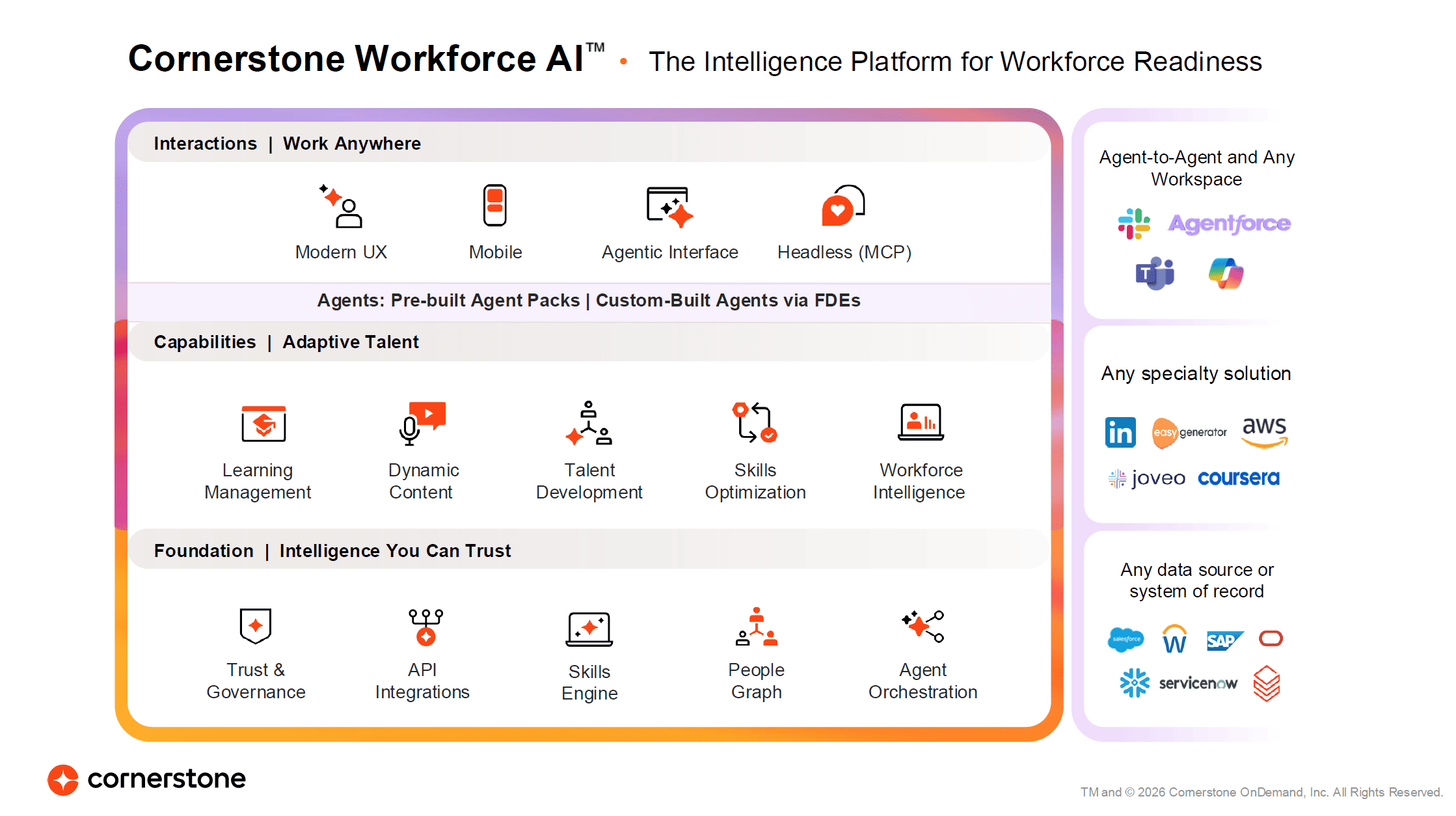
The underlying infrastructure of Cornerstone Workforce AI integrates new AI capabilities with existing functionalities from Cornerstone Galaxy, the company’s established learning platform. Customers can opt for a completely new AI-native experience or upgrade their existing licenses to unlock these advanced features. Early feedback from customers, including a wealth management firm and a large media company, as well as insights from discussions with Cisco, highlight the platform’s potential. These organizations are reportedly leveraging Workforce AI to address critical skills transformation, enhance employee mobility, facilitate organizational redesign, and mitigate risks by integrating their proprietary company information.
While Cornerstone Workforce AI is not yet a fully "AI-native" platform in the vein of competitors like Sana, it represents a significant leap towards that objective. Cornerstone has already introduced AI-powered content development tools and agents designed to streamline LMS administration and analysis, with these AI-native content features being incorporated into both existing and new environments. The currently available packaged Agents, while not yet fully customizable by users, effectively harness the comprehensive data and intelligence within Workforce AI to address specific organizational needs.
The Future Trajectory of Corporate Learning and Cornerstone’s Opportunity
The strategic direction of Cornerstone with its new AI platform is viewed as a monumental undertaking, particularly given the company’s long-standing relationship with its customer base. While the management team is understandably cautious about alienating existing clients, this reinvention presents a critical opportunity to shape the future of the corporate learning market. Investments in traditional training solutions are projected to decline significantly, with substantial AI budgets poised for allocation. Despite the presence of innovative vendors already established in the AI-native space, Cornerstone possesses a significant opportunity to capture market share.
For organizations ready to embrace this transformative shift, exploring Cornerstone Workforce AI is highly recommended. While the offering is new and still evolving, its powerful AI platform provides a foundation for ambitious strategic planning. The ultimate goal is to empower every employee to achieve success through personalized and adaptive learning experiences. The coming period will be crucial for Cornerstone to effectively articulate its AI strategy within the dynamic and fast-paced AI market, demonstrating how its platform can enable organizations to foster an environment where every employee feels "enabled to succeed" in their unique professional journey. The integration of a robust "People Graph" and the development of advanced AI agents signal a clear intent to redefine the boundaries of corporate enablement and learning.







