This week, Cornerstone, a titan in the corporate learning technology sector with an estimated annual revenue of $1 billion – significantly outpacing competitors like Docebo – announced a major strategic reinvention centered on Artificial Intelligence (AI). This move signals a profound shift for the company and the broader Learning and Development (L&D) industry, as it navigates the disruptive potential of AI. The announcement comes at a critical juncture, with the L&D market undergoing rapid transformation, a trend explored in upcoming research, including the forthcoming HR 2030 report.
Cornerstone’s Current Standing and Market Dominance
Cornerstone currently boasts an impressive client roster of over 7,000 enterprise customers, including a substantial number of the world’s largest brands, and serves an estimated 140 million users. Its core business is anchored in Learning Management System (LMS) and Learning Experience Platform (LXP) software, complemented by a robust talent management platform.
Founded 27 years ago as an e-learning platform pioneer, Cornerstone has established itself as a leader in the "talent-driven learning platform" market. Over its history, it has either outpaced or acquired numerous standalone LMS companies. The total addressable market for corporate learning solutions is estimated to be around $30 billion. However, this market is also significantly influenced by major Human Capital Management (HCM) players such as Workday, Oracle, and SAP. Within this competitive landscape, Cornerstone has historically maintained a dominant position due to its superior functionality.

Since its acquisition by a private equity firm in 2021 for $5.5 billion (approximately 5 times its then-current revenue), Cornerstone has strategically expanded its portfolio through acquisitions. Notable additions include EdCast (LXP), Skyhive (skills and labor market data), and Tailspin (VR), alongside smaller content providers. While the company remains highly profitable, its market valuation has seen limited growth. This is partly attributed to the challenging market dynamics within its traditional segment, which has experienced a significant downturn in recent years, as will be further detailed.
Cornerstone has been proactive in addressing market shifts by strengthening its channel partnerships, offering more comprehensive solutions, and enhancing its product features. Nevertheless, the company acknowledges that its brand perception may be considered somewhat dated by some clients, leading to increased customer churn during renewal periods. This is a common challenge for established technology providers as newer, more innovative solutions emerge. The current market trajectory, driven by rapid technological advancements, necessitates a more fundamental transformation.
The AI Disruption: Redefining Corporate Learning
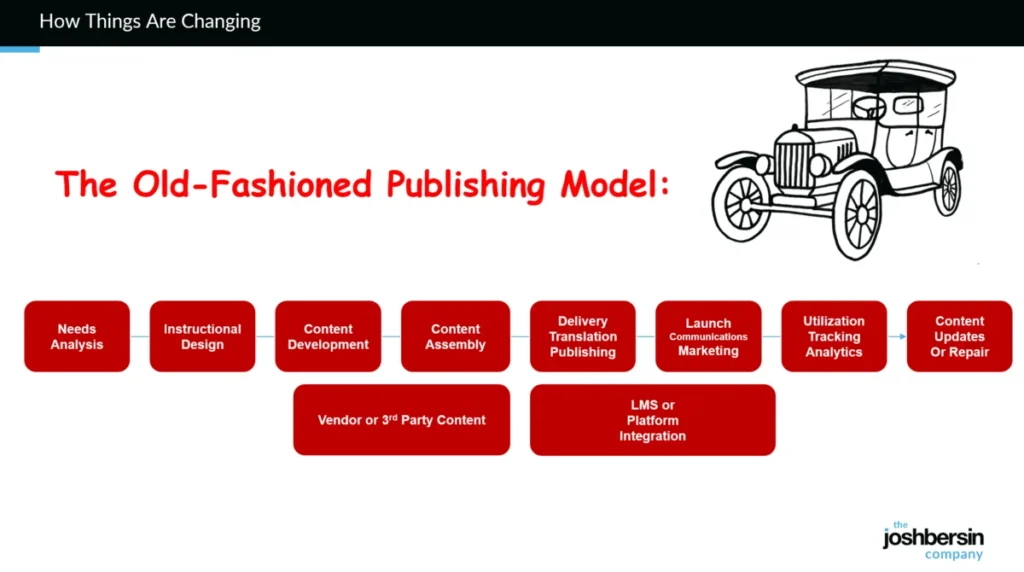
The emergence of sophisticated AI tools, exemplified by the launch of ChatGPT in late 2022, has fundamentally altered the landscape of e-learning and the market for "published training content." This market, valued at over $400 billion, is now undergoing a rapid reinvention driven by AI. For decades, the process of creating and distributing corporate training content has been a laborious and time-consuming undertaking. This typically involved instructional designers, graphic artists, and subject matter experts meticulously crafting courses, videos, assessments, and simulations. This content was then translated, tested, and published into LMS platforms, often adhering to the 35-year-old SCORM standard for tracking learner progress.
The traditional content creation process, akin to writing a book, was characterized by significant investment in time and resources. Developing a single course could cost upwards of $50,000, placing considerable constraints on L&D departments and content providers. This often led to challenges in demonstrating return on investment (ROI) for lengthy development cycles. While valuable, this approach was inherently slow, inflexible for updates, and expensive. This model, which supported a large ecosystem of learning professionals and content publishers, is now becoming increasingly obsolete.
AI’s Transformative Impact on Content Creation and Delivery
The advent of AI is dramatically accelerating content development. While early AI-generated content may have raised concerns about quality, current AI models are producing highly effective and rapidly evolving learning materials. The time required to create and refine a course has been reduced from months to days or even hours. This efficiency allows for iterative improvements, even if initial outputs are not perfectly polished.
Beyond content generation, AI is revolutionizing the learning experience itself. AI-powered learning platforms enable learners to "ask questions" directly, bypassing the need to navigate lengthy chapters or modules. This transforms a static "course" into a dynamic, interactive learning resource, akin to a personalized expert. Critically, AI facilitates the creation of custom learning experiences for each employee, addressing a long-standing limitation of SCORM-compliant content.
Furthermore, AI-powered learning environments can connect disparate pieces of information, allowing learners to access relevant knowledge seamlessly. For instance, an employee seeking information on specific safety protocols in a high-risk environment, such as handling poisonous gases in a refinery, can simply ask the system. The AI can then retrieve and present the precise information needed, eliminating the need to search for a dedicated "sulfur dioxide safety" course. This shift moves corporate learning from a purely educational model to one focused on "enablement," providing immediate support and knowledge to employees in their daily tasks. This shift has profound implications for the L&D function, potentially reducing its size and repositioning it as a direct business enabler, with the exception of compliance-related training.
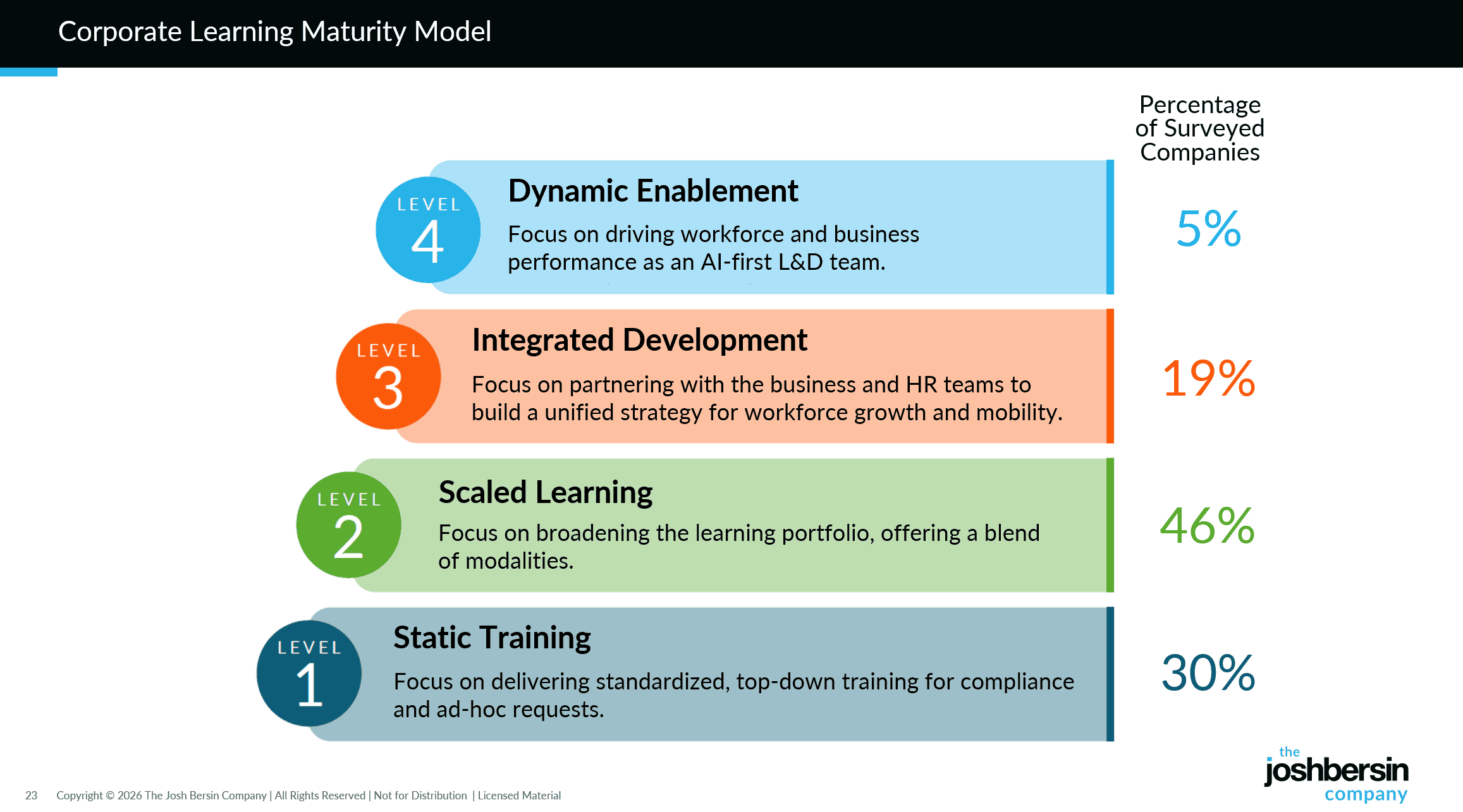
Research indicates that companies operating at higher levels of learning maturity, characterized by the rapid generation of relevant skills development content, are significantly more innovative and agile. These organizations are highly valued by the business for their ability to respond swiftly to emerging challenges and opportunities.
Market Response and Cornerstone’s Strategic Pivot
The rapid evolution of AI in learning technology has spurred the emergence of new market entrants. Companies such as Sana, Docebo, Absorb, Uplimit, Arist, and others are actively developing and deploying AI-native learning solutions. Major AI players like OpenAI are also integrating content from established providers, while companies like Anthropic are actively assisting businesses in leveraging AI for learning.
The future of corporate learning points towards a paradigm where every employee has access to a personalized AI agent. These agents, similar to Microsoft Copilot, can leverage an individual’s work data, communications, and digital footprint to understand their skills, experiences, strengths, and weaknesses. When integrated with peer feedback and performance data, this forms a comprehensive "People Graph," as described by Cornerstone. This underlying data infrastructure, central to Cornerstone’s recent announcement, empowers AI agents to provide timely nudges, onboarding plans, and personalized coaching, significantly streamlining traditional learning interventions.
The implications for L&D professionals are substantial. Spending in L&D is demonstrably shifting from traditional tools to AI-driven solutions. L&D leaders who do not embrace these AI-native approaches risk diminished budgets, seniority, and relevance within their organizations. The question of "why is this department spending so much on content nobody uses?" will increasingly be asked of those lagging behind.
Cornerstone Workforce AI: A New Era for the Company
In response to these market dynamics, Cornerstone has unveiled "Cornerstone Workforce AI," a comprehensive reinvention of its platform strategy. Led by Guna Jayaraman, the AI team has developed a new architecture designed to address the evolving needs of the corporate learning landscape. While still in its early stages, this offering represents a significant strategic pivot for the company.
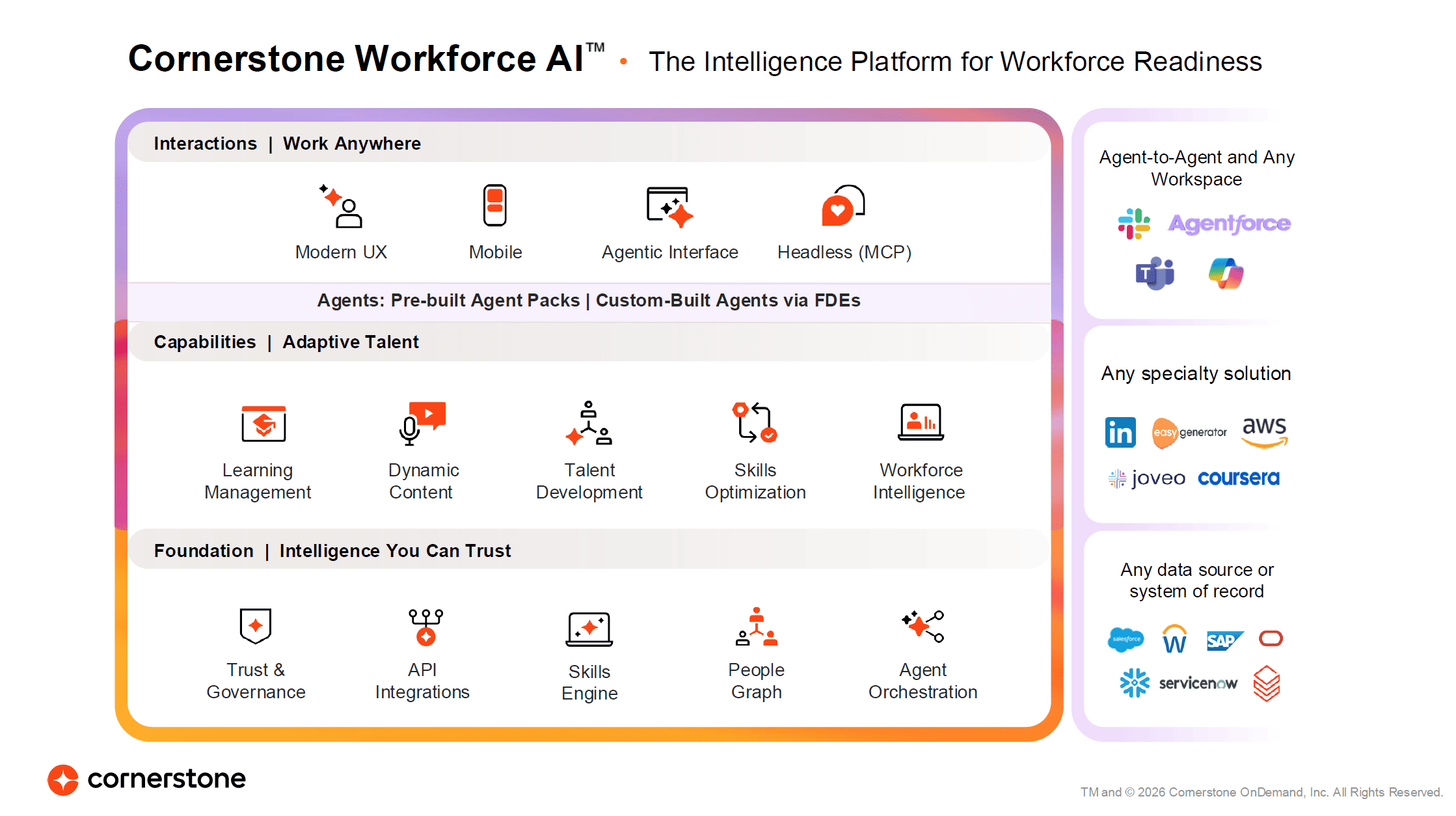
Cornerstone Workforce AI integrates several key capabilities:
- Skills and Capability Inference: Advanced AI algorithms to identify and map employee skills and competencies.
- Open "People Graph": A flexible data infrastructure capable of ingesting data from diverse sources, including HRIS, LMS, project management systems, and employee engagement surveys. This forms a holistic view of the workforce.
- Data Services: Leveraging market intelligence from acquisitions like Skyhive, providing external labor market data to inform internal development strategies.
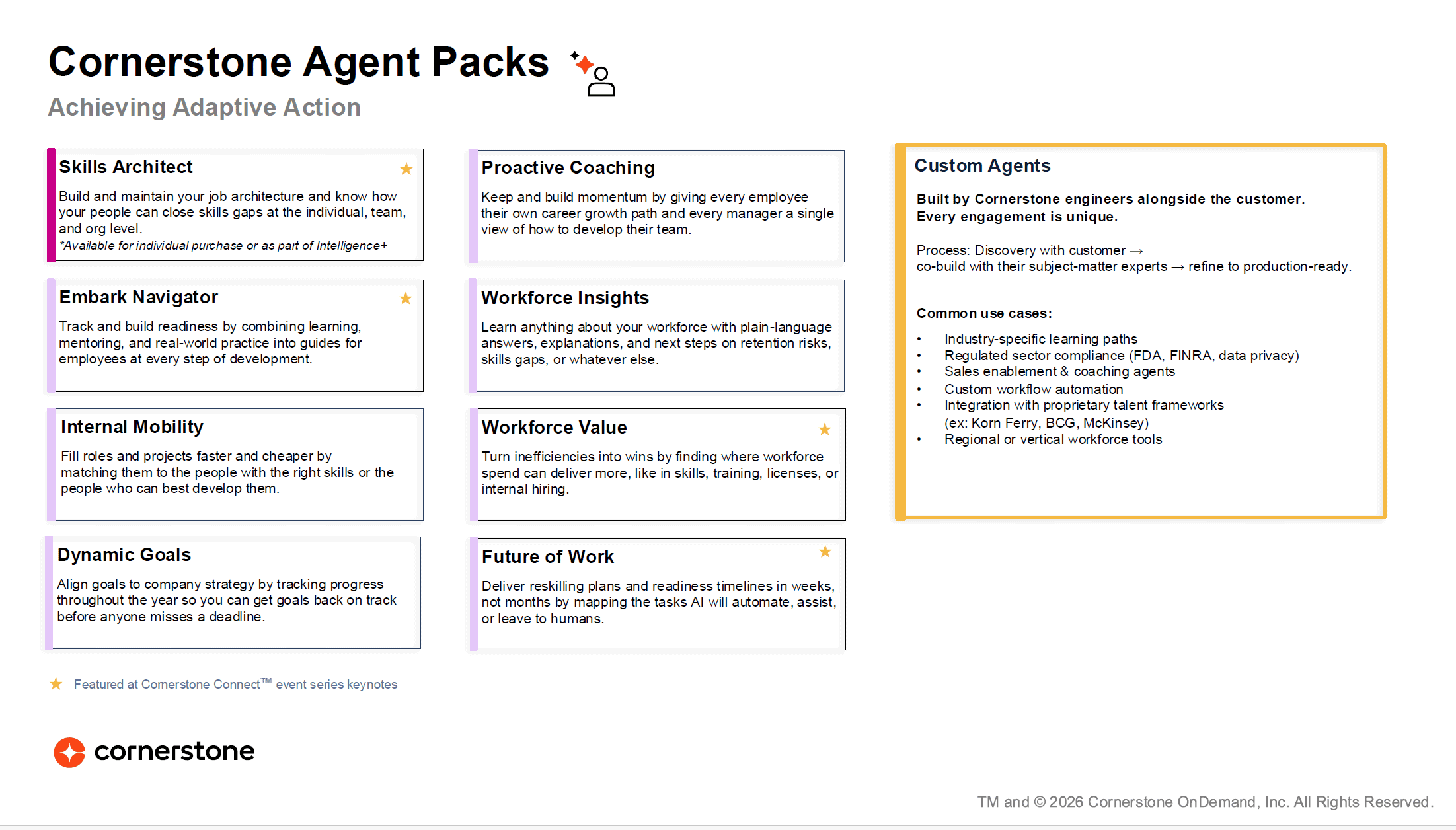
- "Readiness Agents": Pre-built AI agents designed to address immediate business challenges and facilitate skill development.
While some functionalities are still being integrated from Cornerstone’s existing platform, Galaxy, the new AI capabilities can be accessed through new licensing tiers or by upgrading existing subscriptions. Early customer feedback from sectors like wealth management and media indicates a strong demand for integrating company-specific information to enhance skills, improve employee mobility, and mitigate risks. Cisco has also reportedly engaged with the new platform.
While not yet a fully "AI-native" platform in the vein of some newer competitors, Cornerstone Workforce AI is rapidly approaching that standard. The company has already introduced AI-powered content development tools and administrative agents, with AI-native content features being rolled out across both its existing and new environments. The current packaged "Agents" offer pre-defined solutions, with future iterations expected to provide greater customization and flexibility.
Future Trajectory and Market Implications
Cornerstone’s strategic shift to AI represents a monumental undertaking, especially for a company with a long-standing legacy in traditional e-learning. The management team is navigating the delicate balance of retaining existing customers while embracing a future defined by AI. This new platform strategy offers Cornerstone a significant opportunity to influence the direction of the AI-driven learning market.
The market for traditional training solutions is poised for a substantial decline, with AI budgets increasingly available for allocation. While established AI-native vendors have a head start, Cornerstone’s extensive client base and market presence provide a strong foundation for its AI transformation.
The implications for the broader HR and L&D sectors are profound. The industry is moving towards a model where every employee is empowered to succeed through personalized, AI-driven enablement. This evolution suggests a future where L&D functions are intrinsically linked to business outcomes, fostering a more agile, responsive, and effective workforce. The success of Cornerstone’s AI reinvention will hinge on its ability to clearly articulate the value proposition of its new offerings in the dynamic and rapidly evolving AI market.