Diversity, Equity, and Inclusion (DEI) initiatives across corporate America have encountered unprecedented challenges throughout 2025 and 2026, marking a significant recalibration of workplace diversity programs. This shift is largely a direct consequence of policy changes and executive orders emanating from the Trump administration, creating a complex and often contradictory environment for businesses. While some corporations have chosen to double down on their DEI commitments, others have scaled back or fundamentally restructured their initiatives, citing evolving legal landscapes, increasing political pressures, and financial considerations. The long-term ramifications for corporate branding, talent acquisition, and consumer trust are still unfolding, but preliminary indicators suggest a destabilization of confidence among employees and consumers who question the genuine commitment of organizations to these principles.
Background: The Rise and Retraction of Corporate DEI
The past decade saw a significant surge in corporate investment in DEI, driven by a growing understanding of its benefits for innovation, employee engagement, and market reach, alongside increasing pressure from socially conscious consumers and investors. DEI programs became integral to corporate social responsibility (CSR) frameworks, often featuring prominently in annual reports and recruitment drives. Companies established dedicated DEI departments, implemented training programs, diversified supplier networks, and supported employee resource groups (ERGs). This momentum, however, began to face headwinds with evolving legal interpretations and a shifting political climate.
A crucial precursor to the 2025-2026 rollbacks was the landmark June 2023 Supreme Court decision, which effectively ended affirmative action in higher education admissions. This ruling, while directly applicable to educational institutions, signaled a broader legal re-evaluation of race-conscious policies, prompting corporations to review their own diversity initiatives for potential legal vulnerabilities. The subsequent change in presidential administration amplified this scrutiny, introducing a new era of federal directives aimed at reshaping the landscape of diversity practices.
The Trump Administration’s Influence: A Chronology of Directives
The Trump administration’s influence on corporate DEI policies intensified throughout 2025, culminating in what many refer to as the "DEI ban." This overarching term encompasses a series of executive orders and policy changes designed to restrict DEI training within federal agencies, higher education, and, critically, among federal contractors. These directives aimed to eliminate federal funding for diversity programs and to challenge practices perceived as creating "unfair advantages" or "reverse discrimination."
In 2025, President Trump issued multiple executive orders that had a ripple effect across the private sector. Companies reliant on federal grants and contracts, such as John Deere and NYU Langone, were compelled to reassess their DEI commitments to align with new federal guidelines. The administration’s focus progressively expanded beyond federal entities, firmly setting its gaze on the private sector, leaving business owners and boards grappling with the extent of the bans’ reach and the potential legal and financial consequences of non-compliance.
A significant escalation occurred on March 26th, 2026, with the issuance of a new executive order (referred to as the DEI EO) further targeting federal contractors and subcontractors. This order introduced specific contractual language prohibiting "racially discriminatory DEI activities," providing clearer definitions of what constitutes illegal DEI and outlining the consequences of non-compliance. Unlike previous directives, the DEI EO established specific instructions and criteria, mandating federal partners to incorporate clauses reviewing existing employment practices, data use, and subcontractor oversight.
These clauses, applicable to all federal contractors and subcontractors, expanded the scope of "racially discriminatory activities" to a broad range of organizational functions. This directly impacted traditional DEI structures and norms, influencing promotion criteria, hiring and recruitment standards, and resource allocation for ERGs and other community-specific initiatives. The administration’s stance emphasized a shift towards a "merit-based" approach, defining "merit" in terms that often diverged from traditional DEI objectives.
Corporate America’s Divided Response
The evolving political and legal climate prompted a bifurcated response from corporate America, with some companies retracting their DEI efforts, others steadfastly maintaining them, and a third group attempting to evolve their strategies to navigate the new landscape.

Companies Scaling Back Initiatives:
Several major corporations, under increasing pressure, significantly reduced or restructured their DEI efforts. Their motivations often stemmed from policy shifts, legal challenges, and a perceived change in public attitudes towards inclusion initiatives.
- Meta: The parent company of Facebook and Instagram, Meta, eliminated several DEI-related activities, including supplier diversity programs and its internal DEI function. An internal memo from Meta leadership cited the "changing legal and policy landscape surrounding diversity, equity and inclusion efforts in the United States." The company faced pressure from conservative groups arguing that DEI training creates unfair advantages. Critics, however, warned that such removals would diminish the "leveling practices" DEI sought to implement, potentially reverting institutions to majority biases.
- Amazon: Amazon substantially reduced its DEI commitments, influenced by legal challenges related to workplace culture and federal diversity policies. Throughout 2025, the company phased out various inclusion initiatives, including leadership training programs for underrepresented employees and funding for ERGs. Its supplier diversity program, which previously allocated contracts to minority-owned businesses, was also scaled back, and recruitment shifted away from explicit diversity hiring goals toward a "merit-based" approach. This sparked debates about the potential impact on the representation of women, Black women, and other historically marginalized groups within Amazon’s workforce. Employees expressed growing uncertainty about career advancement and team dynamics, despite Amazon’s claims that these adjustments would not affect its broader commitment to workplace culture.
- McDonald’s: McDonald’s announced a rollback of key inclusion programs, particularly those focused on supplier diversity and diverse workforce recruitment. This decision followed lawsuits claiming that certain DEI efforts led to unfair advantages. The company’s annual reports began emphasizing general workplace culture over specific DEI training. McDonald’s leaders justified these changes as necessary to attract top talent while avoiding legal action, specifically citing executive orders like "Ending Radical And Wasteful Government DEI Programs And Preferencing."
- Target: Target concluded its Racial Equity Action and Change (REACH) initiative in 2025, stating it had completed its "three-year DEI roadmap." However, many employees and consumers viewed this as a retreat rather than a strategic conclusion. The retailer also faced backlash from advocacy groups regarding its stance on LGBTQ+ inclusion and gender-affirming care policies for employees, with a White House executive order influencing how companies navigate sexual orientation protections. Target’s exclusion from the Twin Cities Pride Festival underscored the growing consumer and advocacy group pressure.
Companies Maintaining or Enhancing DEI Commitments:
In contrast, some prominent companies reinforced their commitment to workplace diversity and inclusion efforts, often citing business value and stakeholder support.
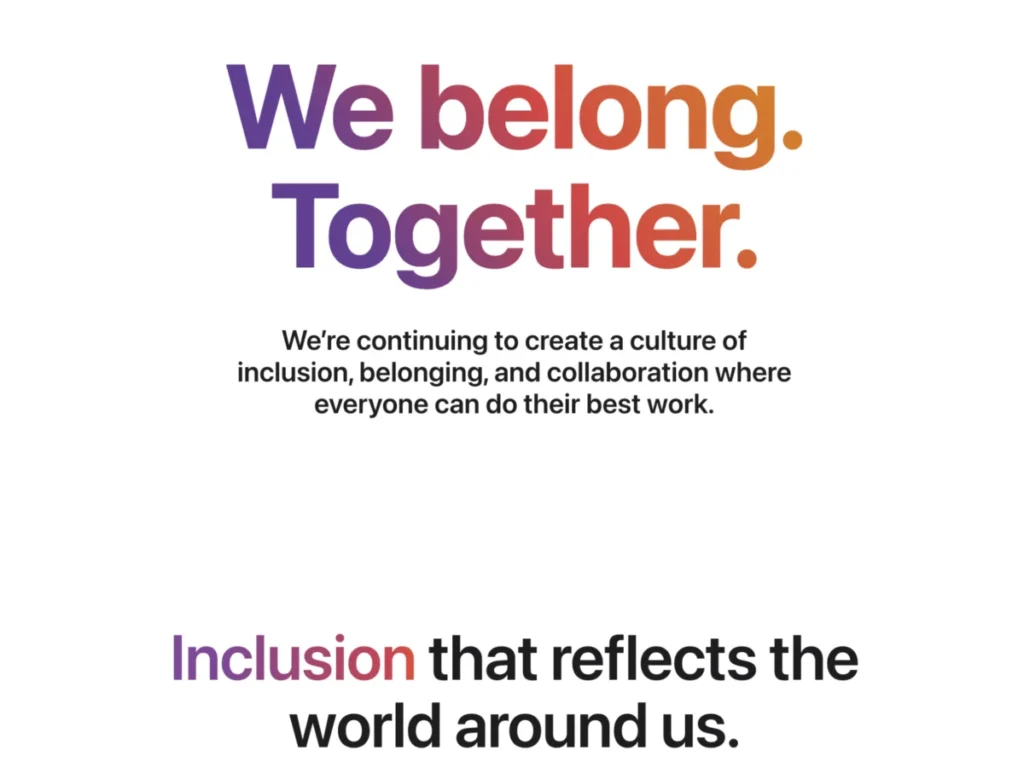
- Apple: CEO Tim Cook publicly reaffirmed Apple’s stance on inclusion initiatives, declaring diversity programs essential to the company’s business strategy. In February 2025, Apple shareholders overwhelmingly rejected a proposal to eliminate DEI training, signaling strong investor support. Apple’s supplier diversity program remained robust, and its 2020 partnership with Historically Black Colleges and Universities continued. The company’s board committed to monitoring global diversity efforts across its international workforce, maintaining its public "Inclusion and Diversity" statement.
- Costco: Costco defended its DEI policies despite rising political debates, asserting that inclusion programs are integral to its business practices. Shareholders largely agreed, and the company experienced positive customer feedback, enhancing its reputation and branding. However, Costco had yet to publicly respond to a letter from 19 state attorney generals urging an end to "unlawful discrimination imposed by the company through diversity, equity and inclusion (DEI) policies."
- Cisco: In January 2025, Cisco CEO Chuck Robbins defended the company’s DEI initiatives in the wake of executive orders, stating, "There’s too much business value." Robbins acknowledged the pendulum swings in political discourse but emphasized the undeniable benefits of a diverse workforce, focusing on finding "equilibrium" rather than abandoning commitments.
Companies Evolving Their DEI Commitments:
A third category of companies sought to adapt their DEI strategies, often by renaming programs, reallocating functions, or subtly adjusting language to align with legal advice while attempting to preserve the spirit of inclusion.
- JPMorgan Chase: CEO Jamie Dimon positioned JPMorgan Chase as a leader in maintaining DEI commitments amid political scrutiny, stating the company would continue to "reach out to the Black community, Hispanic community, the LGBT community, the veterans community." However, the company later changed the name of its diversity program to DOI, with the "O" standing for "opportunity." Some training was reduced, and certain programs were moved to other departments, such as HR, aligning with legal advice for companies during this period. This represented a strategic pivot to emphasize broad opportunity and integration rather than explicitly race or gender-focused initiatives.
- Disney: Disney announced updates to its LGBTQ+ support programs, reaffirming its stance on inclusion despite political pushback. The company upheld its commitment to gender-affirming care and diverse representation, garnering shareholder and consumer support. However, FCC Chairman Brendan Carr ordered a DEI investigation in March 2025 to "ensure that Disney and ABC have not been violating FCC equal employment opportunity regulations by promoting invidious forms of DEI discrimination." Disney had also attempted to "toe-the-line" by changing its performance metric from "Diversity & Inclusion" to a "Talent Strategy," focusing more on business outcomes.
- Lego Group: The Lego Group, a long-time supporter of DEIB initiatives, abruptly removed all explicit diversity terms from its 2024 annual sustainability report. Words like "people of color" and "LGBTQ+" were removed, as were three instances of "diversity and inclusion" from its 2023 mission statement. The company, the world’s largest toy maker, adopted objective terms used by the U.S. government, such as "appointments based on merit." This demonstrated the widespread impact of the U.S. government’s DEI crackdown, extending even to companies with significant operations on the European continent.
Stakeholder Reactions and Market Ripple Effects
The widespread adjustments to DEI initiatives triggered diverse and often intense reactions from key stakeholders, impacting workplace dynamics, consumer behavior, and investor confidence.
Employee Sentiment and Workplace Dynamics:
Employees emerged as one of the most directly affected groups. Many voiced concerns that reducing inclusion programs would lead to less equitable workplaces, widen disparities in leadership representation, and hinder career advancement for underrepresented employees. A report from MyPerfectResume found that 39.1% of U.S. workers reported a rollback in DEI practices. This had tangible workplace consequences: 54.2% of LGBTQ+ workers in companies that rolled back DEI efforts experienced increased stigma, compared to 24.9% in organizations that adapted their policies to the new climate. These findings underscored deep apprehension among employees, indicating that companies retracting initiatives risked losing key team members who value an inclusive environment. Inclusive workplaces are often linked to greater innovation, collaboration, and job satisfaction, suggesting that unsupported employees might seek opportunities with competitors prioritizing diversity. Some companies tried to mitigate this by shifting DEI efforts into broader leadership development programs, but employees often argued that a lack of accountability and formalized structures rendered these less effective. The Human Rights Campaign Foundation (HRCF) further highlighted the risks of labor churn and reduced workplace output, potentially compromising overall industry productivity.
Consumer Behavior and Brand Loyalty:
Consumer reactions were mixed, with some groups applauding the changes and others expressing frustration. Companies reducing or eliminating DEI initiatives risked alienating a growing and influential customer base that prioritizes corporate social responsibility. Market research indicates that diverse consumers—including Black, Hispanic, LGBTQ+, and women-led households—collectively account for trillions of dollars in annual purchasing power. Businesses neglecting these demographics faced potential long-term brand erosion and diminished customer loyalty. The backlash against Target by the Twin Cities Pride Festival served as a stark example, signaling a broader trend where advocacy groups and consumers hold companies accountable. Conversely, brands like Costco and Apple, which upheld inclusive efforts, often saw strong consumer support, reinforcing the business value of engaging with diverse communities. Furthermore, research consistently shows that younger generations, particularly Gen Z and Millennials, increasingly base purchasing decisions on a company’s values, including its commitment to diversity and inclusion. Companies scaling back DEI programs risked losing market share among these demographics, for whom representation and inclusion are integral to brand loyalty.
Investor Scrutiny and ESG Considerations:
Major investors, including Wall Street banks and ESG-focused funds, expressed varied concerns over DEI rollbacks. Some argued that reducing diversity programs posed an Environmental, Social, and Governance (ESG) risk, potentially negatively impacting long-term financial performance. Apple shareholders’ rejection of anti-DEI proposals indicated sustained investor interest in inclusive corporate strategies. However, in response to the changing legal climate, prominent investors like State Street, BlackRock, and Vanguard adjusted their traditional board diversity requirements. State Street, for instance, removed the criterion for 30% women directors, reflecting a pragmatic adaptation to the evolving regulatory environment rather than necessarily a complete abandonment of diversity principles. State investment also played a role; states like California and New York continued to advocate for DEI metrics in their portfolios, while others sought to divest from companies promoting diversity programs. These conflicting approaches highlighted the ongoing debate over whether DEI efforts contribute to long-term financial success or represent an unnecessary expenditure in the new political climate.
Navigating the Legal Landscape and Future Implications
The latest developments, particularly the March 2026 DEI EO, mandated greater stringency for federal contractors and subcontractors. Affected organizations are now required to add specific contractual clauses reviewing existing employment practices, data use, and subcontractor oversight. These changes are anticipated to drive further compliance adjustments and potentially more subtle DEI rollbacks across the broader private sector.
In this environment, it has become increasingly crucial for employers to adopt a de-risking strategy that prioritizes skills-based hiring. This approach allows companies to fulfill federal mandates by focusing on objective qualifications and competencies rather than identity-focused talent strategies. AI-driven reliability in skills-based hiring emerges as a vital tool, enabling decision-makers to tactfully shift from identity-centric frameworks to outcome-validated ones. Such frameworks are championed as the hallmark of an inclusive and productive culture, aligning with legal requirements while still striving for diverse talent pools.
The landscape of corporate DEI initiatives is undeniably shifting rapidly, and businesses must comprehend how these changes impact their brand, workforce, and consumer trust. Organizations are reassessing their DEI commitments not only to avoid legal action but also to navigate the intricate balance between compliance and their stated values. Companies that reduce or eliminate DEI efforts risk alienating top talent, diminishing workplace morale, and weakening their overall employer brand. Conversely, those that thoughtfully adapt, leveraging tools like inclusive language analyzers, can maintain a commitment to diversity even in the face of external pressures. Company leaders, such as Cisco’s CEO, are spearheading a focus on the future of workplace inclusion through thoughtful, data-driven strategies, demonstrating that while the methods may evolve, the underlying pursuit of a capable and representative workforce remains a strategic imperative. The ongoing evolution of these corporate strategies will define the future of workplace culture and corporate responsibility for years to come.