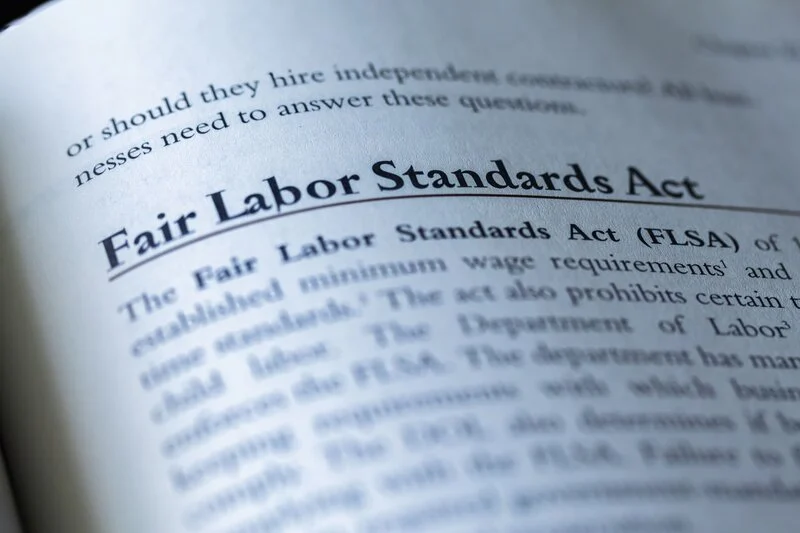
The U.S. Department of Labor officially moved on Thursday to rescind a significant regulatory overhaul from the administration of former President Joe Biden, effectively lowering the salary threshold required for workers to be exempt from overtime pay under the Fair Labor Standards Act (FLSA). By rolling back the 2024 mandate, the Department is returning to the standards established during President Donald Trump’s first term in office, a move that signals a dramatic shift in federal labor policy and a victory for various business advocacy groups that had challenged the Biden-era increases in federal court.
The decision, announced on May 14, 2026, marks the end of a multi-year legal and political tug-of-war regarding which salaried employees are entitled to time-and-a-half pay for working more than 40 hours per week. Under the new directive, the annual salary threshold for "white-collar" exemptions—covering executive, administrative, and professional (EAP) employees—will revert to $35,568 per year, or $684 per week. This replaces the Biden administration’s more aggressive threshold, which had been set to climb to over $58,000 by 2025.
Historical Context and the Evolution of the Salary Threshold
The Fair Labor Standards Act of 1938 established the baseline for worker protections in the United States, including the minimum wage and the requirement for overtime pay. However, the law has long provided exemptions for EAP employees, provided they meet a three-part test: they must be paid on a salary basis, their salary must meet a minimum specified amount, and their primary job duties must involve high-level management or professional tasks.
For decades, the salary threshold remained stagnant, often failing to keep pace with inflation. In 2004, the threshold was set at $23,660. The Obama administration attempted to nearly double this figure in 2016, proposing a jump to $47,476. However, that rule was struck down by a federal judge in Texas just days before it was set to take effect, on the grounds that the Department of Labor (DOL) had exceeded its authority by making salary the primary factor for exemption rather than the nature of the employee’s duties.
Following that legal defeat, the Trump administration in 2019 implemented a more modest increase to $35,568. When President Biden took office, his Department of Labor sought to aggressively expand overtime protections, arguing that the 2019 levels left millions of lower-middle-class workers without fair compensation for long hours. The Biden rule, finalized in April 2024, initially raised the threshold to $43,888 on July 1, 2024, with a second scheduled increase to $58,656 on January 1, 2025. It also included a mechanism for automatic updates every three years.
The 2026 Reversal: Chronology of the Policy Shift
The decision to walk back the 2024 rule comes after nearly two years of administrative review and sustained litigation. The timeline of this policy reversal reflects the broader ideological shift in executive governance following the most recent transition of power.
- April 2024: The Biden DOL publishes the final rule, aiming to extend overtime eligibility to an estimated 4 million additional workers.
- July 2024: The first phase of the Biden rule takes effect, raising the threshold to $43,888. Several states and business groups file lawsuits, primarily in the U.S. District Court for the Eastern District of Texas.
- November 2024 – January 2025: Legal challenges gain momentum. Critics argue the $58,656 threshold effectively eliminates the "duties test" for a large swath of the American workforce, repeating the legal errors of the Obama administration.
- January 2025: A change in administration leads to an immediate freeze on pending regulations and a stay in ongoing litigation as the DOL begins "re-evaluating" its stance on the FLSA exemptions.
- May 14, 2026: The DOL officially issues the notice of rescission, reverting the standard to the 2019 levels and removing the automatic update mechanism.
Supporting Data and Economic Impact
The reversal is expected to have a profound impact on the American labor market, particularly in sectors with high numbers of lower-level management positions, such as retail, hospitality, and non-profit organizations.
According to data from the Bureau of Labor Statistics (BLS) and independent economic analyses, the Biden administration’s $58,656 threshold would have covered roughly 35% of all full-time salaried workers in the United States. By reverting to the $35,568 threshold, the DOL is effectively removing overtime eligibility for millions of workers who earned between those two figures.
For businesses, the rollback represents a significant reduction in anticipated labor costs. The DOL’s 2024 economic impact study estimated that the higher threshold would result in a $1.5 billion transfer of income from employers to employees in the first year alone through increased wages and overtime pay. Furthermore, businesses were expected to incur nearly $700 million in direct administrative and adjustment costs. By returning to the 2019 standard, the DOL argues it is providing "regulatory certainty" and "relieving small businesses of burdensome compliance costs during a period of economic fluctuation."
Official Responses and Stakeholder Reactions
The reaction to Thursday’s announcement was divided along predictable lines, reflecting the ongoing debate over the balance of power between labor and capital.
In a statement released shortly after the filing, a spokesperson for the Department of Labor stated: "The Department is committed to a balanced approach to the Fair Labor Standards Act. By returning to the 2019 salary levels, we are ensuring that the EAP exemption remains a functional tool for employers while respecting the statutory intent of the law, which emphasizes the duties performed by an employee rather than a one-size-fits-all salary floor."
Business groups, led by the U.S. Chamber of Commerce and the National Federation of Independent Business (NFIB), praised the move. "The Biden administration’s overtime rule was an overreach that ignored the economic realities of different regions and industries," said a representative for the Chamber. "A manager in rural Mississippi does not have the same cost of living as a manager in Manhattan. This rollback allows businesses the flexibility to structure their workforces without the threat of arbitrary federal mandates."
Conversely, labor advocates and Democratic lawmakers decried the decision as a blow to the American middle class. The AFL-CIO issued a sharp rebuke, stating: "This is a direct pay cut for millions of working people. These are managers and professionals who are often required to work 50, 60, or 70 hours a week without a single penny of extra pay. By reverting to an outdated and inadequate salary threshold, the government is essentially giving corporations a license to exploit their employees."
Legal and Administrative Implications
The primary legal justification for the walk-back hinges on the "duties test." Historically, the DOL has used a combination of salary and job description to determine exemption status. However, conservative legal scholars and several federal judges have argued that if the salary threshold is set too high, it renders the "duties" portion of the test irrelevant.
In previous rulings, the courts have suggested that the DOL has the authority to set a "floor" to screen out obviously non-exempt employees, but it cannot use the salary level to define the exemption itself. The 2026 rescission aligns with this judicial philosophy, asserting that the $35,568 level is a more "reasonable proxy" for distinguishing between hourly workers and exempt professionals.
Furthermore, the removal of the automatic updating mechanism is a significant administrative shift. The Biden-era rule had sought to automate threshold increases every three years based on prevailing wage data. The current DOL leadership argued that such "evergreen" provisions bypass the notice-and-comment requirements of the Administrative Procedure Act (APA) and deprive the public of the opportunity to weigh in on significant economic changes.
Broader Implications for the Labor Market
The return to the Trump-era overtime rules occurs at a time when the U.S. labor market is undergoing structural shifts. Remote work, the rise of the gig economy, and the increasing use of artificial intelligence in professional roles have complicated the traditional definitions of "executive" and "administrative" work.
Some analysts suggest that while the federal threshold is lowering, the impact may be mitigated in certain parts of the country by state-level regulations. States like California, New York, and Washington have their own salary thresholds for overtime exemptions that are significantly higher than the federal standard. In these jurisdictions, employers must comply with whichever law—state or federal—is more favorable to the employee. Consequently, the DOL’s move may lead to a widening "protection gap" between workers in progressive states and those in states that rely solely on the federal FLSA baseline.
Moreover, the decision may influence how companies handle "misclassification" of workers. With a lower salary threshold, there is less financial incentive for employers to misclassify hourly workers as exempt managers to avoid overtime. However, labor advocates warn that it may also encourage "title inflation," where low-wage workers are given managerial titles to exempt them from overtime pay, even if their primary duties remain largely manual or clerical.
Conclusion
The U.S. Department of Labor’s decision to walk back the Biden-era overtime rule represents a major pivot in federal employment policy. By reverting to the $35,568 threshold, the administration has prioritized business flexibility and regulatory stability over the broad expansion of overtime eligibility.
As the rescission takes effect, the focus will likely shift back to the courts and individual state legislatures. For millions of American workers, the change means that the prospect of overtime pay will once again depend more heavily on the specific nature of their job duties rather than the size of their paycheck. For the legal community, it serves as a reminder of the volatile nature of administrative law and the enduring influence of executive philosophy on the day-to-day operations of the American economy.