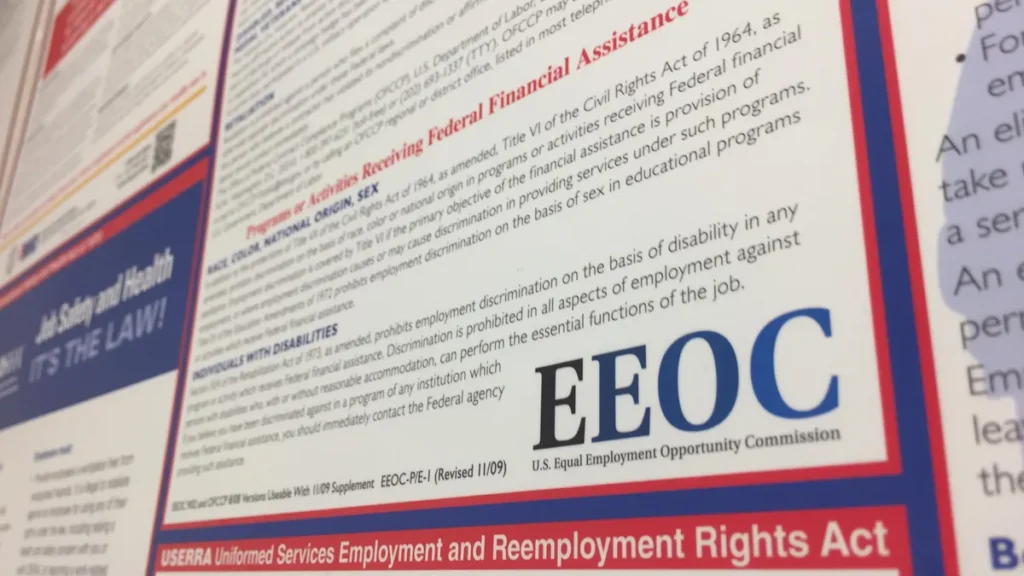
The U.S. Equal Employment Opportunity Commission (EEOC) has filed a lawsuit against Lori’s Gifts, a prominent gift shop retailer operating primarily within hospitals, alleging widespread disability discrimination in its hiring processes. The federal agency claims that Lori’s Gifts systematically rejected qualified candidates with disabilities by automatically screening out applicants who indicated they could not meet physical requirements such as standing or walking for up to five hours or lifting up to 30 pounds, without adequately assessing reasonable accommodations or the actual essential functions of the roles. The lawsuit, publicized on April 24, 2026, underscores the EEOC’s continued commitment to enforcing the Americans with Disabilities Act (ADA) and ensuring equal employment opportunities for individuals with disabilities. The company has since stated that the alleged issues stemmed from aspects of a third-party applicant tracking system and that immediate corrective actions have been taken.
The Core Allegations and Legal Framework
At the heart of the EEOC’s complaint are allegations that Lori’s Gifts utilized job descriptions and an automated screening process that effectively barred individuals with certain physical disabilities from even being considered for positions. The agency contended that the listed requirements, such as prolonged standing and lifting specific weights, were often not genuinely essential functions of the jobs or could be reasonably accommodated. This practice, the EEOC argues, constitutes a direct violation of the Americans with Disabilities Act, which mandates that employers provide reasonable accommodations to qualified individuals with disabilities unless doing so would cause undue hardship.
The ADA, enacted in 1990, is a landmark civil rights law that prohibits discrimination against individuals with disabilities in all areas of public life, including employment. Title I of the ADA specifically addresses employment discrimination, requiring employers with 15 or more employees to provide equal opportunity to qualified individuals with disabilities in job application procedures, hiring, firing, advancement, compensation, job training, and other terms, conditions, and privileges of employment. A "qualified individual with a disability" is defined as a person who, with or without reasonable accommodation, can perform the essential functions of the employment position that such individual holds or desires. The EEOC is the federal agency responsible for enforcing the ADA’s employment provisions.
A Closer Look at the Americans with Disabilities Act
Understanding the nuances of the ADA is crucial to comprehending the EEOC’s claims against Lori’s Gifts. The Act does not prohibit employers from establishing physical requirements for jobs; rather, it requires that these requirements be truly "essential functions" of the position and that employers consider reasonable accommodations for qualified individuals who cannot meet them due to a disability.
Essential Functions: These are the fundamental job duties of the employment position the individual holds or desires. A job function may be considered essential for several reasons, including:

- The position exists to perform that function.
- There are a limited number of employees available among whom the performance of that job function can be distributed.
- The function is highly specialized, and the incumbent is hired for his or her expertise or ability to perform that particular function.
The EEOC provides guidance on how to determine essential functions, emphasizing that employers should look beyond formal job descriptions to the actual work performed by incumbents, the consequences of not performing the function, and the collective bargaining agreements. The 6th U.S. Circuit Court of Appeals, as noted by the EEOC, has previously ruled that while job descriptions offer evidence, they are "not dispositive" and courts must examine the "actual reality of the performance of the job." This legal precedent highlights that merely listing a requirement in a job description does not automatically make it an essential function, especially if alternative ways of performing the job or accommodations are feasible.
Reasonable Accommodation: This refers to any modification or adjustment to the work environment, or to the manner or circumstances under which a job is customarily performed, that enables a qualified individual with a disability to perform the essential functions of that position. Examples include:
- Making existing facilities readily accessible to and usable by individuals with disabilities.
- Job restructuring, part-time or modified work schedules.
- Reassignment to a vacant position.
- Acquiring or modifying equipment or devices.
- Adjusting or modifying examinations, training materials, or policies.
- Providing qualified readers or interpreters.
The process of determining a reasonable accommodation often involves an "interactive process" between the employer and the applicant/employee to identify the precise limitations resulting from the disability and potential accommodations that could overcome those limitations. The EEOC’s complaint suggests that Lori’s Gifts’ automated screening bypassed this crucial interactive process.
The EEOC’s Enforcement Role and Disability Discrimination Landscape
The EEOC plays a vital role in upholding civil rights in the workplace by investigating charges of discrimination, conciliating disputes, and, when necessary, filing lawsuits. Each year, the EEOC receives tens of thousands of charges alleging various forms of discrimination. Disability discrimination consistently ranks among the most common types of charges filed.
According to the EEOC’s most recent publicly available data, charges alleging disability discrimination have remained consistently high. For instance, in fiscal year 2023, disability discrimination charges accounted for a significant percentage of all charges filed, underscoring the ongoing challenges faced by individuals with disabilities in the job market. Many of these charges involve hiring practices, where biases, both explicit and implicit, or systemic barriers like those alleged against Lori’s Gifts, prevent qualified individuals from securing employment. The EEOC’s focus on systemic discrimination, which involves patterns or practices of discrimination that have a broad impact on an industry, profession, company, or geographic area, means that cases like Lori’s Gifts are prioritized due to their potential to affect numerous applicants.
The agency’s consistent enforcement efforts serve multiple purposes: to secure justice for victims of discrimination, to deter future discriminatory practices, and to educate employers on their legal obligations under federal anti-discrimination laws.

Specific Allegations and the Applicant Experience
The EEOC’s complaint detailed the experience of at least one specific plaintiff, whose encounter with Lori’s Gifts’ hiring process illustrates the alleged discriminatory practices. This candidate, who had a physical impairment limiting her ability to walk or stand for extended periods, interviewed for a position at one of Lori’s Gifts’ stores. During the interview, she reportedly discussed her limitations with the hiring manager, who acknowledged the availability of a stool for employees to use periodically and even mentioned using it herself during shifts. This interaction suggested a potential for accommodation within the actual work environment.
However, the promising initial exchange was allegedly contradicted by a subsequent communication from Lori’s Gifts. The candidate was later informed that standing for five hours was a non-negotiable requirement for the position and that she would not be hired if she could not meet it. The company then proceeded to fill the position with another applicant, effectively denying the disabled candidate an opportunity based on a requirement that the EEOC contends was neither truly essential nor explored for reasonable accommodation.
Further bolstering its claim, the EEOC alleged that many of the listed responsibilities for store employees could, in fact, be performed with intervals of standing and sitting. Moreover, regarding the requirement to lift 30-pound boxes of merchandise, the agency contended that such boxes could be opened, and the lighter products contained within could be moved piece by piece, negating the need for a single, heavy lift. These details highlight the discrepancy between the stated job requirements and the practical realities of the work, which forms the core of the EEOC’s argument.
Corporate Responsibility and Automated Hiring Systems
Lori’s Gifts, in its response, attributed the alleged incident to "aspects of a third-party applicant tracking system that was implemented several years ago." The company stated that this "minor online procedural issue was corrected immediately when we were notified" and that it has since taken additional steps to address its hiring process and oversight.
This statement brings into focus the increasing reliance of companies on automated hiring systems and the potential for these technologies to inadvertently perpetuate or create discriminatory barriers. While applicant tracking systems (ATS) are designed to streamline the hiring process, manage large volumes of applications, and ensure consistency, their configuration and underlying algorithms can lead to unintended consequences if not carefully designed and monitored for compliance with anti-discrimination laws.
If an ATS is programmed to automatically screen out candidates based on their responses to questions about physical abilities without an embedded mechanism for evaluating reasonable accommodations or the true essentiality of those functions, it can systematically exclude qualified individuals with disabilities. This scenario underscores the critical need for employers to rigorously vet their HR technologies, ensuring that they align with legal obligations and promote equitable hiring practices. Companies must remain responsible for the outcomes of their automated systems, as these systems act as extensions of their hiring policies.

Statements from the Parties Involved
Debra Lawrence, an EEOC regional attorney, reiterated the agency’s stance on equal opportunity, stating in the agency’s press release, "Federal law prohibits employers from attempting to screen out or exclude applicants with disabilities. Applicants with disabilities must be provided with an equal opportunity to seek employment." This statement encapsulates the EEOC’s core mission to remove artificial barriers to employment for protected groups.
Lori’s Gifts, while acknowledging the procedural issue, emphasized its commitment to its values. "Our vision is to be a trusted place for joy and support when people need it most, and that commitment extends not only to the patients, families, caregivers, and hospital partners we serve, but also to our highly valued team members," the company said. "We take our responsibilities as a workplace and as a partner very seriously." This response suggests an intent to rectify the situation and uphold its corporate values of support and care, which, by extension, should include its employees and prospective hires. The agreement to settle the lawsuit, as indicated by the news, would likely involve remedial measures and potentially monetary relief for affected individuals.
Broader Implications for Employers
The Lori’s Gifts case serves as a potent reminder for all employers, particularly those utilizing high-volume hiring processes or automated systems, about the critical importance of ADA compliance. The implications extend beyond just avoiding litigation:
- Review of Job Descriptions: Employers must regularly review and update job descriptions to ensure they accurately reflect the "essential functions" of each role. These descriptions should not include requirements that are marginal or that can be performed with reasonable accommodation.
- Scrutiny of Automated Systems: Companies must audit their applicant tracking systems and other hiring technologies to ensure they do not contain embedded biases or discriminatory filters. The screening criteria used by these systems should be legally compliant and allow for the consideration of reasonable accommodations.
- Training for Hiring Managers: Comprehensive training for hiring managers and HR personnel is essential. They need to understand their obligations under the ADA, how to conduct an interactive process, and how to evaluate requests for reasonable accommodation.
- Interactive Process: Employers should establish clear procedures for engaging in the interactive process when an applicant or employee discloses a disability and requests an accommodation. This process should be flexible and individualized.
- Reputational and Financial Risks: Beyond legal fees and potential damages, discrimination lawsuits can severely damage a company’s reputation, affecting its ability to attract talent, retain customers, and maintain positive public relations. Settlements and judgments can also incur substantial financial costs.
Best Practices for ADA Compliance in Hiring
To mitigate the risk of disability discrimination claims and foster truly inclusive workplaces, employers should adopt several best practices:
- Proactive Review of Policies: Regularly review all employment policies, procedures, and practices, from recruitment and hiring to performance management and termination, for ADA compliance.
- Focus on Abilities, Not Disabilities: Shift the focus during interviews and candidate assessments to what an individual can do, with or without reasonable accommodation, rather than what they cannot do.
- Disability-Inclusive Language: Use inclusive language in job postings and descriptions that encourages applicants with disabilities to apply.
- Reasonable Accommodation Policy: Develop and communicate a clear, accessible policy on reasonable accommodation, including how employees and applicants can request it.
- Diverse Interview Panels: Utilize diverse interview panels to reduce unconscious bias in the hiring process.
- Accessibility in Recruitment: Ensure that all stages of the recruitment and application process, including online platforms, are accessible to individuals with various disabilities.
Conclusion: Fostering Inclusive Workplaces
The lawsuit against Lori’s Gifts underscores the ongoing need for vigilance and proactive measures to ensure equitable employment practices for individuals with disabilities. While technological advancements in HR offer efficiency, they must be carefully managed to prevent the creation of new barriers to employment. The EEOC’s action serves as a powerful reminder that the spirit and letter of the Americans with Disabilities Act must be honored, fostering workplaces where all qualified individuals, regardless of their physical abilities, have an equal opportunity to contribute and thrive. The resolution of this case will undoubtedly set a precedent and reinforce the imperative for businesses to prioritize inclusivity and accessibility in every aspect of their operations.