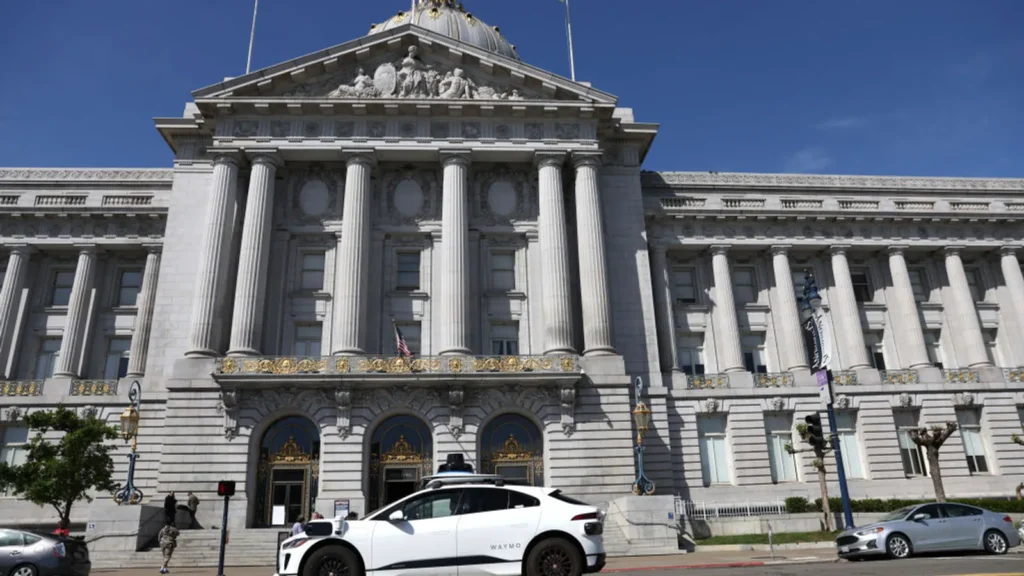
The U.S. Equal Employment Opportunity Commission (EEOC) has initiated a federal court action to enforce an administrative subpoena against the City and County of San Francisco, citing significant delays and non-compliance in its investigation into allegations of race and gender discrimination stemming from mandatory diversity, equity, and inclusion (DEI) training. The federal agency’s move, filed on September 3, 2026, in the U.S. District Court for the Northern District of California, signals an intensifying federal oversight of DEI programs, particularly those that may cross into discriminatory practices against specific demographic groups. At the heart of the dispute are claims that mandatory "Anti-Racism Fellowship Seminars" featured "derogatory and vitriolic statements" directed at White people and White women, prompting a former City employee to file a formal complaint.
The Genesis of the Controversy: Allegations of Discriminatory Training
The controversy began with a formal charge of discrimination filed by a former employee of the San Francisco Department of Public Health. According to the EEOC’s filing, this employee alleged that she was compelled by her supervisor to attend a series of 16 four-hour "Anti-Racism Fellowship Seminars." These sessions, facilitated by an external contractor, are purported to have been a cornerstone of the City’s broader DEI initiatives. The charging party, whose identity remains protected under EEOC investigative protocols, claimed that the instructor leading these seminars repeatedly made statements that were both derogatory and vitriolic concerning White individuals, and specifically White women. Further allegations included claims that the instructor "spoke down" to the charging party and other female leaders, instructing them to adopt a "diminutive manner" of speaking. These accusations paint a picture of a workplace environment where mandated training, intended to foster inclusivity, allegedly devolved into a platform for discriminatory rhetoric. Such claims, if substantiated, represent a significant departure from the foundational principles of federal anti-discrimination laws, which aim to protect all employees regardless of race or gender.
The EEOC, tasked with enforcing federal laws prohibiting employment discrimination, launched its investigation into these serious allegations in June 2024. As part of its standard investigative procedure, the agency issued an initial request for information to the City and County of San Francisco. This was followed by a supplemental request in March 2025, seeking further documentation pertinent to the discrimination charge. The City partially complied with the initial requests, providing a segment of the documents by an April 2025 deadline. However, according to the EEOC, San Francisco continuously withheld crucial documents and information throughout the subsequent year, despite repeated notifications from the federal agency regarding these deficiencies. By mid-August 2026, the City and County had allegedly still failed to produce information and documents falling under three critical categories: all materials related to the instructor’s curriculum and the seminars themselves; a searchable electronic database of all employees who attended or enrolled in these mandatory seminars; and all documents pertaining to any investigations previously conducted against the external instructor. The EEOC emphasized in its filing that, "Despite multiple extensions, reminders, and assurances, Respondent has continued to produce documents in fragmented installments that leave substantial gaps in critical categories of information necessary for a timely and thorough investigation." This ongoing resistance to full disclosure has ultimately led to the EEOC’s decision to seek judicial intervention to compel compliance.
The Legal Framework: EEOC’s Authority and Subpoena Enforcement
The EEOC’s authority to conduct investigations and issue administrative subpoenas is a cornerstone of its mission to combat employment discrimination. Under Title VII of the Civil Rights Act of 1964, the Age Discrimination in Employment Act (ADEA), the Americans with Disabilities Act (ADA), and other federal statutes, the EEOC is empowered to investigate charges of discrimination. A key component of this power is the ability to gather evidence, which often includes demanding documents and testimony through subpoenas. When an employer or entity fails to comply with such a subpoena, the EEOC can petition a federal district court to enforce it. Courts generally uphold EEOC subpoenas if the information sought is relevant to the charge under investigation and the request is not unduly burdensome or vague.
In this specific case, the EEOC argues that the requested documents are not only relevant but absolutely critical to understanding the scope and nature of the alleged discrimination. The seminar curriculum and materials are essential for assessing the content of the training and verifying the charging party’s claims about "derogatory and vitriolic statements." A searchable database of attendees is vital for identifying potential victims or witnesses of similar discrimination, allowing the EEOC to determine if the alleged issues are isolated incidents or indicative of a broader pattern or practice. Furthermore, documents related to any prior investigations into the external instructor are crucial for evaluating the City’s due diligence in selecting and overseeing its training providers, as well as establishing a pattern of conduct by the instructor. The agency’s petition highlights that the City’s obstruction has "delayed and hampered" its ability to conduct a "timely and thorough investigation," thereby impeding justice for the aggrieved employee and potentially others. The legal standard for subpoena enforcement is typically broad, favoring the investigative agency, as long as the requests are not frivolous or irrelevant. This legal posture often places the burden on the subpoenaed party to demonstrate why they should not comply, rather than on the EEOC to prove absolute necessity at this early stage.
Official Reactions and Anticipated Arguments
In response to the EEOC’s forceful action, San Francisco officials have indicated their intent to challenge the subpoena enforcement. Jen Kwart, communications director for City Attorney David Chu, stated via email that "San Francisco officials responded to the EEOC’s motion and plan to oppose it. We look forward to discussing this matter with the Court." While specific arguments from the City Attorney’s office have not been publicly detailed, legal experts anticipate that San Francisco’s defense will likely revolve around several common points in subpoena enforcement challenges. These could include claims that the EEOC’s requests are overly broad or unduly burdensome, requiring the production of an excessive volume of documents or information that is difficult to compile. The City might also argue that some of the requested information, such as personal data of attendees, falls under privacy protections, though such concerns are typically addressed through protective orders or redaction processes rather than outright refusal.
Another potential line of defense could involve questioning the relevance of certain document categories, attempting to narrow the scope of the subpoena. For instance, while the curriculum is clearly relevant, the City might argue that a complete searchable database of all attendees, beyond a sample, is not strictly necessary for the investigation of a single employee’s charge. Furthermore, the City could attempt to demonstrate that it has made good-faith efforts to comply and that any delays were due to administrative complexities or genuine disagreements over the scope of the requests, rather than deliberate obstruction. However, given the EEOC’s explicit statement about "fragmented installments" and "substantial gaps" over an extended period, such arguments might face an uphill battle in court. The City’s legal team will need to present compelling reasons to a federal judge why it should not be compelled to produce the outstanding information, especially in the face of federal anti-discrimination mandates. The outcome of these arguments will not only impact the immediate investigation but could also set a precedent for how municipalities engage with federal agencies on sensitive DEI matters.
Broader Context: DEI Initiatives Under Scrutiny

The San Francisco case is not an isolated incident but rather a significant development within a broader national trend of increasing scrutiny and legal challenges against diversity, equity, and inclusion (DEI) initiatives. While DEI programs gained widespread adoption in recent years, particularly following heightened social justice awareness, their implementation has sparked considerable debate and, in some instances, legal backlash. The core intent of DEI is to create more equitable and inclusive workplaces by addressing historical and systemic biases. However, critics argue that some programs, particularly certain forms of "anti-racism" training, have inadvertently fostered division, promoted essentialist views of race, or even led to reverse discrimination, where individuals from majority groups feel targeted or unfairly treated.
This growing skepticism has led to a surge in charges of "reverse discrimination" or "anti-White bias" filed with the EEOC. These complaints often allege that DEI initiatives, in their zeal to uplift underrepresented groups, have crossed a line into discriminating against majority groups, primarily White employees, or men. The legal landscape surrounding DEI is complex, as employers must navigate the delicate balance of promoting diversity without violating federal anti-discrimination laws that protect all individuals. The EEOC’s proactive stance in enforcing subpoenas related to these cases underscores its commitment to ensuring that DEI programs are implemented in a lawful manner, adhering to the principle of equal opportunity for all, rather than becoming tools for new forms of discrimination. This case highlights the need for organizations to meticulously review their DEI curricula, ensure their training is genuinely inclusive, and avoid content that could be perceived as demeaning or discriminatory toward any group.
Precedents and the EEOC’s Pattern of Enforcement
The EEOC’s action against San Francisco aligns with a discernible pattern of increased enforcement activity concerning DEI policies and alleged reverse discrimination. The agency has demonstrated a willingness to pursue legal action to obtain information deemed necessary for its investigations, particularly when employers are perceived as uncooperative. Two recent high-profile cases illustrate this trend clearly.
Last month, the EEOC concluded a subpoena enforcement proceeding against Nike. The agency had initiated an investigation into alleged anti-White bias within the company’s DEI framework. While the specific details of the allegations remained confidential, the EEOC had sought extensive information from Nike. The legal proceeding ended when Nike provided the requested information to a Missouri federal district court, allowing the investigation to proceed without further judicial compulsion. This outcome reinforced the EEOC’s power to compel information from even large, multinational corporations.
Similarly, in another significant case involving Northwestern Mutual, a federal judge ordered the company to comply with the EEOC’s information requests regarding its DEI policies. In that instance, the EEOC had received a charge alleging that Northwestern Mutual’s performance metrics, possibly influenced by DEI objectives, led to the unlawful failure to promote a White male employee. The court’s decision underscored that companies cannot shield their DEI policies from federal scrutiny when allegations of discrimination arise. These cases collectively send a clear message to employers: while DEI initiatives are encouraged, they are not exempt from legal oversight, and the EEOC will vigorously pursue investigations into any claims of discrimination, regardless of the protected class involved.

Legal experts have consistently noted the EEOC’s strong track record in compelling compliance with its administrative subpoenas. Duane Morris attorneys, in an April virtual presentation, emphasized that the "EEOC is generally likely to succeed in persuading courts to enforce subpoenas for information with respect to its DEI probes." This likelihood stems from the broad interpretative powers granted to the EEOC in determining the relevance of information to an ongoing investigation. Courts typically afford considerable deference to the agency’s judgment in this regard, making it challenging for subpoenaed parties to avoid compliance without a compelling legal reason. The consistency of these judicial outcomes further empowers the EEOC to push for full disclosure, as seen in the San Francisco case.
Implications and the Road Ahead
The immediate implications for the City and County of San Francisco are substantial. Should the federal court rule in favor of the EEOC and enforce the subpoena, the City will be compelled to produce all outstanding documents and information. This process itself will incur significant legal and administrative costs. More critically, the produced documents could provide the EEOC with the evidence it needs to make a finding of discrimination. Such a finding could lead to conciliation efforts, requiring San Francisco to offer remedies to the charging party, which might include monetary compensation, changes in employment terms, or other forms of relief. If conciliation fails, the EEOC could file a lawsuit against the City, seeking broader systemic relief and potentially exposing San Francisco to significant financial penalties and reputational damage.
Beyond San Francisco, the implications for other municipalities, government agencies, and private organizations engaged in DEI initiatives are profound. This case serves as a stark reminder that while the intention behind DEI is to foster inclusion, the implementation must be meticulously managed to avoid creating new forms of discrimination. Organizations are increasingly being advised to conduct thorough legal reviews of their DEI programs, particularly any mandatory training components, to ensure compliance with all federal anti-discrimination laws. This includes scrutinizing content for any language or concepts that could be perceived as biased or discriminatory against any protected group. The emphasis must remain on fostering an equitable environment for all employees, rather than inadvertently alienating or targeting specific demographics.
The San Francisco case will continue to unfold in federal court, with hearings anticipated to determine the validity of the EEOC’s subpoena enforcement petition. The legal battle highlights the ongoing tension between promoting diversity and upholding the principle of equal protection under the law for every individual in the workplace. The outcome will undoubtedly contribute to the evolving jurisprudence surrounding DEI, potentially influencing how such initiatives are structured, reviewed, and challenged across the nation in the years to come.