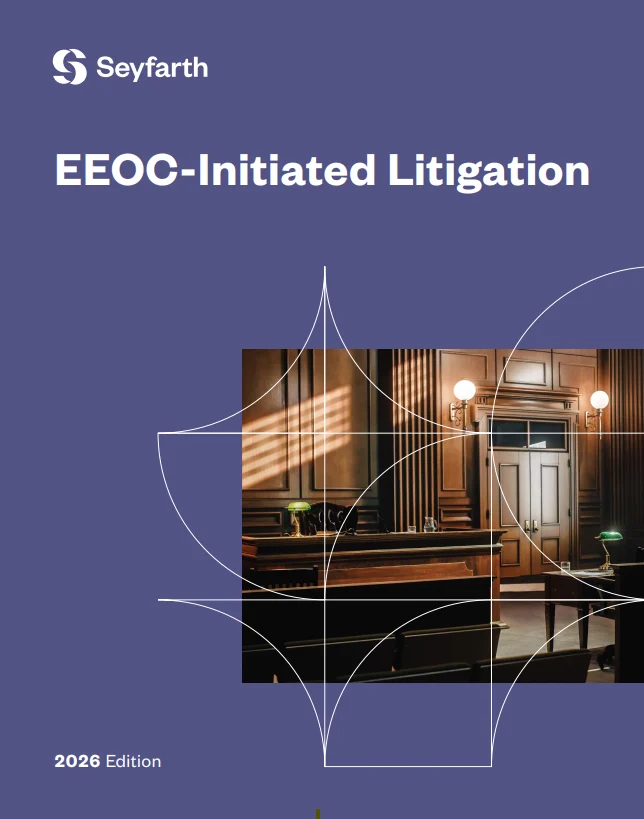
The release of the 2026 edition of the annual analysis of trends and developments in enforcement by the U.S. Equal Employment Opportunity Commission (EEOC) marks a pivotal moment for American labor law and corporate compliance. Compiled by the legal experts at Seyfarth Shaw LLP, this comprehensive desk reference provides a granular examination of the major case filings, judicial decisions, and policy shifts that defined the EEOC’s activity throughout 2025. The report arrives at a time when the Commission has undergone what analysts describe as the most dramatic evolution in its recent history, characterized by aggressive litigation strategies, a focus on emerging technologies, and a significant expansion of protected categories under federal law.
As the primary federal agency responsible for enforcing civil rights laws against workplace discrimination, the EEOC’s annual performance serves as a barometer for the broader legal climate facing employers. The 2026 Edition synthesizes a year of high-stakes litigation and administrative changes, offering a roadmap for corporate counsel, human resources professionals, and operations teams as they navigate an increasingly complex regulatory environment. The data from 2025 suggests that the Commission has not only increased its volume of merit lawsuits but has also shifted its focus toward systemic litigation aimed at correcting industry-wide practices.
A Retrospective of 2025: A Year of Unprecedented Enforcement
The year 2025 was defined by a series of transformative events that reshaped the EEOC’s operational priorities. Following the implementation of the Strategic Enforcement Plan (SEP) for Fiscal Years 2024-2028, the Commission moved decisively to address "vulnerable and underserved" worker populations. This led to a surge in filings related to the Pregnant Workers Fairness Act (PWFA) and the Providing Urgent Maternal Protections for Nursing Mothers (PUMP) Act, both of which saw their first full cycle of rigorous enforcement in 2025.
Statistically, the Commission’s activity in 2025 reflected a heightened state of vigilance. While final official figures for the fiscal year are typically finalized in the first quarter of the following year, the 2026 Edition highlights that the EEOC filed over 150 new merit lawsuits in 2025, a notable increase from the previous two years. Of these, a significant portion—approximately 35%—were classified as systemic lawsuits. These cases are particularly impactful as they involve "pattern or practice" allegations that affect large numbers of employees across multiple locations or entire corporate structures.
The financial implications for employers were equally substantial. In 2025, the EEOC secured hundreds of millions of dollars in monetary relief for workers through both litigation and administrative enforcement (conciliation and mediation). This aggressive pursuit of financial penalties, combined with demands for injunctive relief—such as mandatory training and long-term monitoring—has forced many Fortune 500 companies to overhaul their internal compliance mechanisms.
Technological Frontiers: AI and Algorithmic Bias
One of the most significant chapters in the 2026 Edition focuses on the EEOC’s burgeoning interest in artificial intelligence (AI) and automated systems in the workplace. Throughout 2025, the Commission prioritized cases involving "algorithmic bias," where AI tools used for hiring, performance monitoring, or termination were found to have a disparate impact on protected groups.
The EEOC’s focus on technology is not merely reactive; it is a proactive attempt to set legal precedents in the "Age of AI." In several landmark filings in 2025, the Commission challenged the use of gamified hiring assessments and automated resume-screening software, arguing that these tools often bake in historical biases against older workers and individuals with disabilities. This shift has sent a clear signal to tech vendors and the companies that use their products: the "black box" nature of AI is not a valid defense against discrimination claims.
Chronology of Major 2025 Milestones
To understand the current state of EEOC enforcement, it is essential to review the timeline of key developments that occurred over the past twelve months:
- January 2025: The EEOC issued updated guidance on the intersection of the Americans with Disabilities Act (ADA) and mental health conditions, leading to a wave of filings related to "invisible disabilities."
- April 2025: The first major multi-state settlement under the Pregnant Workers Fairness Act was announced, involving a national retail chain that failed to provide reasonable accommodations for pregnancy-related medical conditions.
- July 2025: A significant judicial ruling in the Seventh Circuit clarified the "reasonable cause" standard for EEOC investigations, providing the Commission with broader latitude to subpoena internal corporate data.
- September 2025: The end of the federal fiscal year saw a "midnight filing" surge, with dozens of lawsuits filed in the final weeks of September, targeting industries ranging from healthcare to hospitality.
- November 2025: The Commission held a public hearing on the use of "DEI (Diversity, Equity, and Inclusion) initiatives" in the wake of shifting Supreme Court jurisprudence, signaling how it intended to protect such programs from emerging legal challenges.
Statistical Breakdown: Statutes and Charges
The 2026 Edition provides a detailed breakdown of the types of discrimination charges that dominated the 2025 landscape. Retaliation remained the most frequently cited charge, appearing in more than 50% of all filings. This trend underscores a persistent challenge for employers: even if an underlying discrimination claim is dismissed, the company can still be held liable if it took adverse action against the employee for reporting the perceived issue.
Disability discrimination under the ADA followed closely behind, driven by a record number of requests for remote work as a reasonable accommodation. As many corporations pushed for a "return to office" in 2025, the friction between corporate policy and ADA requirements became a primary source of litigation.
Sex-based discrimination, including claims under the Equal Pay Act and Title VII, also saw a resurgence. The Commission’s focus on "pay transparency" and the elimination of the "motherhood penalty" resulted in several high-profile settlements in the tech and finance sectors.
Industry Reactions and Corporate Response
The legal community has reacted to these developments with a mixture of caution and strategic recalibration. Legal analysts suggest that the EEOC’s 2025 tactics represent a "return to form" for the agency, which has benefited from a stable quorum of commissioners and a clear ideological mandate.
"The 2026 Edition confirms what we have been seeing on the ground: the EEOC is no longer just looking for individual bad actors; they are looking for structural flaws in how companies manage their human capital," noted one senior employment defense attorney. "The focus on AI and systemic litigation means that even companies with robust HR departments are at risk if their data-driven processes aren’t audited for bias."
In response to the Commission’s aggressive stance, many organizations have shifted toward proactive auditing. This includes conducting pay equity analyses, reviewing AI vendor contracts for indemnification clauses, and implementing "retaliation-proof" internal complaint systems.
Analysis of Implications for 2026
Looking ahead, the 2026 Edition offers several predictions for the coming year. First, the Commission is expected to double down on its enforcement of the PWFA, particularly regarding "modest accommodations" that many employers still struggle to implement correctly. Second, the use of AI in the workplace will remain a top-tier priority, likely resulting in the first "class-action style" AI discrimination settlement.
Furthermore, the political climate will play a crucial role. As the 2026 mid-term election cycle approaches, the EEOC’s leadership may feel pressure to solidify its gains and finalize pending investigations. Employers should expect a continued high volume of subpoenas and "Requests for Information" (RFIs) as the Commission seeks to build its 2026 litigation docket.
The report also highlights a growing trend of "inter-agency cooperation." In 2025, the EEOC frequently collaborated with the Department of Labor (DOL) and the National Labor Relations Board (NLRB) to share information on employers suspected of multiple violations. This "whole-of-government" approach means that an EEOC investigation could quickly trigger audits from other federal agencies.
Conclusion: A Reference for Strategic Decision-Making
The EEOC-Initiated Litigation: 2026 Edition serves as more than just a summary of past events; it is a strategic tool designed to empower decision-makers. By analyzing the patterns of the past year, the report allows employers to identify their own vulnerabilities before they become the subject of a federal investigation.
The dramatic changes witnessed in 2025—from the rise of AI litigation to the rigorous enforcement of new maternal protections—suggest that the "standard" approach to employment law is no longer sufficient. To mitigate risk in 2026, companies must adopt a more dynamic and data-driven approach to compliance, ensuring that their policies not only meet the letter of the law but also align with the EEOC’s evolving interpretation of workplace justice.
As the legal landscape continues to shift, the insights provided in this annual analysis remain an essential resource for those charged with protecting both the workforce and the corporate bottom line. The message for 2026 is clear: the EEOC is more active, more technologically savvy, and more focused on systemic change than ever before. Organizations that fail to adapt to this new reality may find themselves at the center of the next major enforcement action.