The U.S. Equal Employment Opportunity Commission (EEOC) concluded its 2025 fiscal year on September 30, revealing a dramatic decline in enforcement activity that has sent ripples through the legal and corporate sectors. Despite entering the year with a robust budget and a Democratic-led majority of Commissioners, the agency filed just 93 merit lawsuits—the lowest volume recorded in a decade and among the lowest in the past 30 years. This statistical retreat marks a sharp departure from the aggressive litigation strategy seen during the Biden administration and reflects the profound impact of the Trump administration’s swift leadership changes, budget recalibrations, and a fundamental pivot in enforcement philosophy.
The fiscal year, which runs from October 1 to September 30, began with expectations of a watershed year for the Commission. Following a surge in FY 2023, where the agency filed 144 merit lawsuits, many legal analysts predicted that the newly installed Democratic majority would leverage its resources to tackle systemic discrimination. However, the political transition following the November 2024 election brought unprecedented structural changes to the agency, leading to a "roller-coaster" year for field staff and employers alike.
A Chronology of Leadership Transitions and Constitutional Challenges
The trajectory of the EEOC’s 2025 fiscal year was largely dictated by the change in presidential administrations. While typical transitions involve the appointment of new leadership, the actions taken in early 2025 were notably aggressive and, in some cases, without legal precedent.
In late January 2025, President Trump elevated Commissioner Andrea Lucas to the position of Acting Chair. Simultaneously, he terminated General Counsel Karla Gilbride, a Biden appointee who had been instrumental in the agency’s recent litigation spike. In a move that tested the constitutional limits of presidential power over independent agencies, President Trump also fired Commissioners Charlotte Burrows and Jocelyn Samuels. Both had several years remaining on their appointed terms.
This purge left the EEOC without a quorum, as only Acting Chair Lucas and Commissioner Kalpana Kotagal remained. Under the agency’s governing rules, the lack of a quorum significantly restricts the scope of litigation the EEOC can initiate. While the General Counsel maintains a "delegation of authority" to file routine cases, this authority does not extend to "systemic" or "pattern or practice" lawsuits, cases involving major expenditures, or positions that run contrary to established circuit precedent. This structural vacuum is a primary factor behind the diminished filing numbers seen in the latter half of the fiscal year.
Statistical Analysis: The September Surge That Wasn’t
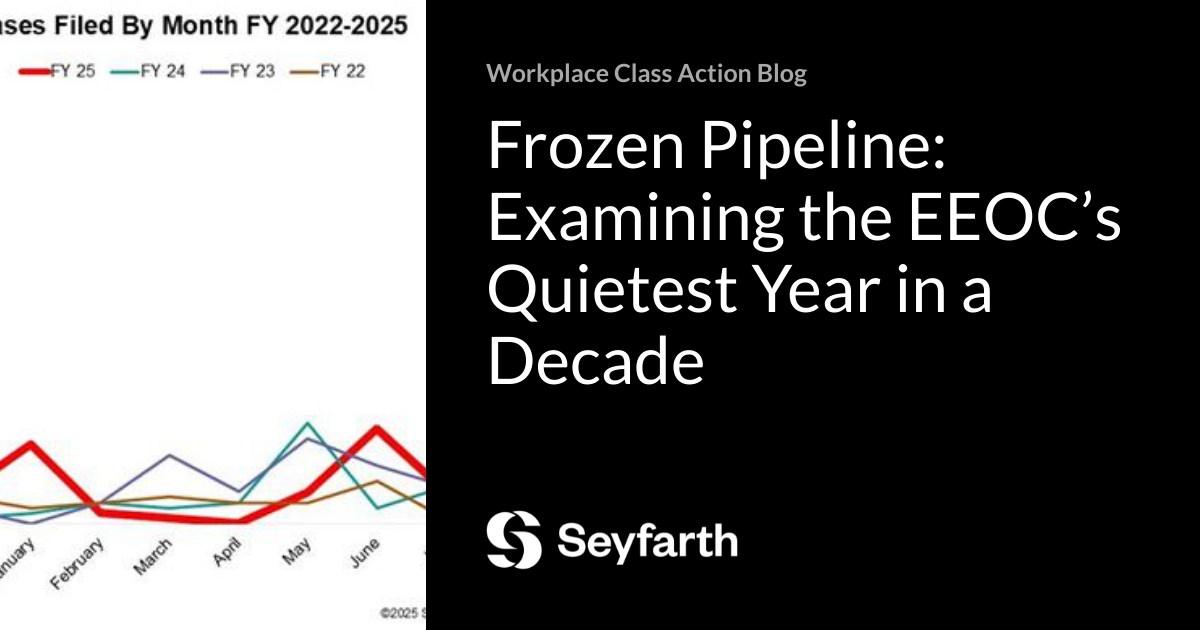
Historically, the EEOC is known for a "September surge," where the agency files a significant portion of its annual cases in the final month of the fiscal year to meet internal quotas and demonstrate productivity. While September 2025 was the busiest month of the year with 35 filings, it paled in comparison to previous years. For context, in FY 2023, the EEOC filed 71 lawsuits in September alone—nearly matching the total output of the entire 2025 fiscal year.
The timing of filings throughout the year reveals a reactive agency. In the first four months (October 2024 through January 2025), the Commission filed 24 lawsuits, including 15 in January. Legal analysts suggest this early activity was a "pre-emptive strike" by enforcement personnel seeking to move cases through the pipeline before the anticipated change in administration. Following the transition, the pace slowed significantly, with the exception of an 18-case spike in June 2025, before the final, albeit muted, September push.
Shifts in Statutory Focus: From LGBTQ Rights to Religious Freedom
An analysis of the types of claims asserted in FY 2025 reveals a calculated shift in the agency’s priorities under Acting Chair Lucas. While the Americans with Disabilities Act (ADA) and Title VII remained the primary vehicles for litigation, the underlying theories of these cases shifted.
The Retreat from LGBTQ-Related Litigation
One of the most stark reversals in agency policy concerned gender identity and sexual orientation. Under the Biden administration, the EEOC had aggressively pursued protections for transgender workers. However, following President Trump’s January 20, 2025, Executive Order titled "Defending Women From Gender Ideology Extremism," the EEOC shifted course. Acting Chair Lucas issued a statement emphasizing that "biological sex is real" and that acknowledging biological reality does not constitute harassment.

Consequently, the EEOC moved to dismiss two high-profile lawsuits concerning transgender workers—EEOC v. Starboard Group, Inc. and EEOC v. Brik Enterprises, Inc.—both of which had been filed in late 2024. No new gender-identity cases were filed for the remainder of the fiscal year, signaling a total cessation of federal enforcement in this area for the foreseeable future.
The Rise of Religious Freedom and Pregnancy Protections
Conversely, the EEOC significantly increased its focus on religious discrimination. The agency filed 11 lawsuits asserting religious discrimination or failure to accommodate religious beliefs, a notable jump from previous years. This aligns with Lucas’s stated goal of "restoring evenhanded enforcement" and ensuring workers do not have to choose between their faith and their livelihood. Many of these cases are believed to be the result of a backlog of charges stemming from COVID-19 vaccine mandate disputes.
Pregnancy-related litigation also saw a resurgence. The agency filed 10 lawsuits under the Pregnancy Discrimination Act and the newly enacted Pregnant Workers Fairness Act (PWFA). Combined with other sex-based claims, the EEOC filed 37 cases in this category, representing a significant portion of its total docket.
ADA and Mental Health Priorities
Despite the overall drop in filings, the ADA remained a top priority with 34 disability-related lawsuits. The agency continued to focus on "invisible" disabilities, including mental health conditions such as PTSD, anxiety, and depression. There was also a continued trend of suing on behalf of individuals with hearing or vision impairments, particularly in cases where employers allegedly failed to engage in the "interactive process" for accommodations.
Regional Variations: Chicago Leads, West Coast Quiets
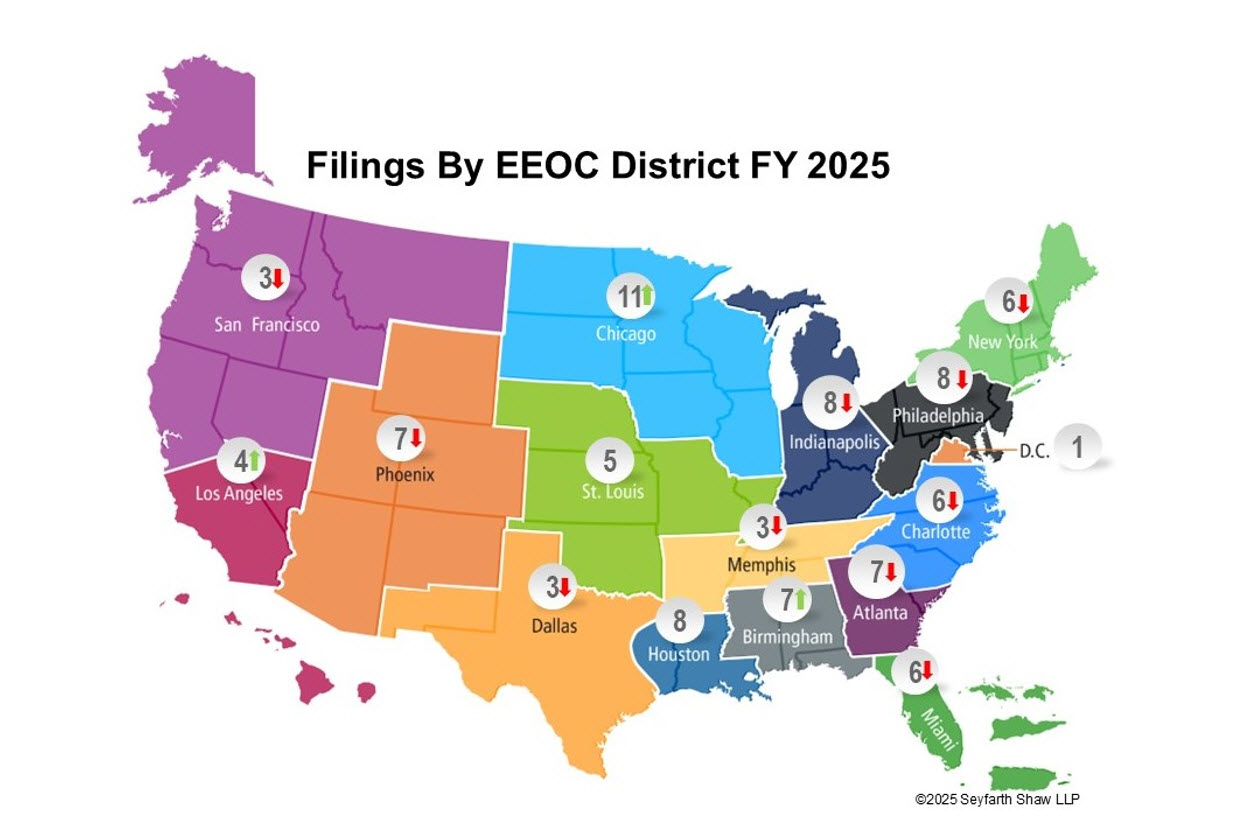
The geographic distribution of EEOC filings in FY 2025 shows a continued concentration of activity in the Midwest and South, while traditionally liberal strongholds have gone quiet.

- The Chicago District Office: Once again led the nation with 11 merit filings, maintaining its reputation as the most litigious arm of the Commission.
- Philadelphia, Indianapolis, and Houston: These offices followed closely, each filing 8 lawsuits. These regions have historically maintained steady enforcement levels regardless of the administration in power.
- The West Coast Decline: Districts in Los Angeles, San Francisco, and New York—which were prolific during the Obama era—filed only 4, 3, and 6 lawsuits, respectively. This decline has been a multi-year trend, suggesting a shift in resource allocation or a more cautious approach by regional directors in these jurisdictions.
Implications for the Corporate Sector and Private Bar
The historically low level of EEOC litigation in FY 2025 offers a temporary reprieve for large corporations, but it does not equate to a decrease in overall legal risk. Legal experts warn that the private plaintiffs’ bar often fills the void left by federal agencies.
The "Follow-the-Leader" Phenomenon
Private litigants often use EEOC filings as a roadmap for their own class-action suits. Even if the EEOC is filing fewer cases, the specific issues they do highlight—such as religious accommodation and pregnancy fairness—become "hot zones" for private litigation. Employers should expect a rise in private suits targeting these areas, even as federal oversight wanes.
Vulnerability of Smaller Businesses
A notable trend in the FY 2025 data is the EEOC’s willingness to target smaller, regional businesses and local government entities. While the agency lacked the quorum to pursue massive systemic cases against Fortune 500 companies, it remained active in policing smaller employers. This suggests that businesses of all sizes must remain vigilant regarding compliance.
The Healthcare Industry Under Scrutiny
Data suggests that the healthcare sector was a frequent target of EEOC activity this year. Given the complexities of staffing, religious exemptions for vaccinations, and ADA accommodations in a medical setting, healthcare providers should review their HR protocols to ensure they align with the current administration’s focus on religious and pregnancy-related rights.
Looking Ahead: The Future of EEOC Enforcement
As the EEOC enters FY 2026, the agency remains in a state of transition. The Senate confirmation of a new Trump-appointed Commissioner would restore a quorum, potentially allowing the agency to resume systemic litigation—albeit with a focus that aligns with the administration’s "anti-woke" agenda.
Acting Chair Lucas has signaled a commitment to protecting American workers from "anti-American bias," a phrase that suggests the EEOC may begin targeting Diversity, Equity, and Inclusion (DEI) programs that the administration views as discriminatory against majority groups. This was hinted at in FY 2025 by the filing of "reverse discrimination" cases, such as EEOC v. Leopalace Guam Corp. and EEOC v. Seward and Son Planting Co.
While the "sluggish" nature of FY 2025 may suggest a toothless Commission, the strategic pivot currently underway indicates that the EEOC is not retreating, but rather rearming for a different type of legal battle. Employers must now navigate a landscape where traditional DEI initiatives may carry federal risk, while religious and biological-sex-based protections have moved to the forefront of the enforcement agenda.