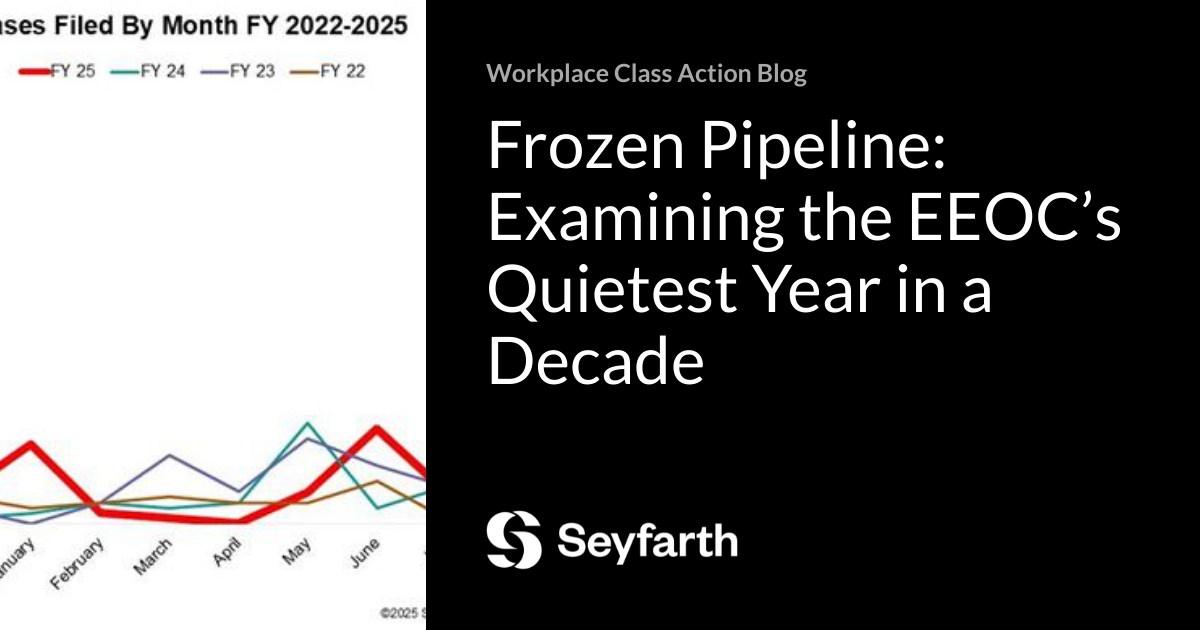
The Equal Employment Opportunity Commission (EEOC) concluded its 2025 fiscal year with a record-low volume of litigation, marking a dramatic departure from the aggressive enforcement stance seen during the early years of the Biden administration. According to a year-end analysis of federal filings, the Commission initiated just 93 merit lawsuits between October 1, 2024, and September 30, 2025. This figure represents a ten-year low and stands as one of the lowest annual totals in the agency’s three-decade history. The slowdown is attributed to a combination of unprecedented leadership changes, a loss of a governing quorum, and a fundamental realignment of the agency’s priorities following the change in presidential administrations.
The fiscal year began with expectations of a robust enforcement cycle. Entering FY 2025, the EEOC was bolstered by a significant budget and a backlog of workplace discrimination charges. However, the political transition in early 2025 triggered a series of administrative actions that effectively decelerated the Commission’s litigation engine. From the firing of high-level commissioners to a shift away from LGBTQ-related advocacy, the EEOC’s trajectory in 2025 offers a blueprint for the "America First" approach to labor law enforcement that is expected to define the coming years.
A Chronology of Leadership Turbulence and the Quorum Crisis
The defining characteristic of FY 2025 was the rapid restructuring of the EEOC’s top brass. In the wake of the 2024 presidential election, the incoming administration moved swiftly to dismantle the Democratic majority that had guided the agency since 2023. In late January 2025, President Donald Trump elevated Commissioner Andrea Lucas to Acting Chair, replacing the Biden-appointed leadership. In a more aggressive move, the administration terminated General Counsel Karla Gilbride—a key architect of the previous year’s litigation strategy.
The most significant disruption occurred when President Trump took the unprecedented step of firing Commissioners Charlotte Burrows and Jocelyn Samuels before their appointed terms had expired. This action left the EEOC with only two commissioners: Acting Chair Lucas and Commissioner Kalpana Kotagal. Under federal law, the EEOC requires a quorum of three commissioners to approve major enforcement actions, such as the filing of systemic lawsuits or the adoption of new policy guidance.
This loss of quorum created a legal bottleneck. While a previous delegation of authority allows the General Counsel to file "routine" cases without a full commission vote, the agency was legally barred from pursuing "systemic" litigation—cases involving widespread patterns or practices of discrimination—or matters involving significant expenditures of agency resources. Consequently, the EEOC’s litigation output for the remainder of the year was confined to individual or small-group claims, contributing to the historic drop in total filings.
Statistical Analysis: The Decline of the September Surge
Historically, the EEOC’s litigation activity follows a predictable seasonal pattern, culminating in a "September Surge" as district offices race to file cases before the fiscal year-end deadline. In FY 2023, for example, the Commission filed 71 lawsuits in September alone. In contrast, FY 2025 saw only 35 filings in its final month.
The timing of filings throughout the year reflected the political climate. The Commission was surprisingly active in the first quarter, filing 24 lawsuits between October and January. This included a spike of 15 cases in January 2025, which legal analysts interpret as an effort by outgoing Biden-era enforcement personnel to move cases into the court system before the change in leadership. Following the transition, filing activity fluctuated, reaching a mid-year high of 18 cases in June 2025 before tapering off.

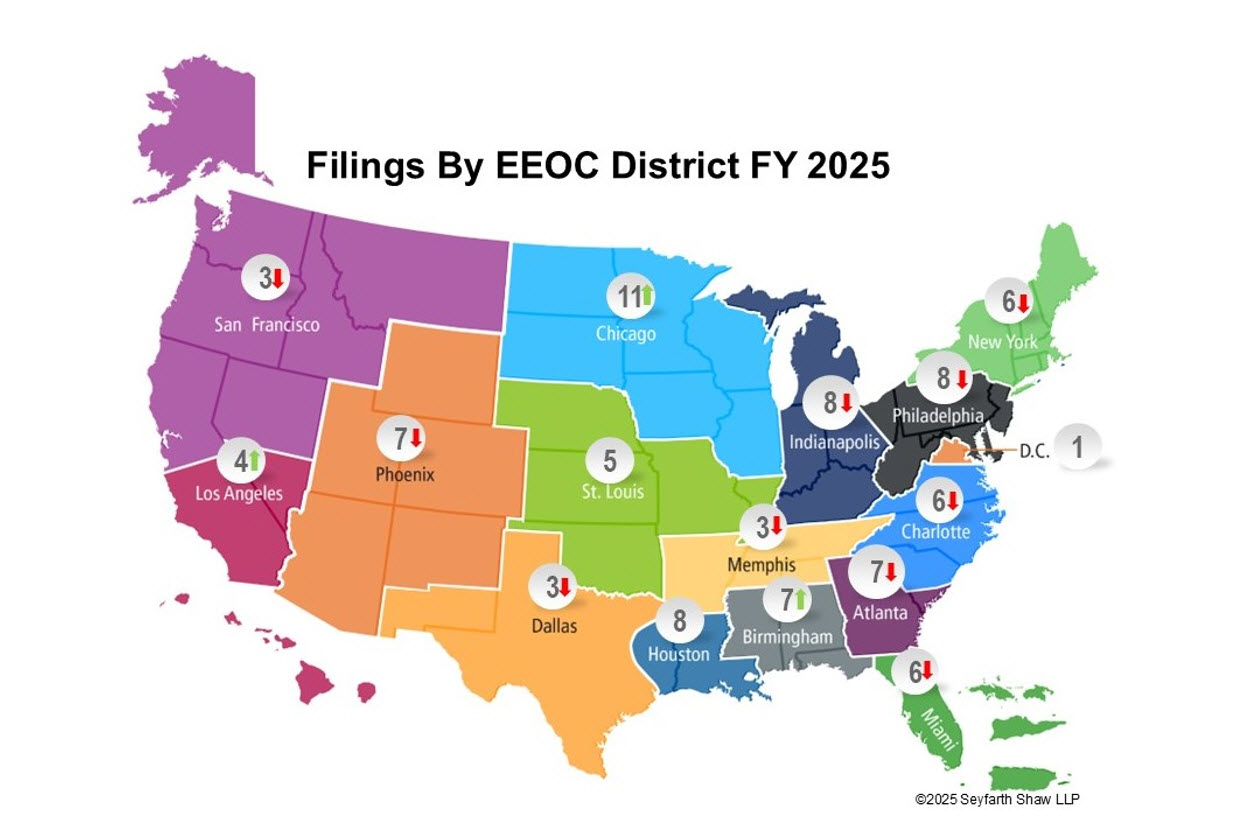
Geographically, the distribution of cases revealed a shift in regional influence. The Chicago District Office emerged as the most active, filing 11 merit lawsuits. Other busy regions included Philadelphia, Indianapolis, and Houston, each contributing eight filings. Notably, West Coast offices in Los Angeles, San Francisco, and New York—traditionally hubs of aggressive EEOC activity—were uncharacteristically quiet, combining for only 13 total lawsuits. This decline in West Coast activity continues a trend observed over the last several years, diverging from the Obama era when these offices frequently led the nation in litigation volume.
Statutory Focus: ADA Dominance and the Rise of Pregnancy Protections
Despite the overall decline in volume, the types of claims filed in FY 2025 provide insight into the agency’s current enforcement priorities. The Americans with Disabilities Act (ADA) remained the primary vehicle for EEOC litigation, accounting for 34 of the year’s 93 lawsuits. The Commission continued to target employers for failing to provide reasonable accommodations, with a specific focus on "invisible" disabilities. This included cases involving mental health conditions such as post-traumatic stress disorder (PTSD), anxiety, and depression, as well as sensory impairments like hearing and vision loss.
Title VII claims also remained a staple, but the focus within that statute shifted. There was a notable increase in litigation related to pregnancy discrimination, fueled by the recently enacted Pregnant Workers Fairness Act (PWFA). The EEOC filed 10 lawsuits asserting pregnancy-related violations in FY 2025. Acting Chair Andrea Lucas has publicly emphasized that protecting pregnant workers and ensuring "biological truth" in the workplace are cornerstones of her leadership.
The Retreat from LGBTQ+ Advocacy and Gender Ideology
One of the most stark policy reversals in FY 2025 involved the EEOC’s stance on gender identity and sexual orientation. Under the Biden administration, the Commission had prioritized cases involving transgender rights and pronoun usage. However, following President Trump’s January 2025 Executive Order aimed at "Defending Women From Gender Ideology Extremism," the EEOC underwent a radical course correction.

Acting Chair Lucas issued a statement asserting that "biological sex is real" and that acknowledging this reality does not constitute workplace harassment. This policy shift had immediate legal consequences. The EEOC moved to dismiss two high-profile lawsuits concerning transgender workers that had been filed just months earlier: EEOC v. Starboard Group, Inc. and EEOC v. Brik Enterprises, Inc. While private plaintiffs intervened to continue these cases, the EEOC’s withdrawal sent a clear signal that the federal government would no longer dedicate resources to gender identity litigation.
Religious Freedom and the Backlog of Vaccine Mandate Charges
Religious discrimination emerged as a primary focus area in FY 2025, with the Commission filing 11 lawsuits—a significant increase from the four cases filed in FY 2024. Much of this activity is rooted in the aftermath of the COVID-19 pandemic. In 2022, the EEOC saw a 600% spike in religious discrimination charges, many involving employees who were denied religious exemptions from corporate vaccine mandates.
The 2025 filings suggest that the Commission is now processing that backlog. Acting Chair Lucas has framed this as a restoration of "evenhanded enforcement," arguing that religious protections were previously sidelined in favor of "woke policies." The EEOC’s August 2025 statement on religious freedom highlighted its commitment to ensuring workers are not forced to choose between their faith and their livelihood.
Reverse Discrimination and Anti-American Bias
In another notable shift, the EEOC signaled an increased interest in protecting American-born workers from what it termed "anti-American bias." While race and national origin discrimination filings hit a decade low with only three cases, two of those lawsuits were based on theories of reverse discrimination.
In EEOC v. Leopalace Guam Corp., the Commission alleged discrimination against non-Japanese workers. Similarly, in EEOC v. Seward and Son Planting Co., the agency filed suit on behalf of Black American workers, alleging that the employer gave illegal preference to non-American laborers. This aligns with a February 2025 press release in which the agency vowed to protect domestic workers from discriminatory hiring practices that favor foreign nationals.
Implications for Employers and the Private Plaintiffs’ Bar
The lull in EEOC litigation should not be mistaken for a total cessation of workplace legal risk. Historically, when the EEOC retreats from certain areas of enforcement, the private plaintiffs’ bar steps in to fill the void. Large-scale class actions that the EEOC is currently unable to file due to its lack of quorum are likely to be picked up by private law firms.
Furthermore, the EEOC’s focus on smaller regional businesses and the healthcare industry in FY 2025 suggests that no sector is immune from scrutiny. Employers in active regions like Chicago and Philadelphia should remain particularly vigilant regarding ADA and religious accommodation requests.
The agency’s transition in FY 2025 represents more than just a change in numbers; it represents a fundamental redefining of the "protected classes" the federal government prioritizes. As the Commission awaits the confirmation of new members to restore its quorum, the 93 cases filed this year stand as a testament to an agency in the midst of a profound ideological and structural transformation. For now, the EEOC has "eased off the gas," but the roadmap it has laid out suggests a very different kind of enforcement engine is being built for the future.