A recent judicial decision in Michigan has underscored the critical role of "comparators" in employment litigation, allowing a former plant manager to proceed with a Family and Medical Leave Act (FMLA) retaliation claim against CW Manufacturing. The U.S. District Court judge determined that the employer failed to provide an objective reason for terminating the plaintiff’s role while retaining a similarly situated operations manager, thereby creating sufficient grounds for a jury to question the legitimacy of the termination and infer potential retaliation for protected leave. This ruling, emerging from the case Meadows v. CW Manufacturing, serves as a stark reminder for companies regarding the meticulous documentation and objective criteria required for workforce reduction decisions, especially when employees have exercised their FMLA rights.
The case brings into sharp focus the intricate legal landscape surrounding FMLA compliance and the potential for employers to face significant liability if their adverse employment actions lack clear, defensible justifications. Comparators—employees in similar positions or circumstances who were treated differently—are often the linchpin in proving discrimination or retaliation, providing a tangible benchmark against which an employer’s actions can be measured. In the absence of a credible, non-discriminatory reason for disparate treatment, courts are increasingly willing to allow such claims to advance, pushing employers to demonstrate an unwavering commitment to fairness and legal adherence.
Background of the Meadows v. CW Manufacturing Case
The legal dispute originated from the employment of a plant manager at CW Manufacturing, who, according to court documents, made several requests for medical-related leave between October 2022 and November 2023. These requests were necessitated by three separate surgeries and one infection, demonstrating a consistent need for medical attention. Initially, the plant manager utilized his accrued paid time off (PTO) for most of these absences. However, for his final leave request, after exhausting his PTO benefits, he was granted FMLA leave, marking his engagement in a federally protected activity.
In the fall of 2023, amidst these leave occurrences, CW Manufacturing’s global president initiated a corporate-wide efficiency drive. A consultant was brought on-site with the specific mandate to identify inefficiencies within the company’s operations. The consultant subsequently identified both the plant manager and the operations manager roles as redundant, recommending that one of these positions be eliminated. Crucially, the consultant later denied selecting the plaintiff as the specific individual to be terminated, a detail that would later prove significant in the legal proceedings. Following this assessment, the plant manager was terminated.
Judicial Scrutiny and the Role of Comparators
In her ruling, the judge meticulously dissected the employer’s defense against the FMLA retaliation claim. A cornerstone of her analysis was the absence of any objective, documented reason for choosing to terminate the plant manager over the operations manager, who held a "similarly situated" role. The judge emphasized that in FMLA retaliation cases, particularly those involving a reduction in force (RIF), companies bear the burden of providing a specific, objective justification for terminating a plaintiff when other comparable candidates survive the reduction. In this instance, CW Manufacturing presented no such reason. There was no record of objective criteria used to evaluate the two managers, nor was there any documentation indicating poor performance on the part of the plaintiff.
Beyond the lack of objective criteria, the court also noted several other red flags that bolstered the plaintiff’s claim. The temporal proximity between the plant manager’s return from FMLA leave and his subsequent termination raised immediate suspicions. Such close timing often serves as circumstantial evidence of a causal link between the protected activity and the adverse employment action. Furthermore, the plaintiff’s subjective experience of feeling "alienated" upon his return from leave, though not independently conclusive, contributed to the overall narrative of a potentially retaliatory environment.
Perhaps most damning for CW Manufacturing was the judge’s questioning of whether a legitimate RIF even occurred. The plaintiff was terminated approximately 10 months before any other employees were separated as part of the alleged RIF. Compounding this inconsistency, at least one higher-ranking official within the company reportedly believed the plaintiff had left "voluntarily," unaware that his termination was part of a broader reduction. These discrepancies painted a picture of an uncoordinated, poorly communicated, and potentially pretextual workforce reduction process, further undermining the employer’s defense.
The McDonnell Douglas Framework and Pretext
The court’s analysis in Meadows v. CW Manufacturing is deeply rooted in the well-established McDonnell Douglas burden-shifting framework, a procedural tool used by courts to evaluate evidence in employment discrimination and retaliation cases. This framework operates in three stages:
- Prima Facie Case: The plaintiff must first establish a prima facie case of retaliation. In FMLA cases, this typically involves demonstrating that they engaged in FMLA-protected activity (e.g., taking FMLA leave), suffered an adverse employment action (e.g., termination), and there was a causal connection between the two. The temporal proximity of the termination to the FMLA leave often helps establish this initial connection.
- Legitimate, Non-Retaliatory Reason: If the plaintiff establishes a prima facie case, the burden shifts to the employer to articulate a legitimate, non-retaliatory reason for the adverse action. CW Manufacturing attempted to do this by citing a consultant’s recommendation for a RIF due to role redundancy.
- Pretext: If the employer articulates a legitimate reason, the burden shifts back to the plaintiff to demonstrate that the employer’s stated reason is merely a pretext for retaliation. This is where the concept of comparators becomes critically important. By showing that a similarly situated employee (the operations manager) was treated more favorably, or by highlighting inconsistencies and a lack of objective criteria in the termination decision, the plaintiff can argue that the employer’s stated reason is not the true reason.
In the Meadows case, the judge found that CW Manufacturing failed to provide a sufficiently objective and consistent reason to rebut the inference of pretext. The absence of clear documentation, the inconsistent messaging regarding the RIF, and the retention of a comparable role without justification strongly suggested that the employer’s stated reason might not be the real one, thus allowing the claim to proceed to a jury.

Broader Implications for Employers and HR Professionals
The Meadows ruling serves as a powerful cautionary tale for employers navigating the complexities of workforce management, particularly when dealing with employees on protected leave. The consequences of failing to adhere to FMLA regulations and ensure non-discriminatory practices can be severe, encompassing costly litigation, reputational damage, and decreased employee morale.
1. The Imperative of Objective Criteria in RIFs: Employers must develop and rigorously apply objective, non-discriminatory criteria for all workforce reductions. Relying solely on a consultant’s general recommendation without specific, measurable, and defensible metrics for selecting individuals for termination is a significant risk. Factors such as performance reviews, skills assessments, disciplinary records, and seniority should be clearly defined and consistently applied to all employees being considered for a RIF.
2. Meticulous Documentation: Comprehensive and consistent documentation of all employment decisions, especially those involving adverse actions like termination, is paramount. This includes detailed records of performance, disciplinary actions, attendance, and the rationale behind any RIF selections. A lack of such documentation leaves employers vulnerable to claims of arbitrary decision-making and makes it challenging to defend against allegations of pretext.
3. FMLA Compliance Training for Managers: All managers and supervisors must be thoroughly trained on FMLA regulations, including the types of leave protected, the prohibition against retaliation, and the proper procedures for handling leave requests and employee returns. Awareness of "temporal proximity" as a red flag is crucial, prompting managers to seek HR guidance before taking adverse actions against employees who have recently returned from protected leave.
4. Consistent Communication and Transparency: Internal communication surrounding RIFs or restructuring must be clear, consistent, and transparent. The fact that a high-ranking official was unaware of the RIF and believed the plaintiff left "voluntarily" highlights a critical breakdown in internal communication that can severely undermine an employer’s defense. All relevant personnel should be aligned on the nature and scope of any workforce changes.

5. Managing Leave Laws in a Complex Landscape: The FMLA is just one piece of a growing patchwork of federal, state, and local leave laws. Employers must navigate these interconnected regulations, which often include state-specific paid sick leave laws, family leave acts, and accommodations under the Americans with Disabilities Act (ADA). The complexity of managing these leave requirements necessitates robust HR systems and expert legal counsel to ensure compliance and mitigate risk. According to recent EEOC data, retaliation claims consistently rank as one of the most frequent charges filed, underscoring the pervasive nature of this legal challenge.
6. The "Alienation" Factor: While not a standalone legal claim, an employee’s experience of feeling "alienated" or marginalized upon returning from protected leave can contribute to a broader narrative of a hostile work environment or retaliatory intent. Employers should foster an inclusive culture that supports employees returning from leave, ensuring they are reintegrated smoothly and treated equitably.
Related Cases and Future Scrutiny
The Meadows case is not an isolated incident. The original article briefly referenced another ongoing court case involving a hotel worker who alleged she was fired for taking leave for gender-affirming surgeries. In that instance, the worker contended that while she was told her role and those of other assistant general managers were being eliminated as part of a restructuring, her position was ultimately the only one cut. This parallel case further illustrates the judiciary’s increasing focus on the "comparator" analysis and the requirement for employers to demonstrate consistent and non-discriminatory treatment across similarly situated employees.
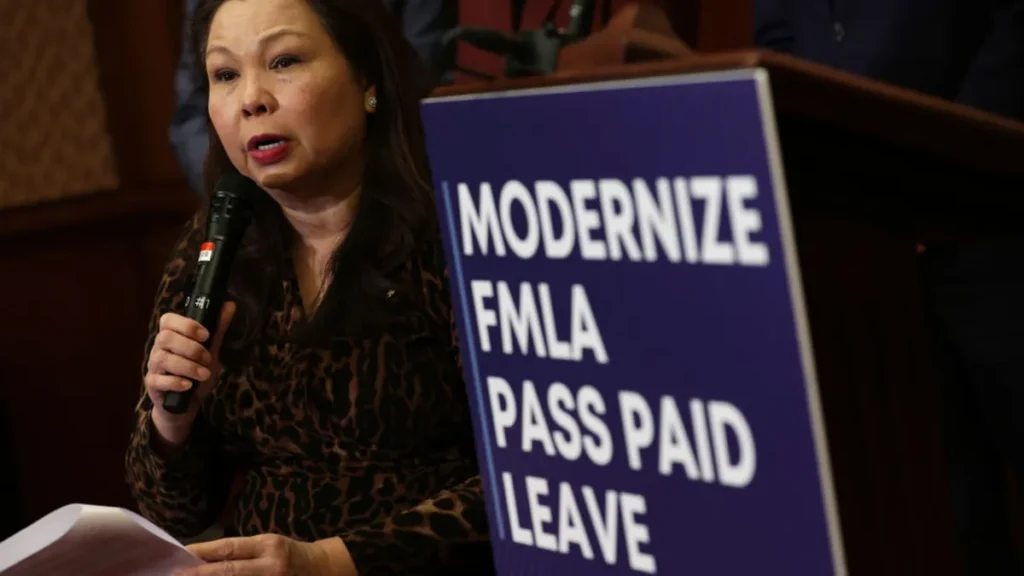
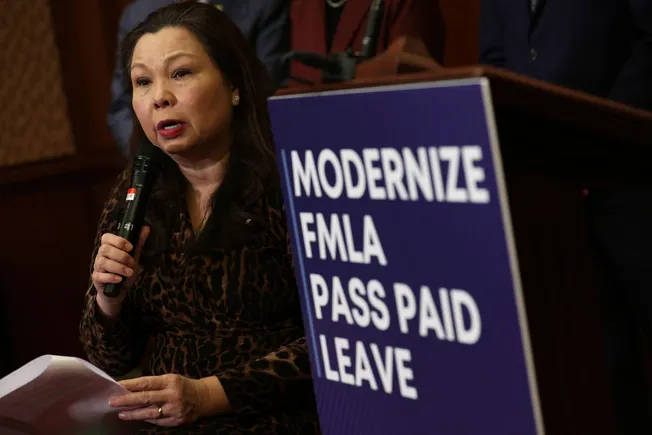
As employee rights regarding protected leave continue to evolve and gain prominence, courts are scrutinizing employer decisions with greater intensity. The U.S. Senator Tammy Duckworth, D-Ill., photo from Feb. 1, 2023, where she speaks during a news conference to discuss the Family and Medical Leave Act, is a timely reminder of the ongoing legislative and public interest in ensuring robust FMLA protections. This sustained focus means employers cannot afford to be lax in their approach to leave management and workforce adjustments.
Conclusion
The Michigan judge’s decision to allow the FMLA retaliation claim against CW Manufacturing to proceed serves as a powerful reminder of the intricate legal challenges employers face when making termination decisions, particularly when an employee has exercised their rights under the Family and Medical Leave Act. The inability to provide a clear, objective, and consistent reason for terminating an employee on protected leave, especially when a similarly situated comparator is retained, is a critical vulnerability. Employers must prioritize robust documentation, objective criteria, comprehensive FMLA training for management, and transparent internal communication to successfully defend against such claims. As the legal landscape for employee protections continues to expand, adherence to these principles is not merely a best practice but a fundamental requirement for mitigating legal risk and fostering a fair workplace environment.