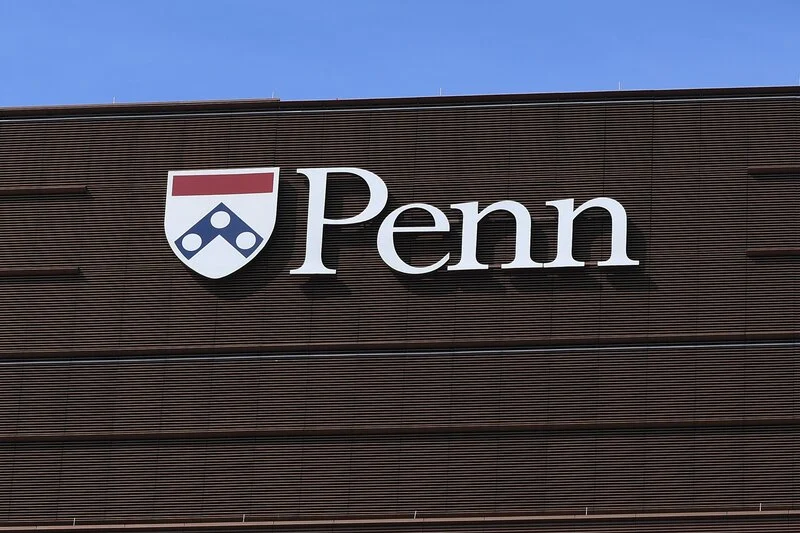
In a significant legal development that underscores the mounting tensions between federal regulatory oversight and institutional privacy, a federal judge on Monday granted a motion to pause the enforcement of a U.S. Equal Employment Opportunity Commission (EEOC) subpoena against the University of Pennsylvania. The subpoena, which sought detailed internal information regarding the university’s Jewish employees, has been at the center of an escalating legal battle that the court has now formally recognized as a matter of significant public interest. The decision to stay enforcement pending an appellate review effectively halts the EEOC’s immediate access to sensitive personnel data, providing the Ivy League institution with a temporary reprieve as it challenges the federal agency’s investigative reach in the U.S. Court of Appeals for the Third Circuit.
The ruling, issued by the district court on April 27, 2026, marks a pivotal moment in a case that intersects employment law, religious privacy, and the administrative authority of federal civil rights monitors. At the heart of the dispute is an EEOC investigation launched to determine whether the University of Pennsylvania (Penn) engaged in discriminatory practices or failed to maintain a workplace free from harassment. However, the university has argued that the agency’s demand for a comprehensive list and demographic breakdown of Jewish faculty and staff constitutes an unprecedented overreach that threatens the privacy of its employees and lacks a specific foundation in individual complaints.
The Genesis of the EEOC Investigation
The conflict traces its origins back to late 2023 and throughout 2024, a period during which elite American universities faced intense scrutiny regarding their handling of campus climate issues, specifically relating to antisemitism and Islamophobia. Following a series of high-profile congressional hearings and a wave of internal complaints from both students and faculty, the EEOC initiated a broad-based inquiry into several high-ranking academic institutions.
The commission’s investigation into the University of Pennsylvania was reportedly prompted by allegations that the institution’s environment had become hostile toward Jewish employees. Under Title VII of the Civil Rights Act of 1964, the EEOC is empowered to investigate charges of discrimination based on race, color, religion, sex, and national origin. When the EEOC believes a pattern or practice of discrimination exists, it possesses the statutory authority to issue administrative subpoenas to compel the production of evidence relevant to its inquiry.
In this instance, the subpoena requested that Penn provide specific data identifying employees who identify as Jewish, their roles within the university, their tenure, and any records of complaints or disciplinary actions involving those individuals. The EEOC has maintained that this data is essential to establishing a baseline for its investigation into whether Jewish staff were subjected to disparate treatment or a hostile work environment compared to their non-Jewish colleagues.
The University’s Legal Challenge and Privacy Concerns
The University of Pennsylvania moved to quash the subpoena in early 2026, asserting that the request was "extraordinarily broad" and "intrusive." The university’s legal counsel argued that unlike race or gender, which are often tracked for federal compliance reporting (such as EEO-1 forms), religious affiliation is not a data point typically collected or maintained in a systematic way for all employees. To comply with the subpoena, the university argued it would be forced to conduct a "religious census" of its workforce, a move it claims would be inherently coercive and damaging to the trust between the administration and its staff.
Furthermore, Penn’s legal team contended that the subpoena violated the Fourth Amendment protections against unreasonable searches and seizures. They argued that the EEOC had failed to demonstrate a "nexus" between a specific, credible charge of discrimination and the sweeping demand for the personal identities of an entire religious demographic within the university.
"The university remains steadfast in its commitment to fostering a safe and inclusive environment for all members of our community, including our Jewish faculty and staff," a university spokesperson said in a statement following a previous hearing. "However, the EEOC’s demand for a registry based on religious identity is a bridge too far. It sets a dangerous precedent for government surveillance of religious identity in the workplace and ignores the privacy rights that every employee is entitled to under the law."
The District Court’s Decision to Stay Enforcement
In his Monday order, the presiding judge acknowledged the complexity of the issues at hand. While the court had previously leaned toward the EEOC’s broad investigative mandate, the judge recognized that the university had raised "substantial legal questions" that merit a definitive ruling from a higher court.
The decision to grant a stay pending appeal is a procedural move often reserved for cases where the moving party can show a likelihood of irreparable harm and where the public interest is served by maintaining the status quo. The judge noted that if the university were forced to turn over the data now, the privacy of the employees would be irrevocably compromised even if the appellate court later ruled the subpoena was invalid.
"This dispute is not merely a routine administrative matter; it is a matter of great public interest," the judge wrote. "It touches upon the fundamental balance between the government’s power to root out discrimination and the individual’s right to religious privacy within a private educational institution. Given the weight of these constitutional and statutory concerns, it is appropriate that the Third Circuit weigh in before the university is compelled to comply."
A Timeline of the Dispute
The legal trajectory of the case highlights the rapid escalation of tensions between the university and federal regulators:
- October 2023 – January 2024: Following global geopolitical events, the University of Pennsylvania sees a surge in campus protests and internal reports of harassment. The university leadership faces national criticism, leading to the resignation of high-level administrators.
- August 2024: The EEOC formally notifies the University of Pennsylvania that it has opened a Commissioner’s Charge investigation into potential systemic religious discrimination.
- March 2025: After months of informal negotiations over data sharing, the EEOC issues a formal administrative subpoena.
- November 2025: The University of Pennsylvania files a motion in federal district court to quash the subpoena.
- February 2026: The district court initially rules in favor of the EEOC, ordering the university to comply with a modified version of the subpoena.
- March 2026: The university files a notice of appeal to the U.S. Court of Appeals for the Third Circuit and moves for a stay of the district court’s order.
- April 27, 2026: The district court grants the stay, pausing all data production until the appellate court issues a final decision.
Supporting Data and Legal Framework
The EEOC’s reliance on administrative subpoenas is a cornerstone of its enforcement strategy. According to the agency’s latest performance and accountability reports, the EEOC files dozens of subpoena enforcement actions annually when employers refuse to provide requested information. Historically, courts have given the EEOC wide latitude, applying a "relevance" standard that is significantly broader than the discovery rules used in private litigation.
However, legal experts point out that the request for religious identity data is particularly sensitive. Data from the Bureau of Labor Statistics and the EEOC shows that while religious discrimination charges have fluctuated over the last decade—accounting for roughly 4% to 7% of all charges filed—the collection of "religious lists" by the government is almost non-existent in modern American jurisprudence.
"Usually, the EEOC asks for records of people who have already identified themselves through a complaint or those in a specific department where an issue was raised," said Marcus Thorne, a veteran labor and employment attorney not involved in the case. "Asking for a list of every Jewish employee across an entire university is a massive expansion of the agency’s typical footprint. It’s why this case is being watched so closely by the higher education sector and civil liberties groups alike."
Reactions from Legal and Academic Communities
The ruling has sparked a range of reactions from legal scholars and advocacy groups. Organizations dedicated to fighting antisemitism have expressed mixed views. Some argue that the EEOC must have the tools it needs to uncover systemic biases that might be hidden within university bureaucracies. Others, however, share the university’s concern that creating "Jewish lists" could be weaponized or lead to further marginalization.
Civil liberties advocates have largely praised the stay. "The government should not be in the business of forcing employers to categorize their employees by religion unless there is a very specific, narrowly tailored need to do so," said a representative from a prominent privacy rights group. "The judge’s recognition of this as a matter of public interest is a victory for the principle that administrative efficiency does not override constitutional privacy."
On the other side, proponents of the EEOC’s investigation argue that the stay represents a delay in justice for employees who may be suffering in a hostile environment. They contend that large institutions often use "privacy" as a shield to hide patterns of neglect or active discrimination.
Broader Impact and Implications for Higher Education
The outcome of the Third Circuit’s review will have far-reaching implications for how federal agencies interact with private and public universities. If the appellate court upholds the subpoena, it could signal a new era of aggressive federal oversight where universities are required to maintain and disclose religious demographic data of their workforces.
Conversely, a ruling in favor of the University of Pennsylvania would set a firm boundary on the EEOC’s investigative powers, reinforcing the idea that religious identity is a protected category that requires higher levels of privacy protection than other demographic markers.
For other universities currently under EEOC or Department of Education scrutiny, the stay provides a roadmap for resisting broad data requests. The "public interest" designation used by the judge suggests that the judiciary is becoming increasingly wary of how federal civil rights investigations are conducted in the polarized atmosphere of modern academia.
As the case moves to the Third Circuit, legal analysts expect a flurry of amicus curiae (friend-of-the-court) briefs from academic associations, religious organizations, and labor unions. The final decision will likely clarify the extent to which the government can compel an employer to identify the religious affiliations of its staff, a question that remains one of the most sensitive and unresolved areas of American employment law.
The University of Pennsylvania’s case stands as a landmark test of whether the tools designed to protect civil rights can, in their application, infringe upon the very privacy and associational rights they were meant to uphold. For now, the records of Penn’s Jewish employees remain private, shielded by a court that believes the questions raised by this dispute are too significant to be answered in haste.