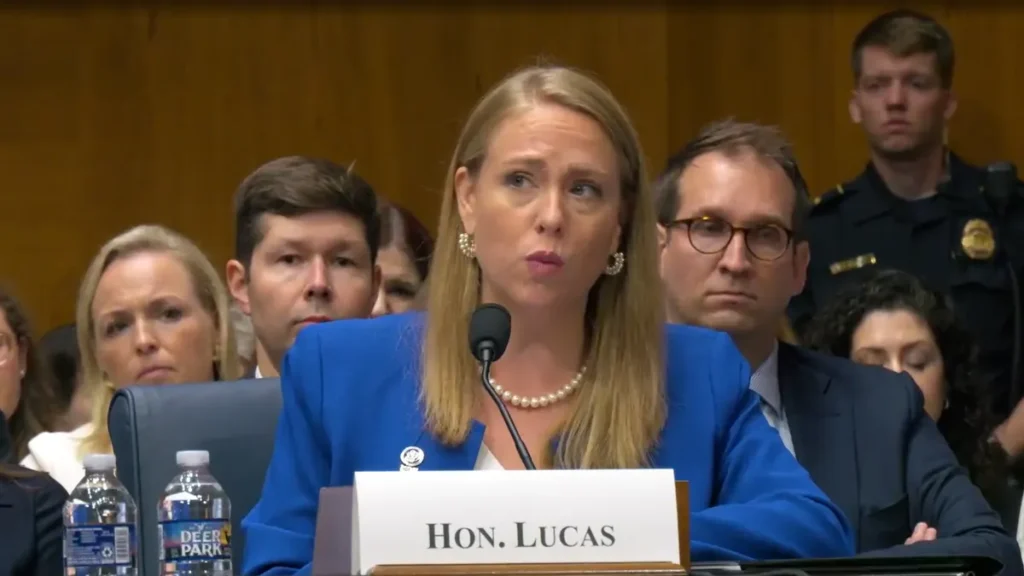
A federal judge has delivered a significant victory to the U.S. Equal Employment Opportunity Commission (EEOC) and its Chair, Andrea Lucas, by siding with the agency in a lawsuit challenging its approach to gender-identity bias claims. The ruling, issued on June 15, 2026, reinforces the commission’s implementation of a key component of former President Donald Trump’s workplace civil rights agenda, which seeks to prioritize a "biological reality of sex" in federal enforcement. This decision marks another step in the EEOC’s evolving posture on LGBTQ+ rights in the workplace, drawing sharp criticism from advocacy groups while affirming the agency’s discretion in resource allocation.
The judgment comes amidst a period of considerable transformation within the EEOC, particularly concerning its interpretation and enforcement of Title VII of the Civil Rights Act of 1964 regarding sex discrimination. Under Chair Lucas’s leadership, the commission has systematically reevaluated its previous stances on gender identity, aligning itself more closely with the directives set forth during the Trump administration. This latest ruling supports the agency’s decision to dismiss numerous discrimination lawsuits filed on behalf of transgender plaintiffs, signaling a potentially profound shift in federal protections for transgender workers.
The EEOC’s Mandate and Shifting Interpretations
The Equal Employment Opportunity Commission is a federal agency responsible for enforcing civil rights laws against workplace discrimination. Established by Title VII of the Civil Rights Act of 1964, its primary mission is to prevent and remedy unlawful employment discrimination and to promote equal opportunity in the workplace. Title VII prohibits discrimination based on race, color, religion, sex, and national origin. For decades, the interpretation of "sex" under Title VII has been a subject of evolving legal and social discourse, culminating in the landmark Supreme Court decision in Bostock v. Clayton County in 2020.
In Bostock, the Supreme Court ruled that discrimination based on sexual orientation or gender identity constitutes discrimination "because of sex" under Title VII. This decision was widely hailed by LGBTQ+ advocates as a monumental expansion of civil rights protections, seemingly solidifying the EEOC’s mandate to pursue claims of discrimination against transgender individuals. However, the subsequent Trump administration, through executive orders and appointments, initiated efforts to reinterpret or narrow the scope of these protections, particularly concerning gender identity.
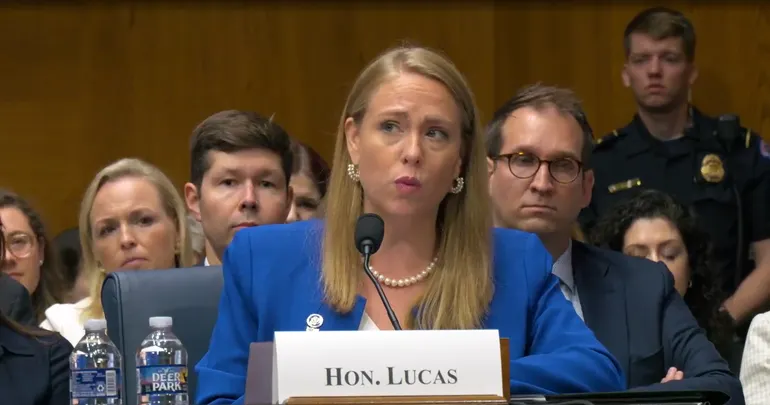
Chair Andrea Lucas, appointed during the Trump administration, has been a central figure in this reorientation. Her tenure has been characterized by a strategic implementation of the former president’s "biological reality of sex" agenda. This agenda posits that legal and policy frameworks should primarily recognize sex as an immutable biological characteristic assigned at birth, rather than encompassing gender identity. Critics argue this interpretation directly undermines the spirit and letter of the Bostock decision, while proponents assert it restores a more traditional understanding of sex in legal contexts.
Chronology of Policy Shifts and Legal Challenges
The path to the current federal court ruling has been marked by a series of executive actions, policy changes, and legal skirmishes:
- January 2025: Trump’s Executive Order: Former President Donald Trump issued an executive order directing federal agencies to promote the "biological reality of sex." This order served as a foundational document for subsequent policy changes across various government bodies, including the EEOC. It explicitly aimed to guide federal policy by distinguishing between "sex" as a biological attribute and gender identity.
- Early 2025: Lucas References Executive Order: Following the executive order, EEOC Chair Andrea Lucas publicly referenced its directives in an announcement detailing various EEOC initiatives pertaining to sex-based discrimination enforcement. She articulated a vision for the agency that aligned with the order’s principles, signaling a forthcoming shift in how gender identity claims would be handled. Lucas’s statements often framed the new direction as "removing gender ideology and restoring EEOC’s role protecting women in the workplace," suggesting a perceived conflict between gender identity protections and protections for biological women.
- Late 2025: EEOC Moves to Dismiss Lawsuits: As an extension of this work, the EEOC last year requested the dismissal of nearly every discrimination lawsuit it had previously filed on behalf of transgender plaintiffs. This unprecedented move triggered immediate and widespread condemnation from LGBTQ+ rights organizations. Groups like Equal Rights Advocates sharply criticized the decision, calling it a "dereliction of EEOC’s duty" under federal civil rights laws, arguing that the agency was abandoning its responsibility to protect vulnerable workers.
- Late 2025: FreeState Justice Files Lawsuit: In response to the EEOC’s policy changes and its effective non-enforcement of certain gender identity claims, FreeState Justice, an LGBTQ+ legal advocacy organization, filed a lawsuit against the commission. The lawsuit challenged the EEOC’s handling of gender-identity bias claims, arguing that the agency was failing to uphold its legal obligations under Title VII and the Bostock precedent.
- Late 2025: EEOC Moves to Dismiss FreeState’s Lawsuit: The EEOC, in turn, moved to dismiss FreeState Justice’s lawsuit. The agency’s legal argument hinged on the principle of judicial deference to an agency’s allocation of resources and enforcement priorities. The EEOC cited a federal judge’s decision in Cross v. EEOC as a precedent, which had challenged the commission’s non-enforcement of disparate-impact discrimination. The agency contended that the federal judiciary cannot second-guess the EEOC’s decisions regarding where it will allocate its enforcement resources.
- June 15, 2026: Federal Judge Sides with EEOC: A federal judge ultimately agreed with the EEOC’s position, adopting the same reasoning outlined in Cross v. EEOC. The ruling also cited a 2023 U.S. Supreme Court decision involving state governments’ challenges to federal enforcement of immigration laws, further buttressing the argument for agency discretion in enforcement matters. This decision effectively validated the EEOC’s revised approach to gender identity claims.
The "Biological Reality of Sex" and its Legal Underpinnings
The core of the EEOC’s current policy direction stems from the Trump administration’s emphasis on the "biological reality of sex." This framework seeks to define "sex" strictly in terms of biological characteristics observable at birth, primarily genetic and anatomical. Proponents of this view argue that legal protections based on "sex" were originally intended to address discrimination between biological males and females, and that extending these protections to include gender identity fundamentally alters the traditional understanding of sex.
This interpretation stands in stark contrast to the legal reasoning in Bostock v. Clayton County, where Justice Neil Gorsuch, writing for the majority, concluded that "it is impossible to discriminate against a person for being homosexual or transgender without discriminating against that individual based on sex." The Bostock decision effectively defined "sex" in Title VII to include sexual orientation and gender identity, based on a "but-for" causation standard: but for the individual’s sex, they would not have been discriminated against for their sexual orientation or gender identity.

The current EEOC, under Chair Lucas, appears to be navigating this legal landscape by asserting agency discretion rather than directly challenging Bostock. By arguing that it can accept charges from transgender plaintiffs but choose not to pursue certain cases due to resource allocation or policy directives, the EEOC attempts to reconcile its new policy with existing Supreme Court precedent. The federal judge’s decision to uphold this discretion is crucial, as it provides a judicial imprimatur for the agency’s selective enforcement.
The reliance on Cross v. EEOC and the 2023 Supreme Court ruling on immigration enforcement highlights a legal principle often referred to as "prosecutorial discretion" or "agency deference." This doctrine generally holds that courts should defer to an executive agency’s decisions regarding how it allocates its limited resources and prioritizes its enforcement actions, particularly when the agency has a broad mandate. In essence, the court is saying that while the EEOC may have the authority to pursue gender identity claims under Bostock, it is not compelled to do so if it determines that such cases do not align with its current enforcement priorities or resource strategy.
Broader Actions and Reactions
The federal judge’s ruling is not an isolated incident but rather part of a broader pattern of actions undertaken by the EEOC under Chair Lucas to reshape its policies regarding gender identity:
- Rescission of Biden-Era Harassment Guidance: Earlier this year, the agency rescinded its Biden-era harassment guidance. This previous guidance had explicitly identified repeated and intentional misgendering of individuals as an illegal form of harassment under Title VII. The rescission removes a clear directive for employers and opens the door for a more permissive environment regarding the use of pronouns and gendered language in the workplace.
- Protection of Sex-Segregated Facilities: The EEOC has also issued federal sector decisions aimed at protecting sex-segregated facilities. One such decision permits agencies to require that transgender employees use bathrooms and intimate spaces that correspond to their sex at birth. This policy directly impacts transgender individuals’ access to facilities aligning with their gender identity, potentially creating hostile work environments and reinforcing a binary understanding of sex in federal workplaces.
- Acceptance of Charges, Limited Enforcement: Despite these shifts, the EEOC has stated that it will continue to accept charges from transgender plaintiffs alleging discrimination. However, the agency’s stated inability to continue pursuing such cases while simultaneously following the Trump administration’s executive order implies that many of these charges may not lead to agency-led enforcement actions or litigation. This places a greater burden on individual plaintiffs to pursue private lawsuits, which can be financially and emotionally draining.
These actions have predictably generated significant backlash. LGBTQ+ rights organizations continue to denounce the EEOC’s policies, arguing that they systematically undermine protections for transgender workers and contradict the spirit of federal anti-discrimination law. Legal experts have also expressed concerns about the potential for inconsistent application of Title VII and the creation of legal uncertainty for both employers and employees.
Ongoing Challenges and Future Implications

The controversy surrounding the EEOC’s stance is far from over. In a notable development, a transgender former EEOC employee sued the agency in April, alleging that Chair Lucas created a hostile work environment that violated Title VII of the Civil Rights Act. This case is ongoing and represents a direct challenge to the agency’s internal culture and leadership under the current policies. The outcome of this lawsuit could have significant implications for how the EEOC itself is held accountable for its workplace environment and its adherence to anti-discrimination principles.
The federal judge’s ruling, while a victory for the EEOC’s current direction, does not resolve the underlying legal and social tensions. It primarily addresses the agency’s discretion in enforcement, rather than definitively overturning the Bostock precedent. This means that:
- Increased Private Litigation: Transgender individuals experiencing discrimination may increasingly need to pursue private lawsuits, bypassing the EEOC’s enforcement process. This could strain legal aid resources and create a fragmented landscape of legal protections.
- Uncertainty for Employers: Employers, particularly those operating in multiple states with varying local and state laws, face increased uncertainty. While the EEOC’s federal enforcement may be scaled back, state and local protections for gender identity may still be robust, requiring businesses to navigate a complex patchwork of regulations.
- Continued Legal Challenges: The interpretation of Bostock and the scope of "sex" discrimination under Title VII will likely continue to be litigated in various courts. Future presidential administrations could also reverse the current EEOC policies, leading to further shifts in enforcement priorities.
- Political and Social Ramifications: The debate over "biological reality of sex" versus gender identity in legal contexts reflects broader societal divisions. The EEOC’s actions and judicial rulings in this area will continue to be a flashpoint in the ongoing culture wars, impacting public discourse on LGBTQ+ rights and workplace equality.
In conclusion, the federal judge’s decision to side with the EEOC regarding its handling of gender-identity bias claims is a significant legal development. It affirms the agency’s ability to prioritize its enforcement efforts in alignment with the "biological reality of sex" agenda, a key policy initiative from the Trump administration. While providing a measure of legal clarity for the EEOC’s current operations, the ruling simultaneously intensifies concerns among LGBTQ+ advocates and underscores the ongoing legal and social battles over the definition and scope of civil rights protections in the American workplace. The journey towards comprehensive and consistent anti-discrimination protections for all workers, including transgender individuals, remains complex and contested.