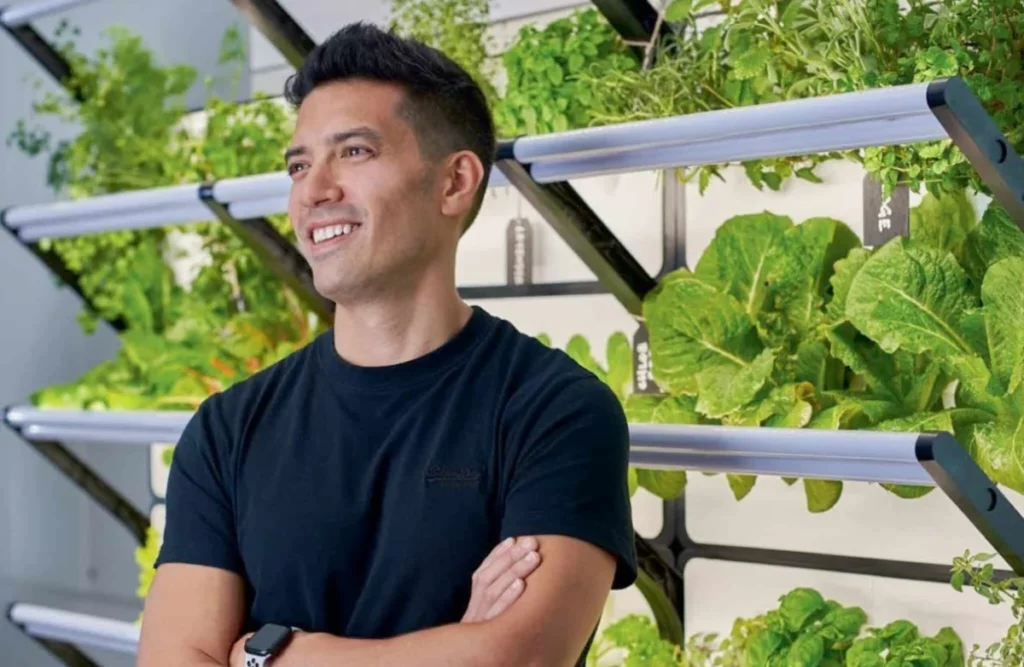
A quiet, yet profoundly radical transformation is unfolding within the modern workplaces of Singapore. Amidst the ubiquitous standing desks and sleek glass-walled meeting rooms, a burgeoning trend sees employees engaging in the cultivation of kale, the delicate snipping of herbs, and collaborative discussions about dinner recipes – all within arm’s reach of their laptops. What might initially appear as a whimsical wellness novelty is, in fact, a calculated strategic pivot by astute HR leaders. They are placing a significant bet: that the future of meaningful employee engagement lies not in ephemeral perks, but in living, interactive experiences that foster community and purpose.
This innovative approach is a direct response to a growing malaise in the corporate world, particularly exacerbated by the shifts brought about by the global pandemic. Mathew Howe, founder of the Singapore-based urban farming company Grobrix, brings a seasoned perspective from his 15 years in corporate environments. His observation is stark and clear: sterile, uninspiring workspaces breed disengaged individuals. This sentiment resonates deeply in an era where terms like "quiet quitting" and "coffee badging" have entered the HR lexicon, signifying a detachment where employees merely fulfill return-to-office mandates without genuine connection or investment in their physical workspace. Howe articulates this candidly to HRM Asia, stating, “Coffee badging is just the latest version of that. It’s a sign that the office has become a place to check a box rather than a place to actually connect.”
The Shifting Sands of the Modern Workplace: A Post-Pandemic Reckoning
The landscape of work underwent an unprecedented upheaval in the early 2020s. The rapid transition to remote and then hybrid work models exposed the vulnerabilities of traditional office structures and employee engagement strategies. Prior to the pandemic, a significant portion of the global workforce already reported feeling disengaged. A 2019 Gallup study, for instance, indicated that only 15% of employees worldwide were engaged in their jobs. The subsequent years, marked by economic uncertainty, social isolation, and a re-evaluation of personal priorities, only deepened this chasm.
The concept of "coffee badging," where employees briefly appear at the office to satisfy attendance requirements before retreating, became a tangible symbol of this disconnect. It highlighted that simply mandating a return to office (RTO) without providing compelling reasons for being there was counterproductive. Companies poured resources into traditional perks – free catered lunches, premium coffee, gym memberships, and various wellness apps – believing these offerings would lure employees back and foster loyalty. However, research from institutions like the U.K.-based Institution of Occupational Safety and Health (IOSH) began to show that these one-off transactional benefits had limited long-term impact on how employees truly felt about their workplace or their commitment to its culture. As Howe succinctly puts it, “A gym membership is a solo transaction; you use it, you leave. It doesn’t build a culture.” The prevailing wisdom was that engagement needed to move beyond passive consumption to active participation.
Singapore’s Unique Ecosystem: A Fertile Ground for Workplace Farming
Singapore, a densely populated city-state renowned for its "City in a Garden" vision, presents a particularly fertile ground for the integration of urban farming into corporate spaces. The nation faces unique challenges and opportunities that make this trend especially relevant. With limited land and a high reliance on imported food, Singapore launched its ambitious "30 by 30" goal in 2019, aiming to produce 30% of its nutritional needs locally by 2030. This national imperative has spurred significant innovation and investment in urban agriculture, vertical farming, and aquaculture.
Concurrently, Singapore’s commitment to sustainability is enshrined in its Green Plan 2030, a comprehensive blueprint for sustainable development across various sectors. This plan, coupled with new mandatory sustainability disclosure requirements for companies, places increasing pressure on HR and corporate affairs teams to demonstrate tangible environmental, social, and governance (ESG) commitments that extend beyond annual reports and boardroom discussions. For many organizations, the challenge has been translating these high-level objectives into visible, impactful actions that resonate with their employees daily. Urban farming initiatives in the workplace seamlessly align with both the food security drive and the broader sustainability agenda, offering a practical and visible solution to these national priorities.
Grobrix’s Vision: Cultivating Community, Not Just Crops
Against this backdrop, Grobrix has emerged as a key player in redefining workplace engagement. Its core offering is an edible green wall – a modular, soil-free indoor farming system designed for office environments, capable of growing herbs, leafy greens, and vegetables year-round. Critically, Grobrix operates on a subscription model, providing a fully managed service that includes weekly maintenance, crop health monitoring, and hygiene protocols. This approach liberates clients’ facilities teams from any operational burden, addressing a common initial concern.
However, Mathew Howe emphasizes that the physical hardware, while impressive, is merely a conduit for a deeper cultural shift. What Grobrix truly offers is a paradigm change: moving from an engagement model based on "consumption" to one built on "participation." Unlike a free snack bar or a discounted gym membership, urban farming is an activity that employees actively do, and crucially, do together.
The impact on workplace dynamics is profound. Howe notes, “When you’re standing at a Grobrix wall, the office hierarchy disappears. You aren’t reporting to anyone; you’re just part of a community tending to something alive.” This shared activity fosters genuine, organic interactions that transcend professional roles. The ongoing nature of cultivation – planting, watering, observing growth, and finally harvesting – provides continuous reasons for colleagues to connect, discuss, and collaborate. A recent survey conducted among over 500 employees across 50 Grobrix client workplaces strongly supports these claims: an impressive 93% of respondents reported that the indoor farms strengthened workplace community, while 97% indicated that they promoted a sustainability mindset. These figures stand in stark contrast to the typically modest impact associated with conventional office amenities.
Beyond Greenery: The Strategic Imperative for HR Leaders
Despite the compelling cultural benefits, Grobrix initially faces a predictable hurdle: HR decision-makers often perceive indoor farming as another operational headache, akin to traditional landscaping services. Howe readily acknowledges this misconception: “The biggest hurdle is that HR leaders often mistake us for a traditional landscaping service. They have spent years paying for stale office plants that sit in a corner, collect dust and offer nothing back to the team. Naturally, they assume an edible farm means more work, more mess and a higher mental load for their facilities team.”
To counter this, Grobrix deliberately reframes its offering. “Grobrix isn’t a product you buy; it’s a managed service you subscribe to. Think of it like a high-end coffee service rather than a gardening project,” Howe explains. By emphasizing the closed-loop, soil-free system that requires no direct water line and minimal client intervention, Grobrix addresses the operational concerns head-on. Once these practicalities are clarified, the conversation shifts to the strategic value proposition.
Beyond the green wall itself, Grobrix provides a comprehensive calendar of programming designed to integrate seamlessly with existing wellness and engagement initiatives. These include "farm-to-table" workshops, smoothie bar sessions utilizing freshly harvested produce, and even botanical cocktail events. This curated programming transforms a static installation into a dynamic hub of activity. Howe elaborates on this strategic advantage: “We aren’t just giving you greenery; we’re giving you a schedule of farm-to-table workshops that align with your wellness initiatives. You’re investing in a strategic cultural asset that turns a quiet corner into a destination.” This holistic approach positions urban farming not just as an amenity, but as a catalyst for a vibrant, interactive workplace culture.
ESG Made Tangible: Bridging the Gap Between Policy and Practice
The increasing global and local emphasis on Environmental, Social, and Governance (ESG) criteria represents a significant structural tailwind for solutions like Grobrix. Singapore’s Green Plan 2030 and mandatory sustainability disclosure requirements, such as those implemented by the Singapore Exchange (SGX) for listed companies, have amplified pressure on organizations to demonstrate genuine ESG commitments. However, a common challenge for many companies is translating abstract ESG policies into visible, impactful actions that resonate with their employees and stakeholders.
Howe identifies this as a critical gap that indoor farming effectively fills. “The problem with most ESG strategies is that they are invisible to the average employee,” he states. “They exist in boardrooms and annual reports, but they don’t actually change the daily experience of being in the office.” Grobrix aims to make ESG tangible and immediate. The company provides real-time data to employees, illustrating the direct environmental impact of their workplace farm. For instance, Grobrix estimates that across its Singapore client base in 2025, its installations eliminated the need for 238,368 single-use wrappers – a quantifiable metric that employees can see and understand.
This visibility is paramount. “It is one thing to read a sustainability report; it is another to see the waste you are personally avoiding by harvesting fresh produce right next to your desk,” Howe explains. “It turns the employee from a passive observer into an active participant in the mission.” This active participation fosters a sense of collective responsibility and pride, aligning individual actions with broader corporate values.
For talent acquisition and retention teams, this transparency holds particular weight. Younger generations, notably Gen Z and Millennials, are increasingly discerning about corporate sustainability messaging. They are skeptical of "greenwashing" and demand authentic proof points that align an employer’s actions with its stated values. A 2023 survey by Deloitte, for example, revealed that 45% of Gen Zs and 42% of Millennials have rejected assignments or employers that did not align with their personal values, including those related to environmental sustainability. Howe observes, “They are looking for employers whose actions match their marketing. It changes the narrative from ‘What is the company doing?’ to ‘What are we doing together?’—which is how you build genuine trust and long-term loyalty.” By providing a visible, interactive embodiment of ESG principles, companies can significantly enhance their employer brand and attract value-driven talent.
A New Currency for Talent Retention: Personal Growth and Purpose
Looking ahead to 2026, Mathew Howe identifies a broader shift in workforce dynamics: a move away from passive benefits—things done for employees—towards active ones that genuinely develop individuals. Urban farming, he argues, fits squarely into this latter category, offering a unique form of personal and professional enrichment.
“Most office perks are basically designed to help you forget you’re at work for 20 minutes. Urban farming is different because it’s an actual investment in the person,” he asserts. Employees engaging with Grobrix installations gain practical knowledge in horticulture, learning about food cultivation, the nutritional benefits of fresh produce, and sustainable practices. This hands-on experience provides a novel skill set and a connection to nature that is often absent in dense urban environments like Singapore.
In a fast-paced, highly urbanized region like Asia-Pacific, this opportunity to reconnect with nature addresses a fundamental human need. Howe explains, “There is this deep-seated hunger to reconnect with nurture, but we rarely get the chance to embrace it. If an employer provides that bridge, they are offering something far more valuable than a standard pantry.” It taps into a desire for holistic well-being that extends beyond physical health to mental and emotional fulfillment.
Ultimately, the retention argument for urban farming rests on a simple, yet powerful premise: people thrive and stay where they feel they are growing, both professionally and personally. In an increasingly competitive talent market, employers who invest in the holistic development of their staff gain a distinct advantage. “Talent retention in 2026 is really about who helps you become a more well-rounded human being,” Howe concludes. “By turning a sterile environment into an interactive wellness hub, we give them a sense of personal growth and a community they won’t find at a desk anywhere else.”
The Broader Implications: Reshaping the Office of Tomorrow
The integration of urban farming into workplaces signals a significant evolution in office design, corporate culture, and the very purpose of the physical office. It represents a shift from offices as mere functional spaces for task completion to dynamic hubs for collaboration, well-being, and community building. This trend is likely to influence architects and interior designers, pushing them to incorporate biophilic design principles and interactive elements that foster a deeper connection between employees and their environment.
Furthermore, this movement underscores a broader recognition within HR and leadership circles that employee well-being is multifaceted, encompassing not just physical health but also mental resilience, social connection, and a sense of purpose. By offering an activity that is simultaneously engaging, educational, and environmentally conscious, companies are cultivating a richer, more meaningful employee experience. The success of initiatives like Grobrix suggests that the future office will be less about lavish but passive perks, and more about creating environments that empower employees to grow, connect, and contribute in tangible ways, fundamentally reshaping how we work and interact in the years to come.