The landscape of global mobility, once primarily a logistical exercise focused on the efficient and cost-effective relocation of employees, has undergone a profound transformation, elevating the nebulous concept of "employee experience" to its most critical, yet challenging, measure of success. This paradigm shift, highlighted by the Cartus Global Talent Mobility Survey 2026, signals a departure from transactional efficiency towards a holistic, human-centric approach where an employee’s journey, emotional well-being, and sense of belonging are paramount.
The Evolution of Global Mobility: From Logistics to Lived Experience
For decades, global mobility programs operated on a relatively straightforward premise: move an employee from Point A to Point B on time, within budget, and with all necessary documentation complete. Success was quantifiable through metrics like cost per move, adherence to timelines, and compliance with immigration and tax regulations. The underlying assumption was that if these logistical elements were handled proficiently, the employee would inherently adapt and thrive. This perspective, while pragmatic in its era, increasingly fails to account for the complexities of modern work, diverse workforces, and heightened employee expectations.
The late 20th and early 21st centuries saw a gradual expansion of mobility’s scope, driven by globalization and the need for companies to deploy talent strategically across international markets. Initial shifts focused on better integration with HR and talent management strategies. However, recent years, particularly in the wake of the global pandemic, have dramatically accelerated the re-evaluation of what constitutes a "successful" relocation. The rise of hybrid work models, increased awareness of mental health, and a stronger emphasis on diversity, equity, and inclusion (DEI) have converged to reshape employee priorities. Relocation is no longer just about a job change; it’s a life change, touching careers, families, personal identity, and the fundamental sense of belonging.
Unpacking the "Experience" Metric: Beyond Tangible Milestones
The Cartus Global Talent Mobility Survey 2026 emphatically states that "improving the employee experience" now stands as a core focus for organizations alongside traditional priorities like "improving in-house mobility processes," "optimization," and "compliance." This indicates a fundamental reordering of strategic objectives. Employee experience, once considered a "soft" aspect or a byproduct of well-executed programs, is now recognized as central to work itself and a direct driver of business outcomes.
The challenge lies in its inherent intangibility. While a flight itinerary or a housing contract are concrete, an employee’s "experience" resides in the nuanced moments beyond these milestones. It begins not with a checklist, but with profound personal questions: "What will this mean for my family?" "Will I find a community in the new location?" "Is this a career risk that will genuinely pay off?" These questions underscore the emotional weight accompanying any relocation, even one brimming with opportunity and excitement. Career ambition, while powerful, does not negate the psychological and social adjustments required.
For organizations, this reality significantly raises the bar. A truly successful move is no longer merely defined by the physical transit from one location to another. It is equally, if not more, defined by how supported an employee (and their family) felt throughout the process, the confidence they gained over time in their new environment, and whether the entire experience strengthened their connection and loyalty to the organization. This profound shift is where many traditional mobility programs encounter significant strain.
The Cost of Neglecting Experience: High Failure Rates and Policy Revisions
The survey findings paint a stark picture of the consequences when employee experience is overlooked. A significant 22% of companies reported failed assignments, with the predominant reason cited as employees and their families being unable to settle in the new location. This statistic serves as a potent reminder that relocation success is far from purely transactional. A move can be technically flawless in its execution – all boxes unpacked, all paperwork filed – yet still fail catastrophically on the human side, often many months after the initial relocation. The repercussions of such failures extend beyond the immediate financial costs of a wasted relocation and repatriation; they include lost productivity, diminished team morale, damaged employer brand, and the potential loss of valuable talent. Industry estimates suggest that a failed international assignment can cost an organization anywhere from two to three times the employee’s annual salary, making the investment in employee experience a strategic imperative rather than a discretionary expense.
In response to these challenges, organizations are actively revisiting and revising their mobility policies. When questioned about the primary drivers for these policy reviews, employee experience emerged as the leading factor at 58%, surpassing even cost (52%) and flexibility (50%). This is a critical indicator: employee experience is not merely a desirable "nice-to-have"; it is the foremost catalyst for fundamental change within global mobility frameworks. This prioritization reflects a growing understanding that positive experiences translate directly into better talent retention, enhanced productivity, and stronger organizational loyalty, ultimately contributing to a more robust return on investment for mobility programs.
The Multi-Dimensionality of Success and Modern Work Models
Defining relocation program success is inherently complex, as the survey respondents highlighted. No single metric reigns supreme; instead, success is viewed as multi-dimensional, encompassing operational efficiency, demonstrable business impact, high employee satisfaction, and positive talent outcomes. This holistic view necessitates programs that not only run smoothly and support strategic business goals but also deliver an exceptional employee and family experience, thereby contributing meaningfully to broader talent management objectives. Employee experience, therefore, is not an isolated component; it is intrinsically linked to every facet of a successful mobility program.
Compounding this complexity is the evolving nature of the workplace itself. Today’s work environment has expanded the very definition of the "mobility experience" to include a wider array of movement types and worker classifications. The Cartus survey reveals that 75% of mobility programs now encompass hybrid workers, 63% manage extended business travelers, 57% contend with return-to-office mandates, and 40% support international remote workers. This proliferation of movement across a more diverse employee population significantly increases the potential for inconsistencies in experience. Such inconsistencies – whether in support levels, policy application, or communication – are among the fastest ways to erode employee trust and disengage talent. They transform employee experience from a purely operational concern into a critical leadership challenge.
Overcoming Barriers: The Interplay of Systems, Leadership, and Human Touch
Achieving optimal relocation program success is often hampered by a range of organizational barriers. The Cartus report specifically identifies fragmented systems and data, limited internal resources, decentralization and inconsistency, unclear strategy and metrics, and unmet employee expectations as common obstacles. Experience suffers when employees receive mixed signals, when decisions appear arbitrary or unpredictable, and when support varies unevenly across different regions or types of moves. Such breakdowns can lead to frustration, dissatisfaction, and ultimately, failed assignments.
Progress in this domain necessitates a balanced model that effectively integrates human support with smart technology. A majority of organizations (68%) currently report offering such a mix in administering their mobility programs. Technology plays a crucial role in streamlining tasks, enhancing transparency, automating processes, and reducing administrative friction. Digital platforms can provide accessible information, track progress, and facilitate communication. However, technology alone cannot cultivate trust, which is fundamentally built through human relationships. A relocation is often one of the most personal and stressful moments in an employee’s career, requiring empathy, personalized guidance, and responsive human interaction. The combination of efficient tech and compassionate human support is essential for creating an experience that feels both seamless and supportive.
Broader Implications: Talent Advantage and Future Strategies
When executed thoughtfully and with a keen focus on the employee journey, the mobility experience transcends a mere administrative function to become a significant competitive advantage in the global talent market. Employees are demonstrably more willing to accept relocation assignments when they have confidence in their employer’s commitment to their well-being and support. Leaders, in turn, can deploy talent more strategically and confidently when they can predict positive outcomes and minimize risks associated with assignments. Organizations that master this human-centric approach to mobility are better positioned for sustainable growth, market expansion, and innovation, as talent movement feels like an opportunity for advancement rather than a disruptive burden.
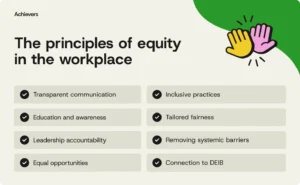
Looking ahead, the emphasis on employee experience will drive several key trends in global mobility. There will be an increased demand for continuous feedback mechanisms to gauge sentiment throughout the assignment lifecycle, moving beyond post-relocation surveys to real-time insights. Predictive analytics will become more sophisticated, allowing organizations to anticipate potential challenges and offer proactive support. Hyper-personalization of mobility packages, tailored to individual employee and family needs rather than one-size-fits-all policies, will become a differentiator. Furthermore, the integration of DEI principles into every stage of the mobility process will be paramount, ensuring equitable support for all relocating employees, regardless of their background or family structure.
The findings of the Cartus Global Talent Mobility Survey 2026 underscore a fundamental truth: employee experience is no longer a peripheral concern in global mobility. It has become the definitive standard by which mobility programs are judged, a testament to its critical role at the intersection of strategic business objectives and the profound human experience of relocation. Organizations that recognize and effectively navigate this complex challenge, through a blend of intention, strategic partnerships, and a genuine commitment to designing mobility around real people, will be the ones that succeed in attracting, retaining, and developing the global talent essential for future success. The future of global mobility is not just about moving people; it’s about moving lives, careers, and aspirations with unparalleled care and strategic foresight.