
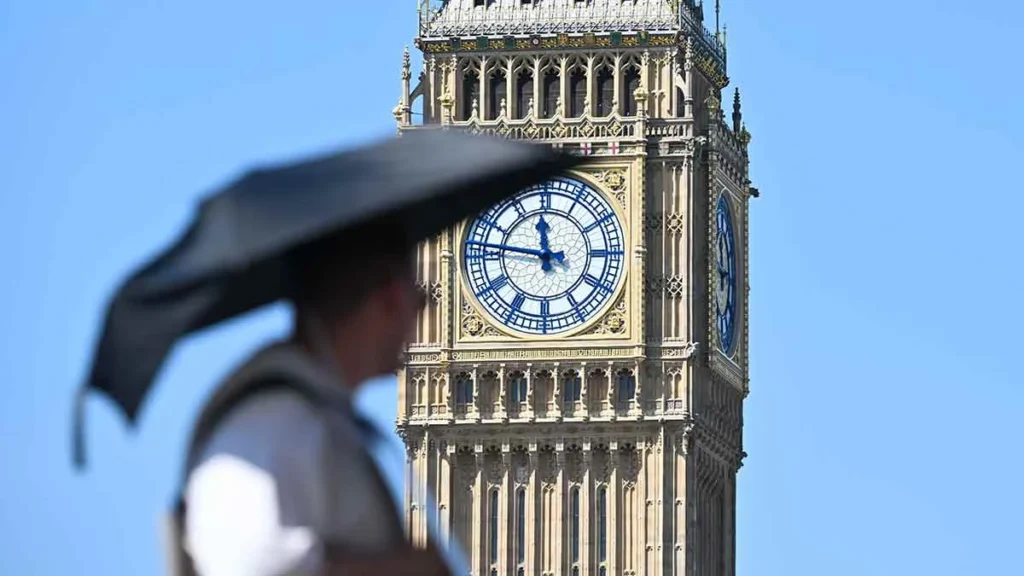
In a significant move poised to reshape workplace safety standards across the United Kingdom, Hannah Spencer, the Green Member of Parliament who secured the Gorton and Denton by-election in February, is set to introduce a private member’s bill advocating for a legally mandated maximum workplace temperature. This legislative push comes in the wake of unprecedented heatwaves that have gripped the nation, highlighting what Spencer describes as the “absurdity” of the UK’s current lack of comprehensive guidance on excessive heat in employment settings. The proposed bill aims to establish a robust framework to protect workers from the escalating risks posed by rising global temperatures, a concern long championed by trade unions and health and safety advocates.
The initiative gains particular urgency following a period of extreme heat in May and June, which researchers from Imperial College London, the Met Office, and the London School of Hygiene and Tropical Medicine have estimated led to over 2,700 heat-related deaths in England and Wales. These figures underscore the profound human cost of insufficient adaptation to climate change and the critical need for proactive measures to safeguard public health and worker welfare. Spencer articulated the gravity of the situation, stating, “This is something workers and trade unions have been raising the alarm about for many years. It shouldn’t have taken this long to act, but the unsafe temperatures we’re seeing now should be a huge wake-up call. We’ve seen absolute chaos as a result of these recent temperatures, and such a massive human cost, yet we haven’t heard a peep from government about how they plan to protect us all.”
The Catalyst: Unprecedented Heatwaves and Public Health Crisis
The summer of 2026 has brought with it a stark reminder of the realities of climate change, with May and June registering as some of the hottest on record. Across England and Wales, communities grappled with soaring temperatures that pushed infrastructure to its limits and posed severe health risks. The estimated 2,700 heat-related fatalities represent a grim statistic, indicative of the vulnerability of populations, particularly the elderly, those with pre-existing health conditions, and individuals whose occupations expose them directly to extreme heat. Beyond the tragic loss of life, the heatwaves placed immense strain on the National Health Service (NHS), with increased admissions for heatstroke, dehydration, and exacerbated cardiovascular and respiratory conditions. Public transport systems experienced significant disruptions, and productivity across various sectors was demonstrably impacted as workers struggled in arduous conditions.
This period of intense heat has not been an isolated incident but rather part of a discernible trend of increasingly frequent and severe heatwaves globally, directly attributable to anthropogenic climate change. Scientific consensus, as outlined by the Intergovernmental Panel on Climate Change (IPCC), indicates that such events will only become more common and intense, making the need for adaptive policies, including those for occupational health and safety, more pressing than ever. The UK, historically accustomed to more temperate climates, is increasingly confronting the challenges of extreme weather, necessitating a re-evaluation of its resilience strategies.
The Legislative Gap: A Decades-Old Anomaly in Worker Protection
A central tenet of Hannah Spencer’s argument is the glaring omission in current UK legislation regarding maximum workplace temperatures. While the Workplace (Health, Safety and Welfare) Regulations 1992 stipulate that employers must maintain a "reasonable temperature" in the workplace, they conspicuously fail to define an upper limit. The regulations do specify a minimum temperature of 16°C for most workplaces, or 13°C if the work involves considerable physical activity. However, the expectation for employers to prevent workplaces from becoming "uncomfortably hot" is vague and lacks the enforceability of a definitive maximum threshold.
This regulatory ambiguity leaves significant room for interpretation and, critics argue, allows some employers to operate without adequate safeguards when temperatures rise. Unlike some European counterparts, which have specific maximum temperature regulations, the UK relies on a general duty of care, which can be difficult to enforce proactively. This gap has been a persistent point of contention for trade unions and worker advocacy groups, who argue that the absence of a clear legal standard compromises worker health, safety, and productivity, especially during periods of extreme heat.
Voices from the Frontline: Tales of Unbearable Conditions
The urgency of Spencer’s bill is underscored by myriad firsthand accounts from workers across diverse sectors who have endured harrowing conditions during the recent heatwaves. The MP highlighted several examples, including bus and train drivers "sweltering in cabins that are hotter than the soaring temperatures outside." These confined spaces, often with inadequate ventilation or air conditioning, can become dangerous ovens, posing risks of heat exhaustion and impaired concentration, which has significant safety implications for passengers.
Bakers, working in already hot environments, reported temperatures exceeding 40°C, compounding the inherent risks of their profession. Builders, whose work often takes place outdoors with no immediate respite from the sun, face relentless exposure, leading to severe dehydration and heat stress. Spencer recounted a particularly poignant anecdote from a constituent in Gorton and Denton, who described the "unbearable" conditions while laying Tarmac on roads – a physically demanding task exacerbated by the intense heat radiating from the ground and the materials themselves. These examples illustrate that the issue is not confined to specific industries but is a pervasive challenge impacting a broad spectrum of the workforce, from manual labourers to those in service roles and even office environments where cooling systems may be insufficient or non-existent.
A Call to Action: Advocacy from Trade Unions and Expert Bodies
The call for a maximum workplace temperature is not new; it has been a consistent demand from various stakeholders for many years.
Trade Union Congress (TUC): The TUC has been at the forefront of this campaign, consistently advocating for the introduction of an upper legal limit. Their long-standing proposal suggests that employers should be compelled to act when workplace temperatures reach 24°C, potentially allowing staff to be sent home if conditions do not improve. Furthermore, the TUC has argued for legal recourse, proposing that employers could face prosecution if temperatures in the workplace escalate to 30°C, or 27°C for those engaged in physically demanding work. The TUC’s stance is rooted in the belief that worker safety and health should not be discretionary but a legally enforceable right, particularly in the face of a changing climate. Their campaigns have consistently highlighted the detrimental effects of heat on worker health, including increased risk of accidents, fatigue, and long-term health complications.
Climate Change Committee (CCC): In May, just prior to the most severe heatwaves, the Climate Change Committee (CCC), an independent advisory body established under the Climate Change Act 2008, lent significant weight to the argument. The CCC recommended that the government commit to establishing a maximum temperature at work "to protect workers’ safety." Crucially, they also advised incentivizing employers to invest in cooling systems and adaptation measures. The CCC proposed a "target indoor temperature range" of between 16°C and 25°C, drawing upon existing regulatory principles. As an authoritative body providing independent advice to the UK and devolved governments on tackling and preparing for climate change, the CCC’s recommendations underscore the scientific and strategic imperative of addressing workplace heat. Their involvement highlights that this is not merely a comfort issue but a critical component of national climate resilience and public health strategy.

The Proposed Legislation: Spencer’s Bill and Its Mechanics
Hannah Spencer’s private member’s bill seeks to directly address the legislative void identified by workers, unions, and advisory bodies. If passed, the proposed legislation would fundamentally alter the landscape of workplace health and safety in the UK. A key feature of the bill is the establishment of an independent body. This body would be tasked with the crucial responsibility of recommending maximum safe workplace temperatures, taking into account various factors such as the nature of the work, the environment, and scientific health guidelines. Furthermore, the bill would set out how these recommendations should be implemented across different sectors, ensuring a practical and enforceable framework.
The introduction of such an independent body signifies a move towards evidence-based and adaptable regulation, capable of responding to evolving climate conditions and occupational health research. It would remove the ambiguity of the current "reasonable temperature" clause, replacing it with clear, measurable standards. The anticipated cross-party support for Spencer’s bill suggests a growing political consensus on the necessity of this reform, indicating that the issue transcends traditional party lines and is recognized as a fundamental aspect of worker protection in the 21st century.
Government’s Response and Parallel Initiatives
While Spencer’s bill represents a proactive legislative effort, there are parallel developments within the government. Last week, Stephen Timms, the social security and disability minister, issued a written statement confirming that the Health and Safety Executive (HSE) will be launching a public consultation. This consultation will focus on proposed changes to the Approved Code of Practice (ACoP) for the Workplace (Health, Safety and Welfare) Regulations 1992, specifically including those relating to workplace temperature.
This announcement from the government, while not directly proposing new legislation, signifies an acknowledgement of the mounting pressure and the recognized need to update existing guidance. An Approved Code of Practice provides practical advice on how to comply with the law, and updates to it could offer more specific guidelines for employers regarding heat. However, critics may argue that updating an ACoP, while helpful, still falls short of a legally binding maximum temperature, which a parliamentary bill could deliver. The HSE consultation could be seen as a governmental response to the public and political pressure generated by the heatwaves and advocacy groups, potentially seeking to offer a more immediate, albeit perhaps less definitive, solution.
International Comparisons: Learning from Global Standards
The UK’s current stance on workplace temperatures places it somewhat behind other developed nations that have already implemented specific maximum limits or comprehensive guidelines. For instance, countries like France and Spain have regulations that mandate measures when temperatures exceed certain thresholds, often around 30°C or even lower for physically demanding tasks. In France, employers are legally obliged to provide water, ventilate premises, and adapt work schedules when temperatures rise. Spain’s occupational safety regulations require employers to assess risks related to thermal stress and implement appropriate controls.
Similarly, some states in the United States, such as California, have specific heat illness prevention standards for outdoor workers, including requirements for shade, water, and rest breaks. Germany has technical rules for workplaces (ASR A3.5) that recommend actions for employers at various temperature levels, with 26°C, 30°C, and 35°C serving as key thresholds for specific interventions. These international examples demonstrate that establishing clear maximum temperature limits and associated employer duties is a feasible and adopted practice, aimed at protecting worker health and maintaining productivity in an increasingly warmer world. The UK’s move towards similar legislation would align it with evolving global best practices in occupational health and safety.
Economic and Health Implications: The Cost of Inaction
The implications of extreme workplace temperatures extend far beyond mere discomfort, impacting both worker health and economic productivity. On the health front, prolonged exposure to heat can lead to a range of conditions from heat rash and cramps to heat exhaustion and the life-threatening heatstroke. It can also exacerbate existing cardiovascular and respiratory conditions, increase the risk of accidents due to fatigue and impaired concentration, and contribute to long-term health problems. The human cost, as evidenced by the recent heatwave fatalities, is undeniable.
Economically, high temperatures significantly diminish worker productivity. Studies have shown a noticeable decline in cognitive function and physical performance as temperatures rise above an optimal range. This can translate into reduced output, increased errors, and higher rates of absenteeism. For industries reliant on manual labour or precision tasks, the impact can be particularly severe. Investing in cooling systems, adapting work schedules, and implementing heat-safety protocols, while incurring initial costs for employers, can ultimately lead to a more resilient, healthier, and productive workforce, thereby mitigating the substantial economic losses associated with heat-related illness and inefficiency. The Climate Change Committee’s recommendation to incentivize such investments acknowledges this long-term economic benefit.
The Road Ahead: Legislative Journey and Future Outlook
The introduction of Hannah Spencer’s bill marks the beginning of a potentially transformative legislative journey. As a private member’s bill, its path through Parliament will depend on securing adequate parliamentary time and cross-party consensus, which appears promising given the current context. Concurrently, the HSE’s public consultation on the Approved Code of Practice will gather expert and public opinion, providing further data and pressure for regulatory change. The confluence of these efforts – a direct legislative proposal and a governmental review of existing guidance – indicates a strong impetus for reform.
Should Spencer’s bill pass, it would signify a monumental shift in UK workplace safety, offering a robust legal framework to protect millions of workers from the growing threat of extreme heat. It would mandate clear responsibilities for employers, empower workers with greater protections, and provide a mechanism for independent, expert-driven guidance. As the UK continues to grapple with the realities of a changing climate, this legislation would be a crucial step towards building a more resilient and humane working environment, ensuring that the health and safety of the workforce remain paramount in the face of escalating environmental challenges.








