As businesses globally accelerate their reliance on artificial intelligence (AI), human resources (HR) leaders are confronting a pivotal challenge: the pressing need to identify and develop employees capable of effectively supervising these increasingly sophisticated systems. This critical shift, highlighted in a recent report, signals a fundamental redefinition of roles, particularly at the entry level, and underscores a significant gap in current corporate learning and development initiatives. The insights, stemming from a comprehensive survey of 750 HR leaders across the U.S., the U.K., and India, published on June 26, 2026, by Cognizant and Pearson, paint a clear picture of an evolving talent landscape where human judgment and oversight are becoming paramount to successful AI integration.
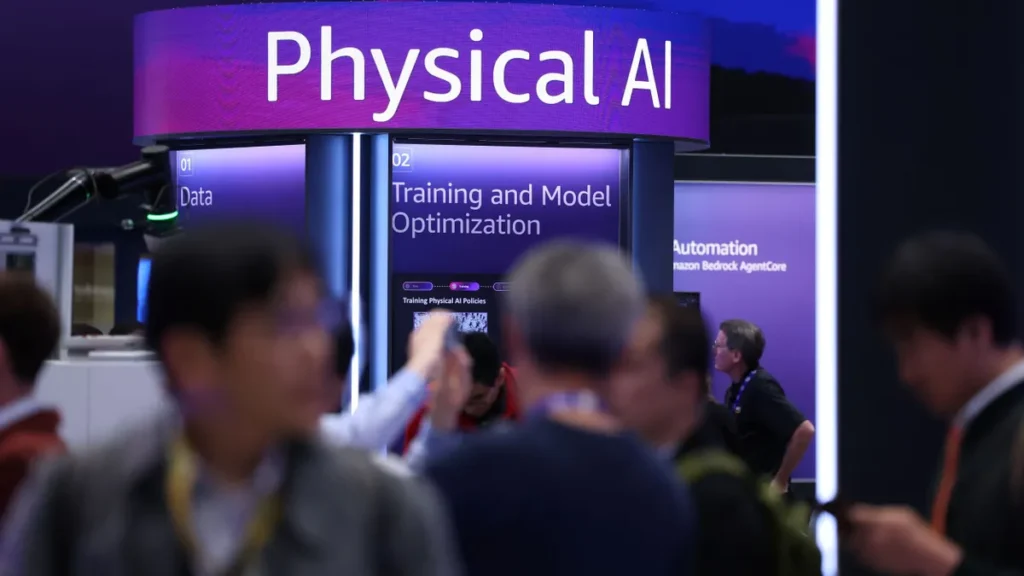
The report emphasizes that the rapid proliferation of AI tools, from automated customer service agents to sophisticated data analytics platforms, necessitates a new kind of workforce. No longer are entry-level positions merely about executing predefined tasks; they are transforming into roles that demand a nuanced understanding of AI capabilities, limitations, and ethical implications. This evolution requires employees who can monitor AI performance, interpret its outputs, troubleshoot anomalies, and ensure its alignment with organizational goals and human values. The photograph from an industrial trade fair in Hanover, Germany, on April 20, 2026, showing attendees at a "Physical AI Training and Model Optimization" booth, visually encapsulates this burgeoning industry focus on human-AI collaboration and management.
The Accelerating Pace of AI Integration and Its Workforce Implications
The trajectory of artificial intelligence has been nothing short of meteoric, particularly in the last decade. What began as specialized algorithms for specific tasks has rapidly expanded into generative AI, predictive analytics, and autonomous systems, permeating nearly every sector from manufacturing and finance to healthcare and customer service. This widespread adoption is driven by promises of increased efficiency, reduced costs, and enhanced innovation. However, the very nature of these advanced systems—their complexity, potential for bias, and the critical need for ethical deployment—mandates robust human oversight.
Historically, technological revolutions have always reshaped labor markets, but the current wave of AI presents unique challenges. Unlike previous automation, which often replaced repetitive manual tasks, AI is increasingly capable of performing cognitive functions, leading to anxieties about job displacement. Yet, the report from Cognizant and Pearson, alongside other industry analyses, suggests a more nuanced outcome: a transformation rather than outright elimination of roles. The new frontier isn’t just about building AI; it’s about managing it, optimizing it, and integrating it responsibly into human workflows. This shift necessitates a proactive approach from HR departments to identify future skill requirements and prepare their workforces accordingly. The timeline of AI’s integration into business operations has compressed dramatically, moving from experimental phases to essential infrastructure within a few short years, thus placing immense pressure on talent development strategies.
The Urgency of Upskilling: A Global Development Gap
Despite the clear and present need for AI-ready workers, the report reveals a critical disconnect within organizations regarding talent development. An overwhelming 91% of HR leaders surveyed noted a significant increase in employee requests for AI training over the past year, indicating a strong internal awareness and desire among the workforce to adapt to the changing landscape. However, nearly half of the companies surveyed (46%) admitted to not providing any such training. This statistic highlights a glaring gap between employee demand for relevant skills and organizational provision of the necessary resources.
Furthermore, the agility of learning and development (L&D) programs appears to be a major bottleneck. A substantial 60% of HR professionals expressed concerns that their organization’s current L&D initiatives were simply too slow to keep pace with the rapid advancements and evolving demands of AI technology. This sluggishness can be attributed to several factors: traditional L&D models often involve lengthy curriculum development cycles, a lack of specialized trainers, and insufficient investment in new learning technologies. The speed at which AI is developing means that by the time a comprehensive training program is designed and implemented, the technology itself may have already evolved, rendering parts of the training obsolete.
Kathy Diaz, Chief People Officer at Cognizant, succinctly articulated this challenge, stating, "AI is reshaping the talent landscape and exposing the limits of traditional talent and learning models. With the fundamental shift in entry-level tasks and skill requirements changing rapidly, organizations must rethink how they hire and develop talent at pace." This statement underscores the need for a paradigm shift in how companies approach talent acquisition and continuous learning, moving away from static models to dynamic, adaptive frameworks that can respond in real-time to technological evolution.
Redefining Entry-Level Roles and Valued Skills
The report challenges conventional wisdom regarding qualifications, suggesting a profound reevaluation of what makes an ideal candidate for AI-focused roles. Rather than prioritizing narrow, specialized degrees, a significant 69% of respondents indicated that employees and candidates with "broad, interdisciplinary backgrounds" are better suited for these new entry-level positions. This preference stems from the complex nature of AI supervision, which often requires a blend of technical understanding, critical thinking, problem-solving, and an ability to contextualize AI outputs within broader business objectives.
Perhaps even more striking, two-thirds (67%) of HR leaders reported finding liberal arts degrees more valuable than they used to. This resurgence in the appreciation for humanities and social sciences reflects a growing recognition that while AI can handle data processing and complex calculations, human skills like ethical reasoning, creative problem-solving, critical analysis, and nuanced communication remain indispensable. These skills are crucial for tasks such as identifying biases in AI algorithms, interpreting ambiguous AI recommendations, and effectively communicating AI-driven insights to diverse stakeholders.

Further reinforcing this trend, a near-unanimous 97% of HR professionals highlighted the critical importance of soft skills. These include adaptability, problem-solving, and human judgment – qualities that are inherently difficult for AI to replicate. Adaptability is essential in an environment of constant technological change, enabling employees to learn new tools and methodologies quickly. Problem-solving extends beyond technical debugging to encompass complex scenarios where AI may offer a solution that is technically sound but practically or ethically problematic. Human judgment, perhaps the most critical, involves making decisions that consider context, nuance, and ethical implications, areas where AI, despite its advancements, still lacks true understanding and consciousness. As HRDive previously reported, entry-level workers are often unprepared for their jobs amidst this AI blitz, underscoring the urgent need to cultivate these very soft skills.
Expert Perspectives and Strategic Industry Responses
The statements from leadership at Cognizant and Pearson resonate with a broader industry consensus emerging around the strategic importance of human-AI collaboration. Ali Bebo, CHRO at Pearson, articulated this vision, stating, "As work evolves, the most successful organizations will focus less on replacing tasks and more on building the capabilities that help humans and AI work together. That starts with early-career talent. The future belongs to organizations that combine AI innovation with a deep understanding of how people learn, develop, and apply new skills in the real world." This perspective moves beyond the simplistic "AI vs. humans" narrative to one of synergistic partnership, where AI augments human capabilities, and humans provide the crucial oversight and strategic direction.
Many forward-thinking companies are beginning to implement initiatives to address this talent gap. These include internal academies focused on AI literacy, partnerships with educational institutions to tailor curricula to future workforce needs, and the adoption of continuous learning platforms. Some organizations are experimenting with "AI fluency" as a core competency for all employees, rather than just a specialized skill, recognizing that even those not directly supervising AI will interact with it regularly. The shift also impacts recruitment strategies, with companies increasingly looking beyond traditional technical degrees to candidates who demonstrate strong cognitive flexibility, ethical awareness, and a proclivity for lifelong learning. This holistic approach is essential for building a resilient workforce capable of navigating the complexities of the AI era.
The Critical Role of Management in an AI-Driven World
The evolving workforce demands also shed light on the indispensable role of a robust management layer, particularly in supervising AI systems. Interestingly, a 2025 report from the workforce communication platform Firstup found that recent reductions in middle management have paradoxically made communication, productivity, and employee engagement more challenging. This finding gains new significance in an AI-driven environment. Middle managers often serve as crucial conduits between strategic objectives and operational execution, translating high-level goals into actionable tasks and providing direct oversight. In the context of AI, they would be instrumental in ensuring AI systems are deployed correctly, their outputs are integrated effectively, and potential issues are identified and addressed promptly.
A depleted middle management layer could exacerbate the challenges of AI supervision. Without experienced managers to guide human-AI teams, ensure ethical compliance, and interpret complex AI-generated data, the risk of misaligned AI deployment, operational inefficiencies, and even unintended negative consequences increases significantly. Effective AI supervision is not a standalone technical task; it requires leadership, coordination, and a deep understanding of both technological capabilities and organizational context—qualities often embodied by a strong management structure. This suggests that while AI may automate certain tasks, it elevates the importance of human leadership and strategic oversight.

Productivity Pressures and the Future of Work
Compounding these challenges is the growing expectation for increased productivity from entry-level workers, often fueled by the promise of AI. A recent survey indicated that almost half of U.S.-based HR professionals believe AI is placing pressure on early-career workers to achieve higher productivity levels, even when staffing levels remain static. While AI certainly has the potential to boost output, this expectation can be a double-edged sword. If workers are not adequately trained to leverage AI effectively or to supervise it responsibly, the pressure for increased productivity can lead to burnout, errors, and a general sense of being overwhelmed.
The future of work, therefore, is not merely about integrating AI, but about thoughtfully designing work processes that optimize human-AI collaboration. This involves investing in continuous learning, fostering a culture of adaptability, and ensuring that expectations for productivity are realistic and supported by adequate training and managerial oversight. The goal should be to empower employees to use AI as a tool for augmentation, enhancing their capabilities and allowing them to focus on higher-value, more complex tasks that require uniquely human attributes.
Broader Implications for Education and Economic Competitiveness
The findings of the Cognizant and Pearson report carry profound implications beyond individual organizations, extending to educational institutions and national economic competitiveness. Universities and vocational schools must adapt their curricula to prepare students for these evolving roles, integrating AI literacy, data ethics, and interdisciplinary problem-solving into their programs. The revaluation of liberal arts degrees signals a need for a more holistic educational approach that balances technical skills with critical thinking, creativity, and communication.
For economies, the ability to effectively integrate and supervise AI will be a key differentiator in the global marketplace. Nations that prioritize talent development in this area will likely see greater innovation, higher productivity, and more resilient workforces. Conversely, those that lag in preparing their citizens for AI-driven roles risk falling behind. The onus is on governments, educational bodies, and private enterprises to collaborate in building a robust ecosystem for lifelong learning and continuous skill development, ensuring that the human element remains central to the AI revolution.
In conclusion, the era of widespread AI adoption is here, and it demands a proactive, strategic response from HR leaders. The imperative to find and develop employees who can supervise AI systems is not just a passing trend but a fundamental shift in workforce requirements. Addressing the current training deficit, embracing interdisciplinary talent, valuing soft skills, and strengthening managerial oversight are critical steps. As Kathy Diaz and Ali Bebo underscore, the future success of organizations hinges on their ability to foster a symbiotic relationship between humans and AI, ensuring that technological advancement is guided by human judgment, adaptability, and ethical considerations. The path forward requires a rethinking of traditional talent models, prioritizing continuous learning, and nurturing the uniquely human capabilities that will ultimately drive innovation and responsible progress in an AI-augmented world.