
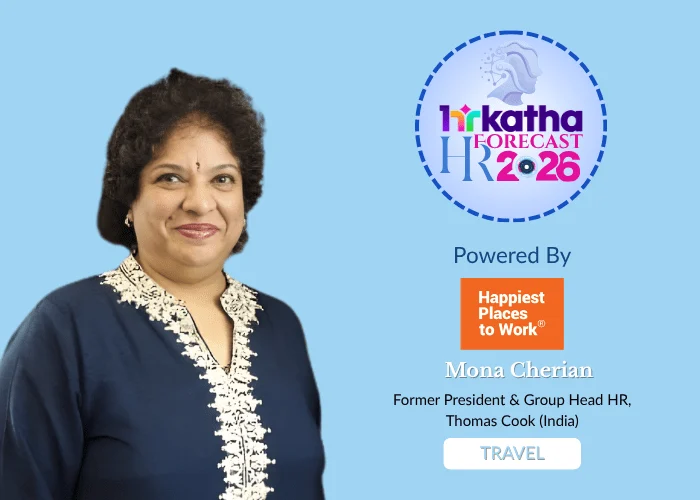
Mona Cheriyan, a distinguished former President & Group Head of Human Resources at Thomas Cook (India), posits that by 2026, the true measure of an organization’s success will lie not in the loftiness of its announced policies, but in its tangible commitment to fundamentally redesigning the very fabric of how work operates. "The organizations that win will not be the ones with the loudest slogans, but the ones that redesign how work itself is structured," Cheriyan asserts, highlighting a critical pivot from superficial engagement to structural transformation. Several converging signals underscore this impending paradigm shift, pointing towards a future where agility, human-centricity, and adaptability are paramount.
The Genesis of Transformation: From Legacy Systems to Evolving Demands
The journey towards this redesign imperative is not sudden but a culmination of decades of evolving economic pressures, technological advancements, and, most recently, the seismic shifts brought about by the global pandemic. Pre-pandemic work environments, while increasingly digitized, often retained hierarchical structures, fixed roles, and a presenteeism culture. Internal career progression was typically linear, and employee well-being, though gaining traction, was often treated as a supplementary program rather than an integrated design principle. Compensation models, largely annual, struggled to keep pace with rapid economic fluctuations, while benefits packages, designed for a more homogenous workforce, became increasingly inadequate for diverse generational and lifestyle needs.
The pandemic acted as a powerful accelerant, forcing organizations globally to rethink remote work, digital collaboration, and employee support at an unprecedented scale. This period starkly illuminated the fragilities of existing systems and amplified employee demands for greater flexibility, empathy, and purpose. Concurrently, the rapid ascent of Artificial Intelligence (AI) has introduced another layer of complexity and opportunity, prompting a re-evaluation of human-machine collaboration and the intrinsic value of uniquely human capabilities. These forces collectively set the stage for the fundamental redesign that Cheriyan and other thought leaders predict.
Signal 1: Internal Mobility – Shifting from Talent Hoarding to Strategic Exporting
For far too long, internal mobility, despite being a stated organizational goal, has been hampered by a pervasive culture of "talent hoarding." Managers, driven by short-term team performance metrics, have often been reluctant to release their top performers, fearing a dip in productivity or a loss of critical expertise. This mentality, coupled with rigid HR systems designed for control rather than fluidity, created silos that trapped talent and hindered organizational agility.
This dynamic is now undergoing a significant transformation. "We are beginning to see a shift from ‘jobs’ to ‘work portfolios’," Cheriyan observes. "Instead of rigid roles, employees move between projects, gigs and missions aligned to business priorities." This evolution recognizes that talent is a dynamic asset, best utilized when deployed where it can create the most value, irrespective of departmental boundaries. Industry reports, such as those from LinkedIn and the World Economic Forum, consistently highlight that companies with high internal mobility rates experience significantly lower turnover, higher employee engagement, and enhanced innovation. A 2023 McKinsey report, for instance, found that organizations excelling at internal mobility were 2.5 times more likely to outperform their peers in innovation.
The advent of AI-enabled talent marketplaces is playing a crucial role in this shift. These platforms leverage advanced algorithms to match employee skills and aspirations with internal opportunities across various functions, making skills, rather than hierarchical position, the primary currency of movement. However, technology alone is insufficient. The deeper, more impactful change is cultural. "Progressive organisations are rewarding leaders not for hoarding talent, talent but for exporting it. Performance metrics increasingly include how leaders develop people for roles beyond their teams," Cheriyan emphasizes. This redefines leadership effectiveness, shifting the focus from individual team success to broader organizational capability building. Career journeys are evolving from linear ladders to dynamic lattices, offering employees more nonlinear, fluid, and individualized pathways for growth and development. While highly regulated industries or legacy-driven enterprises may adopt these changes at a slower pace, the overarching direction is unequivocal. "Where talent flows freely, innovation follows," Cheriyan notes, underscoring the intrinsic link between talent fluidity and organizational vitality. By 2026, organizations that genuinely commit to redesigning work allocation and leader evaluation based on talent development will possess a distinct agility advantage.
Signal 2: Combating Burnout – Prioritizing Sustainable Performance Over Visible Effort
The profound post-pandemic burnout crisis served as a stark, undeniable revelation: productivity models predicated on constant availability and relentless effort are fundamentally unsustainable. While some organizations may continue to pay lip service to employee wellbeing, quietly maintaining an "always-on" culture beneath layers of wellness campaigns and resilience workshops, a growing number are charting a more sustainable course.
These forward-thinking organizations are recalibrating their performance metrics. "They are shifting from measuring effort to measuring impact. From hours logged to outcomes delivered. From urgency to intentionality," Cheriyan explains. This reorientation acknowledges that true productivity stems from focused, impactful work, not from sheer volume of hours or visible exhaustion. Sustainable performance is increasingly recognized as a core leadership discipline, rather than merely an HR initiative. Leaders are being equipped and expected to design work with built-in recovery periods, model healthy boundaries, and conscientiously manage human energy as a finite and invaluable organizational resource.
Research consistently supports this shift. A 2022 Gallup study revealed that burnout costs the global economy billions annually in lost productivity and healthcare expenses. Conversely, organizations prioritizing employee well-being and sustainable work practices report higher engagement, lower turnover, and improved innovation. "High-performing cultures will not be the loudest or fastest. They will be the most disciplined. Employees are expected to bring their best thinking, not their constant presence," Cheriyan states. This subtle yet significant change signifies that while burnout may not vanish entirely, its status as a perceived badge of commitment or a necessary evil is rapidly eroding. In 2026, the truly outperforming organizations will be those that prioritize sustainable impact through disciplined work design, rather than those that merely extract the highest visible effort from their workforce.
Signal 3: Compensation Evolution – Towards Dynamic and Responsive Pay Structures
The traditional annual pay cycle, once a bedrock of corporate compensation, has been severely challenged by escalating inflation and volatile cost-of-living pressures. The conventional increment model increasingly feels detached from the day-to-day financial realities of employees, leading to growing discontent and eroding trust.
"We are seeing early movement toward more responsive pay practices," Cheriyan observes. While a wholesale shift to real-time compensation adjustments might remain niche, the underlying assumption that pay structures should remain static irrespective of external economic conditions is weakening. Some organizations are proactively experimenting with mid-year corrections, inflation buffers, and location-sensitive allowances to address the specific needs of critical talent segments. For instance, companies in regions experiencing rapid cost-of-living increases might implement periodic stipend adjustments, or offer one-time inflation relief bonuses.
The shift extends beyond mere adjustments; it’s a philosophical re-evaluation. "Compensation is no longer viewed purely as a reward for past performance, but as a mechanism for financial security and trust," Cheriyan explains. Employees are increasingly demanding transparency, not only about their own earnings but also regarding how their employers intend to respond to broader economic shocks. A 2023 PwC survey on employee expectations highlighted that financial security and transparent communication around compensation are top priorities for attracting and retaining talent. "Inflation-indexed salaries may remain niche, but dynamic pay will become more common, especially in competitive talent markets," Cheriyan predicts. The concept of fairness is evolving from uniform, across-the-board increments to a more nuanced, contextual equity that acknowledges differing economic realities. Organizations that demonstrate agility in their compensation strategies, listening to employee feedback, adapting to market conditions, and communicating clearly, will foster greater trust and engagement. Conversely, those that rigidly adhere to outdated pay cycles risk silently eroding employee loyalty and motivation.
Signal 4: Benefits Reimagined – From Static Packages to Modular Platforms
With workforces now spanning up to five distinct generations, each with unique life stages, priorities, and financial situations, a monolithic definition of "valuable benefits" has become an impossibility. The question is no longer if benefits should be flexible, but how this flexibility can be implemented without fragmenting the employee experience or compromising equity.
"We are moving steadily toward self-service, modular benefits ecosystems," Cheriyan states. Employees increasingly expect the autonomy to tailor their benefits packages to their individual needs, whether that involves increased allocations for childcare, elder care, robust financial planning services, comprehensive mental health support, or generous learning and development allowances. This bespoke approach recognizes the diverse tapestry of modern life.
Simultaneously, the importance of standardized core protections remains undiminished. "Core protections such as healthcare, retirement security and insurance remain the backbone of organisational responsibility. What changes is the layer built on top," Cheriyan clarifies. The most forward-thinking organizations are designing benefits as customizable platforms rather than fixed packages. This approach allows for structured choice, empowering employees while maintaining a foundational level of security and avoiding chaotic fragmentation. Furthermore, these organizations are investing significantly in employee education, guiding individuals to make informed choices from the array of options, rather than overwhelming them with complexity. A 2023 MetLife report on employee benefits trends revealed that personalized benefits offerings significantly boost employee satisfaction and retention rates. In a multi-generational workforce shaped by varied realities, benefits are evolving from a static policy document into an ongoing, dynamic conversation. "Flexibility signals respect. And in an era where employees evaluate employers through the lens of life support, not just career growth, benefits strategy becomes a quiet but powerful statement of values," Cheriyan concludes, underscoring the strategic importance of this shift.
Signal 5: Human Skills – The Indispensable Differentiator in the AI Age
As Artificial Intelligence continues its rapid advancement, automating an increasing array of technical and repetitive tasks, it fundamentally reshapes the qualities organizations value most in their human capital. This is not a decline in the importance of skills, but rather a "rebundling" of them. "What we are witnessing is not the decline of skills, but their rebundling," Cheriyan notes. Technical expertise remains crucial, but it is increasingly insufficient on its own to drive innovation and navigate complexity.
The true differentiators emerging are uniquely human capabilities. "Emotional intelligence, critical thinking, ethical judgment, creativity and contextual decision-making are becoming the true differentiators, especially in leadership roles," Cheriyan explains. These are the skills that AI, for all its sophistication, struggles to replicate. Forward-looking organizations are moving beyond treating these as mere "soft skills" or workshop topics. Instead, they are actively embedding their development into the fabric of everyday work through cross-functional problem-solving initiatives, immersive scenario planning, reflective leadership development programs, and collaborative human-AI projects.
The symbiotic relationship between humans and AI is becoming clearer. "AI excels at answers. Humans excel at questions," Cheriyan aptly summarizes. The most valuable employees in this new era will be those adept at navigating ambiguity, challenging assumptions, and applying nuanced judgment with empathy and a deep understanding of context. A 2023 World Economic Forum report on the Future of Jobs emphasizes that critical thinking, creativity, and self-efficacy are among the top skills growing in importance. This "renaissance of human skills" is not a retreat from technology; it is a direct and necessary response to it. Organizations that strategically invest in cultivating these uniquely human capabilities will find AI amplifying, rather than replacing, human judgment and ingenuity. Conversely, those that neglect this investment may achieve efficient automation but struggle to foster wise leadership and truly innovative solutions.
The Redesign Imperative: Strategic Pathways to Future Success
These five signals—internal mobility as a core business capability, sustainable performance as a leadership discipline, responsive compensation, benefits designed as flexible platforms, and human skills as the ultimate competitive advantage—collectively point to a broader, undeniable shift. The organizations poised for success in 2026 will not merely be those that adopt the most progressive language or superficial initiatives. They will be the ones with the courage and foresight to fundamentally redesign how work actually functions at every level.
"The organisations that win will not be the ones with the loudest slogans, but the ones that redesign how work itself is structured," Cheriyan reiterates. This isn’t about minor adjustments; it’s about foundational changes that impact daily operations and long-term viability. As Cheriyan states, "High-performing cultures will not be the loudest or fastest. They will be the most disciplined." And critically, "AI amplifies, rather than replaces, human judgment." These are not symbolic gestures but operational decisions with profound implications for sustained performance and employee well-being.
To navigate this new era successfully, organizations must embrace three strategic imperatives:
- Restructure Work for Mobility: Transition from rigid job hierarchies to dynamic work portfolios and AI-enabled talent marketplaces. This involves actively rewarding leaders who cultivate and "export" talent beyond their immediate teams, fostering an ecosystem where skills flow freely to where they are most needed.
- Design Sustainable Performance: Shift the focus from measuring visible effort and hours logged to evaluating meaningful impact and delivered outcomes. This necessitates treating recovery, energy management, and healthy boundaries as integral components of work design, embedding them into organizational culture and leadership practices.
- Build Human Capability Alongside AI: Invest with rigor in developing uniquely human skills such as emotional intelligence, critical thinking, ethical judgment, and contextual decision-making. These capabilities, cultivated through cross-functional collaboration and human-AI partnerships, will differentiate organizations in an increasingly automated world.
The Redesign Test: Distinguishing Authenticity from Facade
By 2026, the critical question for organizations will not be whether they possess progressive policies—most already do, at least on paper. The true differentiator will be whether these policies genuinely and meaningfully shape the daily realities of how work is performed. Do leaders authentically champion talent export, or do outdated performance systems continue to incentivize hoarding? Are organizations genuinely rewarding impactful outcomes, or is visible exhaustion still tacitly celebrated? Does compensation adapt dynamically to economic realities, or does it remain rigidly locked into antiquated cycles? Do benefits truly offer meaningful choice and support, or merely present the illusion of flexibility? Are human skills actively developed and integrated into daily work, or are they simply subjects of discussion in sporadic workshops?
The organizations that will thrive are those where internal mobility evolves from a mere retention slogan into a vital business capability, where sustainable performance is meticulously designed into the very structure of work rather than being appended as superficial wellness messaging, and where human judgment is demonstrably strengthened and amplified by technological advancements. This discerning workforce, increasingly sophisticated in recognizing the distinction between genuine organizational redesign and mere rebranding, will ultimately choose to align with employers whose actions resonate with their evolving values and expectations. In 2026 and beyond, this crucial distinction will increasingly determine an organization’s ability to attract, retain, and inspire the talent essential for future success.








