The modern Human Resources landscape is characterized by a complex interplay of competing demands, where the drive for organizational agility and future readiness often clashes with employees’ fundamental needs for clarity, growth, and recognition. This inherent tension, according to insights gathered from HR leaders and organizational data, is not a sign of insufficient effort but rather a systemic challenge that requires a fundamental shift in approach, moving beyond resolution to creating conditions where both business and employee objectives can simultaneously thrive. Organizations feeling "stuck" are frequently caught in a structural pull where optimizing for one imperative appears to come at the expense of the other.
At its core, the business demands speed and future-ready talent to maintain sustained performance. Conversely, employees seek clarity in their roles, meaningful growth opportunities, and assurance that their contributions are recognized and valued. HR professionals find themselves positioned at the nexus of these often-conflicting needs, with an understandable, yet ultimately counterproductive, instinct to prioritize one over the other. This leads to stalled strategies and a perpetual state of organizational friction. The critical reframe, experts suggest, is not to resolve these tensions but to build the foundational conditions that enable both business success and employee fulfillment.
Defining a Thriving Workforce: Performance Meets Connection
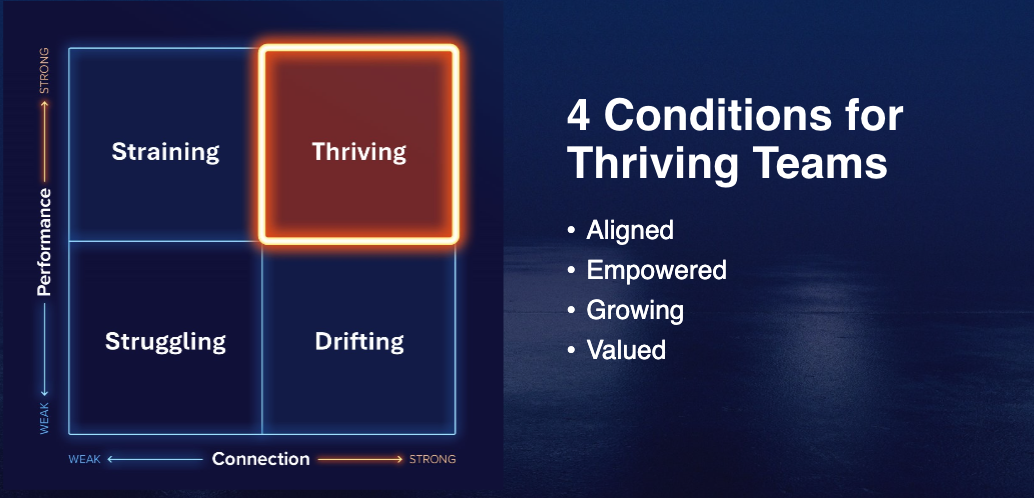
A truly thriving team is characterized by the dual presence of strong performance and robust connection, not an either/or scenario. Teams that excel in performance without a strong sense of connection risk burnout and strain. Conversely, those that prioritize connection without a focus on performance may drift without clear direction or measurable outcomes. Both scenarios are ultimately unsustainable.
Quantum Workplace, a firm specializing in employee engagement and performance, identifies four core conditions that define a thriving team: Aligned, Empowered, Growing, and Valued. Each of these conditions directly addresses a persistent tension HR leaders navigate daily. Understanding and honestly answering diagnostic questions within each of these areas can fundamentally alter organizational strategy and outcomes.

The Four Pillars of HR Strategy: Diagnostic Questions for Organizational Health
The current economic climate, marked by rapid technological advancements and evolving workforce expectations, necessitates a proactive approach to HR strategy. The following four diagnostic questions, rooted in the conditions of Aligned, Empowered, Growing, and Valued, offer a framework for assessing and improving organizational health.
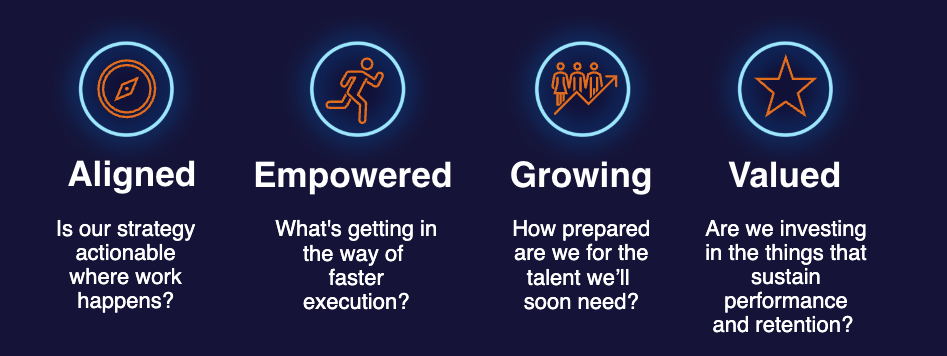
1. Aligned: Is Our Strategy Actionable Where Work Happens?
The Tension: Organizations require speed and agility, while employees need clarity and understanding of their roles in the broader strategic picture.
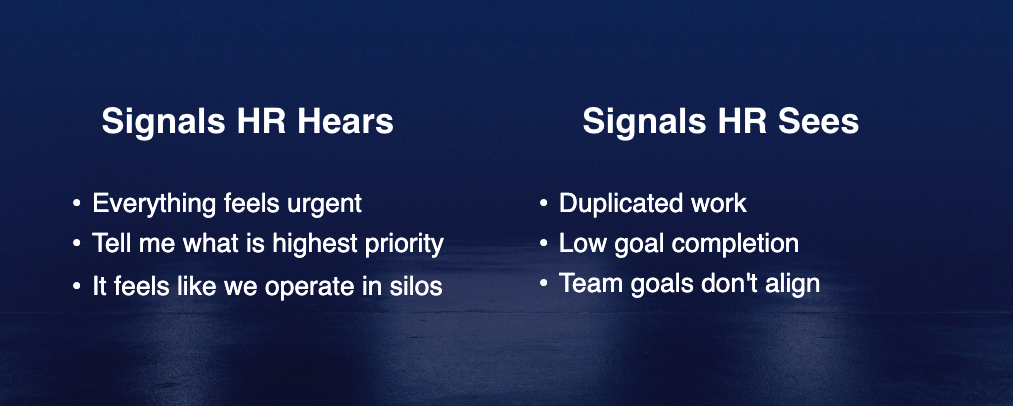
In conversations with HR leaders, common themes emerge: a sense of urgency pervading all initiatives, operational silos hindering collaboration, and a constant need to prioritize. Data often reflects this, showing duplicated efforts, low goal completion rates, and a disconnect between individual or team objectives and overarching company strategy.
The critical diagnostic question here is not merely whether employees are aware of the company strategy, but whether this clarity varies based on performance levels. When solid performers lack strategic clarity, it often presents a coaching opportunity for managers to bridge the gap. However, if top performers also exhibit a lack of clarity, it signals a systemic, organization-wide issue that cannot be resolved solely through individual management efforts.
A deeper dive involves assessing employee accountability. Do teams genuinely feel a sense of ownership and contribution to the strategy, or does it feel like an imposed directive? Survey responses can reveal subtle but significant differences, indicating whether employees are truly aligned or have quietly disengaged. Furthermore, correlating these responses with other key metrics like engagement scores and turnover risk allows HR to quantify the cost of these alignment gaps, moving beyond identification to actionable insight.
Supporting Data and Implications: Studies by Gallup consistently show that highly engaged teams, often characterized by strong alignment, are 21% more profitable. When strategic clarity is lacking, especially among high performers, it can lead to wasted resources, missed opportunities, and a decline in overall productivity. The cost of misaligned efforts can be substantial, impacting project timelines, budget adherence, and the organization’s ability to respond effectively to market shifts.
What Action Looks Like:
- Cascading Objectives: Implementing robust goal-setting frameworks (e.g., OKRs) that clearly link individual and team goals to organizational objectives.
- Transparent Communication: Establishing regular, multi-channel communication strategies to disseminate strategic priorities and progress updates.
- Manager Enablement: Equipping managers with the tools and training to effectively translate strategy into actionable team plans and provide clear direction.
2. Empowered: What’s Getting in the Way of Faster Execution?
The Tension: Businesses need to accelerate execution and decision-making, while employees require fewer bureaucratic hurdles and greater autonomy.
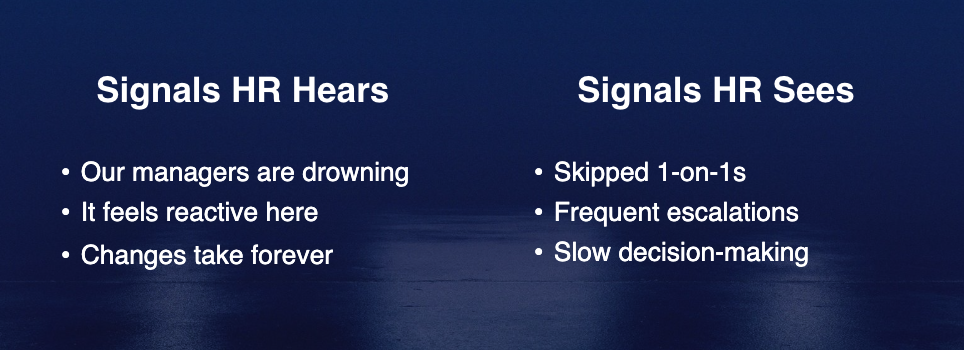
Signals of disempowerment within organizations are often visible: managers feeling overwhelmed, a pervasive sense of reactivity, and protracted decision-making processes. This can manifest as frequently skipped one-on-one meetings, constant escalations, and critical decisions taking days or weeks instead of hours.
Connecting business Key Performance Indicators (KPIs) with employee feedback can illuminate previously unseen barriers to execution. For instance, in one organization, while access to materials was assumed to be a barrier to on-time delivery, data revealed that AI adoption was the more significant factor. This kind of specific, counterintuitive insight is only surfaced when data is integrated across different systems.
A particularly overlooked aspect of empowerment is the "manager experience gap." Data from one organization starkly illustrates this:
| Metric | Managers | Non-Managers | Gap |
|---|---|---|---|
| If I contribute to the org’s success, I know I will be recognized. | 57% | 87% | -30% |
| I clearly understand how my performance is measured. | 57% | 83% | -26% |
| I know how I fit into the organization’s future plans. | 50% | 73% | -23% |
| I have opportunities to learn new skills that will help me succeed. | 57% | 80% | -23% |
| It would take a lot to get me to leave this organization. | 71% | 87% | -16% |
This data reveals that managers consistently score significantly lower than non-managers on metrics related to recognition, performance clarity, and future organizational integration. Managers cannot effectively empower their teams if they themselves do not feel empowered. This is a structural issue, not merely a reflection of individual managerial deficiencies.
Supporting Data and Implications: Research by the Harvard Business Review indicates that companies with highly engaged employees are 1.5 times more likely to outperform their competitors. A lack of empowerment can lead to decreased innovation, slower response times to market changes, and increased employee turnover, particularly among valuable managers who feel unsupported and undervalued. The cost of this disempowerment extends beyond individual frustration to tangible business performance deficits.
What Action Looks Like:
- Streamlining Processes: Identifying and eliminating bureaucratic bottlenecks and unnecessary approval layers.
- Manager Development Programs: Investing in training and support systems for managers, focusing on their empowerment, decision-making authority, and well-being.
- Delegation and Autonomy: Fostering a culture where appropriate levels of autonomy and decision-making authority are delegated to individuals and teams.
3. Growing: How Prepared Are We for the Talent We’ll Soon Need?
The Tension: Organizations must adapt to future talent needs and skill requirements, while employees desire clear career paths and opportunities for meaningful development.
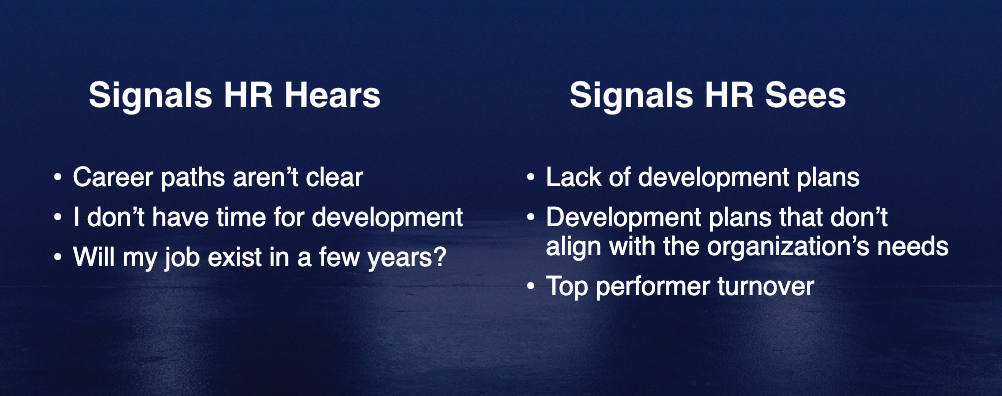
A prevalent sentiment among employees is the lack of clear career progression and insufficient time dedicated to professional development. Increasingly, employees are asking a critical question: "Will my job even exist in a few years?" This reflects a growing concern about automation, industry disruption, and the shelf-life of current skill sets.
The most effective diagnostic question in this area moves beyond simply asking if development plans exist. It probes whether these plans are active, integrated into daily work, and genuinely connected to individual career aspirations and future business needs. A documented growth plan that is rarely consulted or acted upon does not facilitate genuine development. Conversely, a stretch project that builds skills critical for the organization’s future success represents a far more impactful growth opportunity.
Integrating succession planning data with employee feedback provides a richer understanding of talent readiness. By analyzing candidate status alongside survey feedback, organizations can determine if they are intentionally cultivating the talent essential for their future or merely assuming it will materialize. Conversely, feedback from a candidate’s team can offer insights into their actual leadership effectiveness.
Key Insight: "Shift growth from a periodic process to an everyday experience embedded in work—using projects, challenges, and real priorities as the primary vehicle." This philosophy emphasizes experiential learning as a cornerstone of career development.
Supporting Data and Implications: A recent LinkedIn report found that 94% of employees would stay at a company longer if it invested in their learning and development. The failure to adequately prepare the workforce for future demands can lead to significant skill gaps, reduced competitiveness, and an inability to capitalize on emerging market opportunities. The cost of not investing in growth includes increased recruitment expenses for specialized roles and potential business stagnation.
What Action Looks Like:
- Skills-Based Development: Aligning development initiatives with identified future skill needs and career pathways.
- Experiential Learning: Integrating learning opportunities into daily work through challenging projects, cross-functional assignments, and mentorship programs.
- Proactive Succession Planning: Utilizing data to identify and develop high-potential employees for critical future roles, ensuring leadership continuity.
4. Valued: Are We Reinforcing What Matters Most?
The Tension: Organizations require sustained performance, often driven by employee contributions, while employees seek recognition and validation for their efforts.
Common employee grievances include feeling expected to do more without commensurate compensation, perceiving inequities in how roles are valued, and a sense that leadership prioritizes profit over people. Data often reflects this through inconsistent recognition practices across teams and high turnover among valued employees.
Reframing the conversation around Return on Investment (ROI) is crucial. If turnover is primarily driven by employees feeling unappreciated, then recognition shifts from a cultural nicety to a direct financial consideration. By quantifying the cost of retention risk linked to a lack of perceived value, organizations can build a compelling business case for robust recognition programs.
It’s also vital to recognize that feeling valued extends beyond top performers. Solid contributors, who often constitute the largest segment of the workforce, also need to feel their impact is acknowledged. Recognition programs that focus exclusively on high achievers may overlook the majority of employees. Integrating talent reviews or performance ratings with employee feedback can illuminate these patterns and ensure that recognition efforts are inclusive and impactful across the entire organization.
Supporting Data and Implications: According to a survey by O.C. Tanner, employees who feel recognized are 50% more likely to report higher levels of discretionary effort. Conversely, a lack of perceived value can lead to disengagement, reduced productivity, and a significant increase in voluntary turnover, which can cost organizations up to 1.5 to 2 times an employee’s annual salary to replace.
What Action Looks Like:
- Comprehensive Recognition Programs: Implementing diverse recognition strategies that acknowledge both significant achievements and consistent contributions.
- Fair Compensation and Benefits: Ensuring that compensation and benefits packages are competitive and reflect the value employees bring to the organization.
- Managerial Accountability: Training managers to consistently provide timely, specific, and meaningful recognition to their team members.
Moving Beyond Compromise: Building Conditions for Shared Success
While the four tensions—Aligned, Empowered, Growing, and Valued—may manifest differently across organizations, they share a common structural root: the perceived dichotomy between business needs and employee needs. The traditional HR instinct is to choose a side, leading to suboptimal outcomes. The more strategic and sustainable approach, experts advocate, is to cultivate an environment where both business imperatives and employee aspirations can coexist and flourish.
Organizations that successfully foster alignment, empowerment, growth, and a sense of value are not merely achieving a compromise; they are building the foundation for sustained business performance. HR’s role is not to personally resolve every individual tension but to guide the organization in asking and answering more insightful questions.
The right talent platform can be instrumental in this transformation. By integrating insights across engagement, performance, development, and recognition into a unified view, such platforms empower leaders at all levels with the clarity and confidence to address what truly matters. This holistic approach ensures that the focus on human capital is not confined to the HR department but permeates every layer of management and every team within the organization. The data to address these critical questions already exists within most organizations; the challenge lies in connecting it and acting upon the insights it provides.