
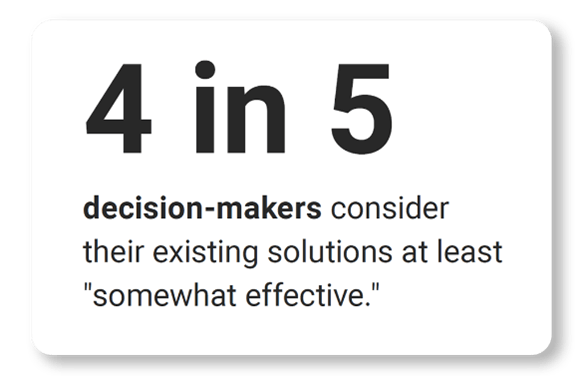
The global enterprise learning and development landscape in 2026 presents a striking paradox: while artificial intelligence is no longer a futuristic concept but a daily operational tool, more than half of the industry is struggling to make it function effectively within their existing frameworks. According to the State of Learning Technologies 2026 report by Scheer IMC, 53.3% of L&D decision-makers identify the integration of AI and new learning technologies as their most significant professional challenge. This friction exists despite a contradictory sentiment in the same data set, which reveals that four out of five leaders still describe their current learning technology as at least "somewhat effective."
This discrepancy suggests a profound shift in how corporate success is measured. For decades, the effectiveness of a Learning Management System (LMS) or a training program was judged by its uptime, its user interface, and its ability to host content without crashing. However, as AI moves from the experimental phase into a core business requirement, the definition of effectiveness is being rewritten. Organizations are now finding that while their "dashboards" indicate a stable system, the "engine" of business performance is not yet receiving the power it needs to accelerate in a volatile market.
The Shift from Experimental AI to Operational Reality
The trajectory of AI in corporate learning has moved with unprecedented speed over the last three years. In 2023 and 2024, AI was largely viewed through the lens of "showroom" potential—it was a series of impressive demonstrations involving automated content creation and chatbots that felt novel but lacked deep integration. By 2026, the report indicates that this honeymoon phase has ended, replaced by intense delivery pressure from the C-suite.
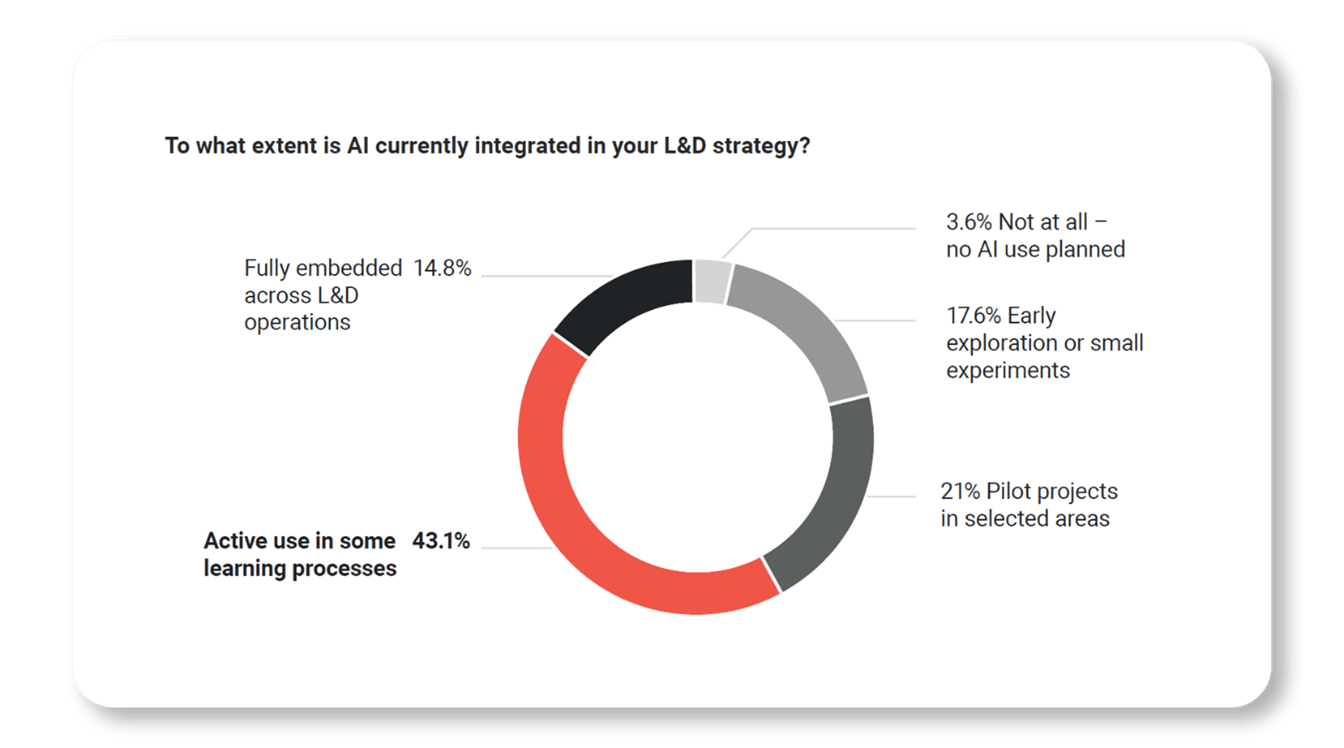
The data confirms that AI is no longer a peripheral interest. Currently, 43.1% of organizations have integrated AI into their active learning processes, while a further 14.8% report that AI is fully embedded across their entire L&D operation. This transition from pilot programs to full-scale deployment has exposed the structural weaknesses of older digital infrastructures. When AI moves from a standalone demo to an enterprise-wide tool, it must interact with legacy databases, comply with rigorous security protocols, and provide reliable outputs that do not risk the organization’s intellectual property.
Investment trends for the coming 12 months further underscore this commitment to AI-driven transformation. Approximately 61.4% of organizations plan to invest in AI-powered authoring tools to speed up content production, while 60.5% are targeting AI-powered coaching tools to provide personalized development at scale. The appetite for these technologies is clear, but the implementation is proving to be a logistical and technical bottleneck.

Technical Complexity and the Crisis of Trust
One of the primary reasons for the 53.3% struggle rate is the inherent difficulty of "dropping" advanced AI into established corporate environments. The Scheer IMC report likens this to building a high-speed railway through an ancient city; the challenge is not the speed of the train, but the existing signals, tunnels, and safety regulations that were never designed for such a machine.
Data security and privacy remain the most significant hurdles to widespread AI adoption. An overwhelming 92.9% of organizations expressed deep concerns regarding the security of AI-based solutions. In an era of strict data sovereignty and increasing cyber threats, L&D leaders are caught between the mandate to innovate and the requirement to protect sensitive employee and company data. This tension has led to a "trust gap," where the potential of AI is recognized, but the confidence to deploy it fully is lacking.
Furthermore, the technical complexity of integrating disparate AI tools into a cohesive ecosystem has created a fragmented experience for many users. Rather than a seamless "intelligent" environment, many employees are navigating a patchwork of tools that do not communicate with one once another, leading to data silos and a lack of holistic insight into learner progress.
The "Effectiveness" Trap: Why Standard Metrics are Failing
The report’s finding that 80% of decision-makers view their current technology as effective highlights a dangerous complacency in traditional L&D metrics. For many years, "effective" meant that the platform didn’t break, the employees could log in, and the compliance department was happy with the completion rates. Under these narrow criteria, a system can be deemed successful even if it fails to improve actual business performance.
AI has raised the bar for what constitutes success. A learning platform in 2026 can be perfectly functional in terms of administration but strategically obsolete if it cannot close skill gaps or support rapid workforce transformation. The report reveals a significant disconnect in measurement: 55.5% of organizations still rely on employee feedback as their primary evaluation tool, yet 44% admit they cannot link learning outcomes to concrete business impact.
This "translation problem" means that L&D departments are often speaking a different language than the rest of the business. While the business is asking for increased productivity, faster time-to-competence, and improved adaptability, L&D is often still reporting on "smile sheets" and login frequency. The 53.3% who are struggling are likely those who have realized that their old metrics no longer satisfy the demand for ROI proof.
Systematic Skills Management as a Strategic Priority
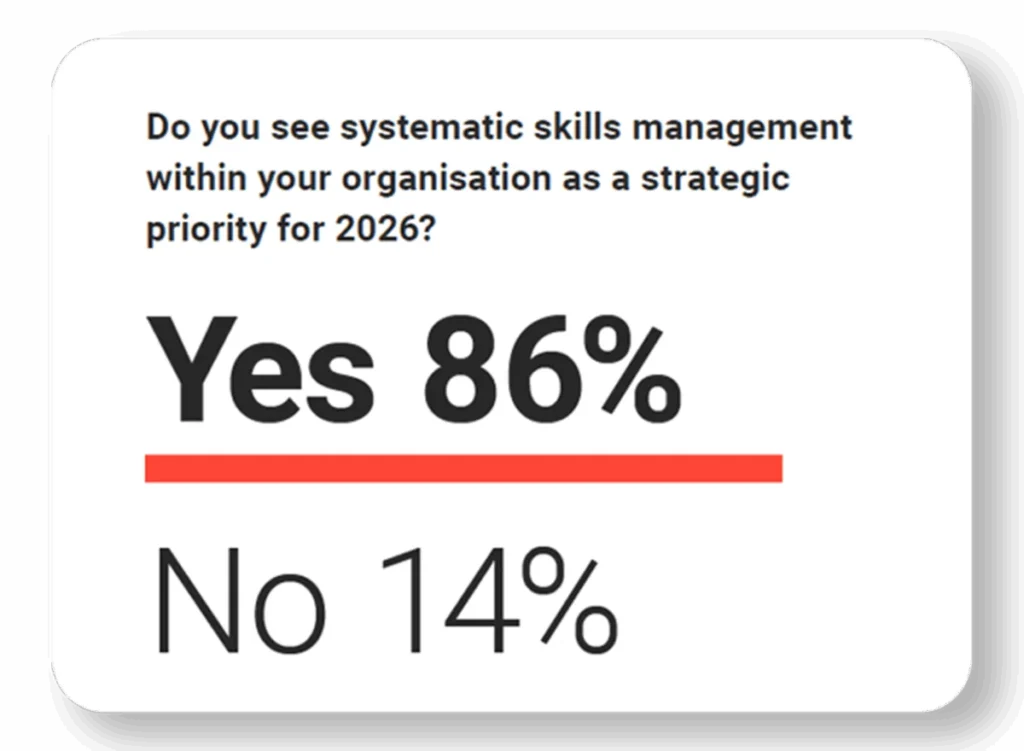
As organizations grapple with AI integration, they are simultaneously refocusing on the fundamental building block of the modern workforce: skills. The report indicates that 86% of organizations view systematic skills management as a top strategic priority for 2026. This shift suggests that the goal of learning technology is moving away from "content delivery" and toward "capability mapping."
To support this, there is a clear trend toward architectural consolidation. Rather than managing a chaotic "stack" of various niche platforms, 73.1% of organizations now rely on a single central LMS as the backbone of their L&D ecosystem. This move toward a centralized "source of truth" for skills and learning data is a necessary step toward making AI work. Without a clean, centralized data set, AI tools cannot accurately identify skill gaps or recommend the right learning interventions.
The focus on skills also reflects the shrinking shelf-life of technical competencies. In an AI-driven economy, skills that used to remain relevant for a decade may now only last two or three years. This requires a learning infrastructure that is not just a library of courses, but a dynamic system capable of real-time skill assessment and rapid redeployment of training.
Learning in the Flow of Work and the Measurement Revolution
One of the most actionable findings in the 2026 report is that engagement is highest when learning is not a destination, but a component of the daily workflow. A total of 85.5% of decision-makers agree that integrating learning into daily tasks is the most effective driver of engagement. This realization is forcing a move away from "event-based" training toward "continuous" learning.
However, if learning happens in the flow of work—inside Microsoft Teams, Slack, or project management tools—then measurement must follow it there. Impact can no longer be measured by how much time a user spends inside an LMS. Instead, it must be measured by how work changes as a result of the learning. Are decisions being made faster? Is the quality of code improving? Is customer satisfaction rising following a new communication module?
The report shows that L&D teams are beginning to move toward these outcome-based metrics, focusing on productivity improvement and skill gap analysis. However, the execution of this shift remains difficult. Connecting learning data to business performance data requires a level of cross-departmental collaboration and data maturity that many organizations have yet to achieve.
Conclusion: Bridging the Gap Between Activity and Impact
The State of Learning Technologies 2026 report serves as a wake-up call for the L&D industry. The struggle faced by 53.3% of decision-makers is not a sign of failure, but a symptom of a massive transition. The industry is moving from a "logistics" phase—where the goal was simply to deliver content digitally—to an "impact" phase, where the goal is to drive measurable business transformation through intelligent technology.
To overcome the current integration challenges, organizations must move beyond the "showroom" mentality of AI and focus on the hard work of data governance, security, and architectural alignment. They must also redefine "effectiveness" to include not just user satisfaction, but demonstrable ROI.
Scheer IMC, with its history of supporting over 1,300 organizations and 10 million learners, emphasizes that the differentiator in the coming years will be trust and connected data. As L&D leaders look toward the remainder of 2026 and beyond, the focus must shift from simply acquiring new tools to ensuring those tools can communicate, provide secure insights, and ultimately prove their value to the bottom line. If the engine light is flashing despite a healthy dashboard, it is time to look deeper into the mechanics of how learning truly drives the business forward.






