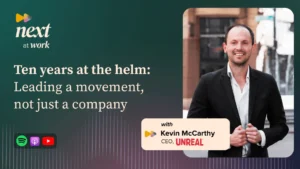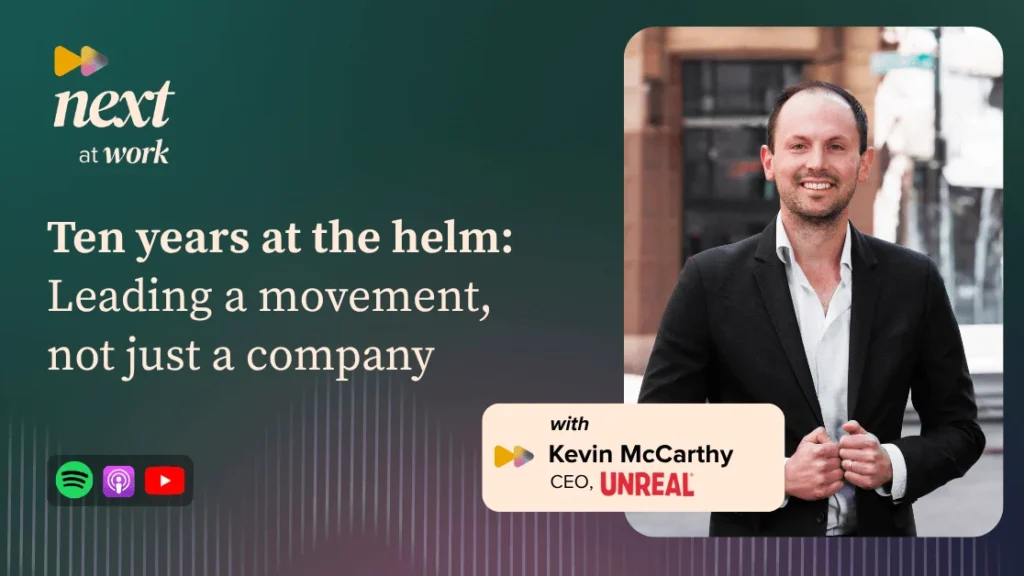
At the tender age of 24, Kevin McCarthy stepped into the demanding role of CEO at UNREAL, a burgeoning chocolate company poised to revolutionize the American candy landscape. A decade later, he remains firmly at the helm, having successfully steered UNREAL from an ambitious startup into the largest "better-for-you" chocolate brand in the United States. His tenure has not only seen the brand’s products penetrate over 35,000 retail locations, including industry giants like Target, Costco, and Whole Foods, but has also become a case study in contemporary leadership, particularly concerning the management of fully remote teams and the cultivation of a resilient company culture in a competitive consumer goods sector. McCarthy’s journey, recently highlighted in a discussion with Brendan Jeannetti on the "Next at Work" podcast, offers profound insights into entrepreneurship, sustainable growth, and the evolving dynamics of the modern workplace.
The Genesis of UNREAL: A Mission-Driven Revolution
UNREAL’s inception was rooted in a simple yet radical idea: to "unjunk" America’s favorite candies. Founded by Nicky and Adam Green, the inspiration struck when Adam, a child, questioned why his parents wouldn’t let him eat certain candies. This sparked a realization that many conventional sweets were laden with excessive sugar, artificial ingredients, and preservatives. The mission was clear from the outset: create delicious chocolate confections that taste as good, if not better, than their traditional counterparts, but with significantly less sugar and only real, high-quality ingredients. This vision resonated deeply with a growing segment of consumers increasingly concerned about health and wellness, setting UNREAL on a path to challenge established confectionery behemoths.
When Kevin McCarthy joined UNREAL, initially in an operational capacity, the company was still finding its footing. The "better-for-you" food movement was gaining traction, but breaking into the deeply entrenched candy aisle, dominated by iconic brands with decades of consumer loyalty, was an immense undertaking. McCarthy quickly immersed himself in every aspect of the business, from understanding the intricacies of the supply chain to optimizing operational efficiencies. This hands-on experience, coupled with an unwavering belief in the company’s core mission, positioned him uniquely for leadership. His subsequent appointment as CEO at 24 was unconventional, yet it underscored a belief by the board in his innate capability and passion, rather than merely a resume filled with traditional senior leadership roles.
Navigating the Competitive Confectionery Landscape
The American confectionery market is a colossal industry, valued at over $40 billion annually, with chocolate products accounting for a significant portion. For decades, it has been dominated by a few multinational corporations. However, the past decade has witnessed a seismic shift in consumer preferences. Data from market research firms like Nielsen and Grand View Research indicates a consistent rise in demand for "better-for-you" snacks, with the healthy chocolate segment experiencing a compound annual growth rate (CAGR) of over 7% in recent years. Consumers are actively seeking products with transparent ingredient lists, reduced sugar content, non-GMO certifications, and ethically sourced components.
UNREAL strategically capitalized on this trend, positioning itself as a premium alternative to conventional candy. Its commitment to using organic, non-GMO, and sustainably sourced ingredients, alongside a focus on natural sweeteners and flavors, directly addresses these consumer demands. This differentiation allowed UNREAL to carve out a significant niche, even as larger players began to introduce their own "healthier" lines. The company’s impressive 15% year-over-year growth in mainstream retailers is a testament to its successful market penetration and the sustained appeal of its product line. According to industry analysts, UNREAL’s success signifies a broader maturation of the "better-for-you" segment, moving beyond niche health food stores into mainstream grocery aisles, forcing established brands to adapt or risk losing market share.
Insight 1: The Myth of ‘Readiness’ in Leadership
One of the most striking revelations from McCarthy’s experience is his candid admission about not feeling "ready" to lead a company at 24. "I don’t think you’re ever, like, ready ready," he stated, a sentiment that challenges the conventional wisdom surrounding career progression and leadership preparedness. Traditional career paths often advocate for a meticulous accumulation of credentials, experience, and specific skill sets before aspiring to top-tier leadership. McCarthy’s trajectory, however, suggests a different model: one where genuine conviction in a mission and a willingness to learn on the job can be more potent catalysts for success.
His advice — to "stop chasing roles" and instead "find something you genuinely care about solving" — resonates deeply in an era where many professionals feel pressured to climb a predefined corporate ladder. McCarthy’s early years at UNREAL, spent understanding operations and supply chain logistics, provided a foundational knowledge that, combined with his entrepreneurial spirit, proved invaluable. The board recognized his potential not just in his technical understanding but in his intrinsic belief in UNREAL’s mission. This aligns with contemporary leadership theories emphasizing adaptive leadership and a growth mindset, where the capacity to learn and evolve is prioritized over pre-existing mastery. For aspiring leaders, McCarthy’s story serves as a powerful reminder that "readiness" is often a self-imposed psychological barrier, and that passion and commitment can unlock unexpected opportunities. When McCarthy built his initial team of ten, he sought individuals who mirrored his own entrepreneurial hunger and mission-driven ethos, prioritizing shared belief and lack of ego over traditional qualifications. Eight years later, the retention of these foundational team members underscores the power of this approach, illustrating how aligned values foster loyalty and collective shaping of a company’s destiny.
Insight 2: Combating Burnout: A Strategic Imperative for Leaders
The modern business landscape, particularly within the startup ecosystem, frequently glorifies "hustle culture" – an ethos that often promotes relentless work hours and sacrificing personal well-being for professional gain. Kevin McCarthy, however, offers a stark counter-narrative, having witnessed its destructive potential. "There’s a lot of celebration of the grind and working super hard. That’s not sustainable," he asserts, framing burnout not as an individual failing but as a fundamental leadership problem. The trap, as McCarthy identifies, is that leaders who absorb all pressure and model constant overwork inadvertently signal to their teams that such behavior is expected, leading to widespread exhaustion and reduced productivity.
Studies consistently highlight the detrimental effects of burnout. A recent Gallup report revealed that 76% of employees experience burnout at least sometimes, leading to decreased engagement, higher turnover rates, and significant costs to businesses. McCarthy’s solution centers on "situational awareness," where protecting personal and team boundaries becomes a strategic act. He emphasizes that a healthy team is crucial for the company’s long-term success. Practically, this translates into deliberate strategies: hiring individuals who possess complementary strengths and surpass the leader in certain areas, fostering a robust mentorship network, and consistently assessing one’s own enjoyment and challenge levels within the role. Furthermore, proactively building capacity within the organization, anticipating future needs rather than reacting to crises, is vital for creating a sustainable operational rhythm. This proactive stance contrasts sharply with reactive crisis management, ultimately safeguarding both human capital and business continuity.
Insight 3: Mission as the Cornerstone of Culture, Especially in Remote Environments
UNREAL’s overarching mission — to "create a world where all food is 100% real" — extends far beyond a marketing slogan; it serves as the foundational operating principle that shapes its organizational culture. McCarthy recounts a stark contrast between the "dark office with no energy" he encountered twelve years ago and the vibrant, transparent, and mission-driven culture he has since cultivated. This transformation underscores the intentional effort required to align internal ethos with external brand promise.
A prime example of this mission-driven culture is UNREAL’s unique "chocolate expensing" policy. Employees are encouraged to purchase and expense chocolate from any brand, an initiative that saw over 3,900 pounds of chocolate expensed in 2025 alone. This isn’t merely a perk; it’s a strategic tool. It ensures the team remains intimately connected to the product category, understands the competitive landscape, stays attuned to customer experiences, and constantly reinforces the "why" behind their work. It fosters a culture of curiosity, competitive analysis, and product immersion that is rare in many organizations.
The shift to a fully remote model, with approximately 100 employees dispersed across the United States, presented significant challenges to maintaining this carefully crafted culture. McCarthy acknowledges the difficulties of replicating spontaneous interactions, reading non-verbal cues on video calls, and preventing communication distortions. His response is pragmatic: remote culture is not a problem to be solved once and then forgotten. It demands "continuous intentionality." This involves regular, structured communication, leveraging technology for both formal and informal interactions, and crucially, leaders actively modeling desired behaviors. When McCarthy visibly protects his own boundaries and prioritizes well-being, it grants implicit permission for his team members to do the same, reinforcing a culture of sustainability and trust. This approach echoes findings from studies on successful remote organizations, which emphasize transparent communication, asynchronous work strategies, and investment in virtual team-building activities as critical components.
The Strategic Edge: Product Focus Over Personal Brand
In an era increasingly defined by the cult of personal branding among business leaders, Kevin McCarthy offers a refreshingly grounded perspective. Over the past decade, his focus has remained steadfastly on the core product and the consumer experience, rather than on cultivating his own public persona as a young CEO. His emphasis on fundamental business metrics—repeat purchase rates, customer recommendations, and overall product satisfaction—underscores a commitment to tangible value creation. "It shouldn’t be about any one person," McCarthy states, "It’s about how you build something serving consumers."
This philosophy stands in contrast to a growing trend where leaders often invest heavily in social media presence and public speaking engagements, sometimes at the expense of internal operational focus. While visibility can be beneficial, McCarthy’s approach highlights the importance of substance over spectacle. For UNREAL, this means a continuous dedication to innovation in product development, ensuring that their chocolates not only meet but exceed consumer expectations for taste and ingredient quality. This unwavering focus on the product has been instrumental in building a loyal customer base and driving the company’s sustained growth, proving that genuine value creation remains the most powerful brand builder.
Broader Implications for the CPG Industry and Future Leadership
UNREAL’s decade-long journey under Kevin McCarthy’s leadership offers a compelling blueprint for the future of the Consumer Packaged Goods (CPG) industry and modern leadership. Its success demonstrates that a mission-driven approach, coupled with strategic execution, can effectively disrupt even the most entrenched markets. As consumer demand for transparent, healthier, and ethically produced food items continues to escalate, UNREAL’s model provides a pathway for other brands seeking to challenge conventional offerings. Major CPG companies are undoubtedly watching, with many already responding by acquiring smaller "better-for-you" brands or reformulating their existing product lines.
McCarthy’s leadership style, characterized by humility, a focus on sustainability, and a deep-seated belief in his team, also signals a shift in what defines effective leadership. His example challenges the notion that age or traditional corporate experience are prerequisites for success, instead highlighting the power of conviction, adaptability, and a genuine concern for employee well-being. Furthermore, UNREAL’s thriving remote model provides valuable lessons for companies across sectors, proving that distributed teams can maintain high levels of productivity and a strong culture, provided there is intentional leadership and investment in communication and collaboration tools.
In essence, UNREAL’s narrative is not just about chocolate; it’s about a paradigm shift. It underscores the increasing importance of authenticity, sustainability, and human-centric leadership in building businesses that are not only profitable but also resilient and impactful. Kevin McCarthy, through his quiet yet transformative leadership, has demonstrated that by focusing on what truly matters—the product, the mission, and the people—a company can achieve extraordinary success and redefine an entire industry. His story encourages leaders to look beyond fleeting trends and personal accolades, urging them instead to build something enduring that genuinely serves both consumers and employees, thereby shaping a more conscious and sustainable business future.