
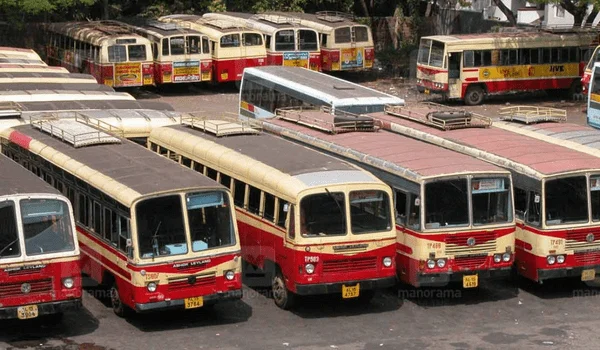
Karnataka State Road Transport Corporation (KSRTC) has issued a stringent warning to its employees, as well as those across the three other state-run transport corporations, against participating in a proposed indefinite statewide strike scheduled to commence on May 20. The directive explicitly states that any staff member found absent from duty during the agitation period will face severe disciplinary action, including significant salary deductions under a strict “no work, no pay” policy. This uncompromising stance underscores the escalating tensions between the state’s massive public transport workforce and the Karnataka government, amidst a prolonged deadlock over critical issues such as long-overdue wage revisions, pending arrears, and comprehensive employee welfare measures.
The proposed industrial action, spearheaded by the Joint Action Committee representing employees from the four state transport corporations – KSRTC, Bengaluru Metropolitan Transport Corporation (BMTC), North West Karnataka Road Transport Corporation (NWKRTC), and Kalyana Karnataka Road Transport Corporation (KKRTC) – threatens to bring public transport services across the entire state to a grinding halt. Union leaders have voiced profound frustration, asserting that their repeated demands and earnest appeals for equitable salary revisions and the resolution of other long-standing grievances have consistently met with an inadequate and often dismissive response from the state administration. This persistent lack of dialogue and resolution has, according to the unions, left them with no recourse but to resort to a full-scale strike to press their demands.
In a comprehensive circular disseminated to senior officials and divisional authorities across all operational units, KSRTC management unequivocally declared that the proposed strike cannot be legally countenanced under the existing legal framework governing essential public services in the state. The corporation’s communication specifically invoked the provisions of the Karnataka Essential Services Maintenance Act (KESMA), 1994, under which the vital services provided by state-run transport corporations are unequivocally classified as essential. This classification carries significant legal implications, as employees engaged in these designated essential services are legally restricted from participating in strike actions, particularly during periods when active conciliation proceedings are underway. Furthermore, the transport corporations have also been officially classified as public utility services, a designation that further reinforces and strengthens the legal limitations on any form of industrial action that could disrupt these critical operations.
The KSRTC directive has not only warned against participation but has also mandated proactive measures to mitigate any potential disruption. Officials across all divisions and depots have been explicitly instructed to ensure that transport operations continue without any interruption whatsoever throughout the proposed strike period. To enforce this, authorities have been directed to rigorously avoid approving any leave requests from May 20 onwards, except in the most exceptional and unavoidable circumstances, which must be thoroughly documented and approved at the highest levels. As part of these stringent precautionary measures, officials have also been tasked with meticulously maintaining detailed, day-wise, and unit-wise records of employee attendance during the potential strike. This comprehensive data on absences will reportedly be utilized as foundational evidence for implementing salary deductions and initiating formal disciplinary processes against those who defy the directive. This firm stance by the KSRTC management highlights the intensifying standoff between the state’s transport employees and the administration, as both sides appear to be bracing for significant operational disruptions that could severely impact public transport services for millions of commuters across Karnataka.
The Genesis of Discontent: A History of Unresolved Demands
The current crisis is not an isolated incident but rather the culmination of years of simmering discontent and a history of unfulfilled promises regarding employee welfare and remuneration within Karnataka’s state transport corporations. The core of the dispute revolves around the demand for a revision of wages, which employees argue has lagged significantly behind the cost of living and the pay scales of other state government employees. The Joint Action Committee, comprising various unions from KSRTC, BMTC, NWKRTC, and KKRTC, has consistently pushed for a wage hike aligning with the recommendations of the 6th Pay Commission, or at least a substantial percentage increase that reflects current economic realities.
For years, transport employees have been advocating for a wage revision that is typically due every four years under standard agreements. The last major wage revision agreement was implemented in 2016, which means a new agreement was due in 2020. However, the COVID-19 pandemic and subsequent economic challenges were cited by the government as reasons for deferring discussions. This deferral, coupled with the rising inflation and the perceived disparity in pay compared to other government departments, has fueled widespread resentment among the over 1.25 lakh employees across the four corporations. These employees often highlight that their salaries have not kept pace with the cost of living, especially considering the essential nature of their service and the challenging working conditions they often face.
Beyond wage revisions, other critical demands include the payment of pending dearness allowance (DA) arrears, regularisation of contract workers, improvements in working conditions, and better social security benefits. Union leaders frequently point to the arduous nature of their work, long hours, and the vital role they play in connecting remote parts of the state and facilitating urban mobility, arguing that their compensation and welfare should reflect these contributions. They emphasize that while other state government employees have benefited from periodic pay commission recommendations, transport corporation employees often feel left behind, leading to a significant morale issue.
A Chronology of Confrontation and Negotiation Attempts
The path to the current strike notice is marked by a series of appeals, negotiations, and previous industrial actions, illustrating a pattern of recurring disputes:
- 2016: The last major wage revision agreement was signed between the transport corporations and employee unions. This agreement typically sets the framework for salary hikes for a four-year period.
- 2020: The four-year period for wage revision elapsed. Employee unions, through the Joint Action Committee, began submitting memorandums and requests for fresh negotiations. However, the initial phase of the COVID-19 pandemic, including widespread lockdowns and financial uncertainties, significantly disrupted these preliminary talks.
- April 2021: A major, prolonged strike was observed by transport employees across the state. This significant industrial action, lasting several days, caused immense inconvenience to millions of commuters and resulted in substantial financial losses for the corporations. The primary demands during this strike also centered on wage parity with state government employees and the implementation of the 6th Pay Commission recommendations. The strike was eventually called off after the government made certain assurances, including an 8% wage hike. However, unions had demanded a much higher percentage, and many employees subsequently faced disciplinary action and salary deductions post-strike, leading to lingering resentment.
- Late 2022 – Early 2023: As economic conditions stabilized post-pandemic, unions renewed their demands for a substantial wage revision, citing the inadequacy of the 2021 hike and the continued rise in living costs. Several rounds of preliminary discussions and appeals were made to the Transport Department and the Chief Minister’s office, but without significant breakthroughs.
- March 2024: The Joint Action Committee formally submitted a strike notice to the government and the transport corporations, outlining their consolidated demands and giving a clear ultimatum for resolution by a specific date. This formal notice triggered official conciliation proceedings under the purview of the state labor department, involving labor officials, union representatives, and corporation management.
- April – May 2024: Multiple rounds of conciliation talks were held under the mediation of the labor department. During these discussions, the government reportedly offered a certain percentage hike (rumored to be around 10-12%), which unions deemed insufficient, holding out for a more substantial increase closer to their initial demands (often cited as 20-25% or aligning with the 6th Pay Commission recommendations). The failure of these talks to yield a mutually agreeable solution led to the reaffirmation of the strike call for May 20, with unions expressing their disappointment over the perceived lack of seriousness from the government.
- May 15-18, 2024: KSRTC and the other transport corporations issued stern circulars and public notices, reiterating the illegality of the proposed strike under KESMA and warning of severe consequences for absenteeism, thus escalating the tension to its current peak. These warnings also included directives to depot managers to prepare contingency plans.
The Legal Gauntlet: Karnataka Essential Services Maintenance Act (KESMA)
The Karnataka Essential Services Maintenance Act (KESMA), 1994, is a powerful legal instrument at the government’s disposal, specifically designed to prevent disruptions to services deemed critical for the public good. Enacted to ensure the uninterrupted functioning of vital public utilities, KESMA empowers the state government to prohibit strikes in any essential service by issuing a specific order. Once KESMA is invoked and an order is issued, participation in a strike, incitement to strike, or financial support for a strike becomes a legally punishable offense, potentially leading to imprisonment for up to one year, a fine, or both.
For state-run transport corporations like KSRTC, BMTC, NWKRTC, and KKRTC, their services are automatically classified as essential under the Act, making it particularly challenging for employees to legally initiate a strike. The government’s argument, as articulated by KSRTC management, is that since conciliation proceedings are currently active and unresolved, any strike would be premature, unlawful, and a direct violation of KESMA provisions. This legal stance puts union leaders and participating employees in a precarious position, as defying the KESMA order could lead to not just salary deductions and departmental disciplinary action, but also more severe legal repercussions, including termination of service or criminal prosecution. The government’s consistent invocation of KESMA in past transport strikes highlights its firm resolve to prevent disruptions to a service that millions rely on daily for their livelihoods, education, and access to essential services. This legal framework is often seen by unions as a tool to stifle legitimate protest, while the government views it as a necessary measure to uphold public order and service continuity.
The Financial Tightrope: Corporation Health vs. Employee Demands
Understanding the complex financial health of Karnataka’s state transport corporations is crucial to grasping the underlying reasons for the wage negotiation deadlock. These corporations, while providing vital public services, have historically operated under significant financial strain, making substantial wage revisions a challenging proposition for the state exchequer.
- Massive Workforce: The four corporations collectively employ over 1.25 lakh individuals, making them one of the largest public sector employers in the state. Even a modest percentage increase in wages translates into a substantial additional financial burden, potentially running into hundreds of crores annually.
- Operational Losses: KSRTC, BMTC, NWKRTC, and KKRTC frequently report operational losses. These losses are primarily driven by steadily rising fuel costs, increasing maintenance expenses for their vast fleets, and the implementation of subsidized fare structures for various social welfare schemes (e.g., student passes, free travel for certain categories of women commuters, passes for senior citizens). The COVID-19 pandemic years severely exacerbated these losses due to drastically reduced ridership and prolonged lockdowns, from which the corporations are still recovering.
- Government Subsidies and Grants: The corporations are heavily reliant on state government subsidies and grants to cover their persistent deficits and fund essential capital expenditures like fleet expansion, modernization, and infrastructure development. Any major wage revision would necessitate increased budgetary allocation from the state exchequer, placing additional pressure on already stretched government finances.
- Daily Ridership and Revenue: Together, these corporations ferry an estimated 10-12 million passengers daily across Karnataka. For instance, BMTC alone typically serves over 3.5 million commuters in Bengaluru daily under normal circumstances, generating substantial revenue. However, this revenue is often insufficient to cover escalating operational costs and meet employee remuneration demands without external financial support.
- Debt Burden: Many corporations carry significant debt from past loans taken for fleet upgrades, depot construction, and other infrastructure development projects. This existing debt burden further complicates their financial viability and limits their capacity to absorb additional expenditure without external assistance.
From the government’s perspective, acceding to a substantial wage hike would entail a massive financial outlay, potentially running into hundreds of crores of rupees annually. This would either require diverting funds from other critical developmental projects, increasing taxes, or further indebting the state. This argument of fiscal prudence and the need to maintain financial stability is often central to the government’s reluctance to fully meet the union demands, setting up a direct conflict with employee expectations.
Stakeholder Reactions and Broader Implications
The looming strike has elicited strong reactions from all involved parties, while also generating significant apprehension among the general public who stand to be most affected.
KSRTC and Government Officials:
Top management at KSRTC and officials within the Transport Department have consistently emphasized their primary responsibility to ensure uninterrupted public service. They highlight the legal implications of KESMA, stressing that any strike would be illegal and that the corporations are committed to exploring all avenues for resolution through dialogue, but not under duress. "Our employees are the backbone of public transport, and we value their contributions," stated a senior KSRTC official, requesting anonymity, emphasizing the administration’s appreciation for their workforce. "However, we must also operate within legal frameworks and financial realities. Invoking KESMA is a difficult but necessary step to protect public interest and prevent statewide paralysis." The government, through its transport minister and other key officials, has appealed to the unions to reconsider their decision, emphasizing ongoing efforts to address their concerns while reiterating the state’s financial constraints. They maintain that discussions are still open, but the strike notice, they argue, preempts these constructive efforts.
Joint Action Committee and Union Leaders:
Union representatives are equally resolute in their stance. "We have exhausted all channels of communication and negotiation for years," declared a prominent union leader from the Joint Action Committee. "Our demands are not new; they are legitimate and have been pending for far too long. The government cannot continue to ignore the plight of over a lakh employees who work tirelessly to keep the state moving, often under challenging conditions. KESMA is being used as a tool to suppress our fundamental right to protest for fair wages and better working conditions, which is unacceptable. We are prepared to face the consequences if it means securing a dignified life for our families." They often highlight the significant disparity in pay between transport employees and other state government staff, arguing for equal pay for equal work and the full implementation of the 6th Pay Commission recommendations, which would significantly boost their salaries and bring them parity.
The Public and Commuters:
The most immediate and profound impact of the strike will be felt by the millions of daily commuters across Karnataka. Public transport, particularly buses, forms the lifeline for students, daily wage earners, office-goers, and those in rural areas with limited alternative options. A statewide strike would:
- Crippling Mobility: Bring urban and inter-district travel to a near standstill, severely affecting economic activity, school attendance, and access to essential services like healthcare, particularly in regions where other transport options are scarce.
- Economic Disruption: Daily wage earners, small businesses relying on efficient transport for goods and services, and various industries would suffer significant financial losses due to absenteeism and logistical challenges.
- Surge in Private Transport Costs: Auto-rickshaws, taxis, and ride-sharing services would likely witness a massive surge in demand and corresponding fares, disproportionately affecting economically vulnerable sections of society who cannot afford these alternatives.
- Law and Order Concerns: Large gatherings at bus stands due to lack of transport, potential clashes between striking and non-striking employees, or widespread public frustration could lead to law and order challenges for local authorities.
Long-term Implications:
Beyond the immediate disruption, a prolonged strike and the government’s firm response could have several long-term implications. For employees, it could further strain industrial relations with management and lead to a more punitive work environment, impacting morale and productivity. For the corporations, it could lead to further financial losses, a decline in ridership as commuters seek alternative long-term solutions, and potentially a loss of public trust. For the government, it tests its ability to balance fiscal responsibility with employee welfare and maintain essential services without resorting to heavy-handed measures. The repeated invocation of KESMA also raises broader questions about the scope of employee rights in essential services versus the state’s prerogative to maintain public order and service continuity.
Conclusion: Awaiting a Resolution
As May 20 approaches, Karnataka stands at the precipice of a significant public transport disruption. The KSRTC’s unwavering warning, backed by the formidable legal framework of KESMA, signals the state’s determination to prevent a shutdown. However, the Joint Action Committee’s equally firm resolve, fueled by years of unmet demands, suggests that employees are prepared for a showdown. The coming days will be critical, with potential last-minute negotiations or government interventions aiming to avert the strike. Should the strike proceed, the state government will face the daunting task of ensuring some semblance of public transport while dealing with the fallout of mass absenteeism, disciplinary actions, and public outcry. The resolution of this standoff will not only determine the immediate fate of Karnataka’s public transport system but also set a precedent for future labor relations within essential services across the state. The eyes of millions of commuters and the entire state administration are now fixed on the outcome of this escalating confrontation.








