LandCare, a prominent national commercial landscape management company, has significantly enhanced its talent acquisition capabilities through the strategic implementation of Workable, a modern applicant tracking system. This pivotal shift from an antiquated, plugin-based system to a comprehensive, user-friendly platform has yielded measurable improvements across key recruitment metrics, solidifying LandCare’s ability to attract, engage, and retain top talent across its vast and geographically dispersed operations. With 76 locations spanning 23 states and a workforce peaking at approximately 4,000 employees, LandCare operates one of the largest field-based workforces in the commercial landscaping industry, making efficient and effective talent management an imperative for sustained growth and operational excellence.
A National Footprint, A Complex Challenge
Operating on such a vast scale presents unique challenges for talent acquisition, particularly given the blend of corporate, exempt-level, and high-volume crew-level positions. The company’s organizational structure necessitates a nuanced approach to recruitment, where a centralized team provides strategic oversight while individual branches manage their own localized hiring needs. Alex Kline, LandCare’s Director of Talent Acquisition and Employee Services, leads a dedicated team of six recruiters responsible for a wide array of roles, including branch administrators, production managers, account managers, branch managers, and various corporate functions such as finance, IT, HR, marketing, and operations. Additionally, the team handles periodic executive searches for VP and director-level positions. For the critical crew-level hiring, which forms the backbone of its field operations, the central TA team acts as subject matter experts and advisors, empowering branch managers with the tools and guidance to effectively recruit their teams. This hybrid model demands a robust, flexible, and intuitive recruitment technology solution that can cater to diverse user needs and roles.
The Legacy System’s Limitations: A Bottleneck to Growth
Prior to adopting Workable, LandCare’s recruitment infrastructure was largely insufficient for its scale and ambition. The company relied on a UKG plugin that, while integrated with its HR information system, functioned more as a rudimentary processing tool than a true applicant tracking system. This setup was inherently manual, limited in scope, and incapable of supporting the high-volume, efficient hiring processes critical for a rapidly expanding organization. The absence of a dedicated ATS meant that the talent acquisition team was constantly battling inefficiencies and manual bottlenecks.
Alex Kline vividly recalled the constraints of the old system: “It was a very antiquated process. There was really nothing about it that allowed us to manage our recruitment effort through that system. We were managing it kind of outside and then just processing everything through it.” This meant recruiters were performing significant administrative work outside the system, then manually entering data, leading to duplication of effort, potential for errors, and a severe lack of real-time visibility into the recruitment pipeline.
A significant pain point was the job posting process. The UKG plugin could only push job openings to LandCare’s internal careers page. For broader visibility on essential platforms like LinkedIn and Indeed, each posting required a separate, manual effort. This became increasingly unsustainable as the organization grew and the velocity of hiring intensified, impacting LandCare’s ability to compete for talent effectively in a dynamic labor market. The commercial landscaping sector, like many field-based industries, faces consistent demand for skilled and semi-skilled labor, making rapid and widespread job distribution a critical competitive advantage. The manual posting process not only consumed valuable recruiter time but also delayed the time-to-market for critical roles, potentially causing LandCare to miss out on qualified candidates who were quickly snatched up by competitors.
Strategic Selection: Why Workable Stood Out
Recognizing the urgent need for a transformative solution, Alex Kline embarked on a comprehensive evaluation process. The initial search involved approximately ten different platforms, which were then rigorously narrowed down to five, then three, and finally two finalists. This thorough due diligence underscored LandCare’s commitment to finding a system that not only met current needs but also scaled with future growth.
During the evaluation, one competing finalist presented an impressive array of features, including robust reporting capabilities and tools that typically appeal to seasoned talent acquisition professionals. However, LandCare’s unique operational model, characterized by a significant population of field-based hiring managers, presented a distinct challenge. These managers are often on job sites, in vehicles, or otherwise away from traditional office desks, making access to and engagement with complex desktop-centric systems impractical. The key criterion for LandCare was a platform that could genuinely engage these field managers with minimal onboarding and maximum accessibility.
This is where Workable emerged as the clear and compelling choice. Alex Kline emphasized Workable’s superior user experience, particularly for non-recruiting personnel. He noted, “If we would have put the other platform in front of our hiring managers, we would have never been able to get the buy-in from them that we have now. Workable makes it so simple for them.” The decision ultimately hinged on Workable’s ability to combine the necessary functional depth, including essential reporting, with an intuitive interface that ensured widespread adoption among LandCare’s diverse user base. The platform’s simplicity was not a compromise on capability but rather a strategic design choice that perfectly aligned with LandCare’s operational realities. This focus on user adoption, especially for non-TA professionals, is often overlooked in ATS selection but proved to be a decisive factor for LandCare.
Seamless Implementation and Rapid Adoption
The transition to Workable was meticulously planned and executed as a phased implementation, personally led by Alex Kline, who functioned as the project manager for the rollout. This strategic approach ensured a smooth transition and minimized disruption across the expansive organization. Alex worked in close collaboration with Workable’s implementation partner, Kashaw, fostering a highly responsive and productive relationship. “The relationship was very symbiotic. We’d bring things to their attention in the afternoon and come back the next morning to viable solutions,” Kline remarked, highlighting the effectiveness of the partnership.
Rather than attempting a simultaneous overhaul, specific components of the implementation were deliberately delegated. The central TA team took ownership of building out comprehensive candidate communication templates, standardizing outreach and enhancing the candidate experience. Concurrently, the HR team focused on aligning LandCare’s intricate organizational structure within Workable with the company’s existing HRIS. This crucial step ensured seamless candidate flow and data consistency across both systems, preventing data silos and streamlining administrative processes.
This phased rollout proved highly effective. The core talent acquisition team became fully operational on Workable within a swift six-week timeframe. Following this initial period, a two-week internal use phase allowed the team to refine workflows, document edge cases, and ensure the system was perfectly tailored to LandCare’s specific needs. Subsequently, Workable was launched to the broader business, achieving full company adoption within an impressive eight weeks of initial implementation. This rapid and efficient deployment demonstrated the platform’s user-friendliness and the effectiveness of LandCare’s implementation strategy.
Transformative Transparency: Elevating Talent Acquisition’s Role
Beyond the immediate operational efficiencies, one of the most significant, albeit unexpected, outcomes of Workable’s implementation was the profound clarity it brought to the business regarding the true scope and effort involved in talent acquisition. By granting hiring managers direct access to the platform and their specific job pipelines, Workable demystified the recruitment process, making the extensive work of the TA team visible and quantifiable.
A powerful anecdote illustrates this newfound transparency. When LandCare’s marketing director posted a graphic designer role, she received an overwhelming 2,000 applications in a single month. Witnessing this volume firsthand fundamentally altered her perception of the TA team’s workload and strategic value. As Alex Kline recounted, this experience was instrumental: “For her to understand that yes, you may only be seeing five candidates you like to talk to, but this is the level of effort that went into it. Out of 400 candidates, we disqualified 350, scheduled calls with 50, only 30 showed up, we liked 15 of those, 10 made it through the behavioral assessment, and those are your top five. It really gave the TA team a lot of street credit in the business.”
This granular visibility transformed the perception of talent acquisition from a back-office function to a strategic business partner. The transparency fostered a deeper understanding and appreciation for the meticulous work involved in candidate screening, interviewing, and selection. This, in turn, strengthened the collaborative relationship between the TA team and the departments they serve, significantly elevating the function’s credibility and influence with senior leadership. The ability to demonstrate the quantitative effort behind each hire allowed the TA team to articulate its value proposition more effectively, moving beyond mere transactional hiring to strategic talent advisement.
Quantifiable Success: Metrics of a Modernized Approach
The impact of Workable on LandCare’s hiring performance has been immediate and cumulative, demonstrating a clear return on investment. Implemented in the fall of 2023, the platform quickly began to influence key recruitment metrics.
Analyzing four core branch-level positions, the improvement in hiring volume is evident:
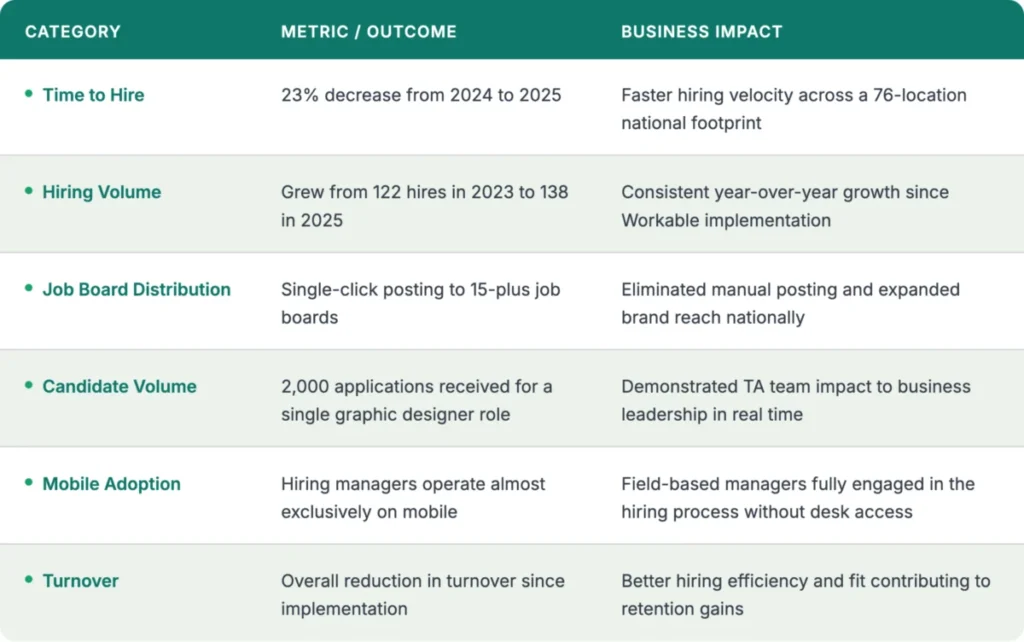
- In 2023, the last full year operating on the UKG system, LandCare hired 122 individuals for these positions.
- In 2024, following Workable’s implementation, that number increased to 136 hires.
- By 2025, the volume further grew to 138 hires.
This consistent year-over-year increase in hiring volume for critical roles underscores Workable’s contribution to LandCare’s ability to staff its operations effectively and support business expansion. The capacity to hire more people faster means LandCare can better meet client demand, take on new projects, and maintain its competitive edge in the market.
Simultaneously, the time to hire—a crucial metric for efficiency and candidate experience—moved in the desired direction. From 2024 to 2025, LandCare experienced a remarkable 23% decrease in its time to hire. This acceleration means that qualified candidates are moved through the pipeline more quickly, reducing the risk of losing them to competitors and decreasing the operational costs associated with prolonged vacancies. Crucially, this speed was achieved while maintaining, and even improving, the quality of candidates reaching hiring managers, indicating a more effective and streamlined vetting process.
While Alex Kline prudently noted that turnover reduction cannot be attributed to a single factor, the implementation of Workable has undeniably contributed to improved retention outcomes. The ability to move faster, reach a wider pool of candidates, and provide hiring managers with genuine visibility into their pipelines collectively leads to better-informed hiring decisions and, consequently, a stronger fit between new hires and their roles. This enhanced quality of hire is a critical driver for long-term employee satisfaction and reduced turnover, fostering a more stable and productive workforce.
Operational Excellence: Features for a Field-Based Force
Workable’s impact extends to fundamental operational shifts, particularly in job distribution and mobile accessibility. The previous UKG plugin’s limitation of pushing roles only to LandCare’s careers page, requiring arduous manual re-posting to external platforms, was a significant drag on efficiency. With Workable, this bottleneck has been eliminated: a single action now distributes job postings to 15-plus job boards, including industry giants like LinkedIn and Indeed, which remain LandCare’s primary candidate sources. This single-click, multi-platform distribution not only saves invaluable recruiter time but also dramatically expands LandCare’s reach to potential candidates.
Beyond direct applications, Alex Kline highlights an important secondary benefit: brand awareness. “Just having your brand out there in all the different areas ultimately drives applicants to you in other ways as well,” he stated. This broad digital footprint reinforces LandCare’s presence in the talent market, making it a more recognizable and attractive employer. In a competitive industry, consistent brand visibility can be a powerful differentiator, influencing passive candidates and strengthening the company’s overall employer brand.
For a company like LandCare, where a significant portion of its hiring managers are mobile and not desk-bound, the Workable mobile app has proven to be an indispensable tool. In fact, many of LandCare’s field-based hiring managers use the mobile app almost exclusively, transforming how they engage with the recruitment process. The app’s functionality allows managers to receive immediate notifications when a candidate moves to a new stage. From their phone, they can click directly into Workable, review resumes, and promptly signal approval or rejection. This eliminates delays, ensures timely feedback, and empowers managers to make critical decisions without needing to be physically at a desk. Alex Kline himself utilizes the mobile app daily, frequently approving offer letters on the go. He emphatically states, “That is probably one of the biggest highlights of the system. Our hiring managers — that’s all they use.” This mobile-first approach is a game-changer for distributed, field-heavy organizations, ensuring that geographical constraints do not impede the hiring process.
Data-Driven Insights and Candidate Experience
Workable’s analytical capabilities further bolster LandCare’s strategic talent acquisition efforts. The platform’s built-in reporting features provide an immediate, operational view of key metrics such as hiring velocity and time to hire, offering a quick pulse on recruiting performance. For more sophisticated, custom analysis, LandCare leverages Workable’s data integration capabilities, pulling raw data directly into Power BI. This allows the team to run highly specialized reports through their own data warehouse, providing deeper insights tailored to specific business questions. “It’s easy to communicate with the internal mainframe of Workable. We’re able to pull that data into Power BI and run very custom reports,” Kline explained. This dual approach—native reporting for day-to-day visibility and external integration for advanced analytics—reflects Workable’s adaptability and its ability to support both immediate operational needs and long-term strategic planning.
Enhancing the candidate experience, Workable’s self-scheduling links have received consistently positive feedback from applicants. The ability for candidates to receive a stage-advancement email and immediately book a Teams interview without the typical back-and-forth communication significantly streamlines the process. This efficiency not only improves candidate satisfaction but also reduces candidate drop-off rates, as the barrier to scheduling is minimized.
Additionally, custom application questions provide a critical layer of precision, particularly at LandCare’s scale. The TA team utilizes these questions to gather valuable sourcing attribution data from LinkedIn messaging campaigns, helping them understand the effectiveness of different outreach strategies. For intern candidates, custom questions allow them to indicate their preferred region of the country, enabling efficient routing and prioritization of applications without adding manual administrative steps. These tailored questions enhance the quality of initial candidate screening and improve the overall efficiency of the pipeline management.
A Clear Path Forward: LandCare’s Endorsement
When asked if LandCare would recommend Workable, the answer is an unequivocal “Without question.” For field-based organizations managing distributed hiring across dozens of locations, the capacity to genuinely engage hiring managers in the recruitment process without extensive training represents a significant competitive advantage. LandCare’s talent acquisition team has successfully transitioned from a manual, constrained system to a nationally coordinated recruiting function that can now clearly demonstrate its impact with data. The team moves candidates faster, reaches talent across over 15 platforms with a single click, and has earned enhanced credibility with leadership.
The tangible results speak volumes: a 23% faster time to hire, 138 hires for four core branch positions in a single year, and a talent acquisition team whose strategic value has been unequivocally elevated due to the transparency and efficiency the platform provides. LandCare’s journey with Workable is a testament to how the right technology, strategically implemented, can not only optimize operational processes but also fundamentally transform an organization’s ability to attract, hire, and retain the talent essential for its continued success and growth in a competitive industry. The partnership between LandCare and Workable illustrates a modern approach to talent acquisition, where technology empowers both recruiters and hiring managers, fostering a more collaborative, efficient, and data-driven hiring ecosystem.