
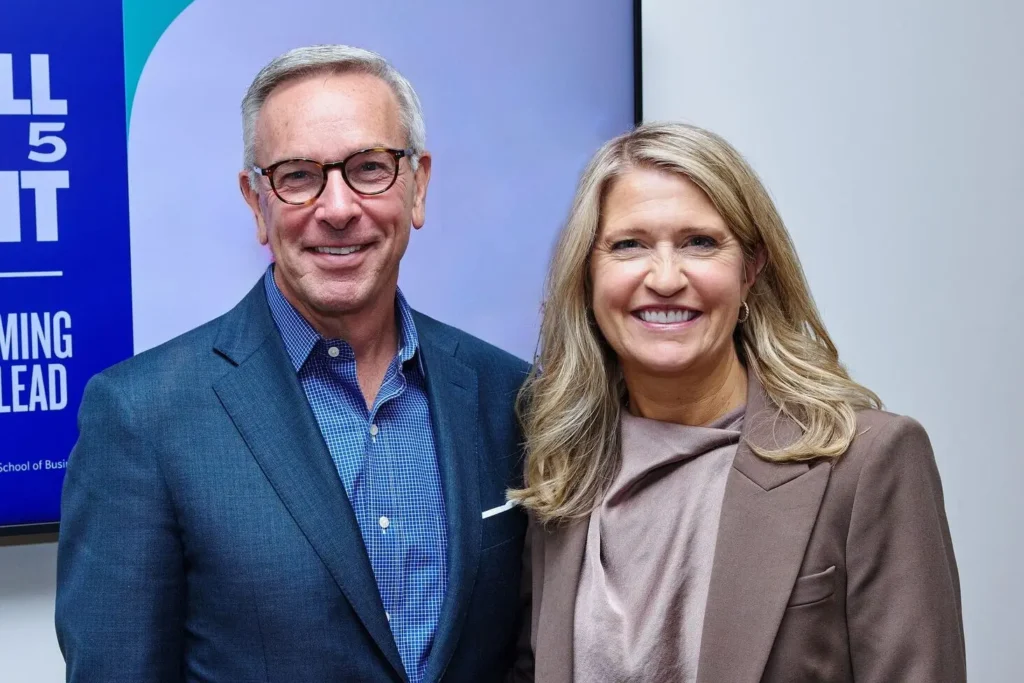
After a tenure spanning just over a year as the director of the Institute for Leadership & Work at Boston University’s Questrom School of Business, Peter Fasolo, formerly the Chief Human Resources Officer (CHRO) of Johnson & Johnson and the esteemed 2022 HR Executive of the Year, has officially stepped down from his position. The Institute also announced the departure of Associate Director Connie Hadley. These significant leadership changes mark a pivotal moment for the Boston-based HR research and thought leadership organization, which recently underwent a notable transformation from its previous identity as the HR Policy Institute (HRPI). The departures open a new chapter for the Institute, with Fred Foulkes, professor emeritus at Questrom and the visionary founder of HRPI, and Siobhan O’Mahony, chair of the university’s Department of Management & Organization, stepping in as interim co-directors.
The Institute for Leadership & Work, nestled within Boston University’s prestigious Questrom School of Business, serves as a critical nexus for advancing dialogue, research, and practice in the dynamic fields of leadership and human resources. Its mission is to bridge the gap between academic theory and real-world application, providing a forum for leading scholars, practitioners, and students to collectively address the complex challenges shaping the modern workplace. The organization’s history, tracing back to its roots as the HR Policy Institute, underscores a long-standing commitment to influencing HR best practices and fostering a community of innovative HR leaders. Its evolution to the Institute for Leadership & Work reflects a broader strategic intent to encompass the wider spectrum of challenges facing organizational leadership today, extending beyond traditional HR policy to include broader themes of talent management, organizational culture, future of work, and the impact of technology.
A Period of Transition and Strategic Reimagining
Peter Fasolo’s appointment as director at the start of last year was met with considerable anticipation, given his distinguished career at Johnson & Johnson, a global healthcare giant. As CHRO, Fasolo was renowned for his strategic vision in talent management, organizational development, and fostering a robust corporate culture across a vast, diverse workforce. His recognition as the 2022 HR Executive of the Year further solidified his reputation as a transformative leader in the HR domain. His decision to step down from the Institute, as stated by the organization, is driven by a desire to dedicate more time to other professional ventures, signaling a continued engagement with the broader business and leadership landscape. Similarly, Associate Director Connie Hadley’s departure is motivated by a focus on personal priorities, marking the conclusion of her significant contributions to the Institute’s operational and strategic initiatives.
Both Fasolo and Hadley are not entirely severing ties with the Institute; they will maintain an association as Fellows. This arrangement is designed to ensure a thoughtful and seamless transition, leveraging their institutional knowledge and deep commitment to the Institute’s mission. Susan Fournier, Dean of the Questrom School of Business, articulated the school’s unwavering commitment to the Institute’s work, emphasizing that their continued involvement as Fellows "reflects their deep commitment to the Institute’s mission and will help ensure a thoughtful and seamless transition." Dean Fournier further highlighted that "The recent evolution of the Institute has created a strong foundation for continued growth, and we are confident in the opportunities that lie ahead." This statement underscores the strategic importance the Questrom School places on the Institute as a key driver of its academic and industry engagement.
The Legacy and Vision of Departing Leaders
During their tenure, Peter Fasolo and Connie Hadley were instrumental in guiding the Institute through its significant transformation. This period saw the organization successfully transition from the HR Policy Institute (HRPI) to its current identity, a move that broadened its scope and solidified its relevance in a rapidly changing global economy. Their leadership was pivotal in establishing a new member engagement model, designed to foster deeper collaboration and knowledge exchange among its diverse constituents. Furthermore, they oversaw the sustained growth and increasing influence of the Institute’s Leadership Summits and its broader thought leadership initiatives. These summits, serving as crucial forums, bring together top HR executives, academic researchers, and industry leaders to discuss emerging trends and best practices, thereby advancing the collective understanding of leadership and the future of work.
Dean Fournier lauded their collective impact, stating, "Their leadership has strengthened the Institute as a premier forum for advancing conversations around leadership and the future of work while deepening its impact across the HR profession and business community." This acknowledgment highlights the tangible progress made under their guidance, particularly in elevating the Institute’s standing as a respected voice in the human resources and organizational leadership spheres. The foundation laid by Fasolo and Hadley is expected to provide a robust platform for the interim leadership team to build upon, ensuring continuity while also exploring new avenues for growth and impact.
Interim Leadership and the Path Forward
Stepping into these critical roles are two highly experienced figures: Fred Foulkes and Siobhan O’Mahony. Fred Foulkes, a professor emeritus at Questrom, is a foundational figure for the Institute, having led the organization for several decades in its previous incarnation as HRPI. His extensive experience and deep institutional memory provide invaluable continuity and a profound understanding of the Institute’s historical trajectory and core values. Foulkes’ return to a leadership capacity is particularly significant, as he previously guided the organization through numerous cycles of economic and technological change, establishing its reputation as a leading authority in HR research and policy.
Joining him is Siobhan O’Mahony, the current chair of Boston University’s Department of Management & Organization and the Feld Family Professor in Innovation and Entrepreneurship. O’Mahony brings a contemporary academic perspective, with expertise in innovation, entrepreneurship, and organizational dynamics—areas increasingly critical to modern HR and leadership. Her academic rigor and focus on cutting-edge research are expected to complement Foulkes’ extensive practical and historical insights, forming a potent leadership combination. Together, they are tasked with steering the Institute through this transition period, focusing immediately on preparations for the upcoming Fall Summit, the full implementation of the new member engagement model, and, crucially, leading the search for a permanent leadership team.
HR at a Crossroads: The Institute’s Enduring Relevance
Fred Foulkes’ observation that "Not during my time in the field has the HR function had so many really big challenges all at the same time, from AI to globalization to regulation" succinctly captures the unprecedented complexity confronting human resources professionals today. This statement underscores the critical importance of institutions like the Institute for Leadership & Work. The challenges he cites are not merely trends; they are foundational shifts reshaping the very nature of work and organizations globally.
- Artificial Intelligence (AI): The rapid acceleration of AI is perhaps the most transformative force. AI is redefining recruitment processes through sophisticated analytics, personalizing learning and development pathways, automating administrative tasks, and even influencing performance management and employee experience. However, it also presents significant ethical dilemmas regarding bias, data privacy, job displacement, and the imperative to reskill workforces for an AI-driven future. A 2023 report by Gartner indicated that 50% of HR leaders plan to implement AI in their HR processes in the next two years, highlighting both the opportunity and the urgency for strategic adoption.
- Globalization: While not new, globalization continues to evolve with increasingly interconnected global supply chains, remote workforces spanning multiple continents, and the need for culturally intelligent leadership. HR must navigate diverse labor laws, manage international talent mobility, and foster inclusive cultures that transcend geographical boundaries. The World Economic Forum consistently highlights global talent mobility and diversity as key drivers of economic growth, but also sources of complexity for HR.
- Regulation: The regulatory landscape for HR is growing in complexity and stringency. Data privacy laws like GDPR and CCPA have profound implications for employee data management. Evolving labor laws, minimum wage adjustments, diversity and inclusion mandates, and workplace safety regulations constantly demand HR’s vigilance and adaptation. Compliance is no longer a checklist item but a strategic imperative that can significantly impact an organization’s reputation and bottom line.
Foulkes posits that "The Institute, a decades-old partnership among HR leaders, faculty and students, is the perfect organization, through research and teaching, to contribute in meaningful ways to the changes that are demanded for companies to remain relevant and competitive." This statement encapsulates the Institute’s enduring value: its unique ability to convene diverse stakeholders to generate actionable insights and foster innovation. It serves as a vital bridge, translating academic research into practical strategies for practitioners, and feeding real-world challenges back into academic inquiry.
Innovation, Renewal, and Collaborative Futures
Dean Fournier reiterated the transformative potential of leadership changes, noting, "Leadership transitions create opportunities for renewal and innovation, and we are confident that the Institute is exceptionally well positioned for the future." This forward-looking perspective emphasizes the Questrom School’s belief in the Institute’s capacity to not only adapt but to thrive amidst evolving challenges. The core commitment remains to "convene leading scholars and practitioners, produce impactful research and foster meaningful dialogue on the issues shaping leadership and the future of work."
Siobhan O’Mahony further elaborated on the critical role of the Institute in the age of rapid AI acceleration. She emphasized that the Institute’s efforts to convene experts and accelerate knowledge sharing between leaders in academia and the HR profession are "all the more important" in these unprecedented times. O’Mahony’s expertise in innovation and entrepreneurship positions her uniquely to guide the Institute in exploring how new technologies and business models will reshape human capital strategies. Her vision is clear: "Together, we can better prepare leaders in both domains to advance meaningful work in unprecedented times." This collaborative ethos, combining the insights of academia with the practical wisdom of industry, is precisely what the Institute is designed to facilitate.
The Institute for Leadership & Work’s strategic plan under the interim co-directorship will involve a multi-pronged approach. Firstly, ensuring the successful execution of its signature events, such as the Fall Summit, which serves as a flagship platform for disseminating cutting-edge research and facilitating peer-to-peer learning among HR executives. Secondly, the new member engagement model, refined during the previous leadership, will be fully rolled out, aiming to create a more interactive and value-driven experience for its members. This model is crucial for fostering a vibrant community of practice where challenges are shared, and solutions are co-created. Thirdly, and perhaps most importantly, Foulkes and O’Mahony will lead the rigorous process of identifying and selecting a permanent leadership team capable of guiding the Institute into its next phase of growth and impact. This search will likely consider candidates with a blend of academic distinction, industry experience, and a visionary outlook for the future of work.
The transition at the Institute for Leadership & Work is more than a change in personnel; it signifies a dynamic adaptation to the profound shifts occurring within the global economy and the HR profession. By embracing these changes and leveraging the combined strengths of its interim leaders, Boston University’s Questrom School of Business is signaling its unwavering commitment to maintaining the Institute’s position as a vital contributor to the future of leadership and work. The ongoing dialogue, research, and collaborative efforts fostered by the Institute will be crucial in equipping organizations and their leaders to navigate the complexities of AI, globalization, and regulation, ensuring relevance and competitiveness in an ever-evolving world.







