A federal district court in Michigan has ruled that an Amazon fulfillment center employee can proceed to trial with her claims that the company retaliated against her after she reported experiencing homophobic slurs and other forms of harassment from third-party delivery drivers. The ruling, issued on May 19, 2026, by Judge Robert White of the U.S. District Court for the Eastern District of Michigan, found sufficient evidence for a jury to conclude that Amazon’s stated reasons for terminating the worker may have been pretextual, masking an underlying retaliatory motive. This development underscores the critical importance of robust anti-retaliation policies and fair investigation processes within large corporate structures, particularly concerning protected characteristics like sexual orientation.
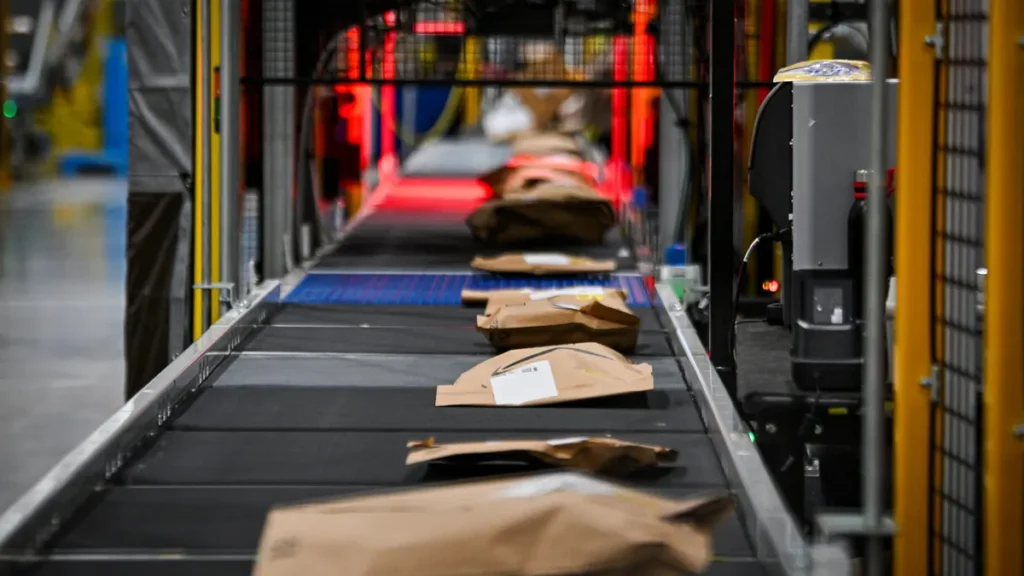
The case, Williams v. Amazon.com Services LLC, centers on an employee who worked in the dispatch department of Amazon’s Hazel Park, Michigan fulfillment center. In this role, she regularly interacted with third-party delivery partners, commonly referred to as "flex drivers," who were responsible for picking up and delivering packages. According to court documents, the worker alleged that she endured "intense" harassment from these flex drivers based on her sexuality, including homophobic slurs that occurred "once or twice a week." The latest reported incident of this harassment took place in October 2022, prompting a series of internal complaints that ultimately led to her termination.
A Chronology of Allegations and Internal Processes
The worker’s journey through Amazon’s internal complaint mechanisms began in earnest in October 2022. Following a particularly egregious incident, she reported the ongoing harassment to both her direct supervisor and an HR representative. During a meeting around this time, she expressed significant frustration regarding what she perceived as a lack of effective action from her superiors to address the hostile environment. Feeling unheard and unprotected, she escalated her concerns further by contacting Amazon’s ethics committee, a body designed to investigate serious employee complaints and ensure adherence to company values and policies.
The plaintiff claims that after engaging with the ethics committee, a noticeable shift occurred in the demeanor of her supervisor and the HR representative. She described their attitudes as changing from cooperative to "very rude," leading her to believe she had a "target on [her] back." This perceived change in treatment is a critical element in establishing a potential causal link between her protected activity (complaining about discrimination) and subsequent adverse actions.
Initially, Amazon did take a step to mitigate the immediate harassment, moving the worker to a different department to minimize her interactions with the flex drivers. While this action might suggest an attempt to address the hostile environment, the plaintiff’s subsequent experiences painted a different picture regarding the handling of her complaints.
In December 2022, the HR representative informed the worker that her complaint was being closed "for lack of evidence." Dissatisfied with this outcome and still experiencing a perceived lack of resolution, the worker reiterated her concerns about Amazon’s failure to adequately address the harassment. She also specifically requested to be assigned to a different supervisor, signaling her discomfort and distrust in her current reporting structure.
Just approximately one week after this renewed complaint and request, the same supervisor who she had previously reported, and whose attitude she claimed had turned "very rude," met with her. During this meeting, the supervisor accused the worker of failing to properly check flex drivers’ routes—a critical duty in the dispatch department—and subsequently issued a written disciplinary action, citing insubordination. Shortly thereafter, based on this report, the HR representative and a site leader made the decision to terminate her employment. The worker contended that this termination was not legitimate but rather a direct act of retaliation for her protected complaints of discrimination.
The Legal Framework: Michigan’s Elliott-Larsen Civil Rights Act
The worker’s claims are rooted in the Michigan Elliott-Larsen Civil Rights Act (ELCRA). Enacted in 1976, ELCRA is a comprehensive state law that prohibits discrimination in employment, housing, public accommodations, public service, and education based on religion, race, color, national origin, age, sex, height, weight, familial status, or marital status. Crucially, in 2022, the Michigan Supreme Court affirmed that the term "sex" in ELCRA includes sexual orientation and gender identity, providing explicit state-level protection for LGBTQ+ individuals against discrimination. This predated the landmark U.S. Supreme Court ruling in Bostock v. Clayton County (2020), which established similar federal protections under Title VII of the Civil Rights Act of 1964.
Under ELCRA, as with federal anti-discrimination laws, it is unlawful for an employer to retaliate against an employee for exercising their rights under the Act. To establish a prima facie case of retaliation, an employee typically must demonstrate:
- They engaged in a protected activity (e.g., complaining about discrimination).
- The employer took an adverse employment action against them (e.g., termination).
- There was a causal connection between the protected activity and the adverse action.
If the employee establishes these elements, the burden shifts to the employer to articulate a legitimate, non-discriminatory reason for the adverse action. If the employer provides such a reason, the burden shifts back to the employee to demonstrate that the employer’s stated reason was merely a pretext for unlawful retaliation. This "pretext" argument was central to Judge White’s decision to allow the case to proceed to trial.
The Court’s Rationale: Unmasking Potential Pretext
Judge Robert White’s ruling carefully dissected the evidence presented by both parties. While Amazon argued that the termination was a legitimate consequence of the worker’s insubordinate conduct and failure to perform job duties, the court found compelling evidence to suggest otherwise.
Several factors influenced Judge White’s decision to permit the retaliation claim to move forward:

- Knowledge and Changed Behavior: The court noted that both the supervisor and the HR representative involved in the termination decision were well aware of the worker’s complaints about harassment. Furthermore, the worker’s testimony regarding their "changed behavior" and "very rude" attitude after her complaints to the ethics committee suggested a potential causal link between her protected activity and their subsequent treatment of her.
- Contradictory Performance Appraisal: The worker’s site leader, who was involved in the final termination decision, had previously described her as a "good" and "hard" worker. This positive assessment stood in stark contrast to the disciplinary action leading to her dismissal, raising questions about the true motivation behind the write-up.
- Supervisor’s Damning Admission: Perhaps the most critical piece of evidence cited by the judge came from the supervisor’s own deposition testimony. The supervisor admitted that she had provided the worker with contradictory guidance regarding the very conduct for which she was later written up. This admission strongly undermined the credibility of the insubordination claim.
In his order, Judge White unequivocally stated: "The last fact suggests that [the supervisor] intentionally omitted relevant information to make the write-up more damning than it originally was; clear evidence of a pretext designed to mask retaliation." This powerful statement highlights the court’s view that the employer’s stated reason for termination might have been a fabricated justification to cover up an unlawful retaliatory motive.
It is important to note that while the retaliation claim was cleared for trial, Judge White dismissed some of the worker’s other claims, specifically her hostile work environment claim. The court reasoned that Amazon had taken some steps to address the harassment by involving security and attempting to ban the abusive third-party drivers. This distinction underscores that while an employer may take corrective actions against harassment, these actions do not insulate them from liability if they subsequently retaliate against the employee who reported the harassment.
Amazon’s Stance and Broader Corporate Responsibility
In response to the ruling, Montana MacLachlan, an Amazon spokesperson, provided a statement to HR Dive, reiterating the company’s official position: "We don’t tolerate discrimination, harassment, or retaliation in our workplace. We investigate any reports of such conduct and take appropriate action against anyone found to have violated our policies."
This statement reflects a standard corporate commitment to anti-discrimination principles. However, the court’s findings in Williams v. Amazon.com Services LLC suggest that, at least in this specific instance, Amazon’s internal processes may have fallen short of effectively upholding these policies. The judge’s strong language regarding "pretext" directly challenges the notion that "appropriate action" was taken, instead implying that disciplinary measures were manipulated to penalize an employee for speaking out.
The case brings to light the complex challenges faced by large corporations, particularly those with extensive networks of third-party contractors. While Amazon has policies against discrimination and harassment, managing the behavior of independent flex drivers who are not direct employees can be difficult. Nevertheless, employers generally have a responsibility to provide a safe working environment for their employees, even if the harassment originates from non-employees, and to prevent retaliation against those who report such incidents.
Implications for Workplace Diversity, Equity, and Inclusion
This ruling carries significant implications for Amazon and other large employers, particularly concerning workplace diversity, equity, and inclusion (DEI) initiatives.

- Reinforcing Anti-Retaliation Protections: The decision serves as a potent reminder that anti-retaliation provisions in civil rights laws are robust and that courts are willing to scrutinize employer justifications for adverse actions following protected complaints. It reinforces the message that employers cannot punish employees for raising legitimate concerns about discrimination or harassment.
- Scrutiny of Internal Investigations: The judge’s finding of potential pretext suggests a failure in Amazon’s internal investigative and disciplinary processes. This highlights the critical need for HR departments to conduct truly impartial and thorough investigations, ensure consistent application of policies, and meticulously document all findings and decisions to avoid the appearance of bias or retaliatory intent.
- Supervisor Training: The supervisor’s admission of contradictory guidance underscores the paramount importance of comprehensive training for all managerial staff on anti-discrimination laws, proper handling of employee complaints, and the absolute prohibition against retaliation. Supervisors are often the first point of contact for employees experiencing harassment, and their actions (or inactions) can have profound legal consequences for the company.
- Managing Third-Party Conduct: The case highlights the ongoing challenge for companies like Amazon, which rely heavily on independent contractors, in controlling and mitigating harassment perpetrated by these third parties. While Amazon took some steps, the initial and persistent nature of the harassment, coupled with the alleged retaliation, indicates that managing the behavior of non-employees within the operational environment remains a complex area requiring robust strategies.
- Trust in HR and Ethics Channels: When employees perceive that reporting mechanisms lead to retaliation rather than resolution, trust in HR and ethics committees erodes. This can create a chilling effect, discouraging employees from coming forward with legitimate complaints, thereby allowing toxic workplace cultures to fester and increasing legal risks for the company in the long run.
The Broader Context of LGBTQ+ Workplace Discrimination
Despite significant advancements in LGBTQ+ rights, discrimination and harassment remain prevalent in workplaces across the United States. Data from organizations like the Human Rights Campaign and the Williams Institute at UCLA School of Law consistently show that LGBTQ+ individuals often face discrimination in hiring, promotions, and daily interactions, and are disproportionately subjected to hostile work environments.
- A 2018 study by the Williams Institute found that nearly half of LGBTQ+ workers (46%) reported experiencing some form of employment discrimination at some point in their lives.
- A 2021 survey by the Human Rights Campaign Foundation found that 1 in 10 LGBTQ+ workers had left a job because the environment was unwelcoming.
These statistics underscore why laws like ELCRA are so vital. They provide legal recourse for individuals who experience discrimination and retaliation, serving as a deterrent against unlawful practices and encouraging employers to foster genuinely inclusive environments. The Williams v. Amazon.com Services LLC case, even at this preliminary stage, contributes to this broader narrative by reinforcing that legal protections for LGBTQ+ employees are enforceable and that allegations of retaliation will be taken seriously by the judiciary.
Looking Ahead: The Path to Trial
With the retaliation claim cleared to proceed, the case will now move towards a trial phase. This could involve further discovery, pre-trial motions, and ultimately, a presentation of evidence before a jury. The outcome of the trial could result in a significant monetary judgment against Amazon, including compensatory and punitive damages, or the case could be settled out of court.
Regardless of the final outcome, Judge White’s decision to allow the claim to go to trial sends a powerful message. It signals that federal courts are prepared to scrutinize employer actions closely when allegations of retaliation for protected activity are raised, especially when there are indications that the stated reasons for termination may be disingenuous. For Amazon and other corporations, this case serves as a critical reminder of the ongoing need to not only establish strong anti-discrimination and anti-retaliation policies but also to ensure their consistent, fair, and transparent implementation at every level of the organization, protecting all employees who bravely come forward to report wrongdoing.