Despite an overall souring outlook on business conditions, Chief Executive’s November survey reveals a surprising silver lining in the recent midterm elections, with some chief executives viewing the outcomes as an opportunity to regain momentum and "get back to business." While overall confidence has dipped to a 14-month low, the electoral results provided a much-needed, albeit nuanced, boost to the CEO Confidence Index, preventing a more significant decline. This dynamic suggests that for many business leaders, the prospect of navigating a settled political landscape, regardless of its specific composition, outweighs the immediate concerns about economic headwinds.
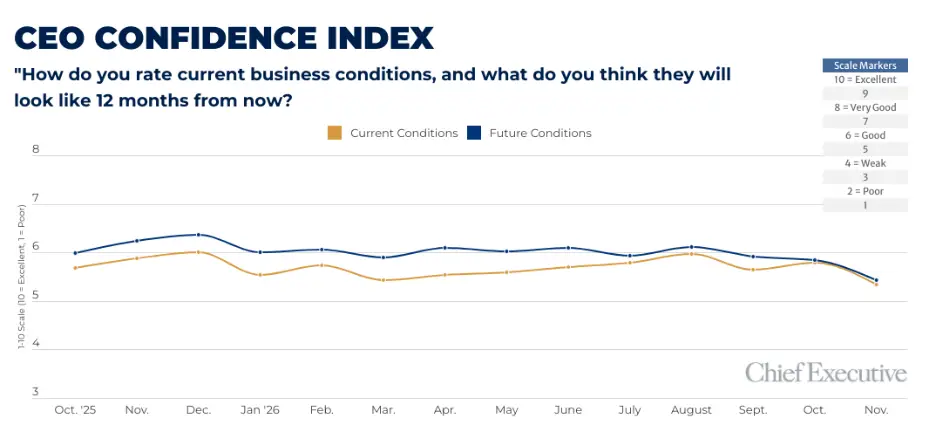
The survey, conducted from November 3rd to 5th among 435 U.S. CEOs, captured a stark reality: overall confidence levels have significantly eroded. CEOs rated current business conditions at a modest 5.3 out of 10, an 8 percent decrease from October. Their outlook for the next 12 months saw a similar downturn, falling 7 percent to 5.4. This dip in sentiment aligns with broader economic anxieties, including persistent inflation, rising interest rates, and ongoing geopolitical uncertainties. The last time current business conditions were rated this poorly was in September 2025, a period characterized by tariff disputes, policy shifts, and concerns over economic growth, underscoring the cyclical nature of business leader sentiment and its sensitivity to macro-economic and political factors.
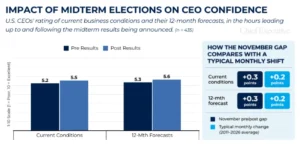
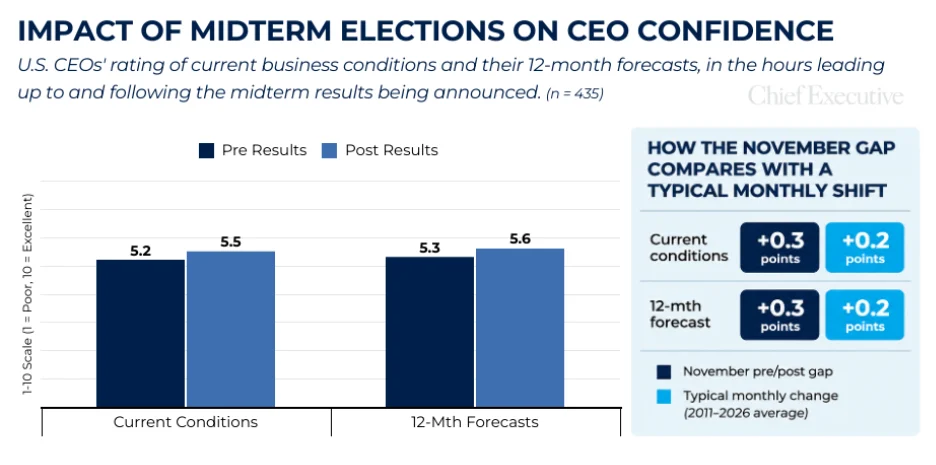
However, a closer examination of the survey data reveals a critical temporal distinction. CEOs who completed the poll before the midterm election results began to emerge on the evening of November 3rd reported average ratings for current conditions at 5.2 and a 12-month forecast of 5.3. In contrast, those who responded after the initial election outcomes became apparent saw a noticeable uptick, with current conditions rated at 5.5 and the 12-month forecast at 5.6. This roughly three-tenths-of-a-point difference, particularly within a matter of hours, is statistically significant. Historically, the CEO Confidence Index typically fluctuates by only two-tenths of a point from one month to the next, highlighting the immediate, albeit localized, impact of the electoral resolution.
The Unwinding of Uncertainty: A Catalyst for Action
The underlying sentiment driving this subtle shift appears to be a collective yearning for clarity and predictability. Many CEOs expressed a sense of relief that the election cycle, with its inherent uncertainties and political maneuvering, had concluded. "I think midterms are weighing on business leaders and their decisions. Once that’s settled, things should start moving again," stated one CEO, articulating a sentiment echoed by many. This perspective suggests that the resolution of the electoral contest, regardless of specific party gains or losses, provides a more stable foundation upon which to build strategic plans and investment decisions.
Another CEO offered a more pointed observation: "President’s chaotic initiatives will be balanced by a more functional congress." This comment implies a belief that a divided or altered legislative landscape might lead to greater bipartisan cooperation or at least a more measured approach to policymaking, thereby reducing executive overreach or unpredictable policy swings. The simple, yet profound, sentiment from another respondent, "Election [is] over so hopefully some stability," encapsulates the core of this post-election optimism. For businesses operating in an increasingly complex global environment, the reduction of political volatility can translate directly into improved operational planning and a more favorable investment climate.
The CEO of a family-owned manufacturer elaborated on this point, stating, "The midterm election is over and the balance of power is in place. At least we know what we should probably do." This indicates that the ambiguity surrounding potential policy shifts and legislative agendas has been replaced by a clearer understanding of the political landscape, enabling businesses to adjust their strategies accordingly. Even a more cautious CEO acknowledged the value of certainty, noting, "The elections will be behind us and will know where the country is headed. May be in the wrong direction, but at least we will know." This sentiment underscores the fundamental business imperative for predictability, even if the direction is not entirely favorable.
Broader Hopes for Global Stability and Economic Recovery
The optimism generated by the midterm results extended beyond domestic policy concerns for some CEOs. A segment of respondents expressed hopes that the election outcomes would contribute to easing international trade tensions, improving global relations, and potentially accelerating the resolution of conflicts. One CEO looking 12 months ahead stated, "The elections will surely change the direction of the country, and we should be out of war by then," hinting at a belief that shifts in political leadership or international dynamics might influence foreign policy decisions. Another respondent directly cited "improved global stability based on recent mid-term election results," suggesting a perception that the electoral process in the United States has ramifications that resonate on a global scale.
This broader outlook aligns with historical patterns where significant political events, particularly in major global economies, can influence international sentiment and foster a more cooperative or less confrontational global environment. The anticipation of reduced geopolitical friction could translate into more predictable supply chains, greater cross-border investment, and a more stable international market for goods and services.
Underlying Economic Headwinds Persist
Despite the electoral uplift, the underlying economic challenges remain a significant concern for the majority of CEOs. The survey data reveals that while the immediate post-election responses showed a marginal improvement, the overall confidence levels have not recovered to previous highs. More than a year ago, in November 2025, CEOs had forecast current business conditions to reach 6.2 by this time. The current reading of 5.3 represents a substantial shortfall, approximately 15 percent below their optimistic projections.
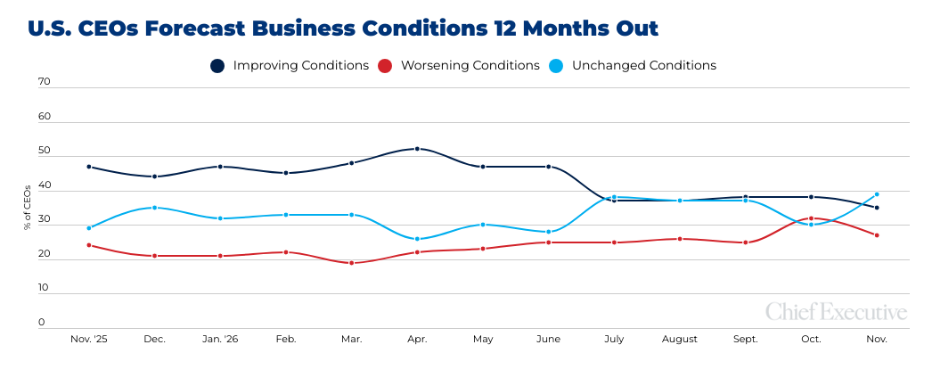
Furthermore, the expectation for significant near-term improvement is muted. The 12-month forecast of 5.4 is only a marginal 2 percent increase from their current assessment. This pattern of stagnating expectations has been a recurring theme throughout 2026, with the exception of a brief period of heightened optimism in the second quarter. A notable trend emerging from the survey is the increase in the number of CEOs anticipating no significant change in business conditions. Thirty-nine percent of respondents now forecast that business conditions will remain essentially unchanged over the next 12 months, a rise from 30 percent in October. This suggests a prevailing sense of cautious inertia, where businesses are bracing for a period of continued, albeit stable, economic performance rather than robust growth.
Divergent Perspectives: Uncertainty and Gridlock
The optimism sparked by the midterms was far from universal. A significant portion of CEOs, even among those responding after the election results, continued to express pessimism. Thirty percent of these CEOs forecasted a deterioration in business conditions over the next 12 months, a higher percentage compared to the 25 percent of those who responded earlier. This divergence highlights the deeply polarized views within the business community regarding the implications of the election outcomes.
One CEO explicitly linked election results to "uncertainty and gridlock," suggesting that the outcome, regardless of specific party victories, could lead to legislative paralysis and hinder proactive policy-making. Another respondent voiced strong partisan concerns, stating, "Business will slow down due to the outcome [of] the November 3 elections due to the democrats going on their witch hunts against republicans throughout the U.S." This CEO projected a severe decline in business conditions, from a current rating of 3 to a forecast of 1 out of 10. These comments underscore the persistent political polarization and its direct impact on business sentiment, indicating that for some, the resolution of the election has not necessarily brought clarity but has instead solidified existing anxieties.
Corporate Growth Expectations Remain Resilient
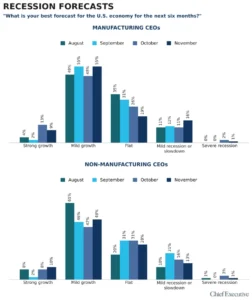
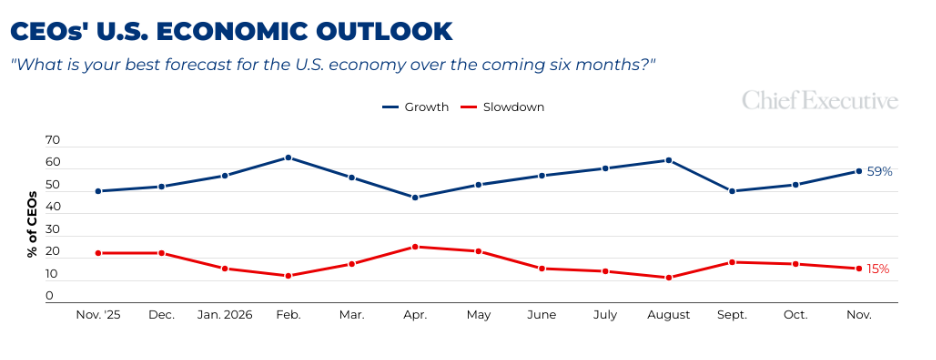
Despite the subdued outlook on overall business conditions, CEOs have largely maintained their expectations for growth within their own companies and for the broader U.S. economy. Six out of 10 CEOs now anticipate U.S. economic growth over the next six months, an increase from 53 percent in October. This shift is largely attributed to CEOs who previously forecasted a stagnant economy now projecting growth, while the proportion anticipating a slowdown or recession saw a slight decline. Notably, the share of CEOs expecting economic growth was higher among those who responded after the election results were known (63 percent) compared to those who responded earlier (56 percent), further reinforcing the idea that electoral clarity contributed to a more optimistic near-term economic outlook.
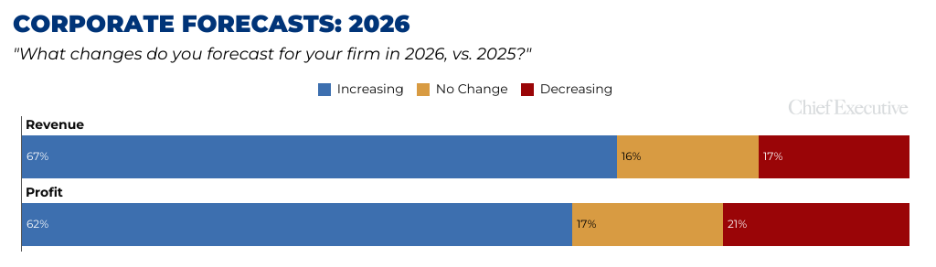
The optimism is even more pronounced when it comes to individual corporate performance. A substantial 79 percent of CEOs anticipate revenue growth for their companies in the next six months, with 65 percent expecting increases in profits. Looking further ahead to 2027, these figures climb to an impressive 80 percent for revenue growth and 74 percent for profit growth. This disconnect between the broader economic sentiment and specific corporate growth projections suggests that businesses are confident in their ability to navigate the prevailing economic landscape and capitalize on emerging opportunities, even amidst broader concerns.
These optimistic growth forecasts are being underpinned by plans for investment and expansion. Fifty-four percent of CEOs plan to increase capital spending, and 52 percent expect to expand their headcount. Approximately one-third of respondents anticipate maintaining their capital spending and headcount at current levels. These intentions, even in the face of anticipated cost pressures, indicate a strategic commitment to future growth and market positioning.
Persistent Cost Pressures and Investment Strategies
The anticipated growth is not without its challenges. Nearly eight out of 10 CEOs foresee higher operating expenses in the coming year. However, the majority expect these increases to be less than 10 percent, suggesting a manageable level of inflation rather than runaway cost escalation. This awareness of rising costs is likely a key factor influencing investment decisions, with companies aiming to bolster efficiency and productivity to offset these pressures.
The dual trends of robust corporate growth expectations and sustained investment plans, despite a somewhat cautious overall economic outlook, paint a picture of a business sector that is resilient and forward-looking. While the immediate macroeconomic environment presents challenges, CEOs appear to be betting on their own strategic acumen and the inherent dynamism of their respective industries to drive future success. The resolution of the midterm elections, for a significant portion of these leaders, has provided a renewed sense of agency and a clearer path forward, enabling them to focus on the critical task of business growth and development.