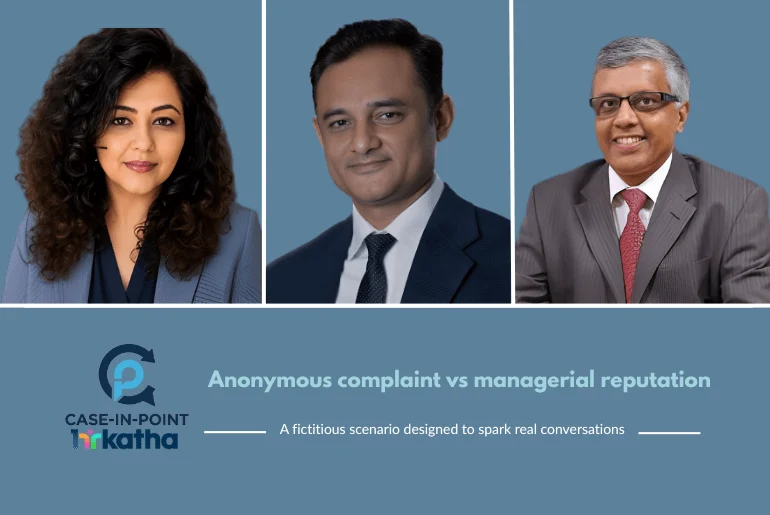
Urban Logistics, a prominent global player in supply chain management, finds itself at a critical juncture following the receipt of an anonymous email addressed to its Human Resources department. The unverified complaint alleges that a senior manager is engaged in an intimate relationship with a direct report, leading to accusations of favouritism and the cultivation of an uncomfortable work environment. The manager vehemently denies the allegations, and crucially, no corroborating evidence has yet surfaced, nor has the direct report been identified. This situation presents Urban Logistics’ HR leadership with a profound ethical and operational dilemma: whether to launch a full-scale investigation into an anonymous, potentially malicious rumour, thereby risking significant reputational damage to the accused manager, or to dismiss it as unsubstantiated hearsay, potentially overlooking a genuine and detrimental workplace issue. The core challenge lies in discerning the credibility of an anonymous complaint and determining if the absence of accountability for the accuser renders such claims mere tools for workplace sabotage or genuine cries for help from a vulnerable employee.
Background: Urban Logistics and the Importance of Workplace Integrity
Urban Logistics operates across a complex global network, managing intricate supply chains that demand precision, trust, and a highly motivated workforce. With thousands of employees spanning multiple continents, the company prides itself on fostering a culture of efficiency, innovation, and ethical conduct. In an organisation of this scale, the integrity of its leadership and the fairness of its internal processes are paramount. Any perceived breach of these principles, especially involving senior management, can ripple through the entire workforce, eroding morale, productivity, and ultimately, the company’s competitive edge. The allegations, though unverified, touch upon sensitive issues of power dynamics, professional ethics, and potential abuse of authority within the workplace, all of which are critical for a company like Urban Logistics to address proactively.
Workplace relationships, particularly those between a manager and a direct report, are often fraught with potential conflicts of interest. While not inherently prohibited in all corporate settings, they invariably raise questions about fairness, objectivity in performance evaluations, promotion decisions, and resource allocation. When such relationships are perceived to be clandestine or undeclared, they can fuel speculation, resentment, and a breakdown of trust within teams, even in the absence of overt favouritism. The anonymous nature of this complaint at Urban Logistics underscores a deeper potential issue: a culture where employees may fear retaliation for speaking up through formal channels.
The Genesis of the Dilemma: An Unverified Claim
The anonymous email landed in the HR inbox with stark allegations. It detailed an alleged affair, citing its impact on team dynamics through favouritism and the creation of an "uncomfortable work environment." The lack of specific names for the alleged direct report and the absence of any concrete evidence beyond the sender’s assertion immediately complicated the situation. The manager’s outright denial, while expected, further solidified the lack of a clear path forward.
HR professionals globally grapple with the challenge of anonymous complaints. Data from various HR surveys indicates that approximately 30-40% of all whistleblower complaints are submitted anonymously. While anonymity can protect complainants from retaliation – a significant concern, with studies showing nearly 70% of employees fear negative repercussions for reporting misconduct – it also opens the door to malicious intent, personal vendettas, or misunderstandings. For Urban Logistics, the stakes are exceptionally high. Mishandling such a complaint could lead to a loss of employee confidence in HR processes, potential legal risks related to workplace harassment or discrimination, and severe damage to the company’s carefully cultivated culture. Conversely, an unwarranted investigation could unjustly tarnish the reputation and career of a senior manager, causing irreparable harm even if the claims are ultimately proven false.

Chronology of Internal Deliberation at Urban Logistics (Hypothetical)
- Day 1: Receipt and Initial Review. The anonymous email is received by Urban Logistics’ HR department. A junior HR professional flags it to the Head of Employee Relations.
- Day 2: Leadership Briefing. The Head of Employee Relations briefs the Chief Human Resources Officer (CHRO) and potentially legal counsel. The core dilemma is immediately identified: the seriousness of the allegations versus the lack of verifiable information.
- Day 3-5: Preliminary Assessment & Policy Review. The HR team reviews Urban Logistics’ existing policies on workplace relationships, conduct, and grievance procedures. They also conduct a discreet internal check on the accused manager’s past performance reviews, team feedback, and any prior, informal concerns that might have been raised. This phase focuses on gathering any low-hanging, objective data without alerting the manager or the wider team.
- Week 2: Strategic Consultation. A confidential meeting is held involving the CHRO, legal, and potentially an external HR consultant specializing in investigations. The discussion centres on the potential risks of both action and inaction, weighing legal liabilities, reputational impact, and cultural implications.
- Week 3: Decision on Initial Steps. Based on the strategic consultation, a decision is made regarding the immediate next steps – likely a discreet, preliminary fact-finding mission as suggested by leading HR experts, rather than an immediate formal investigation. The aim is to gather more context and potential signals without premature escalation.
Expert Perspectives: Navigating the HR Labyrinth
The challenges faced by Urban Logistics resonate deeply within the HR community, where leaders frequently encounter similar dilemmas. Three prominent HR leaders offer their insights, providing a framework for how Urban Logistics might proceed.
Ekta Kaveeshwar, CHRO, Neilsoft: Prioritising Discreet, Evidence-Based Inquiry
Ekta Kaveeshwar, a veteran CHRO, asserts that dismissing an anonymous complaint solely due to its anonymity is a critical error. "When allegations involve a senior manager and a potential abuse of power, anonymity is often less about cowardice and more about fear—fear of retaliation, career damage, or not being believed," Kaveeshwar states. This perspective is particularly relevant for Urban Logistics, as it suggests the anonymous email could be a genuine distress signal from an employee operating under significant psychological pressure.
Kaveeshwar advocates for an investigative approach but with "restraint and discipline." Her initial focus would be on assessing credibility without revealing the specific allegation. For Urban Logistics, this would translate into several actionable steps:
- Historical Review: Has the accused senior manager been the subject of any similar concerns in the past, even informal ones? Are there any patterns of behaviour that might raise red flags?
- Team Sentiment Gauge: Discreetly engaging with the manager’s team through general discussions about workplace climate, team dynamics, and engagement. The goal is to identify any perceived favouritism, exclusion, or unusual decision-making patterns without directly mentioning the allegations.
- Objective Data Analysis: A thorough review of performance ratings, promotion trajectories, rewards, project allocations, and career progression decisions for team members under the accused manager over the past 12-24 months. Any anomalies or disproportionate advancements could serve as indirect signals.
- Professional Dialogue: A carefully framed conversation with the manager focusing on team climate, workplace boundaries, and conflict-of-interest expectations. This conversation would be general in nature, avoiding direct accusation, but aimed at reinforcing company values and policies.
"The key for Urban Logistics," Kaveeshwar advises, "is to investigate the issue, not the rumour. This must be done with utmost care, without damaging a person’s reputation based on hearsay and without ignoring a potentially serious workplace concern. Anonymous complaints deserve attention, but they also require evidence before conclusions are drawn." For Urban Logistics, this means a meticulous, phased approach, moving from general observation to targeted inquiry only if credible signals emerge.
Tanmay Chauhan, Director-HR, Dover Fueling Solutions India: The Power of Proactive Policy

Tanmay Chauhan shifts the focus from reactive investigation to proactive prevention, a crucial lesson for Urban Logistics. "The real question begins much before an anonymous complaint arrives," Chauhan explains. He emphasizes the critical need for organisations to establish clear policies, comprehensive awareness programmes, and robust disclosure mechanisms regarding workplace relationships, especially where reporting lines or conflicts of interest might arise.
Chauhan highlights a growing trend among companies to require employees to declare relationships that could create bias or influence workplace decisions. "Post disclosure, the company can take appropriate measures—such as changing reporting structures or ensuring there is no conflict of interest," he states. For Urban Logistics, this suggests that the anonymous complaint might be a symptom of a larger systemic gap in its relationship disclosure policies or their enforcement. Had such a framework been clearly communicated and consistently followed, the situation might never have escalated to an anonymous complaint.
However, once a complaint surfaces, Chauhan’s approach mirrors Kaveeshwar’s in its caution. He would "never dismiss a complaint simply because it is anonymous" but also "not jump straight into a formal investigation based on an unverified allegation." For Urban Logistics, this means:
- Substance Assessment: The first step is to objectively assess the substance of the complaint. Does it align with any known patterns? Are the alleged consequences (favouritism, uncomfortable environment) plausible within the team’s context?
- Stakeholder Engagement: Discreetly speaking to relevant stakeholders (e.g., other managers, HR business partners for the department) to understand the broader context and dynamics.
- Policy Alignment: Determining if the alleged matter falls within the scope of Urban Logistics’ existing organisational policy on conduct, ethics, or workplace relationships.
"Ultimately, strong policies make these situations easier to navigate," Chauhan concludes. "They provide consistency, fairness, and clarity on how concerns are assessed and addressed." Urban Logistics must view this incident not just as an isolated problem but as an opportunity to review and strengthen its foundational HR policies, particularly those governing workplace relationships and conflict of interest.
Ramesh Shankar, Senior HR Leader: Silence as a Signal
Ramesh Shankar brings a powerful, experience-driven perspective, rooted in the understanding that "silence is not evidence that a problem does not exist." He recounts an instance where informal channels revealed inappropriate managerial behaviour towards female employees, despite a lack of formal complaints. His proactive engagement with the team, leading to a private disclosure, reinforced a vital lesson: employees often remain silent due to fear of retaliation, believing the risks of speaking up outweigh the benefits.
For Urban Logistics, Shankar’s advice is clear: "I would not treat the anonymous complaint as proof, but I would certainly treat it as a signal." He advocates for HR’s responsibility to conduct "discreet fact-finding" when allegations are serious. This could involve:
- Informal Conversations: Holding general, non-accusatory conversations with team members about their work environment, morale, and any challenges they face.
- Observation of Dynamics: Paying close attention to workplace interactions, team meetings, and general office behaviour for any subtle cues of favouritism, discomfort, or unusual power dynamics.
- Trusted Channels: Leveraging existing informal networks or trusted HR business partners who might have a pulse on team sentiment.
Shankar acknowledges that anonymous complaints can sometimes be motivated by personal grudges. However, he stresses that "when the issue involves possible harassment, abuse of authority, favouritism, or ethical misconduct, HR cannot afford to look away." He draws an analogy to courts taking suo moto cognisance of serious matters, not presuming guilt but recognizing the importance of examination even without a formal complaint. For Urban Logistics, this implies a moral and ethical imperative to investigate, albeit cautiously, to protect employee well-being and maintain trust.

The Broader Implications for Urban Logistics
The anonymous complaint at Urban Logistics transcends the immediate allegation, touching upon several critical facets of corporate governance and culture.
- Erosion of Trust and Morale: If the complaint is dismissed without adequate investigation, or if the investigation is perceived as biased, it can severely erode employee trust in HR and leadership. This can lead to decreased morale, higher attrition rates, and a stifled environment where legitimate concerns go unreported, creating a "silent epidemic" of workplace issues.
- Legal and Compliance Risks: Unaddressed allegations of favouritism or harassment can expose Urban Logistics to significant legal risks. Lawsuits related to discrimination, hostile work environments, or even wrongful termination (if the alleged direct report is later impacted negatively) could result in substantial financial penalties and reputational damage. Regulatory bodies increasingly scrutinize how companies handle such complaints.
- Reputational Damage: Both for the company and the individuals involved. For the accused manager, even an unsubstantiated rumour can have lasting professional and personal repercussions. For Urban Logistics, a perceived failure to uphold ethical standards can damage its brand as an employer of choice and potentially impact its relationships with clients and investors who value ethical supply chain practices.
- Organizational Culture: The deepest question posed by this anonymous complaint is "Why the anonymity?" This suggests a potential lack of psychological safety within Urban Logistics, where employees fear retaliation if they report issues through formal channels. Addressing this requires more than just investigating the current complaint; it necessitates a comprehensive review of the company’s culture, grievance mechanisms, and anti-retaliation policies. Fostering an environment where employees feel safe to speak up is crucial for long-term organizational health.
Supporting Data and Industry Context
Workplace misconduct is a pervasive issue. A 2023 report by the Ethics & Compliance Initiative (ECI) found that 49% of employees observed misconduct in the past year, and 79% of those who reported it experienced retaliation. This stark statistic underscores why anonymity is often chosen. Favouritism, often a consequence of undeclared or inappropriate relationships, is cited by employees as one of the most demotivating factors in the workplace. Research by Gartner shows that perceived unfairness in the workplace can reduce employee performance by up to 15%. For a supply chain giant like Urban Logistics, where team cohesion and efficiency are paramount, such internal friction can translate directly into operational inefficiencies and financial losses.
Furthermore, the legal landscape surrounding workplace relationships is evolving. While few jurisdictions outright ban consensual relationships between employees, many require strict policies for manager-subordinate relationships due to the inherent power imbalance. Companies that fail to enforce such policies or investigate complaints thoroughly can be found negligent in creating a fair and safe work environment.
A Path Forward for Urban Logistics: Balanced and Proactive
Given the expert advice and the broader implications, Urban Logistics’ CHRO must adopt a multi-pronged strategy:
- Discreet Preliminary Inquiry: Immediately initiate a cautious, fact-finding process as outlined by Ekta Kaveeshwar and Ramesh Shankar. This involves reviewing objective data, observing team dynamics, and conducting general, non-accusatory conversations about the work environment. The focus is on gathering signals, not evidence of guilt.
- Policy Review and Enhancement: Simultaneously, launch a comprehensive review of Urban Logistics’ existing policies on workplace relationships, conflicts of interest, and grievance procedures. As Tanmay Chauhan suggests, strengthen these policies to require disclosure of manager-subordinate relationships and outline clear steps for managing potential conflicts.
- Communication and Culture Audit: Address the underlying "Why anonymity?" question. This could involve anonymous employee surveys or focus groups (facilitated by an external party to ensure trust) to assess psychological safety, fear of retaliation, and overall confidence in HR processes. Develop a strategy to foster a more open communication culture and reinforce anti-retaliation policies.
- Evidence-Based Decision Making: Only if the preliminary inquiry yields credible signals or corroborating evidence should Urban Logistics proceed to a more formal, structured investigation. This investigation must adhere to principles of due process, confidentiality, and fairness for all parties, ensuring the accused manager has the opportunity to respond to specific allegations if they reach that stage.
- Transparent Communication (where appropriate): While details of specific investigations must remain confidential, Urban Logistics can transparently communicate its commitment to a fair and respectful workplace, its robust grievance procedures, and its zero-tolerance policy for retaliation.
In conclusion, the anonymous complaint at Urban Logistics serves as a potent reminder that HR’s responsibility extends beyond policy enforcement; it encompasses safeguarding the company’s integrity, fostering a healthy culture, and protecting both accuser and accused. By adopting a balanced, evidence-based, and proactive approach, Urban Logistics can navigate this sensitive challenge, not only addressing the immediate allegations but also strengthening its foundation for future workplace fairness and trust. The incident, while challenging, presents an invaluable opportunity for the company to reinforce its commitment to ethical leadership and a truly inclusive work environment.