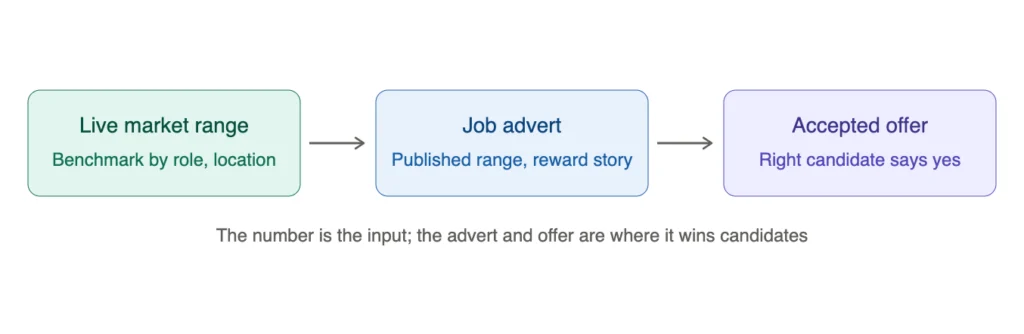
Salary benchmarking is not merely a data input; it is a critical strategic tool whose deployment dictates a company’s success in securing top talent. How this data is interpreted, positioned, communicated, and integrated into a holistic offer package determines whether a candidate accepts an employment proposal from one organization over another. This strategic application of compensation data has become paramount in an increasingly challenging talent landscape. The ManpowerGroup’s 2026 Global Talent Shortage Survey starkly illustrates this reality, reporting that a staggering 72% of employers are encountering significant difficulties in finding skilled talent, with AI skills now claiming the top spot for demand. In a market where numerous organizations are vying for a limited pool of highly sought-after candidates, a meticulously constructed and well-communicated offer must perform far more effectively than it has in previous eras.
The insights for this guide stem from HR DataHub, a platform that continuously monitors live employer advertisements rather than relying solely on historical survey data. This real-time perspective provides an invaluable lens into current market dynamics, informing strategies that guide a benchmark from its initial calculation through to the crafting of compelling job advertisements and ultimately, successful offer acceptance.
The Evolving Landscape of Talent Acquisition
The past few years have witnessed a profound shift in the employer-employee dynamic, often dubbed the "Great Reevaluation." Candidates are no longer solely driven by base salary; they prioritize a broader spectrum of factors including work-life balance, career progression, company culture, and comprehensive benefits. Concurrently, the demand for specialized skills, particularly in emerging fields like artificial intelligence, data science, and advanced cybersecurity, has intensified competition to unprecedented levels. This dual pressure—increased candidate expectations and acute skill shortages—underscores the need for a sophisticated approach to compensation and rewards. Companies must articulate a value proposition that resonates deeply with individual candidates, moving beyond generic statements to demonstrate a genuine understanding of market worth and personal priorities. Without a robust, data-driven strategy for compensation, organizations risk not only failing to attract new talent but also alienating their existing workforce.
Defining Strategic Salary Benchmarking
At its core, salary benchmarking is the systematic process of evaluating an organization’s compensation and benefits structure against external market data. Its primary objective is to ascertain whether current remuneration packages are fair, competitive, and justifiable within the prevailing market conditions. This process provides a clear indication of where an organization’s offer stands—whether it leads the market, aligns with the median, or lags behind—thereby enabling deliberate, evidence-backed decisions on compensation positioning.
It is crucial to differentiate benchmarking from an internal pay review. While often conducted in conjunction, benchmarking is the continuous, data-gathering phase that provides the evidence, whereas a pay review is the subsequent internal decision-making and adjustment process. For optimal talent acquisition, benchmarking should occur independently and proactively whenever a new offer is being formulated or a hard-to-fill role is opened. The ultimate question salary benchmarking seeks to answer in the context of attraction is: "Will a strong candidate perceive the compensation figure in this job advertisement as compelling enough to apply?"
Methodology: How Effective Salary Benchmarking Works
The efficacy of salary benchmarking hinges on a precise methodological approach. It begins by accurately matching an organization’s role to comparable positions across the external market. This matching process extends beyond mere job titles, delving into the actual duties, responsibilities, required competencies, and organizational level, as identical titles can encompass vastly different roles across various employers.
Once a suitable match is established, relevant salary data is sourced from trusted providers. This raw data is then filtered according to key compensation-influencing factors, predominantly geographic location, industry sector, company size, and the specific, in-demand skills required for the role. The output of this process is typically a compensation range, often presented with lower quartile, median (50th percentile), and upper quartile (75th percentile) figures, illustrating the market spread of pay for that specific role. The decision of where to position an offer within this range—be it at the median for standard roles or in the upper quartile for highly critical or scarce skills—becomes a strategic choice, fortified by empirical data. The recency of the data and the precision of the role match are paramount; fresher data and closer matches provide greater defensibility for compensation decisions when challenged by hiring managers seeking budget adjustments or by candidates negotiating their offers.
Translating Data into Accepted Offers: A Strategic Framework
A salary benchmark’s true value is realized only when it actively contributes to a candidate’s journey, from their initial interest in a job advertisement to their final acceptance of an employment offer. The following strategies outline how to convert raw benchmarking data into compelling offers that secure top talent:
-
Benchmark the Total Reward Package: Candidates evaluate "total reward," not just base salary. Consequently, benchmarking must extend beyond the base pay to encompass the entire compensation and benefits package. Neglecting this holistic view can lead to a misjudgment of an offer’s true market competitiveness. For instance, two roles offering an identical base salary of $48,000 are rarely equivalent if one includes a robust retirement match, comprehensive health benefits, generous paid time off, and hybrid work flexibility, while the other demands five days on-site with minimal benefits. A discerning candidate will perform this mental calculation before even submitting an application. The advertised salary acts as an initial gateway, but the comprehensive total reward package is frequently the decisive factor in securing an acceptance. Companies should quantify the value of benefits where possible, presenting a clear, compelling picture of the full compensation landscape.
-
Publish Transparent and Market-Aligned Salary Ranges: The practice of publishing salary ranges in job advertisements has rapidly transitioned from a differentiator to a baseline expectation, and in some jurisdictions, a legal requirement. A transparent, market-aligned range serves as the first tangible piece of benchmarking data a candidate encounters. Vague descriptors such as "competitive salary" are often perceived as a lack of transparency or an attempt to conceal an uncompetitive offer, prompting strong candidates to bypass such postings. Conversely, a specific, data-backed range signals that the organization has conducted its due diligence, understands the role’s market value, and operates with integrity. This fosters trust even before the initial interview. Tools like Ongig’s job description software are instrumental in enabling recruitment teams to seamlessly integrate clear, compliant salary ranges and detailed reward information into their job postings, ensuring these critical details are not overlooked.
-
Articulate the Value Proposition Beyond the Numbers: While a transparent salary range is essential, merely presenting a number is insufficient. If an offer’s compensation range appears to diverge from what a candidate observes elsewhere, a clear, concise explanation is vital. This could involve highlighting a genuine skills premium, acknowledging a higher cost-of-living market, or outlining a defined progression path that guarantees salary increases within the first year. However, organizations must avoid overpromising. The quickest way to lose a promising candidate is to present a reward narrative that subsequent interviews or discussions quietly contradict. Ongig’s comprehensive guide on "how to write a job description" provides valuable insights into crafting candidate-facing language that effectively communicates these nuances and resonates with applicants.
-
Strategically Reallocate Budget and Leverage Non-Monetary Levers: In scenarios where the base salary budget is constrained, the focus must shift to benchmarking and optimizing other elements of the total reward package. The Conference Board’s 40th annual Salary Increase Budgets survey indicates that U.S. companies are planning average salary budget increases of 3.4% in 2026. This modest increase suggests that simply outbidding competitors on base pay alone is rarely a sustainable or scalable strategy. Instead, organizations can reallocate budget effectively. This might involve enhancing retirement contributions, clarifying and strengthening bonus structures, offering additional paid time off, or providing flexibility (such as remote or hybrid work options) that incurs minimal direct cost but holds immense value for the right candidate. In high-volume sectors like retail, employee discounts, robust learning and development opportunities, and a strong, recognizable employer brand can significantly influence candidate decisions, often outweighing a marginal increase in base pay.
-
Targeted Investment in Critical Roles: Spreading attention and budget uniformly across all open roles is an inefficient strategy. It often leads to overpaying for roles where the organization is already competitive, while simultaneously underpaying for positions where talent is scarce and demand is high. Recruitment-focused benchmarking allows organizations to identify precisely which roles are lagging behind market rates and which are appropriately positioned. This enables a targeted allocation of budget and recruitment effort towards critical, hard-to-fill roles. For example, a team-lead role that is 8% below market will likely experience significant candidate leakage, whereas an administrative role positioned squarely at the market median may not. Yet, Mercer reports that 83% of U.S. employers distribute their salary increase budget evenly across the organization, rather than directing resources toward high-demand skills or critical gaps. This uniform distribution inadvertently starves the very openings where securing top talent is most challenging, undermining overall recruitment effectiveness.
The Paradigm Shift: Live Job Advert Data vs. Traditional Surveys
Historically, organizations have relied heavily on annual salary surveys to inform their compensation strategies. These surveys provide aggregated data reflecting what roles paid at the time of data collection, offering a macro view of market trends. However, in today’s rapidly evolving labor market, this historical perspective presents limitations, particularly when setting individual offers for immediate hiring needs.
A significant shift is occurring with the increasing availability and sophistication of live job advert data. This dynamic data stream provides real-time insights into what employers are currently offering to attract talent. While traditional surveys offer a snapshot of historical compensation, live data presents a current, actionable view, especially critical for roles in fast-moving industries or those with rapidly shifting demand.
The trade-off is important to acknowledge: live advertised data reflects what employers are willing to pay to attract new talent, which may differ from what existing employees actually earn. Furthermore, advertised data typically lacks the formal leveling and robust methodological controls found in traditional compensation surveys. However, for active recruitment, this real-time, market-facing view is often more pertinent because it directly reflects the competitive landscape candidates are evaluating in the present moment.
The practical payoff of this approach is a move away from benchmarking base pay in isolation. Platforms like HR DataHub allow organizations to pull current salary ranges by role and location across thousands of locations using live job advert data. This enables a comprehensive comparison of base-pay-only offers against the fuller total reward picture that candidates are actively comparing. This contrast—the perception of base pay versus the reality of total reward—is often the quiet arbiter of offer acceptance.
Case Study: Geographic Pay Differentials
Consider the scenario of hiring a regional operations manager in two distinct markets: New York City and a broader national footprint across other U.S. locations. Relying on a single national survey average for both could lead to significant strategic missteps—overpaying in one market while simultaneously failing to attract talent in another.
Live market data reveals these crucial differences. According to Glassdoor, a regional operations manager in New York City commands an average salary of $133,235, with a typical range spanning from $105,323 (25th percentile) to $171,087 (75th percentile). In contrast, the same role nationally averages $123,905, with a range of $98,293 to $158,695.
This represents approximately a $10,000 gap at the midpoint, and notably, the lower end of the New York City range surpasses the national median. This data dictates that these should be treated as two distinct offers, not one blended average. For the national market, an organization could confidently set a base salary near the $124,000 midpoint, leading with a strong benefits package and a clear career progression path to a senior operations role, transparently publishing this range in the advertisement. For New York City, however, a $124,000 offer would likely be perceived as uncompetitive and quietly screen out qualified candidates. In this market, the base salary must be adjusted towards the upper end of the local range, with the advertisement emphasizing the comprehensive package and accelerated progression opportunities.
This example underscores the power of localized, live data. Similar roles necessitate different offers, each meticulously tailored to what its specific market actually commands. This approach ensures both roles are filled without overpaying in either market, as the compensation figure in each advertisement precisely aligns with the market benchmark the candidate is evaluating. The same logic applies internationally; for instance, in the UK, HR DataHub provides granular, live job advert data filtered by role and location, allowing organizations to avoid blended averages and instead price each role to fit its specific market.
Common Mistakes When Benchmarking to Attract Candidates
Despite the clear benefits, organizations frequently fall prey to common errors in their benchmarking practices. These pitfalls often undermine recruitment efforts:
- Using Outdated Data: Relying on annual surveys that are 6-12 months old in rapidly changing markets means an organization is making decisions based on past realities, not current ones. This leads to offers that are out of sync with present market conditions.
- Poor Role Matching: Benchmarking against roles that only share a title but not core responsibilities, skill requirements, or organizational level leads to inaccurate data and flawed compensation decisions. A meticulous, functional comparison is crucial.
- Ignoring Total Reward: Focusing exclusively on base salary without considering the full spectrum of benefits, bonuses, equity, and non-monetary perks provides an incomplete and often misleading picture of competitiveness.
- Lack of Transparency: Withholding salary ranges or providing vague "competitive" statements erodes candidate trust and signals a potential reluctance to pay market rates, deterring top talent.
- Static Budget Allocation: Spreading salary increase budgets evenly across all roles, irrespective of market demand or strategic importance, starves critical openings of the resources needed to attract top talent.
- Benchmarking in Isolation: Failing to consider internal equity and the potential impact of new hires’ salaries on existing employees can lead to internal dissatisfaction and retention issues.
Beyond Attraction: Benchmarking for Retention and Employer Brand
While often discussed in the context of attracting new talent, salary benchmarking plays an equally vital role in employee retention. The same market insights that inform competitive external offers also highlight where internal pay structures may have fallen behind market rates. Proactively identifying and addressing these lagging roles before an employee considers resigning is a significantly more cost-effective strategy than attempting to counter an external offer once notice has been given. This proactive approach not only preserves talent but also maintains internal pay defensibility and fairness, mitigating the risk of turnover due to perceived inequity.
Furthermore, a commitment to data-driven, transparent, and competitive compensation significantly enhances an organization’s employer brand. Companies known for fair pay, clear compensation structures, and comprehensive benefits are viewed as more desirable employers, which in turn strengthens their ability to attract future talent and fosters a positive reputation in the market. This virtuous cycle reinforces the strategic imperative of dynamic salary benchmarking.
Conclusion: The Future of Compensation Strategy
The compensation figure presented in a job advertisement carries immense weight, signaling to a candidate whether an organization has conducted its due diligence, values their time and skills, and is serious about engaging in a meaningful dialogue. In today’s intensely competitive talent market, static, historical data is no longer sufficient. Organizations must embrace dynamic, real-time salary benchmarking to craft offers that resonate with candidates’ expectations and secure their commitment.
For organizations operating in the UK, HR DataHub offers a powerful solution, providing live job advert data filterable by role, location, and specific skills. This empowers recruitment teams to ensure that the compensation advertised accurately reflects current market rates, not outdated figures from previous years. By leveraging such tools, companies can transform salary data from a mere input into a potent strategic advantage, attracting superior candidates and building a resilient, high-performing workforce.
David Whitfield is the CEO and co-founder of HR DataHub, a salary benchmarking tool that draws data from over 30 million live job postings to help HR teams make confident, data-driven pay decisions. With more than 20 years of experience in HR and Reward, he is passionate about empowering organizations to make smart, defensible decisions more quickly and easily than ever before.