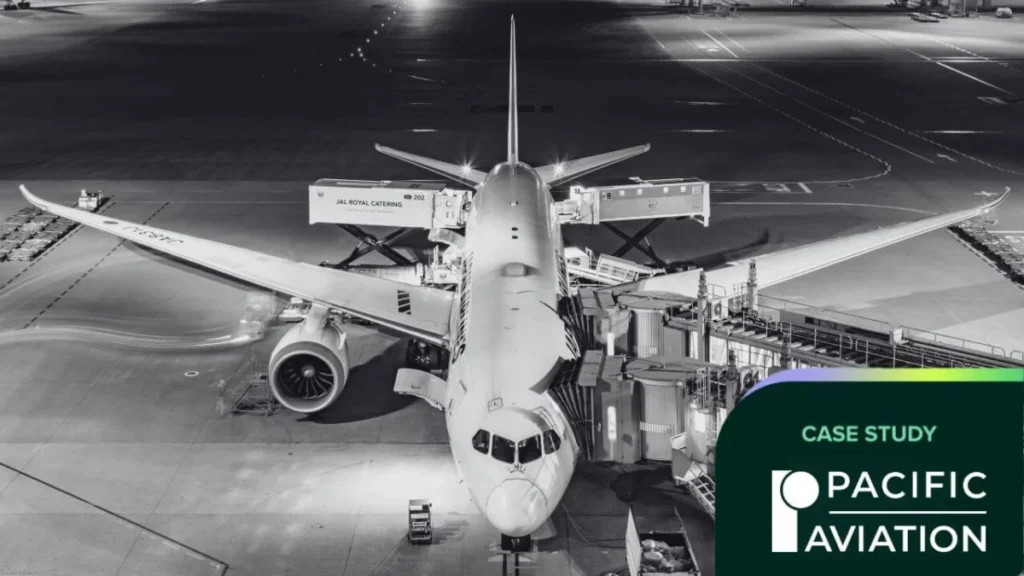
Pacific Aviation, a leading contract aviation company celebrating its thirtieth anniversary this year, has significantly enhanced its talent acquisition capabilities through a comprehensive integration and optimization of Workable, an advanced applicant tracking system (ATS). This strategic move, spearheaded by Senior Recruitment Consultant Doug Hoffman as part of a broader HR restructuring, has transformed the company’s hiring process from a broad, often manual approach into a highly precise, efficient, and scalable operation, crucial for serving its portfolio of prominent international air carriers across the United States.
Aviation Staffing’s Unsung Hero: Understanding Pacific Aviation’s Role
For three decades, Pacific Aviation has served as a critical, albeit often unseen, pillar in the global aviation ecosystem. Operating as a trusted staffing partner, the company provides essential personnel that ensure the smooth functioning of international flights and passenger services. Its extensive reach spans the breadth of the continental United States, with operations stretching from major West Coast hubs like Los Angeles, San Francisco, Seattle, and San Jose, to key East Coast gateways including Boston, Raleigh-Durham, Myrtle Beach, Wilmington, NC, Norfolk, and Syracuse. This vast network supports a substantial workforce of approximately 1,300 employees, encompassing a diverse array of roles: customer service agents, cabin cleaners, wheelchair attendants, dispatchers, and various ground personnel. These individuals are the frontline representatives of global airline brands, making their professionalism, efficiency, and specific skill sets paramount to airline reputation and operational excellence. The company’s longevity in a highly competitive and regulated industry underscores its foundational importance and adaptability.
The Evolving Landscape of Airline Operations and Talent Demand
The aviation industry is characterized by its dynamic nature, subject to geopolitical shifts, economic fluctuations, and rapid technological advancements. Post-pandemic recovery has seen an unprecedented surge in air travel demand, placing immense pressure on airlines and their support partners to scale operations quickly and effectively. This environment exacerbates the inherent challenges of aviation staffing. The demand for highly specialized roles, coupled with stringent security requirements, rigorous training protocols, and the need for multilingual capabilities on international routes, creates a unique hiring complexity. Industry reports from organizations like the International Air Transport Association (IATA) consistently highlight the critical need for skilled ground staff and customer service personnel to meet passenger expectations and maintain operational integrity. Furthermore, the competitive talent market means that companies like Pacific Aviation must not only attract but also rapidly onboard qualified candidates to prevent operational bottlenecks and maintain service levels for their discerning airline partners. The cost of a mis-hire in this sector, particularly for roles interacting directly with the public or handling critical dispatch functions, can be substantial, impacting customer satisfaction, brand image, and regulatory compliance.
The Genesis of Change: Restructuring and the Quest for Efficiency
The impetus for Pacific Aviation’s HR transformation began approximately two years ago with a significant internal restructuring. This strategic realignment was spearheaded by a new Vice President of Human Resources, who recognized the need for a more formalized and technologically advanced approach to talent acquisition. A key hire during this period was Doug Hoffman, who joined as Senior Recruitment Consultant. Tasked with overhauling the company’s recruitment infrastructure, Hoffman quickly assumed responsibility for approximately 90 percent of Pacific Aviation’s recruiting efforts. His work is complemented by a lean, dedicated team comprising HR business partners situated in crucial markets such as San Francisco, San Jose, and Seattle, alongside a colleague who manages East Coast recruiting in conjunction with benefits responsibilities. This streamlined yet geographically distributed team structure underscored the immediate need for a centralized, robust system that could provide oversight, consistency, and efficiency across all operations.
Navigating the Hiring Vortex: Pre-Workable Hurdles
Before the optimization of a structured process, Pacific Aviation faced considerable hurdles in its hiring endeavors. The company’s diverse accounts, which include some of the most recognizable international carriers, demand candidates who are not merely competent but embody a refined professionalism and represent the global airline brand with distinction. Building a hiring process capable of consistently identifying such high-caliber candidates, especially at the substantial volume required by a 1,300-person, multi-market operation, became Hoffman’s immediate priority. The pre-existing methods, often relying on disparate tools and localized approaches, led to inconsistencies in candidate screening, prolonged time-to-hire, and a heightened risk of overlooking essential qualifications. Without a standardized system, evaluating candidates across different regions for roles with varying linguistic and experiential requirements proved cumbersome. This fragmentation also meant that valuable recruiter time was spent on administrative tasks rather than strategic engagement with potential talent, ultimately impacting the company’s ability to swiftly meet the staffing demands of its airline partners. The lack of a centralized data repository also made it difficult to track recruitment metrics, analyze hiring trends, and ensure compliance across all markets, posing both operational and strategic challenges.
Workable: The Architectural Blueprint for a Structured Process
The strategic decision to fully leverage Workable, which was already in place but underutilized, marked a pivotal moment for Pacific Aviation. Rather than seeking an entirely new solution, Hoffman focused on unlocking the full potential of the existing platform. This involved a meticulous refinement of core recruitment elements within Workable. He initiated a comprehensive review and tightening of all job descriptions, ensuring they were not only clear and concise but also accurately reflected the specific nuances of each airline partner’s requirements. A crucial innovation was the introduction of detailed, account-specific "knockout questions." These pre-screening questions, integrated directly into the application process, were designed to filter candidates based on non-negotiable criteria, such as specific language proficiencies essential for international routes (e.g., Mandarin or Cantonese), precise customer service experience durations, or specialized certifications. This granular approach ensured that every job posting was a precise reflection of the partner airline’s needs, drastically improving the quality of inbound applications. Workable’s inherent features, including its built-in career site and seamless integration with various job boards, continued to provide a robust and steady stream of applicants. This consistent influx of talent allowed Hoffman to cultivate a deep candidate pool, from which he could confidently draw even for the most specialized or hard-to-fill roles, significantly reducing the reliance on external agencies or costly advertising.
Seamless Integration and Widespread Adoption: A Cultural Shift
The successful implementation of Workable extended beyond mere technical configuration; it involved a significant cultural shift within Pacific Aviation. From the earliest days of the rollout, hiring managers across all of Pacific Aviation’s markets received comprehensive training on how to effectively review candidates and provide feedback directly within the Workable platform. This hands-on approach ensured widespread adoption and buy-in, transforming managers from passive recipients of screened candidates into active participants in the recruitment ecosystem. To further standardize and streamline the evaluation process, Hoffman and his team meticulously developed structured interview guides. These guides provided hiring managers with clear, repeatable frameworks for conducting interviews, enabling them to quickly and confidently assess candidates against predefined criteria. This structure empowered managers to move efficiently from a screened candidate to a clear "yes" or "no" decision, often culminating in a prompt verbal offer. The emphasis on direct engagement and structured evaluation fostered a consistent hiring approach across the diverse geographical footprint of Pacific Aviation, even as specific pay scales and unique role requirements varied from one region to another. This consistency was vital for maintaining equitable practices and ensuring that all candidates received a fair and thorough evaluation, irrespective of their location.
Transformative Outcomes: Redefining Pacific Aviation’s Hiring Strategy
The strategic deployment of Workable has brought about a paradigm shift in Pacific Aviation’s hiring strategy, yielding several tangible benefits that underscore the platform’s efficacy.
From Broad Postings to Precision Screening:
The introduction of tailored knockout questions has revolutionized the initial candidate screening phase. Hoffman can now almost instantaneously identify candidates who precisely match an account’s specific needs. This capability extends to nuanced requirements such as a minimum of six months of customer service experience, fluency in specific languages like Mandarin or Cantonese, or a particular level of professional polish essential for representing a global airline brand. This precision screening has drastically reduced the time spent reviewing unqualified applications, allowing recruiters to focus on genuinely promising talent. Hoffman lauded the system, stating, "I think it’s a very great system. I would definitely recommend it. I like that I can go in and set it up and have control of setting up the knockout questions and making sure we are compliant and consistent." This emphasis on compliance and consistency is paramount in an industry heavily regulated and reliant on brand image.
Accelerated Interview Scheduling:
Workable’s self-scheduling functionality, seamlessly synced with Hoffman’s Outlook calendar, has dramatically accelerated the interview process. This feature enables him to dispatch video interview invitations to large cohorts—fifty, seventy-five, or even one hundred candidates—simultaneously. The efficiency gain is remarkable; typically, by the next morning, his calendar is populated with a full schedule of candidates ready for live video interviews, each structured to run efficiently for fifteen to twenty minutes, depending on the role. This eliminates the traditional back-and-forth communication inherent in manual scheduling, freeing up significant administrative time. "Combining it with the self-scheduling piece, I can sort candidates into buckets and go through several recs in a day. I can set my week up in a matter of half a day," Hoffman commented, highlighting the profound impact on his productivity.
Expedited Candidate Progression:
A critical advantage of this streamlined process is the ability to swiftly move promising candidates through the hiring funnel. When a candidate demonstrates exceptional potential during an initial interview, Hoffman can facilitate their progression to a hiring manager interview within an impressively short timeframe—typically twenty-four to thirty-six hours. This rapid advancement is crucial in a competitive job market where top talent can quickly be snapped up by other opportunities, ensuring that Pacific Aviation retains its competitive edge in securing preferred candidates.
Standardized Evaluation:
The structured interview guides developed within Workable provide hiring managers with a clear, repeatable methodology for evaluating every candidate. This standardization not only ensures fairness and reduces unconscious bias but also enables managers to reach fast, informed decisions. The output of these structured evaluations feeds directly into the process of extending a verbal offer once a candidate is approved. This structured approach has been instrumental in standardizing Pacific Aviation’s hiring practices across its geographically dispersed markets, ensuring a consistent quality of hire despite regional variations in pay scales and specific role requirements.
Real-World Application: Scaling Operations with Agility
The true testament to Workable’s impact on Pacific Aviation’s operational agility is its ability to scale for new accounts on short notice. A notable instance involved the rapid establishment of a new account in Seattle, tasked with supporting a critical Hong Kong to Seattle route for a major international carrier. Utilizing the efficient Workable system, Pacific Aviation successfully hired twenty-eight agents, alongside a full complement of support staff, to launch this new operation seamlessly. This capability for rapid, large-scale hiring pushes has become a regular and integral part of how Pacific Aviation strategically grows in tandem with its airline partners, demonstrating a level of responsiveness and efficiency that is critical in the fast-paced aviation industry. This ability to quickly mobilize and staff new operations positions Pacific Aviation as an indispensable partner for airlines seeking reliable and adaptable ground support services, directly contributing to their partners’ expansion and market penetration strategies.
Tangible Returns: The Business Impact of HR Technology
The comprehensive integration of Workable has translated into significant business impact for Pacific Aviation, extending beyond mere operational efficiency. While specific financial metrics were not detailed, the observable benefits point towards a substantial return on investment. The drastic reduction in time-to-hire, facilitated by precision screening and accelerated scheduling, translates directly into cost savings by minimizing vacancy periods and reducing the need for temporary staffing solutions. Improved candidate quality, a direct result of tailored knockout questions and structured interviews, leads to lower employee turnover rates (a common challenge in high-volume service industries), thereby reducing recruitment and training costs. Furthermore, the enhanced consistency and professionalism of the hiring process contribute positively to Pacific Aviation’s employer brand, making it a more attractive employer in a competitive talent market. The ability to rapidly scale operations for new accounts means faster revenue generation from new contracts and strengthened relationships with airline partners who value reliable and agile support. This strategic alignment of HR technology with business objectives positions Pacific Aviation for sustained growth and operational excellence.
Industry Endorsement: A Strong Recommendation for Workable
Doug Hoffman’s endorsement of Workable is unequivocal. Having navigated various recruitment tools throughout his career, he firmly considers Workable to be an exceptional fit for the demanding, high-volume, and detail-sensitive hiring environment that characterizes support for international airline partners. His experience underscores the platform’s capability to deliver on its promises in a complex operational setting. "It’s a great tool, and it does save us a lot of time. It’s definitely cost-effective," Hoffman affirmed, emphasizing both the efficiency gains and financial prudence achieved through the system. This combination of speed, structure, and consistency is not merely an operational advantage; it is a strategic imperative for a company whose very foundation rests upon expertly representing some of the world’s most recognizable airlines. It ensures Pacific Aviation remains agile, responsive, and fully prepared to meet the evolving demands and future needs of its esteemed partners in the dynamic global aviation landscape. The success story of Pacific Aviation serves as a compelling case study for other organizations within the aviation sector and beyond, highlighting how targeted investment in HR technology can drive significant operational efficiencies, enhance talent acquisition, and ultimately bolster overall business performance in a highly competitive market.