The human resources landscape is increasingly awash in data, yet many organizations struggle to translate this information into tangible improvements. Quantum Workplace, a prominent provider of employee engagement and performance management solutions, has launched its new AI-powered tool, Insights Hub, designed to bridge this critical divide. The platform aims to transform raw workforce data into clear, actionable insights, empowering HR professionals and leaders to make more informed strategic decisions.
The fundamental premise behind Insights Hub lies in differentiating between "people analytics" and "people insights." While people analytics focuses on describing what is happening within a workforce—identifying trends in turnover, engagement levels, or performance metrics—people insights delve deeper. They interpret these findings, explain their significance, and crucially, recommend specific next steps. This distinction is vital in a business environment that demands swift and decisive action based on complex data sets.
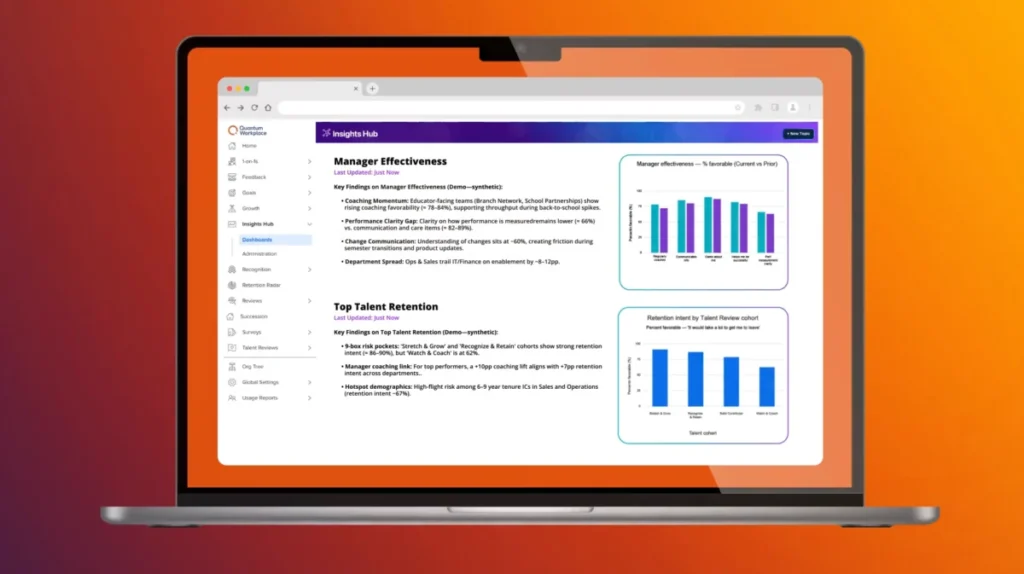
"Most HR teams already have plenty of data," states a Quantum Workplace representative. "What they need is clarity, and they need it fast. Insights Hub acts as a virtual analyst and coach, surfacing insights shaped around your organization’s point of view on topics like manager effectiveness. They are so relevant that your leaders can’t help but act." The tool is designed to integrate with existing Quantum Workplace solutions for engagement, performance, and development, with recognition data slated for future integration.
The Data Deluge and the Decision Drought
Many HR departments find themselves caught in a cycle of data collection and analysis without a clear path to action. A typical scenario involves pulling a turnover report, then examining an engagement dashboard, and by the end of the week, laboring to create a slide deck that attempts to explain the potential meaning behind the numbers. This process is not only time-consuming but also often delays critical decision-making.
Research from industry analysts like Forrester highlights this challenge, noting that numerous organizations become stuck in a loop of data gathering followed by limited or delayed action. The issue, as identified, is not the availability of data itself but the time lag between collection, analysis, and the formulation of effective decisions. This temporal gap can lead to missed opportunities, unaddressed employee concerns, and a general stagnation in organizational progress.
Beyond Traditional Analytics: The Rise of People Insights
Traditional people analytics plays a crucial role in providing organizations with valuable trends, benchmarks, and a consolidated view of their workforce metrics. However, its output is often descriptive, leaving the interpretation and the subsequent decision-making process to human analysts, HR partners, or leadership teams. This is where people insights aim to elevate the HR function.
The core difference can be illustrated by the questions each discipline seeks to answer: People analytics asks "What happened?" while people insights aim to answer "Why did it happen, and what should we do?" The typical output of analytics includes dashboards and reports, whereas insights provide explained findings with recommended actions. Furthermore, while analytics often requires an analyst to interpret the data, people insights are designed to be understood directly by leaders, explained in plain language.
A key differentiator for Insights Hub is its ability to connect signals across various data points. While traditional analytics might examine one metric or report at a time, Insights Hub is being developed to link data from engagement, performance, development, and soon, recognition. This holistic approach allows for a more nuanced understanding of workforce dynamics. Moreover, Insights Hub is designed to present findings that are not just standard metrics but are tailored to an organization’s specific context and definitions, such as how "manager effectiveness" is defined within that company. When data is missing, instead of a blank spot, the tool flags the gap and suggests how to fill it, guiding further data collection efforts. Ultimately, traditional analytics is best for measuring and monitoring, while people insights are geared towards deciding and acting.
Insights Hub: A Practical Application of AI in HR
Quantum Workplace’s Insights Hub is engineered to facilitate this shift towards actionable insights. The platform functions as an AI-powered virtual analyst and leadership coach, guiding users through a structured process.
1. Focusing on Organizational Priorities: Users begin by defining key topics that are critical to their organization, such as "Manager Effectiveness" or "Top Talent Retention." This allows the AI to focus its analysis on areas of strategic importance. Custom topics can also be created to address unique organizational goals.
2. Adapting to Organizational Context: The AI agent, named "Cue," guides the setup process through a conversational interface. It starts with Quantum Workplace’s research-backed understanding of a topic and then allows users to incorporate their organization’s specific perspectives and definitions. This setup is designed to be efficient, typically taking between five to ten minutes.
3. Comprehensive Data Integration: Once a topic is established, Cue analyzes patterns across connected Quantum Workplace data and HRIS (Human Resources Information System) data. The platform emphasizes that the more data sources that are integrated, the more robust and reliable the insights will be.
4. Transparent Explanation of Findings: Each insight generated by Cue includes a clear explanation of what is being observed, why it is significant, and how to interpret any accompanying visualizations. These findings are often supported by cited sources, adding a layer of credibility. Users can also engage in private follow-up conversations with Cue to ask clarifying questions.
5. Identifying Data Gaps: A crucial feature of Insights Hub is its ability to identify when data is insufficient to draw a conclusion. Instead of guessing, Cue will explicitly state what data is missing and suggest ways to close that gap. For instance, it might highlight incomplete exit survey feedback, thereby guiding future data collection strategies.
6. Driving Actionable Next Steps: Insights are only valuable if they lead to action. Insights Hub recommends specific actions tied to each topic and insight. Users can add their own actions, track their progress, and mark them as complete, creating a closed-loop system for continuous improvement.
Six Ways People Insights Empower HR Leaders
The implementation of people insights, as facilitated by tools like Insights Hub, offers tangible benefits to HR professionals and organizational leaders.
1. Accelerated Decision-Making: The time traditionally spent manually compiling reports and spreadsheets is significantly reduced. Insights Hub automates much of the data analysis, allowing HR teams to focus their efforts on strategic advising and decision-making rather than data wrangling.
2. Holistic View of the Workforce: Instead of examining single metrics in isolation, which can lead to misinterpretations, Insights Hub connects various data signals. By linking engagement, performance, development, and recognition data, it provides a more comprehensive context for understanding employee behaviors and trends.
3. Elevating HR’s Strategic Role: By offloading routine data analysis, HR teams can dedicate more time to strategic initiatives and advising business leaders. This shift allows HR to move from a reactive, data-reporting function to a proactive, strategic partner that brings data-driven recommendations to the table.
4. Empowering Managers with Usable Guidance: Insights are presented in a coaching-style language that is easily digestible for busy managers. The focus is on explaining what is happening, why it matters, and offering constructive guidance, fostering a sense of ownership and support rather than judgment.
5. Ensuring Every Insight Leads to Action: The platform’s built-in action-tracking mechanism ensures that insights are not left to languish. By recommending and tracking actions, organizations can demonstrate a commitment to addressing identified issues and measure the impact of their interventions.
6. Illuminating Data Blind Spots: Organizations often have areas where their data is incomplete or non-existent. Insights Hub proactively identifies these gaps, providing a clear picture of what is unknown and offering suggestions for how to gather the necessary information. This helps organizations strategically invest in data collection where it is most needed.
These benefits ultimately contribute to a healthier workplace by ensuring that decisions are informed by a complete picture of how engagement, performance, development, and recognition influence each other.
Readiness for People Insights: A Self-Assessment
Quantum Workplace suggests a simple checklist to gauge an organization’s readiness for adopting people insights:
- Do leaders frequently ask for data beyond what’s readily available in standard reports?
- Does your HR team spend significant time compiling custom reports or analyzing data for leadership?
- Are you looking for ways to proactively identify and address potential issues before they escalate?
- Is your organization focused on making data-driven decisions to improve employee experience and business outcomes?
The company suggests that checking off two or more of these questions indicates that people insights would likely be a valuable next step for the organization.
The Future of Workforce Intelligence
As organizations navigate an increasingly complex and competitive talent market, the ability to leverage data effectively is paramount. Insights Hub represents a significant step forward in democratizing access to meaningful workforce intelligence. By moving beyond descriptive analytics to provide actionable insights, Quantum Workplace aims to empower HR professionals and leaders to foster more engaged, productive, and successful workforces. The future of human capital management lies not just in collecting data, but in understanding its implications and driving targeted action.