The engine of the global economy hums not just in corporate offices, but on factory floors, in retail aisles, across healthcare wards, and at construction sites. These are the realms of the deskless and offline workers, a colossal segment of the global workforce often overlooked by traditional employee recognition programs. Comprising an estimated 70 to 80% of all workers, these individuals are the backbone of daily operations, yet many corporate recognition initiatives, designed for an era of inboxes and logins, fail to reach them. This disparity leaves a significant portion of the workforce feeling unseen, disconnected from organizational goals, and ultimately, less engaged. This comprehensive guide explores the unique challenges and critical importance of designing effective recognition programs tailored to the realities of non-desk and offline employees, offering actionable strategies and insights for HR leaders to foster a culture of appreciation that truly encompasses everyone.
Understanding the Diverse Landscape of Non-Desk and Offline Work
The term "non-desk" or "offline worker" encompasses a broad spectrum of roles that do not involve a fixed workstation or regular access to a computer. These individuals are integral to industries such as retail, manufacturing, hospitality, healthcare, transportation, construction, and field services. Their work environments are dynamic, demanding constant movement, real-time problem-solving, and often, collaboration with colleagues on the go.
The daily realities of these roles significantly shape their experience of employee engagement and retention. Shift work, the use of shared devices, physically demanding tasks, and limited digital connectivity create fewer organic opportunities for feedback, visibility, and connection compared to their desk-bound counterparts. Consequently, when recognition does occur, it is frequently informal, inconsistent, or easily missed, contributing to a pervasive sense of being undervalued. This lack of consistent acknowledgment can have profound implications for morale, productivity, and long-term employee tenure.
Key Challenges and Goals for Frontline Recognition Programs
The inherent nature of non-desk work presents distinct hurdles for implementing equitable recognition programs. Access remains a primary barrier. Many frontline employees do not have consistent access to work computers or corporate email, effectively excluding them from digital-first recognition platforms. This immediate technological divide can create a two-tiered system of appreciation, where those with easy digital access receive more frequent and visible acknowledgment.
Furthermore, the operational structures of frontline roles – including staggered shifts, shared equipment, and geographically dispersed work sites – complicate consistent and timely recognition. Teams may rarely overlap, or work asynchronously, making it difficult to deliver meaningful acknowledgments in the moment they are earned. This often results in a recognition imbalance, where desk-based employees disproportionately receive praise and thank-you messages, not necessarily due to superior performance, but due to the inherent advantages of their work environment and access to established communication channels.
To address this, HR leaders must prioritize the development of recognition programs that ensure 100% workforce participation, irrespective of role, location, or technological access. The goal is to foster a culture where every employee feels seen and valued. This necessitates a strategic shift towards in-the-moment appreciation, delivered through channels accessible to all. Recognition that is closely tied to the actual work performed is more impactful, reinforcing desired behaviors and strengthening the connection between effort and reward.
Visibility is another crucial element. Effective programs must make frontline contributions visible across teams and the wider organization. This visibility helps employees understand that their efforts are noticed and appreciated, fostering a sense of belonging and purpose. Data from the State of Recognition Report indicates that a significant 45% of employees surveyed believe that recognition would enhance their productivity. When recognition is linked to tangible contributions and core organizational values, it reinforces the message that every employee’s work matters, even when they are not under direct supervision.
The Profound Importance of Recognition for Frontline and Offline Teams
For frontline and offline employees, recognition serves as a vital conduit for connection and belonging. Lacking the regular touchpoints of meetings and email exchanges common in desk-based roles, these individuals often have fewer opportunities for informal feedback and social connection. Great work can easily go unnoticed in the hustle of daily operations. Recognition acts as a powerful equalizer, bridging this gap. Being acknowledged by a peer, a manager, or the broader organization reinforces a sense of belonging and communicates a clear message: "You are a valued member of this team." Over time, these moments of appreciation help non-desk team members feel integrated into something larger than their immediate tasks, fostering a deeper commitment to the organization.
In hands-on environments where priorities can shift rapidly, recognizing specific actions provides crucial clarity on what constitutes "good" performance. Acknowledging behaviors that exemplify safety protocols, exceptional customer service, or effective teamwork builds confidence and reinforces how individual efforts contribute to overarching business objectives. This targeted recognition not only boosts individual morale but also cultivates a shared understanding of excellence and reinforces a positive organizational culture.
Practical Recognition Program Ideas for Non-Desk and Offline Workers
To ensure recognition resonates deeply and reaches across diverse work environments, programs must be designed with accessibility and relevance at their core. This means moving beyond traditional digital platforms and embracing solutions that meet employees where they are.

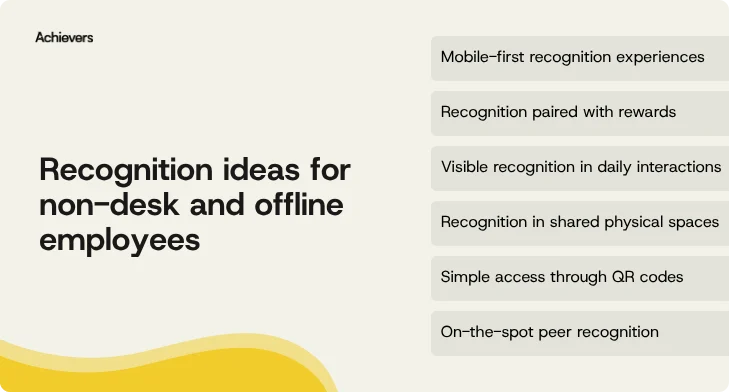
Mobile-First Recognition Experiences: Addressing the challenge of limited access, a mobile-first approach ensures that appreciation can be delivered and received in real-time, as positive actions occur. If recognition requires logging into a desktop computer, the impact is often diminished as the moment has passed. HR leaders can design this by implementing mobile-friendly recognition platforms or simple text-based recognition systems that allow employees to send and receive acknowledgments via their personal mobile devices.
Recognition Paired with Tangible, Easy-to-Use Rewards: The effectiveness of recognition can be undermined by rewards that are confusing, generic, or difficult to redeem. For non-desk and offline employees, rewards must be straightforward, relevant to their interests, and easily accessible without additional steps or complex redemption processes. When rewards are not aligned with employee preferences or are cumbersome to obtain, they can detract from the positive reinforcement of recognition. HR leaders should offer a variety of reward options, such as gift cards to popular retailers, prepaid debit cards, or vouchers for local services, ensuring they are easy to access and use.
Visible Recognition in Daily Team Interactions: Sharing recognition publicly and linking it to specific actions helps teams understand expectations and reinforces desired behaviors. Visibility transforms a private thank-you into a learning opportunity for others, fostering a collective understanding of what success looks like. This can be achieved through team huddles, digital signage in common areas, or dedicated sections on internal communication boards that highlight recent recognitions and the employees who earned them.
Recognition Embedded in Shared Physical Spaces: For employees who do not regularly log into digital systems, recognition needs to be present in their physical work environment. Making recognition visible in shared spaces increases awareness, participation, and a sense of community. This could involve dedicated bulletin boards for peer-to-peer shout-outs, a "kudos" corner in break rooms, or even recognition integrated into team performance dashboards displayed in operational areas.
Simple Access Through QR Codes and Shared Entry Points: Reducing friction in the recognition process is paramount. Simple entry points, such as QR codes strategically placed in work areas, allow employees to easily recognize colleagues or redeem rewards without needing to remember complex logins or passwords. This immediate accessibility encourages more frequent participation and ensures that moments of appreciation are not lost due to cumbersome processes.
On-the-Spot Peer Recognition Captured and Shared: Many of the most authentic and impactful recognition moments occur between colleagues who witness exceptional effort firsthand – a timely assist, a helpful gesture, or a calm demeanor under pressure. Enabling easy and accessible peer-to-peer recognition in the moment ensures that these valuable behaviors are seen, celebrated, and encouraged. This can be facilitated through mobile apps that allow for quick peer nominations or a simple system for submitting brief notes of appreciation that are then shared with the recipient and their team.
Designing a Meaningful Recognition Program for Offline Teams
Creating a truly impactful recognition program for non-desk and offline teams requires a strategic and inclusive approach. The foundational principle must be access and equity. Frontline and offline employees are often the most challenging to reach and are the most susceptible to unintentional exclusion from recognition initiatives. Designing programs with equitable access at the forefront ensures that recognition is not contingent on having a desk or an inbox, but on the valuable work being done.
This translates to practical steps such as offering multiple channels for recognition, including mobile apps, SMS-based platforms, and physical submission points. It also means ensuring that reward options are diverse and accessible, catering to the varied needs and preferences of a broad workforce.
Frequency and Behavior-Based Recognition: The most effective recognition is timely and reinforces specific behaviors. Recognizing employees while they are actively engaged in their work, and highlighting the actions that led to the acknowledgment, provides immediate feedback and encourages repetition of those positive behaviors. Frequent recognition builds a consistent positive reinforcement loop, while behavior-based recognition fosters clarity on performance expectations and builds employee confidence.
Balancing Structure with Flexibility: While clear guidelines and frameworks are essential for fairness and organizational alignment, recognition programs must also incorporate a degree of flexibility to accommodate the unique operational realities of different teams and locations. An overemphasis on rigid structure can stifle genuine appreciation, while too much flexibility can lead to inconsistencies and perceptions of favoritism. Striking this balance ensures that recognition feels both fair and relevant across the organization.
Building Recognition into the Flow of Work: The most sustainable recognition programs are those that are seamlessly integrated into the existing tools and routines that employees already use. When giving and receiving recognition becomes a natural part of the daily workflow, it is more likely to occur frequently and consistently. This could involve integrating recognition features into team communication platforms, daily huddle routines, or task management systems. The easier it is to participate in recognition, the more likely it is to become an ingrained habit.
The Impact of External Recognition on Non-Desk Employees
External recognition, which originates from outside the organization—such as from customers, clients, or patients—can be particularly potent for non-desk teams. This form of acknowledgment directly connects their daily efforts to the tangible impact they have on the lives of those they serve. It transforms their work from a series of tasks into a meaningful contribution, demonstrating not only their competence but also the positive difference they make in the world.
Third-party recognition often carries significant weight, reinforcing pride and credibility. Research from the Achievers Workforce Institute (AWI) highlights that a substantial 50% of healthcare workers consider specific, non-monetary recognition as their most meaningful appreciation. When praise comes from those directly experiencing the benefits of their work, it fosters a profound sense of purpose and validation that internal recognition alone may not always achieve. This external validation can be a powerful motivator, enhancing job satisfaction and a deeper connection to the organization’s mission.

Leveraging Recognition Platforms for Frontline Success
Several platforms are emerging to address the unique needs of deskless and offline workforces, offering innovative solutions for employee recognition and engagement.
Achievers is a comprehensive recognition and rewards platform designed for organizations with large, distributed, and frontline workforces. It specializes in making frequent, meaningful recognition accessible to every employee, regardless of their work environment. Achievers provides mobile-first solutions, supports diverse reward options, and offers robust analytics for HR leaders to track engagement and impact across all employee segments.
Guusto focuses on simplicity and flexible access for non-desk teams, catering to organizations seeking to build recognition programs incrementally. Its platform emphasizes ease of use, allowing for quick peer-to-peer recognition and a straightforward reward redemption process.
Kudos offers a recognition platform centered on structured recognition tied to company values. It emphasizes internal culture measurement and supports formal recognition programs, aiming to embed company values into everyday employee interactions.
Motivosity provides an employee recognition and engagement platform with a strong emphasis on social connection and peer-to-peer recognition. It aims to foster internal communication and a sense of community across teams and locations, recognizing the importance of social bonds in employee engagement.
Making Recognition a Priority, Regardless of Where Teams Work
Ultimately, the success of any recognition program hinges on its ability to reach all employees. For non-desk and offline teams, this means designing initiatives that acknowledge the realities of their work—dynamic shifts, shared spaces, limited screen time, and the critical importance of real-time recognition. Organizations that excel in retention, safety, and performance are those that prioritize recognizing individuals in the environments where work truly happens, not just where it is most convenient to design programs. As these insights suggest, recognition is most impactful when it appears on the factory floor, the retail counter, or the service route, rather than solely within the confines of a PowerPoint presentation.
Frequently Asked Questions: Recognition Programs for Non-Desk and Offline Employees
What are the primary challenges in implementing recognition programs for non-desk workers?
The main challenges include limited access to technology (computers, corporate email), logistical complexities due to shift work and distributed locations, and ensuring equitable distribution of recognition to prevent a two-tiered system.
Why is in-the-moment recognition particularly important for frontline employees?
Frontline work is often fast-paced and dynamic. Recognizing actions as they happen reinforces desired behaviors immediately, making the acknowledgment more impactful and memorable. It also ensures that positive contributions are not overlooked due to infrequent digital communication.
How can organizations ensure recognition programs are accessible to all employees, regardless of their role?
This involves offering multiple recognition channels, such as mobile apps, SMS-based systems, and physical submission points. It also means selecting reward options that are easily redeemable and relevant to a diverse workforce.
What role does peer-to-peer recognition play in engaging non-desk workers?
Peer-to-peer recognition is highly effective as colleagues often witness exceptional efforts firsthand. It fosters a sense of camaraderie and shared appreciation, reinforcing positive behaviors and building a stronger team dynamic.
How can visibility be achieved for the contributions of non-desk employees?
Visibility can be enhanced through public acknowledgments in team meetings, digital signage in common areas, internal newsletters highlighting frontline achievements, or dedicated recognition boards in physical workspaces.
What types of rewards are most effective for non-desk and offline employees?
Rewards should be tangible, easy to understand, and readily accessible. This can include gift cards, prepaid debit cards, vouchers for local services, or experiences that align with employee interests. The key is simplicity and relevance.