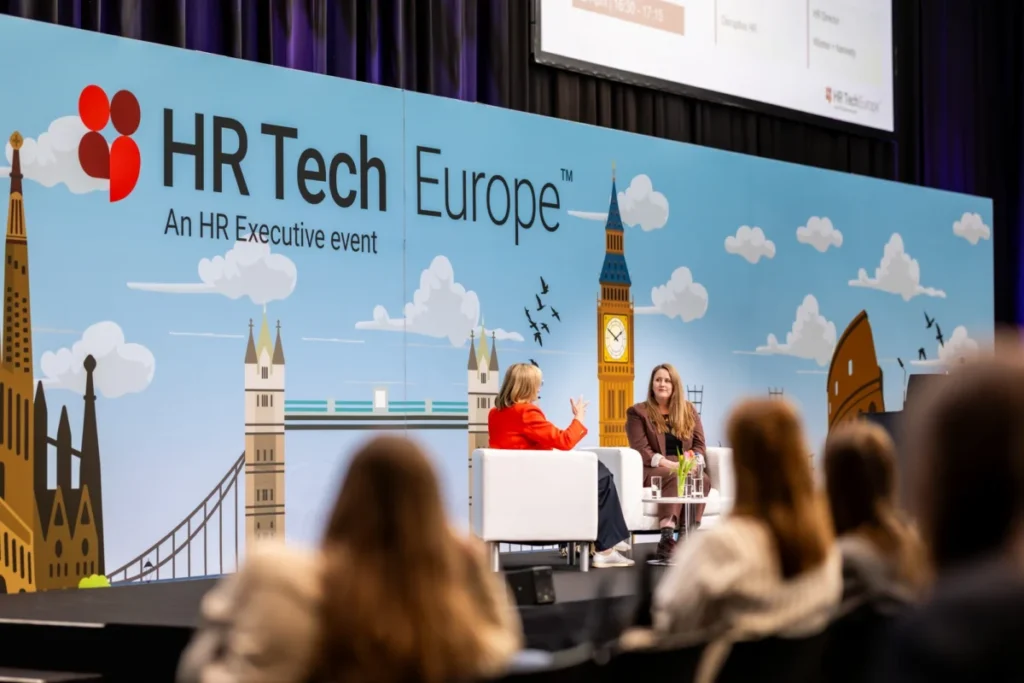
HR consultant Lucy Adams, a veteran of countless change management initiatives, shared stark reflections on the persistent ineffectiveness of many corporate transformation efforts during a recent HR Tech Europe panel. In her former role as HR Director at the BBC, Adams witnessed a recurring pattern: the meticulous mobilization of workstreams, the deployment of change champions, and the proliferation of three-letter acronyms, all culminating in a notable absence of tangible results. "I honestly can’t point to one change that resulted," Adams confessed, highlighting a sentiment echoed by many in the field who struggle to translate strategic intent into observable organizational shifts.
Joining Adams on the panel was Hester Van Oene, Director of HR at the prominent advertising agency Wieden+Kennedy Amsterdam. Together, they delved into the fundamental reasons why change management programs often falter, pinpointing a core disconnect between traditional approaches and basic human psychology. The experts identified three critical areas where HR departments are frequently expending valuable resources with little return, urging a strategic pivot towards more psychologically attuned methodologies.
The Futility of Over-Investing in Resistance
One of the most significant and counterintuitive insights from Adams’ experience at the BBC involved her relentless focus on individual resistors. She described a particular colleague who embodied the spirit of opposition, a "nemesis" who consistently thwarted progress. Adams’ initial instinct, a common one in change management, was to dedicate significant effort to converting this individual. This involved pulling them into every consultation group and diluting proposals in an attempt to gain their buy-in. "I’d put the enthusiastic adopter on hold while managing the resister," Adams recalled, acknowledging the strategic misallocation of energy and focus.
Hester Van Oene corroborated this observation, admitting to making a similar mistake early in her career. "I learned the painful way," she stated, referring to her previous attempts to directly confront and dismantle the objections of the most vocal resistors. Her current approach, however, is markedly different. "I just go where the energy is," Van Oene explained, advocating for a strategic redirection of effort towards those who are already receptive to change.
The practical advantages of this approach are manifold. Early adopters, by their very nature, become enthusiastic proponents and can actively contribute to shaping and refining new initiatives. Their visible engagement creates a natural ripple effect, exerting a subtle yet powerful pressure on skeptics without the need for HR to artificially manufacture it. At Wieden+Kennedy, for instance, the introduction of "growth chats" in one department led to an organic spread of awareness to other areas. Leaders who had initially shown no interest began to inquire about the program, driven by a desire not to be left behind.
Adams even proposed a seemingly provocative tactic: directly informing resistors that a new initiative is not intended for them. "They hate it," she remarked, explaining that these individuals are accustomed to being the "problem children that get all the attention." By removing this perceived spotlight, their motivation to actively resist can be diminished, while their focus is shifted to where it can be more productively applied. This strategic withholding of attention, while appearing counterintuitive, can be a powerful tool in shifting organizational dynamics.
The Inefficacy of Mandatory Training Programs
The rationale behind implementing large-scale, mandatory training programs for organizational change is understandable: to equip employees with the necessary knowledge and skills to adapt. However, Adams highlighted a critical flaw in this logic: the human capacity for retention. "People forget 80% of what they learn in a training program," she stated, underscoring the ephemeral nature of information absorbed in a classroom setting. Furthermore, the demand for employees to block out significant time for training, coupled with the inherent workload pressures most managers face, often makes these programs impractical and poorly received.
"People don’t want to get training, and then three months down the line, they have an issue," Adams elaborated. "They want it in the moment." This emphasis on just-in-time support contrasts sharply with the traditional, pre-emptive model of training.
Van Oene provided a compelling example of this principle in action at Wieden+Kennedy. When leaders were tasked with the often-daunting responsibility of updating job descriptions, a process acknowledged as crucial yet frequently neglected, her team opted for an innovative solution. Instead of conducting traditional training sessions, they developed a prompting guide for Gemini, an AI tool. This guide walked leaders through the process of using AI to generate a first draft of their job descriptions. "It made lots of leaders give AI a try," Van Oene observed. "They have a jumping off point to start from because it’s easier to edit than to start from scratch." This approach delivered the required outcome by providing immediate, actionable support integrated into the workflow, rather than relying on abstract knowledge transfer.
The broader implication of this strategy is that it leverages existing tools and technologies to provide immediate, contextualized assistance. This not only addresses the immediate need but also fosters a sense of empowerment and reduces the perceived burden of the task. As organizations increasingly adopt AI and other digital tools, the ability to integrate them seamlessly into practical application, rather than treating them as subjects of separate training modules, will become paramount.
The Pitfalls of Labeling Top-Down Sessions as "Change Management"
A significant source of resistance to organizational change stems from the perception that it is being imposed upon individuals. Adams drew on a personal anecdote from her time at the BBC, where she led a leadership session for international bureau heads. The atmosphere in the room was palpable with hostility. During a coffee break, she approached one of the individuals who appeared to be instigating the negative sentiment. His candid response revealed the root cause: "We have to be here," he stated, conveying a sense of forced participation.
This psychological dynamic is well-documented: anything that feels mandatory or imposed tends to elicit a reflexive pushback, irrespective of the actual content or merit of the initiative. Adams emphasized that the solution does not lie in abandoning strategic, enterprise-wide priorities, but rather in strategically embedding elements of choice, even if limited, within those priorities.
At Wieden+Kennedy, the co-design of their growth chat model with department heads exemplifies this principle. By offering template choices and empowering leaders to present the program to their own teams, the agency fostered a sense of ownership. "Because they had influence in what it looked like, they were excited about it," Van Oene shared. This collaborative approach transforms what might otherwise be perceived as an imposition into an opportunity for engagement and contribution.
The implications of this are far-reaching. When employees feel they have a voice, however small, in the process of change, their receptiveness increases dramatically. This shift from a top-down directive to a more participatory model can be the deciding factor between successful adoption and widespread resistance. In an era where employee engagement is a critical driver of organizational success, fostering this sense of agency within change initiatives is no longer a nicety but a necessity.
The Enduring Advantage of Human Connection in an AI-Dominated World
Adams concluded her remarks with a powerful observation about the future of HR in an increasingly automated world. As artificial intelligence continues to permeate various aspects of business operations, she posited that the most enduring and valuable asset for HR professionals lies in their inherent human qualities. "In a world where AI feels like it’s taking over, that’s the only thing that’s left," she stated, referring to the uniquely human capacity for empathy, understanding, and nuanced interaction. "And that’s us, and that’s you, and that’s wonderful."
This sentiment suggests a strategic imperative for HR professionals: to lean into their strengths in interpersonal dynamics, emotional intelligence, and the cultivation of organizational culture. While AI can undoubtedly enhance efficiency and data analysis, it cannot replicate the nuanced understanding of human motivation and the art of building consensus that are crucial for effective change management. The ability to foster trust, build relationships, and navigate complex human emotions remains a distinctly human domain, and one that will become increasingly vital as organizations strive for genuine transformation in the years to come. The future of successful change management, therefore, lies not in the wholesale adoption of technological solutions, but in the intelligent integration of human insight and digital tools, with a clear understanding of where each holds the greatest value.