
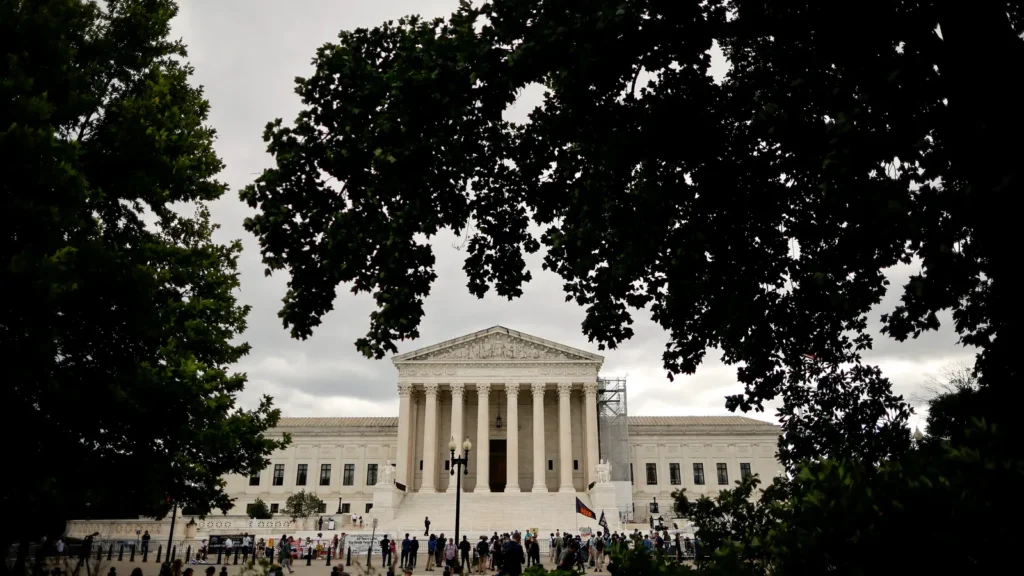
The Supreme Court’s unanimous decision against Flowers Foods on May 29, 2026, while decisively rejecting the bakery giant’s arguments, has provided employers with surprisingly little clarity regarding the application of the Federal Arbitration Act’s (FAA) transportation worker exemption in future, similar cases. The ruling reinforces the high court’s consistent stance against narrowing the scope of this exemption but leaves many practical questions unanswered for businesses operating extensive delivery and logistics networks.
Background of the Federal Arbitration Act and Its Exemption
The Federal Arbitration Act, enacted in 1925, was designed to ensure the enforceability of arbitration agreements in contracts, aiming to reduce litigation in federal courts and provide a more efficient, less costly method of dispute resolution. Arbitration clauses are now ubiquitous in employment contracts, requiring employees to resolve disputes with their employers outside of the judicial system, typically through private arbitration.
However, Section 1 of the FAA contains a crucial exemption: it specifies that the Act "shall not apply to contracts of employment of seamen, railroad employees, or any other class of workers engaged in foreign or interstate commerce." The interpretation of this "transportation worker" exemption has been a persistent source of legal contention, particularly with the rise of the gig economy and complex supply chains that rely on a diverse array of drivers and delivery personnel. For decades, courts have grappled with defining "engaged in interstate commerce" and identifying "any other class of workers" beyond traditional seamen and railroad employees. The stakes are high, as workers falling under this exemption retain their right to pursue claims in court, including class-action lawsuits, bypassing mandatory arbitration.
The Precedent: Bissonnette v. LePage Bakeries (2024)
The Flowers Foods decision is a direct continuation of a line of cases where the Supreme Court has progressively defined and, in some respects, broadened the scope of this exemption. A pivotal precursor was the 2024 ruling in Bissonnette v. LePage Bakeries, a case also involving a Flowers Foods subsidiary. In Bissonnette, the Supreme Court unequivocally stated that for a worker to be exempt from the FAA, they do not necessarily need to be employed by a company in the transportation industry. Instead, the critical factor is whether the worker’s actual work involves the transportation of goods in interstate commerce. This distinction was significant, shifting the focus from the employer’s industry to the nature of the worker’s duties, thereby potentially extending the exemption to a wider range of individuals, including those in roles traditionally not seen as "transportation workers" in the strict sense. The Bissonnette ruling created an immediate ripple effect, prompting many businesses to re-evaluate their arbitration agreements, especially for workers involved in any stage of product movement across state lines.
The Flowers Foods Case: "Last Mile" Delivery Under Scrutiny
The 2026 Flowers Foods case brought the "last mile" delivery dilemma squarely before the Supreme Court. At the heart of the dispute was the classification of certain drivers who distribute Flowers Foods’ products. Flowers Foods, known for its baked goods like Wonder Bread and Tastykake, operates a complex distribution model that often involves independent franchisees who purchase products and then deliver them to local stores.
During oral arguments in March 2026, counsel for Flowers Foods contended that these "last mile" drivers and similar intrastate delivery workers should not be covered by the FAA exemption. Their argument hinged on the idea that these drivers’ work occurred after the goods had completed their interstate journey. For instance, if a truckload of Butterscotch Krimpets traveled from a bakery in State B to a distribution center in State A, and then an independent franchisee picked them up in State A to deliver them to various local grocery stores within State A, Flowers argued that the latter leg of the journey was purely intrastate and therefore outside the FAA exemption. They posited that once the goods reached their destination state, their interstate journey concluded, making subsequent intrastate delivery workers ineligible for the exemption.
Justice Neil Gorsuch, who would later author the unanimous opinion, was among several justices who expressed skepticism regarding Flowers’ reasoning during the hearing. The justices probed the definition of "interstate commerce" in the context of a continuous stream of commerce, questioning whether an artificial line could be drawn at a state border or distribution center if the ultimate contractual obligation involved delivery to a customer in another state.
The Supreme Court’s Unanimous Decision and Reasoning
In its unanimous decision, the Supreme Court firmly rejected Flowers Foods’ narrow interpretation. Justice Gorsuch, writing for the Court, clarified that the FAA’s exemption is indeed inclusive of drivers whose work results in a product moving from a bakery in one state to a purchasing customer in another, irrespective of whether the individual drivers themselves cross state lines.
Gorsuch emphasized that Flowers’ position would effectively exclude several workers who play a "direct, active, and necessary part" in fulfilling the contract between the bakery and the ultimate customer. He illustrated this point vividly: "Each of the drivers played a direct, active, and necessary part in ensuring the Krimpets got from a point in [State B] to a point in [State A] as the contract required." The Court’s reasoning underlined a functional interpretation of interstate commerce, focusing on the entire trajectory of the goods from their origin to their final destination as stipulated by the commercial agreement, rather than segmenting the journey into isolated intrastate legs. This perspective views the "last mile" as an integral and indispensable component of the broader interstate commercial transaction.

A notable aspect of Flowers’ argument also involved the franchisee’s independent contractor status, highlighting that the franchisee distributed products through an independently operated company and took title to Flowers’ goods before selling them to local stores. While the Supreme Court acknowledged these details, it clarified that Flowers did not ask the Court to decide their legal significance in the present case. This omission proved critical, as it prevented the Court from issuing a definitive ruling on how an independent contractor’s specific business structure might impact the FAA exemption, leaving a significant gray area for future litigation.
Reactions from Legal Experts and Broader Implications
The ruling elicited immediate reactions from legal experts representing both sides of the employer-employee divide. Jennifer Bennett, principal at Gupta Wessler and counsel for the respondent, hailed the decision as a victory for workers. In an email to HR Dive, Bennett stated, "Today’s opinion decisively rejects the latest attempt by companies like Flowers to force these drivers into arbitration," underscoring the protection afforded to essential delivery workers to have their day in court. This sentiment resonates with labor advocates who have long argued that mandatory arbitration clauses often disadvantage individual workers, limiting their ability to collectively challenge employer practices.
Conversely, Christopher Ward, a partner at Foley & Lardner, expressed concern about the lack of definitive guidance for employers. In an email, Ward noted that despite being decided on narrow grounds, the Court’s analysis offered "little guidance on how it might apply the FAA’s exemption to similar circumstances in which workers do not transport goods or who are more loosely connected to transport." He articulated the frustration felt by many businesses: "We had hoped the Court would give guidance to address the lower courts’ ongoing expansion of the exemption to those types of classes of workers, and this opinion does nothing to curtail that or help lower courts figure out what is transportation and what is not."
This lingering ambiguity has significant implications for a wide array of industries, particularly those relying heavily on the gig economy and independent contractors for logistics and delivery services. The "last mile" segment, which has exploded in recent years with the growth of e-commerce and on-demand services, is particularly affected. Companies like Amazon, Uber Eats, DoorDash, and countless others utilize vast networks of drivers who often operate as independent contractors and primarily within a single state, yet their work is undeniably part of an interstate commercial flow.
The Flowers Foods decision suggests that many of these workers, even if they never cross state lines, could fall under the FAA exemption if their work is a "direct, active, and necessary part" of moving goods from one state to a customer in another. This potentially exposes employers to a greater risk of class-action lawsuits, as arbitration agreements may be deemed unenforceable for a broader category of their workforce. The cost of defending such lawsuits, even without a judgment, can be substantial, influencing business models and operational strategies.
Furthermore, the decision contributes to the ongoing debate surrounding worker classification – specifically, the distinction between employees and independent contractors. While the Court did not rule on the legal significance of the franchisee’s independent contractor status in this specific case, the underlying issue remains critical. If a worker is deemed an independent contractor, employers often assume they have more flexibility regarding employment laws, including arbitration. However, the Flowers Foods ruling underscores that even if a worker is classified as an independent contractor, the nature of their work (i.e., transportation of goods in interstate commerce) can still exempt them from mandatory arbitration. This creates a complex legal tightrope for companies trying to leverage the flexibility of the independent contractor model while mitigating legal risks.

Historical Context and Evolving Interpretations
The Supreme Court’s consistent refusal to narrow the FAA exemption reflects a broader historical trend in judicial interpretation. Initially, the FAA’s transportation exemption was understood to apply to traditional common carriers. However, as the nature of commerce and transportation evolved, so too did judicial interpretations. Landmark cases over the past two decades have steadily expanded the scope, recognizing that modern logistics often involve intricate networks where many hands contribute to the movement of goods across state lines. This judicial expansion contrasts sharply with the general trend of courts upholding arbitration agreements in almost all other employment contexts, making the transportation worker exemption a unique carve-out. The Court appears hesitant to create a loophole that would undermine the original intent of protecting a specific class of workers, even as the definition of those workers changes with the economy.
The Path Forward: Lingering Ambiguities and Future Litigation
Despite the unanimous decision, the Flowers Foods ruling leaves several critical questions unanswered, perpetuating the very ambiguity employers hoped to resolve. Key among these are:
- Defining "Loosely Connected": Christopher Ward’s concern about workers "more loosely connected to transport" highlights a significant gray area. What precisely constitutes a "direct, active, and necessary part" in the chain of interstate commerce? Does it include warehouse workers who package goods for interstate shipment but do not drive? What about dispatchers, or those who load and unload vehicles? Future litigation will likely seek to define these boundaries.
- Independent Contractor Status and the Exemption: While the Court sidestepped the legal significance of the franchisee’s independent status, this issue is far from resolved. Will a future case directly address whether an independent contractor, by virtue of owning their own company and taking title to goods, can be definitively excluded from the FAA exemption, even if their work involves interstate transportation? This distinction could be crucial for many gig economy companies.
- Impact on Specific Industries: While the ruling clearly affects food and beverage distribution, its implications for other sectors, such as retail, e-commerce, and specialized logistics, will need to be tested. The lack of clear-cut parameters means businesses will continue to operate under a cloud of uncertainty, potentially leading to varied interpretations in lower courts across different jurisdictions.
The Flowers Foods decision represents another chapter in the ongoing legal saga surrounding arbitration and worker rights in the modern economy. It reaffirms the Supreme Court’s commitment to a broad interpretation of the FAA’s transportation worker exemption, ensuring that a significant portion of the logistics workforce retains access to traditional court proceedings. However, for employers, the path ahead remains fraught with ambiguity, necessitating careful re-evaluation of arbitration strategies and worker classifications as the legal landscape continues to evolve through subsequent court challenges and, perhaps eventually, legislative intervention. The unanimous nature of the decision signals a strong consensus on the existing interpretation, but the practical application will continue to be a subject of intense legal scrutiny for years to come.






