A profound transformation is currently reshaping the landscape of global recruitment, with artificial intelligence (AI) rapidly integrating into the job application process. Workable, a leading applicant tracking system (ATS) provider, has revealed a significant shift, reporting that approximately 10% of all job applications flowing through its extensive platform are now submitted with the assistance of AI mass-apply tools. This development signals a critical juncture for employers and talent acquisition professionals, prompting a re-evaluation of traditional hiring strategies and a pressing need for technological adaptation. Workable CEO Nikos Moraitakis emphasizes that this phenomenon represents not a decline in candidate quality but rather an evolution in candidate behavior, urging employers to embrace, rather than resist, this burgeoning technological wave.
The Rise of AI-Assisted Applications: A New Paradigm
The figure of 10% of applications being AI-assisted is a stark indicator of how quickly generative AI tools have permeated everyday activities, including the competitive pursuit of employment. These AI mass-apply tools typically automate the process of finding relevant job postings, tailoring resumes and cover letters using large language models (LLMs), and submitting applications across multiple platforms with minimal human intervention. For job seekers, such tools promise unprecedented efficiency, allowing them to apply to dozens, if not hundreds, of roles in a fraction of the time it would traditionally take. This capability significantly broadens their reach in a challenging job market, offering a perceived edge in securing interviews.
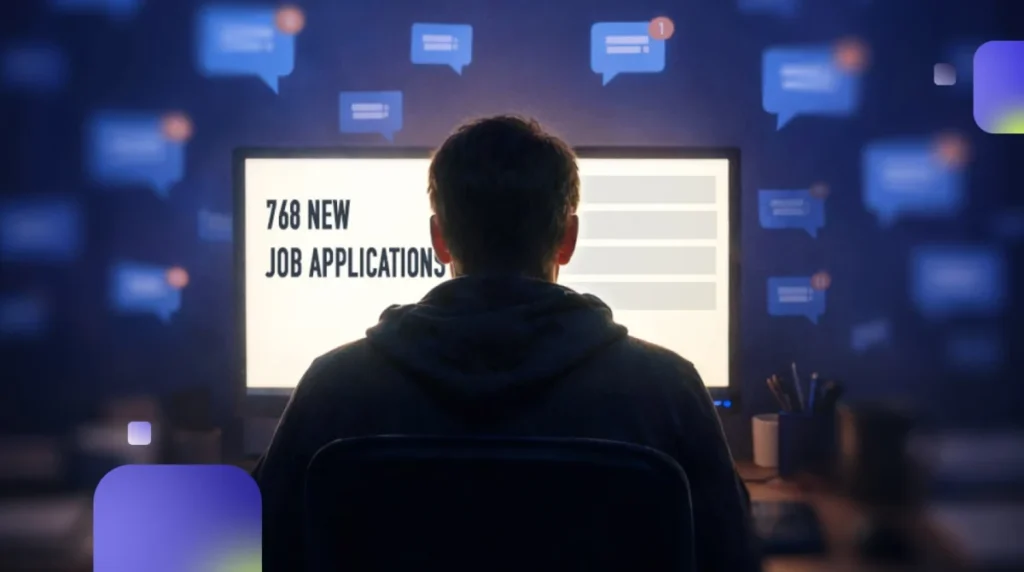
However, for many recruiters, this surge has initially been met with apprehension. The immediate instinct for some is to view these applications as "pollution" – an influx of potentially less personalized or less genuine submissions that could overwhelm already stretched hiring teams. This sentiment often stems from a fear that AI-generated content lacks the authentic human touch or that candidates using these tools may not be as genuinely invested in a specific role or company. The sheer volume that AI tools can generate poses a logistical challenge, making it harder to discern truly qualified and engaged candidates from those merely casting a wide net.
Distinguishing Signal from Noise: Workable’s Perspective
Nikos Moraitakis, CEO of Workable, provides a crucial counter-narrative to this initial skepticism. He asserts, "These aren’t ‘fake’ candidates. The vast majority are real people with real resumes." This statement underscores a fundamental distinction: the tool used for submission does not negate the authenticity or qualifications of the applicant. Instead, it merely represents a modern method of engagement. Moraitakis draws a powerful historical parallel, cautioning, "Refusing AI-assisted applications in 2025 is a little like refusing applications that came from the web in 1997." This analogy highlights the historical resistance to new technologies in recruitment, such as the initial skepticism towards online job boards or email applications, which are now ubiquitous and indispensable. Just as the internet fundamentally altered how businesses operate and individuals connect, AI is poised to redefine the talent acquisition landscape. Blocking AI-assisted applications, therefore, risks alienating a segment of the workforce that is technologically adept and proactive, potentially excluding highly qualified individuals simply for utilizing contemporary tools.
The core challenge, as Workable identifies it, is not the existence of AI-assisted applications, but rather the intensified need to "separate signal from noise." In an environment where application volume, both human and AI-driven, continues to escalate, employers require more sophisticated mechanisms to understand who is applying, their level of genuine intent, and the relevance of their qualifications. This necessitates a shift in focus from merely managing volume to enhancing the clarity and reliability of candidate signals.
Workable’s Strategic Adaptation: Enhancing Identity and Intent Signals
In response to this evolving landscape, Workable is actively developing and refining its platform to empower employers to navigate the new reality. Their approach is rooted in adaptation rather than resistance, focusing on improving identity and intent signals throughout the inbound application funnel. This involves leveraging advanced data analytics and behavioral pattern recognition – capabilities only accessible at Workable’s scale due to the vast amount of application data they process daily.
The specific enhancements aim to provide recruiters with deeper insights, enabling them to:
- Verify Candidate Authenticity: Distinguish between genuinely interested candidates and potentially fraudulent or highly disengaged submissions. This might involve cross-referencing data points, analyzing application patterns, and flagging inconsistencies.
- Gauge Candidate Engagement: Assess the level of effort and customization applied to an application, even if partially AI-generated. This could involve looking at specific phrasing, the degree of tailoring to the job description, or subsequent interactions.
- Identify High-Intent Applicants: Pinpoint candidates who are not just mass-applying but are genuinely enthusiastic and suitable for a particular role, despite using AI tools for efficiency. This could involve tracking engagement metrics post-application, such as viewing company content or interacting with follow-up communications.
- Optimize Screening Efficiency: By providing clearer signals, Workable aims to reduce the time recruiters spend sifting through irrelevant applications, allowing them to focus on promising candidates.
Moraitakis succinctly captures this strategic imperative: "The winners will be the employers with tools that can separate signal from noise." This underscores the competitive advantage that will accrue to organizations willing to invest in and adopt advanced recruitment technologies.
AI as a Countermeasure to AI: Empowering Recruiters
The paradox of the current situation is that while AI tools are generating a surge in applications, AI itself is becoming an indispensable solution for managing this influx. Workable champions the idea of "AI as a countermeasure to AI," advocating for the deployment of sophisticated AI-powered screening tools to assist recruiters. As application volume continues its upward trajectory, human recruiters alone cannot effectively process the sheer quantity of submissions without sacrificing quality or significantly increasing time-to-hire.
The AI screening tools Workable is developing are designed to ensure several critical outcomes:
- Fair and Unbiased Screening: AI algorithms can be designed to objectively evaluate applications based on defined criteria, minimizing human unconscious bias in the initial stages of screening. This promotes a more equitable hiring process, focusing on qualifications and relevant experience.
- Efficient Candidate Matching: AI can rapidly parse resumes, extract key skills and experiences, and compare them against job requirements with unparalleled speed and accuracy. This significantly accelerates the initial screening phase, allowing recruiters to focus on qualitative assessments.
- Personalized Candidate Experience: While AI assists in screening, it can also facilitate more personalized interactions for promising candidates by automating initial outreach or scheduling, ensuring that worthy applicants don’t get lost in the shuffle.
- Identification of Red Flags: AI can be trained to detect patterns indicative of spam, fraudulent applications, or candidates who are clearly unsuitable based on fundamental criteria, thereby saving recruiters valuable time.
This dual application of AI – both by candidates and by employers – is setting the stage for a new era of talent acquisition. Recruiters, far from being replaced, will see their roles evolve, shifting from administrative gatekeepers to strategic talent advisors, leveraging AI to augment their capabilities and focus on high-value human interactions.
Broader Industry Context and Implications
The integration of AI into mass applications is not an isolated event but rather a symptom of a larger digital transformation in the professional world. The proliferation of accessible generative AI tools like ChatGPT has democratized advanced technology, enabling individuals across various skill levels to leverage AI for personal and professional gain. In the context of job seeking, this means that tools that were once niche or required specialized knowledge are now readily available to the average job applicant.
Implications for Candidates:
- Increased Efficiency: Candidates can apply to more jobs, potentially increasing their chances of securing interviews, especially in competitive markets.
- Leveling the Playing Field: AI tools can help candidates optimize their resumes and cover letters, potentially improving their presentation even if they lack professional writing skills.
- Risk of Dehumanization: Over-reliance on AI without personal customization can lead to generic applications that fail to stand out, or worse, create a perception of lack of genuine interest.
- Ethical Considerations: Questions arise about transparency, honesty, and the potential for AI to obscure genuine capabilities or personality.
Implications for Employers:
- Overwhelming Volume: The primary challenge is managing the sheer increase in applications, which can strain recruitment resources and lengthen hiring cycles if not properly addressed.
- Maintaining Quality: Ensuring that the signal-to-noise ratio remains manageable and that high-quality candidates are not overlooked amidst a flood of applications.
- Bias Concerns: While AI can reduce human bias, poorly designed algorithms can introduce or amplify new forms of bias, necessitating careful development and auditing.
- Need for Technological Investment: Companies that fail to adopt AI-powered screening and candidate management tools risk falling behind competitors who can efficiently process applications and identify top talent.
- Evolving Role of Recruiters: Recruiters will need to develop new skills, including proficiency in AI tools, data analysis, and a deeper understanding of human-AI interaction in the hiring process. Their focus will shift to strategic talent pipelining, candidate engagement, and complex decision-making.
The Future Landscape of Talent Acquisition
Looking ahead, the trajectory is clear: AI is set to continue expanding the scale and capabilities of processes that were once considered exclusively human and intimate. Candidate tools will undoubtedly become even smarter, more sophisticated, and more integrated into the job search ecosystem. Consequently, application volume will likely continue its upward trend.
This evolution necessitates a fundamental rethinking of recruitment infrastructure. Modern tools are no longer a luxury but a necessity to keep hiring processes effective, fair, and, crucially, rooted in human judgment where it matters most – in the final stages of assessment, cultural fit, and offer extension. The emphasis will be on leveraging AI to augment human capabilities, not replace them. This means using AI for initial screening, data analysis, and predictive insights, while preserving human interaction for nuanced decision-making, relationship building, and assessing soft skills.
Workable’s enduring mission remains unwavering amidst this technological revolution: to help employers find and hire great people. The method of "knocking on the door" may change, but the objective of identifying and securing top talent persists. As Nikos Moraitakis concludes, encapsulating the definitive nature of this shift, "The job market isn’t going back. It’s time to build the infrastructure that lets great hires rise to the top – no matter how they knock on the door." This statement serves as a powerful call to action for the entire talent acquisition industry, signaling that adaptation and innovation are not merely options, but essential strategies for success in the AI-driven future of work. The era of hybrid recruitment, where human expertise is seamlessly integrated with intelligent automation, has definitively arrived.