In today’s highly competitive talent market, a meticulously crafted job description (JD) has emerged as a pivotal tool, serving not merely as a listing of duties but as a strategic communication asset capable of defining an organization’s employer brand and attracting the right talent. With qualified candidates often overwhelmed by numerous opportunities, the initial impression conveyed by a JD can mean the difference between engaging top-tier applicants and being overlooked. This comprehensive guide delves into best practices for developing compelling job descriptions that resonate with candidates, foster inclusivity, and streamline the recruitment process.
The Foundational Role of Job Descriptions in Talent Acquisition
A job description functions as the primary informational touchpoint for a prospective candidate, offering a succinct summary of a role’s responsibilities, required qualifications, and reporting structure. Beyond these core elements, it subtly communicates a company’s culture, values, and professionalism. A poorly constructed or vague JD can prematurely filter out ideal applicants, costing organizations valuable time and resources in their talent search. Recent shifts in the global workforce, including increased demand for remote work and a greater emphasis on diversity and inclusion, have amplified the importance of JDs as a strategic component of an effective recruitment strategy. Organizations that prioritize clarity, consistency, and candidate experience in their JDs are better positioned to secure the talent necessary for future growth.
Establishing Professionalism: Core Principles for JD Creation
Consistency and clarity form the bedrock of professional job descriptions. Applicants often review multiple roles within a single organization, and a unified presentation significantly enhances readability and conveys a polished corporate image.
- Consistent Section Order: Maintaining a uniform sequence for sections across all job descriptions is crucial. If an "About Us" section appears at the beginning of one JD, it should occupy the same position in all others. This predictability aids candidates in quickly locating relevant information, signaling organizational diligence.
- Unified Point of View (POV): Adopting a consistent narrative voice—whether first person ("we," "us"), second person ("you"), or third person—across all JDs is essential. While the first or second person often creates a more personal and engaging tone, the critical factor is uniformity. Inconsistent POVs can make a company appear disorganized and unprofessional, undermining candidate trust.
- Standardized Boilerplate Copy: Sections detailing the company’s mission, values, benefits, and diversity statements should feature identical, legally approved text across all job postings. This "boilerplate" ensures consistency in messaging, reinforces brand identity, and minimizes potential legal discrepancies. Engaging a copywriter to craft these sections, followed by legal and corporate review, can ensure both appeal and compliance.
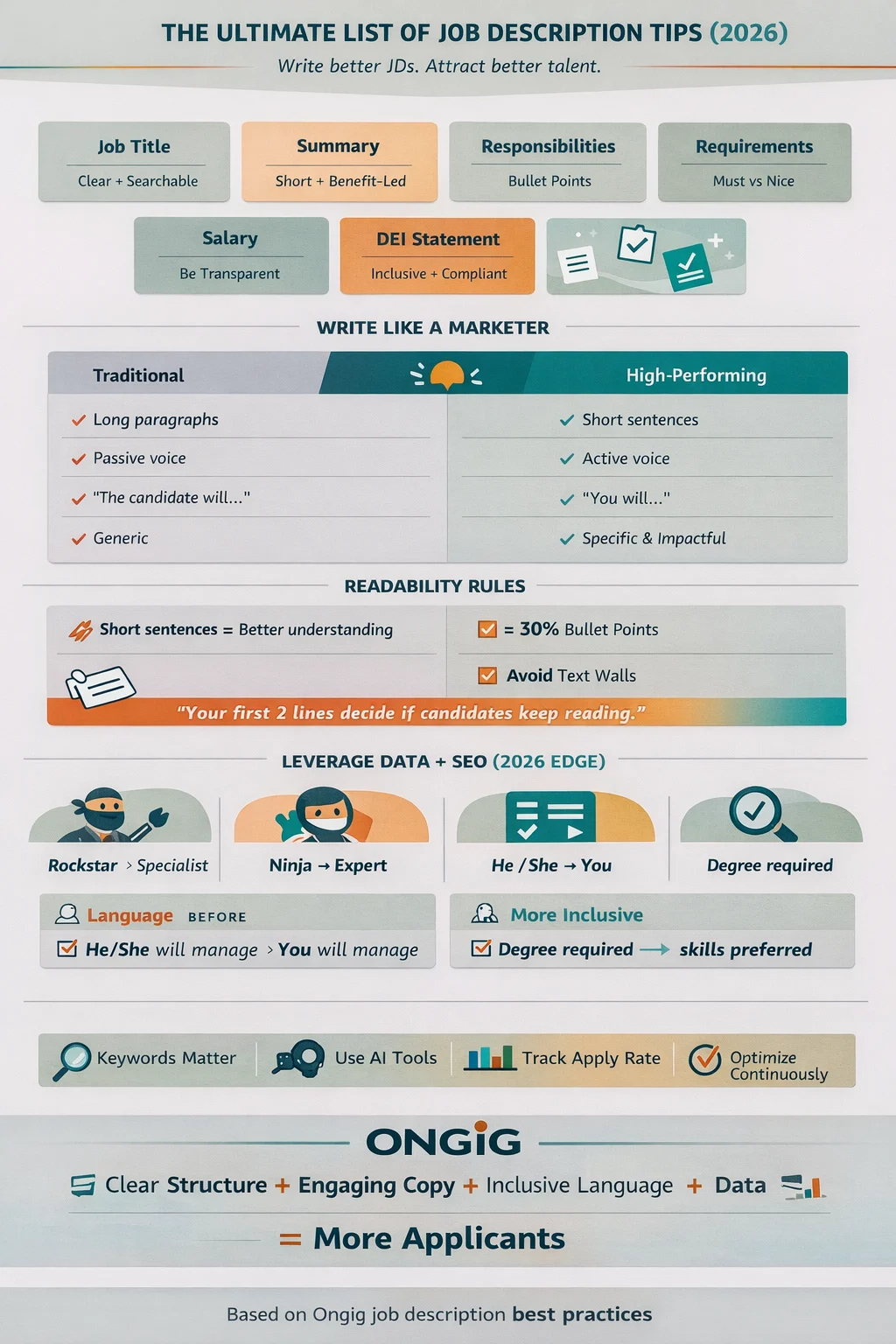
- Brevity and Simplicity: In an era of information overload, candidates typically scan JDs rather than reading them word-for-word. Research indicates that the average candidate spends only 14 seconds reviewing a job description before deciding whether to apply. Consequently, "less is more" is a guiding principle. Every sentence should contribute directly to describing the role, its requirements, or the unique value proposition for the candidate. Eliminating corporate jargon, filler phrases, and overly generic mission statements ensures the message is concise and impactful. A useful self-check is to delete any line that doesn’t directly inform the candidate about the role, its demands, or its desirability.
- Avoiding Industry Jargon: While internal terminology is common, its presence in JDs can alienate promising candidates, particularly those new to an industry or at entry-level positions. Studies reveal that a significant percentage of job ads contain jargon, creating unnecessary barriers. Simplifying language makes roles accessible to a broader talent pool, preventing confusion and encouraging diverse applications.
Optimizing for Candidate Attraction and Engagement
Beyond foundational principles, specific elements can significantly enhance a JD’s attractiveness and engagement.
- Impactful Job Titles: A job title is often the first element candidates encounter, influencing both searchability and initial interest. Titles should be simple, widely recognized, and accurately reflect the role’s function. Overly complex or internally specific titles (e.g., "Sales Apprentice II" instead of "Sales Apprentice") can confuse candidates and reduce visibility in online searches. Clarity ensures candidates can easily find and understand the position.
- Salary Transparency: Compensation is a primary driver for job seekers; an Indeed survey highlighted that nearly one in four candidates consider it the most crucial aspect of a job description. The trend towards pay transparency is accelerating, with 16 U.S. states having enacted laws requiring salary disclosures. Including a salary range, rather than an exact figure, can significantly boost applications, signal fairness, and help manage candidate expectations, ultimately reducing time spent on unsuitable applicants.
- Highlighting Company Perks and Benefits: While salary attracts initial attention, a comprehensive overview of company perks and benefits can provide a compelling reason for candidates to choose one employer over another. Details about paid time off, health benefits, retirement plans, professional development opportunities, and flexible work arrangements (e.g., gym memberships, employee discounts, monthly incentives) offer a holistic view of the employee value proposition.
- Compelling Role Summary: The job title grabs attention, but a well-crafted summary sustains it. In 2-3 concise sentences, this section should encapsulate the team’s function, the role’s integration within that team, and its reporting structure. It should be informative and engaging, saving the broader company mission for dedicated "About Us" sections.
- Distinguishing Essential vs. Desired Qualifications: Lumping all requirements into a single list can inadvertently discourage qualified candidates, particularly women, who research suggests apply to fewer jobs than men and are more hesitant to apply if they don’t meet 100% of listed qualifications. Separating "must-have" (essential) from "nice-to-have" (desired) qualifications provides clarity and encourages a broader range of applicants, signaling flexibility and realistic expectations.
Fostering Inclusivity and Fairness in Hiring
Inclusive language and practices are not merely ethical considerations but strategic imperatives for broadening talent pools and enhancing organizational diversity.
- Auditing for Biased Language: Certain words or phrases in JDs can subtly deter qualified candidates based on protected characteristics like age, gender, or disability, potentially leading to legal exposure under fair-employment laws. Language such as "digital native," "energetic," "young team," "guru," or "rockstar" can create unintended biases. Proactive auditing with objective software tools (e.g., Ongig Text Analyzer) helps identify and replace biased terminology with inclusive alternatives, significantly expanding the applicant pool.
- Emphasizing Skills Over Credentials: The traditional emphasis on academic degrees or years of experience is shifting towards skills-based hiring. The National Association of Colleges and Employers (NACE) reports that 70% of employers now utilize skills-based hiring, an increase from previous years. This approach focuses on a candidate’s demonstrable abilities and potential rather than formal qualifications that may not directly correlate with job performance. Replacing "Bachelor’s degree required" with a list of specific skills and competencies needed for the role can expand the talent pool nearly 19-fold, according to LinkedIn, leading to a 9.4x increase in eligible workers. This strategy opens doors for self-taught individuals, career changers, and those from non-traditional educational backgrounds, fostering a more equitable hiring process.
- Personalized Equal Opportunity Statements: While legal boilerplate "equal opportunity employer" statements are necessary, customizing this message to reflect a company’s unique commitment to diversity, equity, and inclusion (DEI) can make a significant impact. A personalized statement, detailing how the company actively promotes an inclusive environment, reads more authentically and reinforces the organization’s values beyond mere compliance, resonating with candidates who prioritize workplace diversity.
Leveraging Technology and Modern Practices for Enhanced JDs
The digital age offers numerous tools and approaches to make JDs more engaging and efficient.
- Addressing AI-Generated JD Risks: Artificial intelligence is increasingly used to draft JDs, offering speed and efficiency. However, AI-generated content requires human review to mitigate risks. AI models can inadvertently perpetuate biases present in their training data, leading to gendered language, unrealistic requirements, or irrelevant clichés. Without careful auditing, AI-generated JDs can alienate candidates and contradict a company’s DEI goals. Running AI-generated content through bias checkers and ensuring alignment with actual hiring criteria is crucial. Some companies are also considering disclosing when JDs are AI-assisted, reflecting an evolving conversation around transparency.
- Interactive Elements: Incorporating interactive features can elevate a static JD into a dynamic experience.
- Maps: Embedding a map (e.g., via Google Maps API) provides candidates with a clear visual of the workplace location, whether urban or suburban. This prevents candidates from leaving the page to search for directions, increasing engagement.
- Direct Communication: Offering immediate communication channels like instant messaging, chatbots, or direct email links allows candidates to ask questions and engage directly, fostering a sense of accessibility and responsiveness.
- Video and Imagery: Videos showcasing the company culture, team members, or the physical workspace can provide an immersive experience. Similarly, high-quality photos or infographics can break up text, capture attention, and convey information more effectively than words alone.
- Transparent Application Process: Demystifying the hiring journey builds trust and reduces candidate drop-off. Clearly outlining the steps—from application submission to interviews and offer—sets expectations and demonstrates respect for the candidate’s time. Companies like Google excel at this, providing detailed "How We Hire" pages and even interview preparation resources, which empowers candidates and streamlines the process.
- Explicit Job Location Details: With the rise of remote and hybrid work models, specifying the job location is non-negotiable. Vague statements like "flexible working options available" can be a red flag. Clearly stating "on-site," "hybrid" (with details on required office days), or "fully remote" (with any time zone or travel stipulations) prevents misunderstandings and attracts candidates whose preferences align with the company’s policy. Gallup reports that 6 in 10 employees in remote-capable roles prefer hybrid arrangements, highlighting the importance of this transparency.
- Employee Testimonials: Authentic insights from current employees offer powerful social proof. Short video testimonials or written quotes integrated into the JD or a linked career page can provide genuine perspectives on company culture, team dynamics, and work-life balance, making the opportunity more tangible and appealing.
Automation and Quality Assurance for Scalable JD Management
Managing numerous JDs, especially within larger teams, can be complex. Automation and rigorous quality checks ensure consistency and accuracy.
- Utilizing Templates: For organizations with high hiring volumes, standardized templates are indispensable. They guarantee consistency in structure, language, and branding, while also simplifying the creation and storage of JDs. Resources like free templates for Microsoft Word or Google Docs can provide a starting point.
- Job Description Builder Tools: Specialized software designed for JD creation can accelerate the writing process, ensure inclusivity, and facilitate the development of reusable templates. These tools often incorporate features for bias checking, readability analysis, and compliance, making the process more efficient and effective.
- Rigorous Spell and Grammar Checks: Grammatical errors and typos detract from professionalism. Utilizing editing software like Grammarly is essential. Furthermore, assessing readability with tools like Hemingway ensures the language is accessible to a broad audience, ideally aiming for a readability score of 8 or below for general public consumption.
FAQs on Job Descriptions
- Why are job descriptions important? They are often the first interaction a candidate has with your company, signaling your professionalism and organizational culture. A clear JD attracts qualified applicants, while a messy one deters them.
- How often should I update job descriptions? Review JDs every time a role is reposted. Evergreen positions should be audited at least annually, as titles, salary benchmarks, and required skills can evolve rapidly.
- Do I have to write inclusive job descriptions? While not always legally mandated in every aspect, inclusive language is a best practice. Biased language silently shrinks your applicant pool, hindering diversity efforts. Using bias-checking tools is highly recommended.
- Are job descriptions required by law? Generally, JDs are not legally required documents, but their content can carry legal weight. For instance, some states mandate salary range disclosure. Vague duty descriptions can also create liability if a role’s responsibilities significantly change post-hire.
By embracing these comprehensive strategies, organizations can transform their job descriptions from mere administrative necessities into powerful recruitment instruments. A well-crafted JD not only attracts top talent but also reflects an organization’s commitment to clarity, equity, and a positive candidate experience, ultimately strengthening its position in the dynamic talent marketplace.