The discourse surrounding leadership and management is often characterized by a blurring of lines, leading to their frequent interchangeability in everyday conversation. However, a nuanced understanding of the distinct definitions of leadership versus management is crucial for fostering effective organizational outcomes and driving meaningful change. While both are indispensable for achieving objectives, their core focuses and methodologies diverge significantly. Management primarily centers on the operational mechanics of an organization: planning, organizing, executing tasks, and problem-solving. Effective managers are adept at deploying resources, optimizing workflows, and ensuring individuals meet established expectations regarding their duties and performance. This involves diligent task delegation, rigorous deadline management, resource allocation, and the efficient resolution of conflicts. The emphasis is squarely on the day-to-day operations, ensuring smooth functioning and adherence to established protocols.
In contrast, leadership operates on a broader, more expansive spectrum, focusing on influencing, inspiring, and cultivating the best within individuals and teams. Leaders possess the capacity to perceive the overarching vision, connect disparate elements, and bridge informational or operational gaps. They are instrumental in motivating and guiding teams toward a shared objective, investing not just in tasks but in the holistic development of people and the systems that underpin success. Key leadership responsibilities include articulating a clear vision, fostering an environment ripe for innovation, and championing the personal and professional growth of those they lead. Regardless of an individual’s current position—whether overseeing projects, managing a department, or guiding an entire organization—a synthesis of both management and leadership skills is invariably required for optimal effectiveness. Navigating new challenges or pursuing ambitious goals necessitates recalling that leadership is fundamentally a collective process, and discerning whether the immediate need calls for leadership or management is a vital first step. This clarity empowers individuals to apply the skills and behaviors most conducive to achieving desired outcomes and enabling others to contribute effectively.
Defining Leadership Through its Outcomes: Direction, Alignment, and Commitment
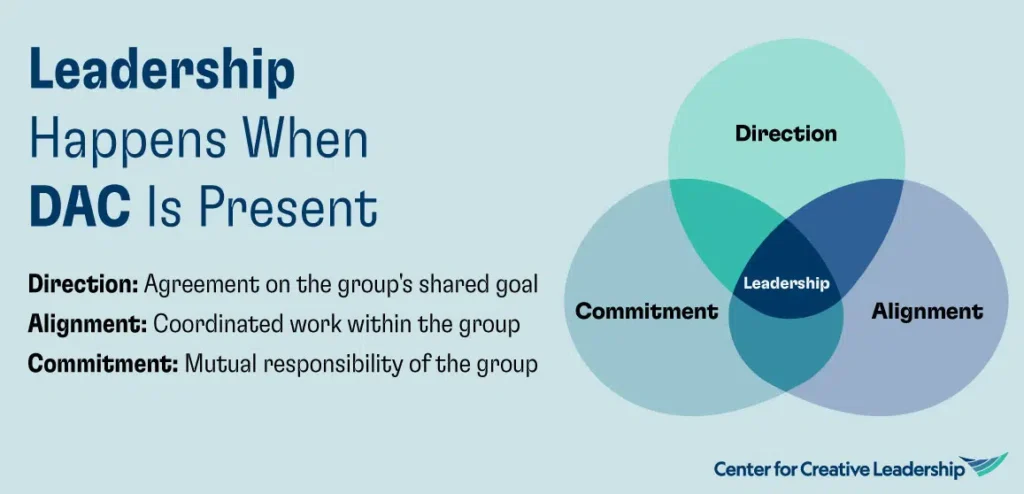
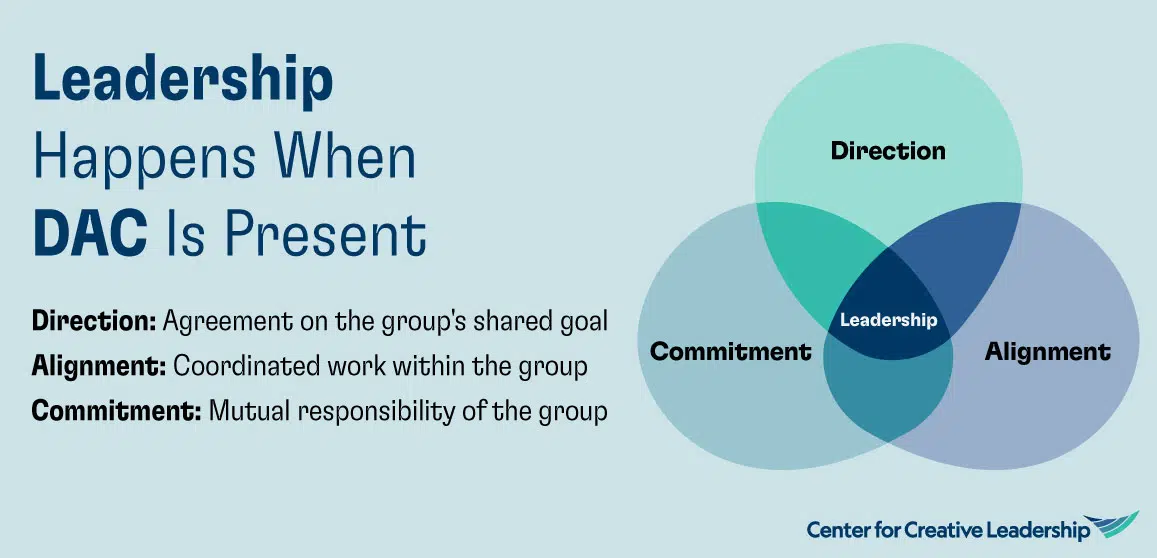
Research conducted by the Center for Creative Leadership (CCL) distills the essence of leadership into three pivotal elements: direction, alignment, and commitment, collectively known as the DAC framework. This model transcends a narrow focus on individual leaders and followers, shifting the emphasis to the shared outcomes that leadership generates. The presence of all three components—direction, alignment, and commitment—signifies that leadership is actively occurring. These outcomes are not the sole province of designated leaders; rather, they emerge from the intricate web of actions, interactions, reactions, and exchanges among multiple individuals. While organizational leaders play a critical role in setting the tone and cultivating an environment where DAC can flourish, the creation of these outcomes is, in essence, a collective endeavor.
This perspective underscores why leadership is fundamentally understood as a social process, rather than an isolated individual act. The DAC model highlights what effective leadership does, acknowledging that everyone possesses the potential to learn, grow, and contribute to shared direction, alignment, and commitment. This approach accommodates a diverse array of leadership styles, individual personalities, and cultural nuances.
Direction: Shared Understanding of Overall Goals
Direction represents the collective answer to the question, "Where are we going?" It signifies a consensus within a group or organization regarding its overarching aspirations and serves as the bedrock for establishing shared goals. When a clear, collective sense of direction prevails, individual efforts and resources are channeled toward their most impactful application. Team members understand which initiatives to embrace and which to decline, and where to best allocate resources. Crucially, they can discern how their individual contributions align with broader objectives. Establishing direction is a fundamental aspect of leadership, extending beyond mere pronouncements of targets or visions. It embodies purpose-driven leadership that cultivates clarity and inspires collective motivation. For instance, organizations that consistently articulate a compelling mission statement, such as "To empower small businesses through innovative financial solutions," provide a clear direction that guides strategic decisions and daily operations.
Alignment: Coordinated Effort Within the Group
If direction defines the destination, alignment defines the journey. Alignment ensures that each individual comprehends their specific role and how it interplays with the work of their colleagues, fostering a sense of coordinated and synchronized effort. This reduces confusion and miscommunication, leading to increased efficiency by minimizing redundant tasks, duplicated efforts, and excessive oversight. The complexities of maintaining alignment are particularly pronounced in today’s increasingly distributed work environments, with remote and hybrid teams spanning different locations and time zones. Navigating these challenges requires intentional effort to build trust and foster interdependence. Effective leadership, therefore, necessitates a dual focus on both relationships and tasks, especially when leading teams in a hybrid or remote setting. Proactive efforts to build rapport and ensure clear lines of communication are paramount to achieving robust alignment. For example, a technology company implementing a new software platform might ensure alignment by clearly defining the roles of developers, testers, and user support teams, along with establishing standardized communication channels and project management tools.
Commitment: Mutual Responsibility for Collective Success
Commitment signifies a profound willingness to prioritize the success of the collective, where individuals recognize that their own achievements are inextricably linked to those of their peers. This fosters a sense of mutual trust, where team members are confident that everyone will exert the necessary effort for the group’s success, characterized by a balanced exchange of contributions. When a culture shifts from one of passive compliance or minimal effort to one of shared endeavor, the need for constant oversight diminishes. Team members are motivated to go the extra mile, driven by a sense of accountability and a shared ownership mentality. This fosters an environment where change is embraced, shared goals are realized, and cultural transformation becomes attainable. Commitment, however, cannot be mandated; it must be nurtured. Effective leaders understand the imperative of respecting individual differences and actively seek to comprehend their employees’ experiences, fostering a sense of belonging where diverse perspectives and contributions are valued. For instance, a non-profit organization working on a major fundraising campaign cultivates commitment by celebrating team milestones, acknowledging individual contributions publicly, and ensuring transparency in how donor funds are utilized to achieve their mission.
The Impact of a Refined Definition of Leadership
A unified understanding of the importance and meaning of leadership can significantly enhance its quality and consistency. With clarity on what leadership entails, organizations and teams can more effectively assess their strengths and weaknesses, thereby enabling targeted interventions to improve collaborative efforts and achieve critical objectives. Once the fundamental definition of leadership is established, the next step involves identifying strategies to enhance its practice.

Fueling the Social Process of Leadership: Diagnosing Challenges
When organizational or team progress falters, or community initiatives stall, viewing leadership as an outcome to be achieved through direction, alignment, and commitment can quickly pinpoint areas requiring focused attention to regain momentum. Several specific steps can be taken:
-
Identify Weaknesses in DAC: Unclear direction, lack of alignment, or diminished commitment manifest in observable ways. For example, a lack of clear direction might be indicated by frequent shifts in project priorities, confusion about objectives, or a pervasive sense of aimlessness. Misalignment can surface as duplicated work, conflicting departmental efforts, or a lack of coordination between different teams. Low commitment might be evident in high employee turnover, a reluctance to take on new responsibilities, or a general disengagement from team goals.
-
Incorporate Diverse Perspectives: Moving beyond a singular viewpoint is essential. Engaging the team in candid discussions about the current state of leadership outcomes—direction, alignment, and commitment—provides a more accurate assessment. Creating an environment of psychological safety is paramount, allowing team members to openly share their observations about what is working well and what is not. This inclusive approach helps to identify systemic issues and challenges.
-
Implement Targeted Actions: The specific skills, actions, and behaviors required to address leadership challenges vary depending on the context. For instance, if an organization demonstrates clear direction and strong commitment but suffers from chaotic processes, the focus must shift to improving alignment. Conversely, if low commitment or unclear direction are the primary pain points, interventions should target those areas. While there are no universal panaceas, incremental changes can yield significant improvements in DAC levels. These might include clarifying project roles, establishing regular cross-functional meetings, or implementing recognition programs that reinforce desired behaviors.
Investing in Leadership at All Levels
When every member of an organization understands the definition of leadership and how to contribute to DAC within their respective roles, a more pervasive and impactful form of leadership emerges. This broader engagement leads to several positive outcomes:
- Enhanced Innovation and Adaptability: A culture that fosters widespread leadership encourages novel ideas and greater responsiveness to change.
- Increased Employee Engagement and Retention: When individuals feel empowered to lead and contribute, their commitment to the organization deepens.
- Improved Organizational Performance: The synergistic effect of strong direction, alignment, and commitment naturally translates into higher productivity and better results.
- Development of Future Leaders: By providing opportunities for leadership at all levels, organizations cultivate a robust pipeline of talent.
Implications of a Relational Definition of Leadership
This relational understanding of leadership has profound implications for leadership development. Research consistently shows that development efforts should not be confined to individuals in formal positions of authority or those identified as "high-potential." Instead, the focus must broaden to building leadership capacity across the entire collective—encompassing teams, workgroups, and the organization as a whole. This holistic approach recognizes that effective leadership is not an exclusive trait but a cultivated capability.
Cultivating leadership across all echelons requires intentional investment. This begins with acknowledging the unique starting points of individuals, nurturing their self-awareness, and enhancing their leadership skillsets and mindsets. Simultaneously, fostering a deeper understanding of leadership within teams and groups creates a ripple effect that can transform entire organizations and communities.
Amplifying Leadership Potential Through Development
Providing timely and relevant learning opportunities for all employees—from individual contributors to senior executives—is instrumental in unlocking organizational performance, engagement, and retention. Key strategies for amplifying leadership potential include:
-
Promote Excellent Leadership and Accessible Development: Effective leaders consistently exhibit core qualities such as integrity, self-awareness, courage, respect, compassion, and resilience. Developing these attributes, alongside others, smooths the social process of leadership. However, mere awareness is insufficient. Research indicates that individuals are more engaged and committed when they have clear career pathways, ample professional development opportunities, and the support necessary to reach their full potential. Leadership development equips individuals to navigate change and builds collective capacity for problem-solving. Unfortunately, access to such opportunities is often inequitable; studies reveal a significant percentage of young professionals worldwide feel that leadership development opportunities are unfairly distributed. Addressing this requires actively dismantling systemic barriers and ensuring equitable access. A mosaic of leadership programs, courses, and tools can be integrated to create comprehensive training and retention initiatives.
-
Foster Team Growth: When building high-performing teams, it is crucial to look beyond individual talent. While having the right people with the necessary leadership capabilities is vital, it represents only one facet of team effectiveness. An effective team also cultivates strong direction, alignment, and commitment, reflecting that leadership is fundamentally about people collaborating to achieve collective results. Instead of solely focusing on individual development, consider the power of teams growing together. By establishing robust direction, alignment, and commitment, team members can collaborate more seamlessly, enhance outputs, and expand their collective impact.
-
Scale for Organizational Impact: Imagine the transformative effect of a shared understanding of leadership, where the organizational vision, language, and behaviors are intrinsically linked to critical business needs. Picture a state where direction, alignment, and commitment are vibrant forces, rather than abstract concepts. By implementing and scaling leadership development enterprise-wide, organizations broaden access to learning, ensure equitable opportunities for growth, build new capabilities across the organization, and foster the social processes essential for effective leadership. Investments in leadership development have consistently demonstrated positive outcomes, including improved organizational performance, enhanced employee engagement, and higher retention rates. While delivering high-impact development to large populations can be challenging, organizations can leverage external expertise and proven providers to supplement their internal resources and reap the manifold benefits of comprehensive leadership development.
-
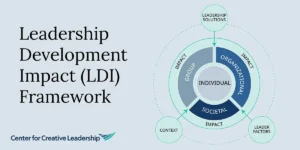
Create a Societal Ripple Effect: As individuals, teams, and organizations deepen their understanding of leadership and enhance DAC, their leadership potential expands, creating a ripple effect that extends beyond their immediate spheres. This impact can positively influence the lives of those they touch. This reality underscores the notion that complex societal or community problems cannot be solved by individuals acting in isolation. Confronting such "wicked problems" necessitates collective action to understand root causes and devise sustainable solutions. Embracing a relational and collective definition of leadership opens the door to transformative change for individuals, teams, entire organizations, and ultimately, broader communities and society at large.
What Does Leadership Mean to You?
With a research-backed understanding that effective leadership is defined by the outcomes of direction, alignment, and commitment (DAC), and that DAC enables individuals to achieve more collectively than they ever could alone, each person is empowered to define what effective leadership means for their specific mission and goals. By identifying areas of strength and recognizing obstacles, targeted and intentional actions can be taken to develop individual leadership capacity and foster it in others. The ultimate result is a greater realization of potential, accelerated progress, and the discovery of superior solutions—achieved collaboratively.
Ready to Take the Next Step?
Sign up for our newsletters to receive the latest research, tips, and insights on leadership.
Frequently Asked Questions About the Meaning of Leadership
-
What is the primary difference between management and leadership? Management focuses on operational efficiency, planning, and execution, while leadership emphasizes influencing, inspiring, and guiding individuals toward a shared vision.
-
What are the three key outcomes of leadership according to CCL research? The three key outcomes are Direction, Alignment, and Commitment (DAC).
-
How does the DAC framework define leadership? It defines leadership as a social process that produces the outcomes of direction, alignment, and commitment through the collective efforts of multiple individuals.
-
Can leadership be learned and developed? Yes, leadership is a skill that can be learned, developed, and cultivated through intentional practice and development opportunities at all levels of an organization.
-
Why is it important to invest in leadership development at all levels? Investing in leadership development across the entire organization builds collective capacity, enhances performance, improves engagement and retention, and fosters a culture of continuous improvement.