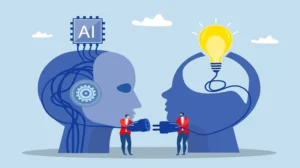
The global professional landscape is currently undergoing a fundamental paradigm shift in how digital tools are perceived, utilized, and integrated into the organizational hierarchy. For decades, software was viewed as a static utility—a "vending machine" model where a specific input invariably led to a predictable, hard-coded output. However, the emergence and rapid maturation of Generative Artificial Intelligence (GenAI) have rendered this traditional framework obsolete. Experts and industry leaders are increasingly arguing that AI should no longer be managed as a technical project, but rather as a "high-potential employee" that requires sophisticated leadership, nuanced onboarding, and continuous coaching to reach its full operational capacity.
This transition from "tool user" to "AI manager" represents a critical evolution in the modern workforce. As organizations move past the initial novelty of Large Language Models (LLMs), the differentiator between successful integration and expensive failure is becoming clear: the quality of the management applied to the machine. If a human employee were managed with the same minimal direction and lack of feedback that many professionals currently apply to AI, the result would be inevitable confusion, inconsistency, and underperformance. The same logic now applies to the digital workforce.
The Historical Context: From Symbolic AI to Generative Workforce Capacity
The journey to treating AI as a member of the "headcount" has been decades in the making, but it reached a critical inflection point in late 2022 with the public release of advanced transformer-based models. Historically, AI was symbolic and rule-based; it followed strict "if-then" logic. If the software failed, it was a "bug."
In contrast, modern Generative AI is probabilistic. It does not follow a rigid script; it predicts the most likely successful outcome based on vast datasets. This shift in underlying architecture means that AI now possesses the ability to analyze, synthesize, and create at a scale that mimics human cognitive labor. By early 2023, the corporate world realized that AI was not just a faster calculator, but a repository of workforce capacity. According to data from McKinsey & Company, generative AI has the potential to generate the equivalent of $2.6 trillion to $4.4 trillion in value annually across various industries. This economic potential, however, remains locked behind a "management gap" where users treat sophisticated neural networks like simple search engines.
The Three Levers of Effective AI Management
To bridge this gap, management consultants and AI researchers have identified three primary levers that determine the success of AI integration: Onboarding, Standards, and Coaching. These pillars mirror the lifecycle of a human employee within an enterprise.
1. Onboarding: The Critical Role of Contextual Integration
In a traditional corporate setting, a new hire is never expected to perform optimally on their first day without a comprehensive brief. They are introduced to business logic, success metrics, and the nuances of the company’s culture. Yet, many professionals approach AI with "one-line prompts," providing no background or objective. This is the functional equivalent of hiring a senior analyst and giving them no instructions other than "write a report."
Effective AI management requires "onboarding with intent." This involves defining the specific objective, the target audience, the desired tone, and the "non-negotiables" of the task. Technical frameworks such as Retrieval-Augmented Generation (RAG) are essentially the technical manifestation of this onboarding process, allowing AI to access specific organizational knowledge to provide context-aware responses. The quality of the input sets the absolute ceiling for the output; without a high-quality brief, the AI is forced to rely on generic averages, leading to mediocre results.
2. Standards: Mitigating Mediocrity Through Clear Expectations
A core tenet of organizational leadership is that "you get what you tolerate." If a manager accepts late or poorly researched work from a human team, that becomes the team’s standard. The same principle governs AI interactions. Because AI models are designed to be helpful and agreeable, they will often provide the easiest path to a completed task unless pushed otherwise.
The output a professional receives from AI is a direct reflection of their own management standards. If a user cannot articulate what "good" looks like in their specific context—whether it is a specific level of analytical depth, a particular structure, or a certain stylistic polish—the AI cannot be expected to deliver it. High-performing organizations are now developing "AI Style Guides" and "Verification Protocols" to ensure that the machine’s output meets the rigorous demands of the brand. When a manager demands precision and challenges the AI to go deeper, the system’s probabilistic nature allows it to rise to meet that higher bar.
3. Coaching: The Power of Iterative Development
The most common mistake in the current professional use of AI is the "one-and-done" approach. Most users treat the first response from an AI as the final product. In a human management context, accepting a raw first draft from a junior staffer without feedback would be considered a failure of leadership.
The real value of generative AI is not found in the first click, but in the iteration. This is often referred to in technical circles as "chain-of-thought" or "iterative prompting." By challenging assumptions, asking for alternatives, and refining the initial brief based on the AI’s first attempt, the manager "coaches" the model toward a superior result. This process does more than just improve a single document; it helps the manager understand the model’s limitations and strengths, creating a feedback loop that compounds in quality over time.
Supporting Data: The Impact of AI Management on Productivity
Recent empirical studies highlight the disparity between "passive use" and "active management" of AI. A study conducted by the Harvard Business School, in collaboration with Boston Consulting Group (BCG), examined the performance of 758 consultants. The research found that consultants using AI finished 12.2% more tasks on average and completed them 25.1% more quickly. Most importantly, the quality of their results was 40% higher than those who did not use AI.
However, the study also noted a "jagged frontier." For tasks that fell outside the AI’s current capabilities, users who blindly trusted the tool (the "vending machine" approach) performed worse than those who did not use AI at all. This underscores the necessity of the "managerial" mindset: a manager must know when to delegate to the AI, how to supervise the process, and when to intervene.
Stakeholder Perspectives and Institutional Responses
The shift toward AI-as-headcount is drawing reactions from various sectors of the economy:
- Human Resources (HR): HR departments are beginning to rewrite job descriptions to include "AI Orchestration" as a core competency. The focus is shifting from "knowing how to do a task" to "knowing how to manage an AI to do a task."
- Corporate Leadership: CEOs are increasingly concerned with "Shadow AI"—employees using AI tools without oversight. To counter this, firms like Goldman Sachs and PwC are investing heavily in proprietary, secure AI environments where management standards can be institutionalized.
- Regulatory Bodies: The European Union’s AI Act and various U.S. Executive Orders are focusing on accountability. If AI is "part of the headcount," the responsibility for its "actions" and "decisions" rests squarely with the human managers overseeing the systems.
Analysis of Implications: Scaling the Professional Self
The long-term implication of this shift is the "scaling of the individual." When a professional moves from being a tool user to an AI manager, they are effectively multiplying their own capabilities. However, this multiplication is a double-edged sword. AI amplifies the qualities of its manager. A manager with clear structure, high standards, and a deep understanding of their craft will see those qualities scaled across a massive volume of work. Conversely, a manager who provides vague instructions and accepts low standards will find that AI amplifies those inefficiencies just as efficiently.
In the leadership philosophy of many elite organizations, there is a saying: "The standard you walk past is the standard you accept." In the age of AI, this must be updated: "The standard you accept is the standard you scale." Because AI can produce content and perform tasks at a frequency impossible for humans, any lapse in management standards is instantly replicated across the entire output of the organization.
Conclusion: The New Competency of the Modern Workforce
As AI continues to integrate into the global economy, the differentiator in the workforce will not be access to the technology—access is becoming universal. Instead, the competitive advantage will belong to those who possess the "soft skills" of management applied to "hard" technology.
Directing, critiquing, and scaling AI requires a blend of traditional leadership, clear communication, and technical literacy. Professionals who treat AI as a high-potential employee—investing time in its onboarding, setting rigorous standards for its output, and coaching it through iterative feedback—will find themselves at the forefront of the next industrial revolution. Those who continue to treat it as a vending machine will likely find themselves frustrated by the "mediocrity" of a tool they have failed to lead. AI is no longer just a project for the IT department; it is a permanent addition to the global headcount, and it is time for the management class to treat it as such.