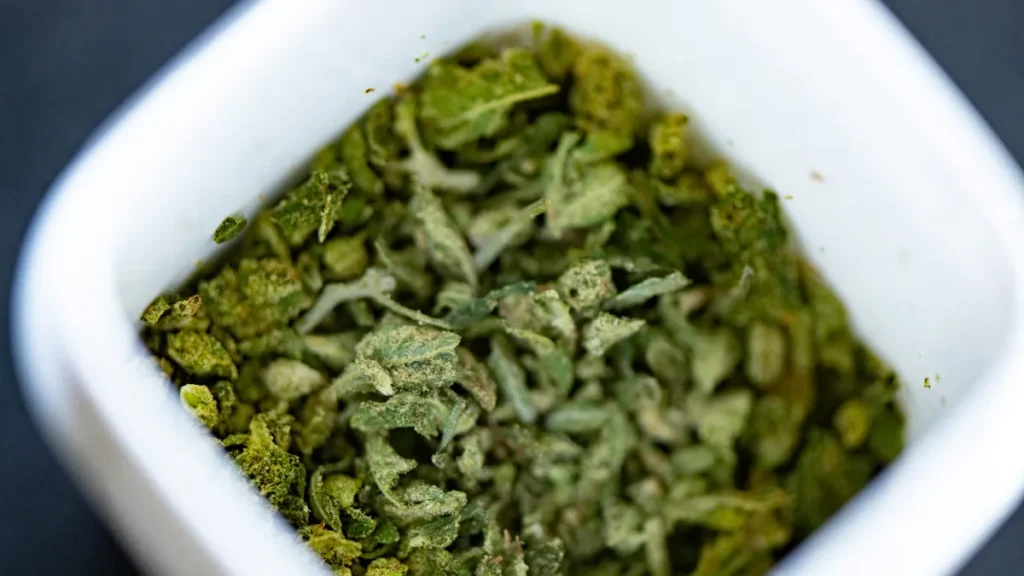
Despite the widespread legalization of medical marijuana across the United States, a significant disparity persists in employer protections for workers holding valid prescriptions. Only a fraction of states that have embraced medical cannabis also prohibit employers from discriminating against these employees, creating a complex and often perilous landscape for patients and businesses alike. This intricate legal tapestry was recently underscored by a Florida state appeals court decision, which reversed a lower court’s ruling that had sought to shield medical marijuana users from disciplinary action without explicit proof of on-duty impairment. The July 31, 2026, appellate judgment in the Giambrone case highlights the ongoing tension between evolving state drug laws and entrenched workplace policies, leaving employers and employees navigating a patchwork of regulations.
Background: A Shifting Tide in Cannabis Legislation
The national conversation surrounding cannabis legalization, both medical and recreational, has undergone a dramatic transformation in recent decades. What was once universally prohibited under federal law is now a burgeoning industry regulated with varying degrees of stringency at the state level. California led the way in 1996 with the Compassionate Use Act, becoming the first state to legalize medical marijuana. This pioneering move ignited a slow but steady cascade of similar legislative actions across the country. As of March 2025, an impressive 38 out of 50 states have legalized the medical use of cannabis, according to data from the National Conference of State Legislatures (NCSL). Additionally, a growing number of states have also moved to legalize recreational adult-use cannabis, further complicating the legal and social landscape.
This rapid legislative shift, however, has not been uniformly mirrored in workplace policies. The federal Controlled Substances Act (CSA) still classifies marijuana as a Schedule I drug, alongside heroin and LSD, deeming it to have "no currently accepted medical use and a high potential for abuse." This federal prohibition creates a direct conflict with state-level legalization efforts, particularly when it comes to employment. While states can choose to legalize cannabis, they cannot override federal law, which can still impact federally regulated industries or workplaces receiving federal funding. This inherent tension forms the bedrock of the challenges faced by employers attempting to reconcile state-sanctioned medical use with federal anti-drug mandates and their own drug-free workplace policies.
For employees, the stakes are high. A valid medical marijuana card, intended to provide relief for qualifying conditions, often offers no guaranteed protection against adverse employment actions, including termination, in many states. The issue typically revolves around whether an employer must "accommodate" a medical marijuana user, similar to how they might accommodate a prescription for other controlled substances, or if the drug-free workplace policy takes precedence.
Chronology of Florida’s Medical Marijuana Journey and the Giambrone Case
Florida’s path to medical marijuana legalization reflects this broader national trend. In 2016, Florida voters overwhelmingly approved Amendment 2, a constitutional amendment that legalized medical cannabis for patients with specific debilitating conditions. This measure, officially titled the "Florida Medical Marijuana Legalization Initiative," passed with over 71% of the vote, signaling strong public support for patient access to cannabis.
Following its approval, the Florida Department of Health’s Office of Medical Marijuana Use (OMMU) was tasked with implementing the regulatory framework for patient registration, physician certification, and dispensing organizations. However, the constitutional amendment, while broad in its intent to allow medical use, did not explicitly address employer obligations or protections for employees who use medical marijuana. This legislative silence set the stage for legal challenges.
The Giambrone case emerged from this ambiguous legal environment. While specific dates of the initial lawsuit and trial court decision are not detailed in the provided snippet, the general chronology can be inferred:
- 2016: Florida voters approve Amendment 2, legalizing medical marijuana.
- Post-2016: The state implements regulations for medical cannabis use, but without explicit employer accommodation mandates.
- Subsequent Period: An employee (Giambrone) subject to a drug-free workplace policy and a Collective Bargaining Agreement (CBA) faces disciplinary action related to medical marijuana use.
- Trial Court Ruling: A lower court initially rules in favor of the employee, suggesting that employers could not discipline medical marijuana users without proof of on-duty impairment. This ruling likely interpreted the spirit of the medical marijuana law as requiring some form of workplace protection.
- Appeals Court Reversal (Published July 31, 2026): The Florida state appeals court reverses the trial court’s decision. The appellate court concluded that "the law as implemented does not require accommodation of any employee who works while under the influence of medical marijuana regardless of where that use occurred." It further criticized the trial court’s reasoning as depending "on an interpretive chain that breaks at every link." This reversal cemented the narrow interpretation of Florida’s medical marijuana law concerning employment protections.
The appeals court’s decision, however, was accompanied by a crucial footnote. It stated that the ruling in Giambrone should be construed narrowly, with its analysis turning specifically on the interaction between Florida law, the county’s particular drug-free workplace policy, and the specific CBA in question. The court explicitly noted, "How other employers, or employees subject to different CBAs or different policies, may address medical marijuana is not before us." This caveat suggests that the door is not entirely closed on potential employee protections in other contexts, but it undeniably restricts the broad applicability of the Giambrone precedent. Furthermore, a concurring opinion from two judges highlighted that the court’s opinion did not fully resolve the case, as it stopped short of addressing the plaintiff’s accommodation claims under Florida’s Civil Rights Act, indicating further legal avenues might exist for challenging such policies.
Supporting Data and the National Patchwork of Laws
The Florida ruling casts a spotlight on a national trend: while medical marijuana legalization is widespread, explicit workplace protections for patients are not. Of the 38 states that have legalized medical cannabis, only a subset has enacted specific statutes protecting employees from discrimination based on their status as medical marijuana cardholders.
States with robust employee protections often include provisions that:

- Prohibit employers from discriminating against individuals solely because they are registered medical marijuana patients.
- Require employers to engage in an "interactive process" to reasonably accommodate medical marijuana use, similar to accommodations for other disabilities, provided the use does not create an undue hardship or pose a direct threat to safety.
- Clarify that such protections do not extend to on-duty impairment or working in safety-sensitive positions while impaired.
Conversely, in many other medical marijuana states, the laws are silent on employment, or they explicitly state that employers retain the right to enforce drug-free workplace policies. This legal vacuum leaves employees vulnerable. For instance, in states like Georgia, Iowa, and Texas, which have limited medical cannabis programs, there are no explicit employment protections. Even in states with more comprehensive programs, the nuances matter. Some state laws, for example, only protect off-duty use, while others might carve out exceptions for federal contractors or safety-sensitive roles.
The lack of uniformity creates significant challenges for multi-state employers. A company operating in California, which has robust employee protections, might face different legal obligations than one in Florida or Pennsylvania. This necessitates a state-by-state analysis of employment policies, drug testing protocols, and accommodation requirements.
Broader Legal Landscape and Employer Challenges
The intersection of state medical marijuana laws and employment remains fraught with legal complexities. Beyond the direct conflict with the federal CSA, employers grapple with several key issues:
- Impairment vs. Presence: Standard drug tests for marijuana typically detect metabolites that can remain in a person’s system for days or even weeks after use. This means a positive test does not necessarily indicate current impairment. The challenge for employers is how to detect actual on-the-job impairment, which is often a valid concern, without unfairly penalizing off-duty medical use. Developing reliable impairment tests is an ongoing area of research and development.
- Safety-Sensitive Positions: Many employers argue that certain roles, such as operating heavy machinery, driving commercial vehicles, or working in healthcare, are inherently safety-sensitive. In these positions, any level of impairment could pose a significant risk to the employee, co-workers, or the public. Courts often show deference to employers in maintaining drug-free policies for these roles, even in states with employee protections.
- Reasonable Accommodation: The Americans with Disabilities Act (ADA) requires employers to provide reasonable accommodations for qualified individuals with disabilities unless doing so would cause undue hardship. While medical marijuana is used to treat various conditions that may qualify as disabilities, the federal illegality of cannabis complicates ADA claims. Federal courts have generally held that employers are not required to accommodate medical marijuana use under the ADA due to its federal prohibition. However, some state disability laws or human rights acts may offer broader protections. The concurring opinion in the Giambrone case hints at this potential avenue in Florida.
- Collective Bargaining Agreements (CBAs): As seen in the Giambrone case, CBAs can play a significant role. These agreements between employers and unions often outline specific rules regarding drug testing and disciplinary actions. The terms of a CBA can either reinforce or, in some cases, provide additional layers of protection (or restriction) regarding medical marijuana use that go beyond general state law.
Employer Responses and Evolving Practices
Amidst this legal uncertainty, many employers are re-evaluating their drug testing policies, particularly concerning marijuana. The provided information notes that some employers have "voluntarily scaled back marijuana screenings as a way to expand talent pools." This shift is driven by several factors:
- Talent Acquisition: With record low unemployment in certain sectors and a tight labor market, employers are struggling to find qualified candidates. Excluding medical marijuana users, or even recreational users in legal states, significantly shrinks the available talent pool. Companies like Amazon, a major employer, famously updated their marijuana drug-testing policy, ceasing to test for cannabis for most positions (excluding DOT-regulated roles) and actively advocating for federal legalization. This move sent ripples through the corporate world, prompting others to consider similar changes.
- Societal Acceptance: As more states legalize cannabis, public perception is shifting. Many view off-duty cannabis use, particularly medical use, similarly to alcohol consumption – permissible in moderation and outside of work hours, provided it doesn’t lead to on-the-job impairment. Employers recognize the need to align their policies with evolving societal norms to maintain a positive employer brand.
- Focus on Impairment: Instead of simply detecting the presence of cannabis metabolites, some HR departments and safety professionals are increasingly focusing on detecting actual impairment. This might involve post-accident testing, reasonable suspicion testing based on observable behaviors, or the use of emerging technologies that aim to measure real-time impairment rather than historical use.
- Legal Risk Mitigation: In states with employee protections, maintaining a blanket zero-tolerance policy for marijuana use can expose employers to legal challenges. Reviewing and updating policies to comply with state-specific non-discrimination clauses is essential for mitigating litigation risk.
HR departments are adopting various approaches. Some are taking a "silent approach," de-emphasizing pre-employment marijuana screening without formally changing their drug-free workplace policies for other substances. Others are explicitly "dropping testing for marijuana while maintaining testing for other illicit drugs," thereby differentiating cannabis from substances that pose more immediate and universally recognized workplace hazards.

Implications for Employees and Future Outlook
For employees who rely on medical marijuana for health conditions, the current legal landscape presents a precarious situation. Their ability to use a prescribed medication without fear of job loss often depends entirely on the specific state in which they reside and the nuances of their employer’s policy and any applicable CBAs. The Giambrone decision in Florida serves as a stark reminder that a medical marijuana card is not a universal shield in the workplace. Employees must be acutely aware of their state’s laws, their employer’s policies, and any collective bargaining agreements that may apply to them. Consulting with legal counsel specializing in employment law and cannabis law is often advisable for those with concerns.
Looking ahead, the tension between federal prohibition and state-level legalization is likely to continue driving legal and policy evolution. Potential developments include:
- Federal Reform: Calls for federal descheduling or rescheduling of cannabis are growing louder, which could significantly alter the legal landscape for employers and employees nationwide. Federal legislation like the MORE Act or the SAFE Banking Act, if passed, could provide clearer guidance or even mandate certain employee protections.
- More State-Level Protections: As more states gain experience with legalized cannabis, there may be an increased legislative push to enact clearer, more comprehensive employee protections, mirroring those found in states like Arizona, Delaware, and Nevada.
- Technological Advancements: The development of more accurate and reliable impairment detection technologies could provide employers with better tools to ensure workplace safety without resorting to blanket prohibitions on off-duty medical use.
- Judicial Interpretation: Courts will continue to grapple with these issues, refining interpretations of existing laws and setting new precedents, as demonstrated by the Giambrone case.
The journey from federal prohibition to widespread state-level acceptance of medical marijuana has been rapid, but the integration into traditional employment frameworks remains a complex, ongoing process. The Florida appellate court’s decision is but one chapter in this evolving narrative, underscoring the critical need for clarity, consistency, and a nuanced approach to balancing patient rights, employer responsibilities, and workplace safety in an era of changing cannabis laws.