
As the calendar turned to September 2026, a series of significant announcements and survey findings from the human resources sector underscored a dynamic shift in how organizations perceive, compensate, and develop their workforces. From unprecedented corporate windfalls being channeled directly to employees’ retirement accounts to massive investments in upskilling initiatives and a growing emphasis on personality over pure technical skills in hiring, the past week offered a compelling snapshot of the evolving world of work. This roundup delves into the critical numbers and their broader implications, painting a picture of a proactive HR landscape adapting to economic shifts, technological advancements, and changing employee expectations.
The Evolving Landscape of Employee Value and Rewards
The financial decisions made by major corporations like Williams-Sonoma and Ernst & Young (EY) highlight a growing trend towards recognizing and rewarding employee contributions in tangible and strategic ways. These initiatives move beyond traditional compensation models, signaling a deeper commitment to human capital as a core business asset.
Williams-Sonoma’s Tariff Windfall: A Precedent in Employee Compensation
In a move that garnered considerable attention within the retail and human resources communities, Williams-Sonoma, the prominent home furnishings retailer, announced a one-time contribution of $10 million to a fund specifically earmarked for its employees’ 401(k) accounts. This substantial allocation, detailed in the company’s Q2 earnings report for 2026, was framed as a direct recognition of employees’ efforts in managing the complexities arising from the International Emergency Economic Powers Act (IEEPA) tariffs.
The IEEPA tariffs refer to a series of duties imposed by the U.S. government on imported goods, primarily from China, which began in 2018 under the Trump administration. These tariffs, designed to address trade imbalances and intellectual property concerns, significantly increased the cost of goods for many American importers, including retailers like Williams-Sonoma, which sources a considerable portion of its products internationally. Companies were forced to absorb these costs, pass them on to consumers, or adjust their supply chains. Over time, some of these tariffs became subject to exclusions, appeals, or eventual refunds, leading to unexpected financial windfalls for businesses that had paid them.
For Williams-Sonoma, the $10 million represented a refund or a favorable adjustment related to these tariffs. Rather than retaining the entire sum as profit, the company made the strategic decision to share a significant portion directly with its workforce. This action is particularly noteworthy in an economic climate where companies often face pressure to maximize shareholder returns. By directing the funds to 401(k) accounts, Williams-Sonoma not only provided a direct financial benefit to its employees but also reinforced a long-term commitment to their financial well-being and retirement security.
The implications of such a move are multi-faceted. From an employee perspective, it is a powerful demonstration of appreciation, likely boosting morale, loyalty, and engagement. In an era where employees increasingly seek employers who genuinely value their contributions, such a gesture can significantly enhance a company’s reputation as an employer of choice. Industry analysts might view this as a progressive approach to corporate responsibility, setting a potential precedent for how other companies might handle unexpected financial gains, especially those stemming from government policies or tax adjustments. It also subtly acknowledges the often-unseen labor involved in navigating complex international trade regulations and supply chain disruptions, tasks that can place considerable strain on operational teams.
This decision by Williams-Sonoma comes at a time when discussions around corporate profit sharing and equitable distribution of wealth are gaining traction. While not a recurring profit-sharing scheme, it serves as a powerful, one-time acknowledgment that employees are integral to the company’s financial success, even when that success arises from external factors like tariff refunds. It signals a shift towards a more holistic view of employee value, extending beyond salary and standard benefits to include recognition for navigating complex business environments.
Ernst & Young’s Strategic Investment in Future Skills
In parallel, the professional services giant Ernst & Young (EY) announced an even more substantial financial commitment: a $100 million investment aimed at rewarding U.S. employees who develop "future-focused skills," advance the firm’s culture, drive innovation, and deliver exceptional client service. This massive investment underscores a critical industry-wide imperative: the urgent need to upskill and reskill the workforce to meet the demands of a rapidly evolving global economy.
"Future-focused skills" in the context of a firm like EY encompass a broad spectrum of competencies. These include proficiency in artificial intelligence (AI) and machine learning, advanced data analytics, cybersecurity, cloud computing, digital transformation strategies, and environmental, social, and governance (ESG) expertise. Beyond technical proficiencies, it also includes critical soft skills such as design thinking, agile methodologies, complex problem-solving, emotional intelligence, and cross-cultural collaboration – skills essential for navigating an increasingly complex and interconnected business world.
EY’s $100 million investment is not merely for training programs but is specifically designed to "reward" employees for acquiring and applying these skills. This suggests a sophisticated compensation and incentive structure that directly links skill development to career progression and financial remuneration. The rationale behind such a significant outlay is clear: in the highly competitive professional services sector, attracting and retaining top talent with cutting-edge skills is paramount for maintaining market leadership and delivering value to clients. As clients grapple with their own digital transformations and sustainability challenges, they demand advisors who possess deep expertise in these emerging areas.
The strategic imperative for EY is multi-layered. Firstly, it addresses the persistent skills gap that many industries face, ensuring that its workforce remains at the forefront of technological and methodological advancements. Secondly, it serves as a powerful retention tool, demonstrating to employees that the firm is committed to their long-term career growth and is willing to invest significantly in their professional development. In a "war for talent" characterized by high attrition rates in professional services, such an investment can be a critical differentiator. Thirdly, by fostering a culture of continuous learning and innovation, EY aims to enhance its ability to develop new services, adapt to market changes, and ultimately drive greater client satisfaction and revenue growth.
This initiative is reflective of a broader trend across professional services and other knowledge-based industries, where the shelf-life of skills is shrinking. Companies are realizing that traditional educational models often cannot keep pace with the rapid changes in technology and business practices. Consequently, firms are increasingly taking on the responsibility of internal upskilling and reskilling, viewing it not just as an HR function but as a core business strategy. The scale of EY’s investment signals a profound recognition that human capital, continuously developed and rewarded, is the ultimate competitive advantage in the 21st century.
The Shifting Paradigms in Talent Acquisition
Beyond compensation and skill development, the very foundations of talent acquisition are undergoing a significant re-evaluation. A recent survey highlighted a striking preference among hiring managers, indicating a notable shift in what qualities are prioritized in potential candidates.
Personality Over Proficiency: The Express Employment Professionals Survey Findings
A revealing survey published by Express Employment Professionals and The Harris Poll indicated that 86% of U.S. hiring decision-makers believe the right personality can outweigh a candidate’s skills gap. This statistic, derived from research conducted in the preceding months, challenges conventional wisdom that often places technical proficiency and experience at the pinnacle of hiring criteria.
The findings suggest a profound shift in how employers assess potential, moving beyond a checklist of qualifications to a more holistic evaluation of an individual’s fit within the organization’s culture and team dynamics. In today’s collaborative and rapidly changing work environments, "soft skills" or "power skills" – such as adaptability, resilience, communication, teamwork, problem-solving, and emotional intelligence – are increasingly recognized as critical drivers of success. A candidate with a strong, positive personality is often perceived as more trainable, more likely to integrate well into a team, and better equipped to navigate unforeseen challenges, even if they lack a specific technical skill at the outset.
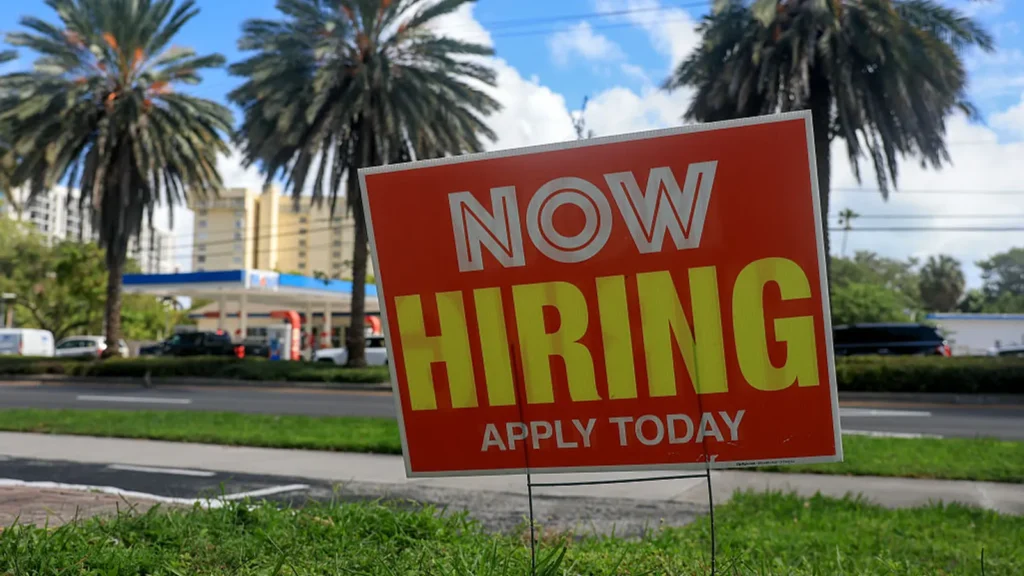
The "Now Hiring" sign prominently displayed outside a business in Miami, Fla., in October 2025, serves as a visual reminder of the ongoing demand for talent, a demand that is influencing these shifts in hiring priorities. With unemployment rates generally low in many sectors and a competitive job market, employers are often forced to look beyond perfect resumes. They are seeking individuals who can grow with the company, contribute positively to the work environment, and embody the company’s values.

This trend has several implications for both employers and job seekers. For companies, it necessitates a re-evaluation of their recruitment processes. Interview techniques may shift from purely technical questions to behavioral assessments designed to uncover personality traits, work ethic, and cultural fit. Assessment tools might incorporate psychological evaluations or situational judgment tests. Furthermore, it places a greater emphasis on post-hire training and development, as employers are seemingly more willing to invest in bridging skill gaps if the foundational personality is deemed suitable.
For job seekers, the message is clear: while skills remain important, demonstrating a strong, adaptable, and positive personality is paramount. This might involve highlighting experiences that showcase teamwork, problem-solving abilities, and resilience during interviews. Crafting compelling personal statements that reflect one’s character and cultural alignment will become increasingly crucial.
However, this emphasis on personality is not without its potential pitfalls. Critics argue that an overreliance on "cultural fit" can inadvertently lead to a lack of diversity, as hiring managers might unconsciously favor candidates who are similar to existing employees. There is also the risk of subjective bias in assessing personality, which can be harder to quantify and objectively evaluate than technical skills. Therefore, while valuing personality, organizations must also implement robust, structured interview processes and diverse hiring panels to mitigate bias and ensure a truly inclusive approach to talent acquisition. The balance between personality and skills remains a delicate act, but the survey indicates a strong leaning towards the former in the mid-2020s.
Broader Industry Implications and Trends
The collective insights from Williams-Sonoma, Ernst & Young, and the Express Employment Professionals survey converge to highlight several overarching themes defining the contemporary HR landscape. These events, occurring in the run-up to Labor Day 2026, collectively signal a more human-centric, adaptable, and strategically focused approach to human capital management.
The Intersection of Compensation, Skills, and Culture
The actions of Williams-Sonoma and EY, while distinct in their mechanisms, both underscore the increasing strategic importance of human capital. Williams-Sonoma’s $10 million contribution to employee 401(k)s demonstrates a direct, financial recognition of employee effort and loyalty, fostering a sense of shared success. This kind of initiative contributes significantly to a positive organizational culture, where employees feel valued beyond their immediate tasks. It reflects a growing understanding that financial well-being is a critical component of overall employee satisfaction and retention.
EY’s $100 million investment in "future-focused skills" similarly speaks to the strategic imperative of continuous learning and development. By directly linking skill acquisition to rewards, EY is not only addressing the immediate skills gap but also cultivating a culture of innovation and adaptability. This proactive approach to skill development is essential for maintaining competitiveness in fast-evolving sectors and ensures that employees are equipped for future roles, not just current ones. Both companies are demonstrating that investing in people, whether through direct financial rewards or through skill-building opportunities, yields significant returns in terms of productivity, innovation, and long-term organizational health.
The Express Employment Professionals survey adds another layer to this dynamic by highlighting the crucial role of personality and cultural fit in hiring. This suggests that while compensation and skill development are vital for retaining and growing talent, the initial selection process is increasingly prioritizing inherent traits and interpersonal abilities. An employee with the "right personality" can absorb new skills and thrive within a supportive culture, making them a more valuable long-term asset. This confluence of fair compensation, continuous skill development, and a strong cultural fit forms a robust framework for modern talent management.
The Future of Work and Human Capital Investment
These developments are not isolated incidents but rather symptomatic of broader trends shaping the future of work. The increasing speed of technological change, the demand for agility in business operations, and the evolving expectations of the workforce are all pushing organizations to rethink their strategies. Companies are recognizing that their human capital is their most valuable asset, requiring continuous investment and strategic nurturing.

The emphasis on "future-focused skills" is a direct response to automation, artificial intelligence, and digital transformation. As routine tasks are automated, the demand for uniquely human skills – creativity, critical thinking, complex problem-solving, and emotional intelligence – intensifies. Investing in these areas is not just about staying relevant but about pioneering new possibilities.
Moreover, the willingness of companies like Williams-Sonoma to share unexpected financial gains with employees reflects a growing awareness of the importance of employee well-being and equitable practices. In an era of increased scrutiny on corporate responsibility and income inequality, such actions can significantly bolster a company’s reputation and foster deeper trust with its workforce.
The Role of HR in Navigating Change
Human Resources professionals find themselves at the forefront of these transformations. They are tasked with designing and implementing compensation strategies that are fair and motivating, developing comprehensive learning and development programs that address future skill needs, and crafting recruitment processes that identify both technical proficiency and crucial personality traits. HR is no longer merely an administrative function but a strategic partner critical to the organization’s success, guiding the adaptation to new economic realities and technological shifts. The decisions made by companies today in these areas will profoundly shape their resilience, innovation capacity, and overall success in the coming decade.
A Moment of Reflection: Labor Day and Work Culture
Amidst these weighty discussions about corporate strategy and employee welfare, HR Dive offered a lighter, yet equally insightful, perspective on the world of work. As Labor Day weekend approached, the publication compiled a list of 22 work-related songs for readers to enjoy. This curated playlist, designed for a holiday dedicated to the social and economic achievements of American workers, provided a cultural lens through which to view the daily grind and aspirations of the workforce.
The inclusion of such a list, while seemingly trivial compared to multi-million dollar investments, serves a significant purpose. It acknowledges the human element of work, the emotions, experiences, and cultural touchpoints that define our professional lives. Labor Day, observed annually on the first Monday of September, is a time for rest and recognition of workers’ contributions. A playlist of work-themed songs, whether celebrating the joys of a job well done or commiserating with the struggles of the daily commute, taps into the shared human experience of employment.
In an increasingly demanding work environment, where discussions often revolve around productivity, efficiency, and skill gaps, moments of cultural connection and lighthearted reflection are crucial for employee well-being. Such initiatives, even small ones, contribute to a positive work culture by acknowledging the universal experiences of the workforce. They offer a reminder that behind the numbers and strategic investments are individuals whose lives are deeply intertwined with their work, and whose contributions deserve both serious recognition and moments of joyous, or even reflective, celebration.
Conclusion
The week leading up to Labor Day 2026 presented a compelling narrative of a human resources landscape in active transformation. Williams-Sonoma’s generous allocation of tariff refunds to employee 401(k)s, Ernst & Young’s strategic $100 million investment in future-focused skills, and the Express Employment Professionals survey highlighting the primacy of personality in hiring decisions collectively point towards a more employee-centric, skills-driven, and culturally attuned approach to talent management. These developments underscore a growing corporate understanding that sustained success in a rapidly evolving global economy hinges not just on financial capital or technological prowess, but fundamentally on a valued, skilled, and engaged human workforce. As companies navigate future challenges, the emphasis on robust compensation, continuous learning, and a supportive organizational culture will undoubtedly remain paramount, shaping the contours of the workplace for years to come.






