The contemporary business environment is characterized by unprecedented volatility, a reality that profoundly impacts leadership paradigms. As artificial intelligence accelerates its integration into every facet of organizational life and global political landscapes undergo seismic shifts, the fundamental questions surrounding effective leadership demand rigorous examination. This analysis delves into the critical transformations redefining what it means to lead in the 21st century, drawing upon decades of research and the latest insights into the future of management.
Historically, leadership theory has been a fertile ground for exploration, yielding influential figures and distinct models. From the foundational principles of operational efficiency espoused by Peter Drucker, whose seminal work "The Effective Executive" remains a cornerstone of management thought, to the command-and-control philosophies that defined the era of figures like Jack Welch, a consistent evolution in leadership approaches has been observed. More recent historical iterations include the emphasis on servant leadership, popularized by figures such as Howard Schultz, who championed a people-centric approach, and the "first principles" thinking championed by innovators like Elon Musk, who seeks to deconstruct complex problems to their fundamental truths. However, in the face of today’s multifaceted challenges, the search for a definitive, universally applicable leadership model has become increasingly complex. While core leadership functions—setting direction, defining mission, and aligning people—remain constant, the behavioral underpinnings are undergoing a radical metamorphosis.
The Rise of the "Voluntary Army": A Paradigm Shift in Employee Engagement
Perhaps the most profound alteration in the leadership landscape over the past half-century is the "decoupling" of the employee from the traditional organizational structure. Historically, a hierarchical, boss-subordinate dynamic, deeply ingrained from the industrial age, allowed leaders to issue directives with a high degree of compliance. This model, which underpinned much of corporate HR practice for decades, is now demonstrably obsolete.
Today’s workforce operates more akin to a "voluntary army." This metaphor encapsulates a fundamental shift where employees, contingent workers, and even AI-powered collaborators are no longer passive recipients of commands. Instead, they are active participants who "opt in" daily, driven by a complex interplay of personal needs, professional aspirations, and evolving challenges. This necessitates a recalibration of power dynamics, moving away from the brittle levers of authority and hierarchy towards something far more intangible yet potent: trust.
The cultivation of trust has emerged as the paramount leadership imperative. This is achieved through consistent clarity of mission, genuine empowerment and development of individuals, and a sincere openness to novel ideas. In an era of hyper-specialization, where individual expertise can often surpass that of leadership, empowering these voices and valuing their insights is not merely beneficial; it is essential for organizational survival and innovation. The ongoing "decoupling," amplified by the rapid advancements in AI, has brought this dynamic to a critical juncture. A single highly skilled engineer or a perceptive professional can possess the insights to revolutionize a business model, underscoring the need for leaders to actively listen, engage, and empower every member of their organization.
From Perfection to Iteration: Embracing Imperfection in the Age of AI
Another significant transformation is the shift from an emphasis on "doing it well" to the imperative of "doing it now." The rapid proliferation of AI technologies, characterized by their novelty, power, and inherent non-determinism—meaning their outcomes can be unpredictable—presents a unique leadership challenge. Organizations are acutely aware that failing to adopt AI risks obsolescence, leading to a natural inclination to meticulously "figure it out and do it right" before implementation.

However, as observed in recent engagements with leading corporations such as IBM, Standard Chartered, and Mastercard, the pursuit of a "perfect" solution often proves to be a significant impediment, creating new and amplified risks. The industrial age model favored launching flawless 1.0 versions. In contrast, the AI age demands a comfort with imperfection. Companies like IBM, for instance, successfully transitioned from Workday to SuccessFactors within 18 months, acknowledging that the new system was not perfect but functional enough to drive progress. Similarly, Microsoft is actively deploying Copilot agents across its HR functions globally, even as its full capabilities and use cases are still being discovered and refined. The luxury of "waiting until it’s done" is no longer a viable strategy.
Leaders must cultivate an understanding that progress is rarely a linear path from point A to point B. Instead, it is an iterative process involving experimentation, inevitable mistakes, and continuous improvement. The leader’s role in this new paradigm is to maintain organizational focus on overarching objectives and customer needs while simultaneously fostering an environment where teams are empowered to learn from failures. This requires a deliberate shift in mindset, moving from a risk-averse culture to one that embraces calculated experimentation.
The Resurgence of Trust, Ethics, and Inclusion: Anchors in a Turbulent Sea
The third critical shift is a renewed and intensified focus on foundational values: ethics, morality, and inclusion. In an era where public discourse is often saturated with divisive narratives, exemplified by the fallout from leaked documents and intense political polarization, the proliferation of misinformation, frequently amplified by AI, makes discerning truth increasingly challenging.
Leaders are now tasked with actively counteracting this trend. The rationale is deeply rooted in human psychology: the vast majority of individuals possess an inherent ethical compass and a fundamental desire to trust the organizations they join. When leaders compromise their integrity, bend rules, or engage in unfair practices, the consequences extend far beyond legal ramifications. Such actions deeply erode the human spirit, diminishing motivation, engagement, and loyalty. As research on organizational culture consistently demonstrates, the unquenchable power of the human spirit is not just a philosophical concept but a profound driver of business success.
The Plummeting Trust in Institutions: A Growing Leadership Imperative
The erosion of public trust in institutions presents a stark backdrop against which modern leadership must operate. In the United States, for example, a dramatic decline in confidence has been observed. While approximately 80% of Americans expressed trust in their government in the 1960s, this figure has dwindled to a mere 17% in recent years, according to Pew Research Center data. This precipitous drop signifies a substantial vacuum that leaders are now compelled to fill.
This growing deficit of trust necessitates a proactive leadership approach centered on authenticity and transparency. Organizations must demonstrate a commitment to their stated values, not just in policy but in practice. This involves cultivating an environment where open dialogue is encouraged, feedback is actively sought and acted upon, and decisions are communicated with clarity and honesty. The contemporary leader must serve as a beacon of integrity, rebuilding and reinforcing trust through consistent, ethical conduct.
Timeline of Trust Erosion (Illustrative)
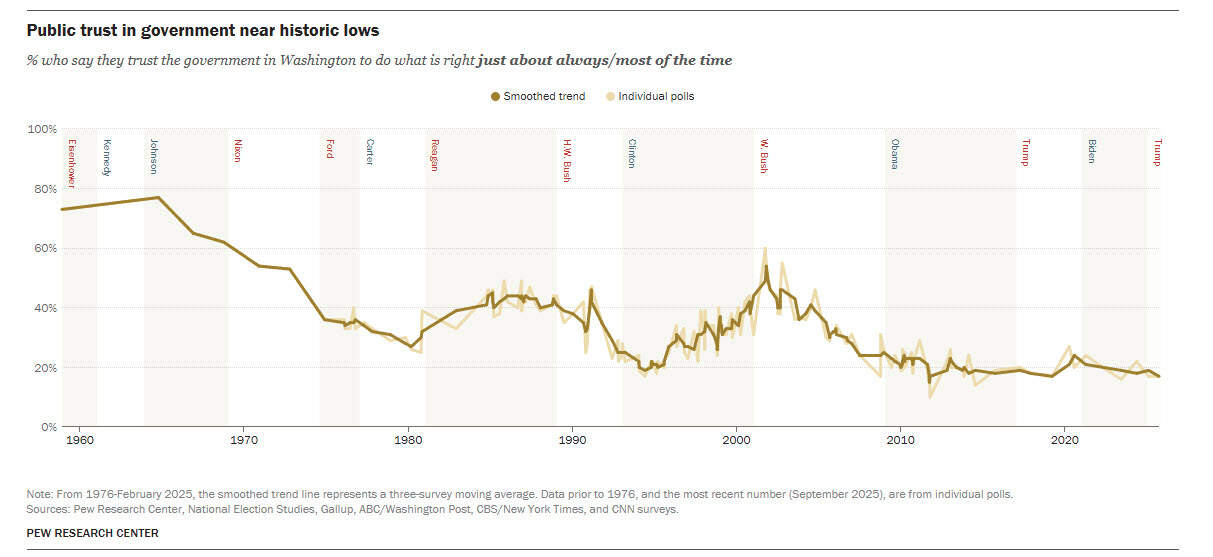
- Mid-20th Century (1950s-1960s): High levels of institutional trust, with significant public confidence in government, corporations, and media.
- Late 20th Century (1970s-1990s): Gradual decline in trust fueled by events such as the Vietnam War, Watergate, and economic uncertainties.
- Early 21st Century (2000s-2010s): Accelerated erosion of trust due to factors including the 2008 financial crisis, political polarization, and the rise of social media.
- Present Day (2020s): Record lows in institutional trust across many developed nations, exacerbated by the COVID-19 pandemic, the spread of misinformation, and ongoing geopolitical instability.
Rebuilding Trust Through Action and Values
The question of how to effectively rebuild and sustain trust in this environment is paramount. The answer lies in a deliberate and consistent focus on core principles. Leaders must actively listen to their people, remaining steadfast in their commitment to values and common sense. This involves courageously speaking truth to power, taking principled stances on critical societal and organizational issues, and fostering an inclusive environment where diverse perspectives are not only tolerated but actively sought and valued. The demonization of initiatives like Diversity, Equity, and Inclusion (DEI) in some quarters does not diminish the fundamental importance of these values; rather, it highlights the critical need for leaders to champion them with renewed conviction.
The Paramount Importance of Leadership Development
In conclusion, the capacity of an organization to adapt and thrive in the face of ongoing disruption is intrinsically linked to the quality of its leadership. Leaders who can effectively drive change, energize their teams, and steadfastly uphold core values are the most valuable assets any organization can possess. The current era demands a fundamental re-evaluation of leadership models.
The development of such leaders is no longer a secondary concern but a strategic imperative. Organizations must invest in robust leadership development programs that equip individuals with the skills to navigate complexity, foster trust, embrace iteration, and champion ethical conduct. This includes fostering competencies in areas such as:
- AI Literacy and Integration: Understanding how to leverage AI ethically and effectively to augment human capabilities, not replace them.
- Emotional Intelligence and Empathy: Building strong relationships based on understanding and responsiveness to the needs of a diverse workforce.
- Agile Decision-Making: Developing the capacity to make timely decisions in uncertain environments, embracing iterative learning.
- Ethical Reasoning and Communication: Upholding integrity and transparency in all organizational dealings.
- Inclusion and Belonging: Creating environments where all individuals feel valued, respected, and empowered to contribute their best.
Analysis of Implications:
The observed shifts in leadership dynamics carry significant implications for organizational strategy and human capital management. Companies that fail to adapt their leadership approaches risk facing increased employee disengagement, reduced innovation, and a diminished capacity to attract and retain top talent. Conversely, organizations that embrace these new leadership imperatives are likely to foster more resilient, agile, and ethical cultures, positioning them for sustained success in an increasingly unpredictable global landscape.
The emergence of AI tools, such as Galileo, designed to assess and develop leadership capabilities, signifies a technological response to these evolving needs. These platforms, trained on extensive datasets of leadership research and case studies, offer personalized development pathways, aiming to equip leaders with the competencies required for the modern era. Furthermore, the upcoming Irresistible 2026 conference, a significant industry event, is poised to unveil new offerings in leadership development, underscoring the sustained focus and investment in this critical area.
Ultimately, the future of leadership hinges on its ability to adapt, to inspire trust, and to empower individuals in an environment defined by constant change. The journey from command-and-control to a trust-based, iterative, and values-driven approach is not merely a trend; it is the essential evolution required for enduring success.