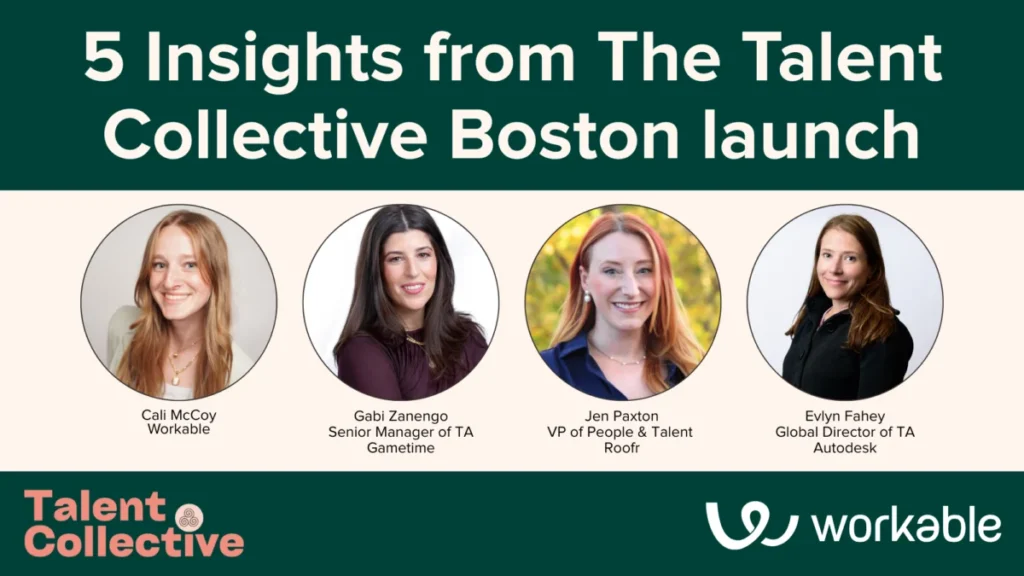
The inaugural Boston chapter launch of The Talent Collective, a prominent community for talent acquisition leaders, convened a distinguished assembly of human resources and recruitment professionals. Hosted in partnership with Workable, a global leader in hiring software, the event centered on a pivotal challenge facing the modern talent landscape: navigating rapid technological advancements, particularly in artificial intelligence, while preserving the essential human element of recruitment. The gathering underscored Boston’s growing prominence as a hub for innovation not only in technology but also in strategic human capital management, drawing participants from diverse industries eager to share insights and collaborative solutions.
The event, which took place at a vibrant venue in Boston, featured a dynamic panel discussion moderated by Cali McCoy of Workable. The panel comprised three influential leaders known for their extensive experience in shaping talent strategies across various industries and company scales. While specific names were not detailed, the collective expertise represented a broad spectrum of challenges and innovative approaches, from agile startups to established corporations. Their candid and lively conversation quickly revealed a surprising consistency in the hurdles faced by talent acquisition (TA) teams today, painting a comprehensive picture of the evolutionary trajectory for hiring practices well into 2026 and beyond. This convergence of perspectives highlighted that despite differing contexts, the core issues and strategic imperatives for TA professionals are remarkably aligned.
The discussions illuminated five critical trends reshaping the recruitment ecosystem, each demanding a nuanced approach that balances technological leverage with human judgment.
The Evolving Landscape of Talent Acquisition: Key Trends and Challenges
1. Hyper-Specialized Roles Reshaping the Recruiter Playbook
The contemporary job market has undergone a significant transformation, moving decisively away from the era of high-volume, generalized hiring towards a demand for deeply niche and often hybrid-skill roles. This shift signifies a departure from the traditional approach where organizations sought "more of the same" to fill numerous identical positions. Instead, companies are now actively hunting for candidates possessing unique combinations of competencies – for instance, individuals adept in technical execution alongside creative problem-solving, or those fluent in AI principles coupled with strategic business acumen. This evolution is driven by increasingly complex business environments, technological advancements requiring specialized skill sets, and a push for innovation that demands cross-functional expertise.
This profound recalibration has necessitated a fundamental shift in how TA teams interact with hiring managers. Recruiters are now tasked with grounding expectations in the tangible reality of today’s talent pool. The prevailing message from TA to hiring managers is clear: while excellence is attainable, the elusive "unicorn" candidate, possessing every conceivable skill without compromise, remains a myth. This requires more sophisticated talent mapping, a deeper understanding of specific departmental needs, and the ability to articulate realistic profiles of ideal candidates. According to recent LinkedIn data, the demand for hybrid skills has surged by over 30% in the past five years, indicating that recruiters must evolve from generalists to specialized talent consultants, capable of identifying and attracting individuals with highly specific, often multidisciplinary, qualifications. The implication is a more strategic, consultative role for recruiters, moving beyond simple candidate sourcing to becoming true talent advisors who can shape job descriptions and manage expectations effectively.
2. Exploding Candidate Volume Overwhelming TA Teams
Paradoxically, even as the demand for roles becomes narrower and more specialized, the sheer volume of applicants per requisition has skyrocketed. Instances of job postings attracting upwards of 1,000 applications are no longer anomalies but increasingly common occurrences, particularly for remote or high-profile positions. This dramatic surge in candidate volume can be attributed to several factors, including economic uncertainties prompting more individuals to seek new opportunities, the ease of applying online through aggregated job boards, and the widespread adoption of remote work opening up national and international talent pools.
This explosion in application numbers is creating significant strain on TA teams, manifesting in several critical issues:
- Recruiter Burnout: Sifting through hundreds or thousands of resumes for a single role is an arduous, time-consuming, and often demotivating task, leading to increased stress and burnout among recruitment professionals.
- Slower Time-to-Hire: The sheer volume inevitably prolongs the initial screening phase, extending the overall time it takes to fill critical positions. This delay can have significant business implications, from lost productivity to missed market opportunities.
- Compromised Candidate Experience: With limited resources, TA teams struggle to provide timely feedback or even acknowledgements to the vast majority of applicants, leading to a negative perception of the employer brand. A 2023 study by the Talent Board found that nearly 60% of candidates who had a poor experience would discourage others from applying to that company.
- Increased Risk of Missing Top Talent: In the deluge of applications, genuinely qualified candidates might inadvertently be overlooked due to superficial screening methods or the sheer volume making individual review impractical.
These challenges are rapidly accelerating the imperative for ethical and transparent AI support in the initial screening phases. AI-powered screening tools, when properly configured and continuously audited for bias, can efficiently filter applications based on predefined criteria, highlight best-fit candidates, and automate initial communications. The emphasis, however, remains on transparent deployment and ethical considerations, ensuring that AI augments human decision-making rather than replacing it, and that fairness and equity are maintained throughout the process. The objective is to leverage AI to manage the logistical burden, allowing human recruiters to focus on the qualitative aspects of candidate engagement and assessment.
3. Candidate Fraud Emerging as a Major Threat to TA Integrity
Among the most universally acknowledged concerns at the Boston launch event, candidate fraud garnered unanimous nods of agreement, signifying its pervasive and growing threat to the integrity of the hiring process. TA teams across industries are increasingly finding themselves on the front lines of a sophisticated battle against various forms of deceptive practices. This rise in fraud can be linked to the increased prevalence of remote work, making it harder to verify identities in person, and the proliferation of online tools that facilitate sophisticated deception.
The types of fraud encountered are diverse and evolving:
- Fabricated Resumes and Credentials: Candidates providing entirely false or significantly exaggerated work histories, educational qualifications, and certifications.
- Imposter Candidates: Individuals applying for positions using stolen identities or posing as someone else during interviews. This can range from a skilled individual taking an interview on behalf of a less qualified candidate to sophisticated identity theft.
- Deepfakes and AI-Generated Content: The alarming emergence of deepfake technology allows candidates to create convincing, yet entirely artificial, video or audio during virtual interviews, making identity verification exceedingly difficult. Similarly, AI can generate highly polished, but fraudulent, portfolios or written samples.
- Proxy Interviews: A third party conducting an interview on behalf of the actual applicant, often using advanced technological means to disguise the deception.
- Location Misrepresentation: Candidates falsely claiming to reside in a specific geographic area to meet job requirements, particularly for roles with location-based restrictions or tax implications.
In response to these escalating threats, leaders are adopting increasingly creative and robust tactics to protect both the candidate experience and the organizational integrity. These measures include:
- IP Address Checks and Location Validation: Verifying a candidate’s geographic location during virtual interactions to ensure alignment with stated residency or job requirements.
- Advanced Identity Verification Platforms: Utilizing biometric scanning, multi-factor authentication, and secure document verification processes to confirm candidate identities.
- Enhanced Background Checks: Going beyond standard checks to include social media scrutiny, digital footprint analysis, and professional reference verification with a critical eye.
- Structured Interviewing with Behavioral Questions: Designing interviews that probe deeply into past experiences and behaviors, making it harder for imposters to provide convincing answers without genuine experience.
- Integrated Video Interviewing Solutions: Using platforms with built-in fraud detection capabilities, such as facial recognition and voice analysis, to flag suspicious activity during virtual interviews.
The implications of candidate fraud are severe, ranging from financial losses associated with mis-hires to reputational damage, compromised data security, and potential legal liabilities. A recent report by HireRight indicated that nearly 85% of employers uncovered a misrepresentation on a resume or job application, highlighting the widespread nature of the problem. Protecting against fraud is becoming a non-negotiable component of a secure and effective talent acquisition strategy.
4. AI Adoption Accelerating, But Maturity Varies Widely
The integration of artificial intelligence into talent acquisition processes is undoubtedly accelerating, yet the Boston discussion made it clear that companies are "somewhere different on the map" regarding their AI maturity. This spectrum ranges from early experimentation to sophisticated, integrated deployments. This variance is often due to differences in organizational size, industry regulations, technological infrastructure, and leadership appetite for risk.
Many forward-thinking organizations are experimenting rapidly with AI across various facets of the recruitment lifecycle:
- Automated Resume Screening and Candidate Matching: AI algorithms are used to analyze resumes against job descriptions, identifying key skills and experiences, and ranking candidates for efficiency.
- Chatbot Assistants for Candidate Engagement: AI-powered chatbots handle initial candidate inquiries, answer FAQs, and guide applicants through the application process, providing 24/7 support.
- Interview Scheduling Optimization: AI tools automate the complex process of coordinating interview times across multiple calendars, significantly reducing administrative burden.
- Personalized Candidate Outreach: AI assists in crafting tailored communication messages to candidates, improving engagement and response rates.
- Predictive Analytics for Retention and Performance: Beyond hiring, some advanced teams use AI to predict candidate success and potential flight risk post-hire.
However, this rapid adoption is not without its hurdles. Many organizations, particularly those in highly regulated industries or with conservative legal departments, are encountering significant legal and compliance friction. Concerns revolve around algorithmic bias, data privacy (e.g., GDPR, CCPA implications), transparency in decision-making, and the potential for discriminatory outcomes.
One standout insight from the discussion offered a transformative approach to navigating this friction: instead of asking legal teams, "Can we do this?" (which often elicits a categorical "no" due to risk aversion), TA leaders should reframe the question to, "Under what conditions would this not be allowed?" This proactive framing shifts the conversation from absolute prohibition to risk mitigation and controlled experimentation. It encourages legal and compliance teams to collaborate on defining boundaries, safeguards, and ethical guidelines, thereby enabling responsible innovation rather than stifling it. This approach reframes experimentation as controlled and strategic, rather than inherently risky, fostering a culture of informed adoption.
The overarching principle guiding AI adoption, universally agreed upon by the assembled leaders, is that "AI should eliminate admin, not become the decision maker." AI is viewed as an augmentation tool, designed to streamline repetitive tasks, provide data-driven insights, and free up recruiters to focus on the human-centric aspects of their roles – building relationships, conducting in-depth interviews, and making nuanced judgments. The human element, therefore, remains paramount in the final hiring decision, ensuring ethical oversight and empathetic candidate engagement.
5. Candidate Experience Moving Toward Continuous Feedback
The concept of candidate experience is undergoing a fundamental re-evaluation, shifting from a reactive, post-process assessment to a proactive, continuous feedback loop. Traditionally, organizations relied on a single end-of-process survey, often administered after a candidate was either hired or rejected. While valuable, this approach typically captured feedback when emotions were at their peak – either elation or disappointment – potentially skewing responses and making it difficult to pinpoint specific friction points in real-time.
The new paradigm advocates for "quick, stage-by-stage check-ins" throughout the recruitment journey. This involves implementing brief, targeted feedback mechanisms at various critical junctures, such as after an application submission, following an initial screening call, or after a panel interview. These micro-surveys or brief pulse checks are designed to surface friction earlier, allowing TA teams to identify and address issues while candidates are still actively engaged in the process.
The benefits of this continuous feedback model are substantial:
- Real-Time Issue Spotting: Instead of discovering weeks later that communication was unclear, interviewers were inconsistent, or process delays were excessive, TA teams can now identify these problems as they occur.
- Agile Process Adjustments: With immediate feedback, recruiters can make real-time adjustments to communication strategies, interview guides, or logistical processes, improving the experience for subsequent candidates.
- Enhanced Communication Clarity: Early feedback can highlight ambiguities in job descriptions or interview questions, prompting clarifications that benefit all candidates.
- Stronger Employer Branding: Proactive engagement and responsiveness to feedback demonstrate a company’s commitment to respecting candidates, enhancing its reputation as an employer of choice.
It is acknowledged that not every candidate will respond to every check-in, and that is perfectly acceptable. The objective is not to achieve a 100% response rate, but rather to gather "early signals" – qualitative and quantitative data points that provide actionable insights. These signals enable TA teams to refine and optimize the recruitment process continuously, ensuring a more positive, efficient, and equitable experience for all applicants. This iterative approach to candidate experience aligns with agile methodologies, allowing for constant improvement and adaptation in a rapidly changing talent market. According to recent industry benchmarks, companies that prioritize continuous feedback see an average 15% improvement in candidate satisfaction scores and a 10% reduction in time-to-hire.
The Bottom Line: Balancing Innovation with Humanity
The comprehensive discussions at The Talent Collective Boston launch underscored a singular, undeniable truth: the field of hiring is currently in the midst of its most dramatic and transformative shift in a decade. The confluence of technological acceleration, evolving job market demands, and heightened ethical considerations is fundamentally reshaping how organizations identify, attract, and onboard talent.
The consensus from the Boston event was clear and resounding: while artificial intelligence and automation will undoubtedly transform and optimize the procedural aspects of recruitment, it is the enduring human element that will continue to define the candidate experience and ultimately drive successful hiring outcomes. This means that technology should serve as an enabler, freeing up human recruiters to focus on empathy, relationship-building, and nuanced judgment.
As the complexity of the talent landscape continues to grow, the true competitive advantage will belong to those talent acquisition teams capable of achieving a delicate yet powerful balance. This balance encompasses a harmonious integration of:
- Innovation: Embracing new technologies and methodologies to streamline processes and gain efficiency.
- Integrity: Upholding ethical standards, ensuring fairness, transparency, and honesty in all interactions, particularly concerning data privacy and AI bias.
- Automation: Leveraging AI and tools to eliminate repetitive administrative tasks, allowing recruiters to focus on strategic activities.
- Empathy: Maintaining a human-centric approach, understanding candidate needs, providing supportive experiences, and fostering genuine connections.
- Speed: Adapting quickly to market changes, optimizing processes to reduce time-to-hire, and responding promptly to candidates.
- Substance: Focusing on the quality of hires, the long-term impact on the organization, and the strategic value TA brings to the business.
These qualities – innovation, integrity, automation, empathy, speed, and substance – were not merely theoretical concepts discussed by the panel; they were demonstrably present in the collective spirit and shared vision of the people leaders gathered in the room. The Talent Collective Boston launch not only provided a platform for critical dialogue but also solidified a shared commitment among its members to navigate this complex future by championing a balanced, human-centered approach to talent acquisition. The insights gleaned from this event are poised to inform best practices and strategic planning for TA professionals across the region and beyond, emphasizing that the future of hiring is intrinsically linked to the thoughtful integration of technology with unwavering human values.