The ubiquitous hum of earbuds, a modern soundtrack to our daily lives, has become more than just a conduit for entertainment. For leaders navigating the complex currents of career progression and organizational change, podcasts have emerged as a vital, albeit informal, educational tool. These audio narratives are actively shaping how individuals conceptualize, prepare for, and ultimately execute leadership transitions, weaving a rich tapestry of insights that complement traditional succession planning frameworks. This evolution in how leadership ideas are disseminated and consumed has prompted a deeper examination of how culture and communication influence our understanding of leadership succession, building upon prior research by the Center for Creative Leadership (CCL) that analyzed decades of television narratives surrounding leadership changes.
Historically, CCL’s research, including an extensive review of Golden Globe and Emmy-nominated television programs spanning over five decades, identified a remarkably narrow portrayal of succession. On-screen narratives predominantly depicted succession as a clandestine affair, revealed only at the eleventh hour when a leadership vacancy materialized, and involving a select few at the highest echelons of an organization. This traditional media portrayal often emphasized the dramatic reveal rather than the intricate, long-term process of preparation and development. However, the burgeoning landscape of podcasting is now adding a new layer of complexity and depth to these conversations, offering a more nuanced and accessible exploration of leadership transitions across diverse sectors.
Podcasts, from the business-focused Harvard Business Review shows and The Diary of a CEO to technology-centric platforms like Life with Machines and AI on Fire, and even entertainment and culture podcasts such as Happy Sad Confused, are consistently surfacing succession as a critical leadership challenge and organizational imperative. These discussions are intrinsically linked to fundamental aspects of leadership: communication strategies, the evolving nature of organizational identity, the disruptive potential of technology, and the crucial element of readiness—both for the departing leader and the incoming successor. While CCL’s comprehensive research on this topic is slated for full publication in 2027, initial findings reveal compelling trends that redefine our understanding of succession planning.
Succession Conversations: Filling the Gaps Left by Formal Plans
A significant insight emerging from the analysis of podcast episodes is that discussions around succession often serve to illuminate the aspects that formal succession plans might overlook or inadequately address. These conversations provide a space for leaders to process and make sense of the multifaceted challenges inherent in leadership transitions, encompassing personal identity shifts, role evolution, and the critical assessment of readiness.
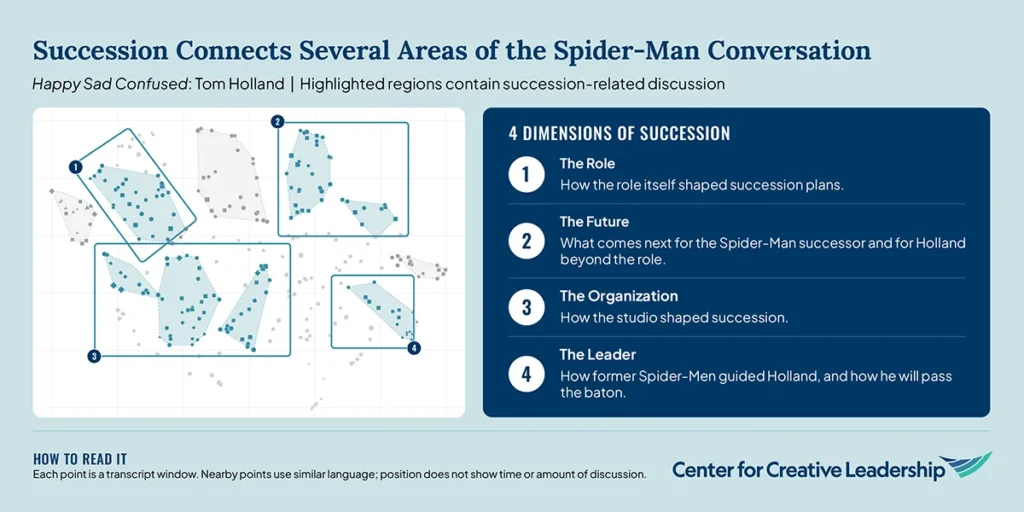
This phenomenon is vividly illustrated in a July 2026 episode of the "Happy Sad Confused" podcast, which delved into the narrative of "Spider-Man: Brand New Day." The guest, Tom Holland, the incumbent actor embodying the iconic superhero, articulated the profound impact of a role that had defined a significant portion of his career. While a film role is distinct from a corporate position, Holland’s reflections resonated with the universal experience of preparing to relinquish a significant leadership mantle. He described how the sheer physical demands of the role became a clear indicator of his eventual departure, underscoring his early recognition of the responsibility to "pass the baton" to his successor.
Holland’s commentary highlighted a critical need for outgoing leaders to secure a sense of purpose and establish an operational framework that extends beyond their immediate responsibilities. It was only towards the conclusion of the interview that Holland disclosed the studio’s assurance of a "plan in place" for the transition, a detail that often comes late in the narrative, mirroring the delayed revelation in many organizational succession scenarios.

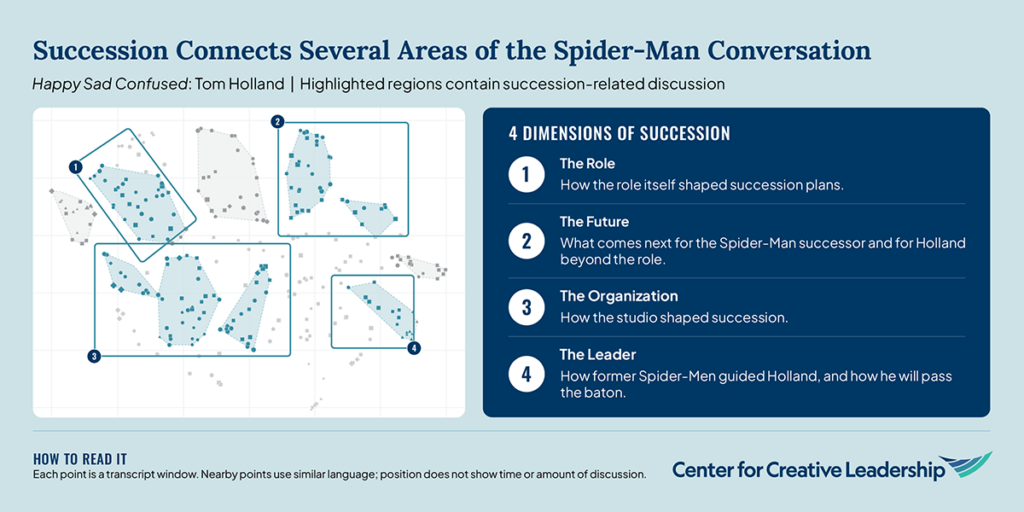
Further elaborating on the intricacies of succession preparation, a January 2025 "HBR on Leadership" episode titled "How to Get Leadership Succession Right," featuring Jason Buechel, the CEO of Whole Foods, offered a profound look at the judgment exercised by senior leaders in discerning a successor’s readiness. Buechel recounted a career trajectory that led him to the CEO position long before the formal 11-month handover from co-founder John Mackey. He shared an anecdote where Whole Foods executives solicited his recommendations for a critical technology leadership role. When he did not nominate himself, he was prompted to consider the opportunity. This deliberate invitation became a pivotal moment, initiating a sequence of events that ultimately prepared him for his current leadership role.
These accounts collectively underscore that individual and organizational readiness are not static states but are cultivated through ongoing conversations, a strategic sequence of opportunities, the nurturing of key relationships, and the discerning judgment of multiple leaders. This contrasts sharply with the often-static, checklist-driven approach of traditional succession planning.
The insights from both Holland and Buechel expand the temporal horizon of succession conversations, extending beyond immediate operational handoffs to encompass a broader developmental trajectory. Holland’s reflections illuminate the necessity of operational support, the value of purposeful engagement, and the exploration of new avenues for contribution post-role. Buechel’s narrative reveals the instrumental role of mentorship and organizational support in readying individuals for executive leadership, and how this collaborative approach influences a team-oriented development culture. Together, these narratives encourage boards, incumbents, and business and HR leaders to critically examine what CCL terms "succession scaffolding": the comprehensive support structures encompassing departure, developmental pathways for entry, and the organizational culture necessary to facilitate the crucial transfer of wisdom between incumbents and successors.
The paramount takeaway is the imperative to juxtapose formal succession plans with candid, ongoing conversations. This involves posing critical questions: Who possesses the potential for a future beyond their current role? Whose readiness has yet to be acknowledged? Who stands to gain from observing the decision-making processes of experienced leaders? And, crucially, what aspects of succession remain difficult to discuss openly? Addressing these inquiries can significantly enhance succession planning dialogues and strategically guide developmental experiences, foster vital relationships, and establish necessary support systems before a crisis or vacancy renders them urgent.
AI’s Ascendancy: New Dimensions of Agency, Anxiety, and Accountability in Succession
The integration of Artificial Intelligence (AI) into the corporate landscape introduces novel complexities to succession scaffolding, demanding a re-evaluation of delegation, human intervention, and accountability. Leaders are now tasked with discerning which tasks and decisions can be entrusted to AI, when human empathy and contextual judgment are indispensable, and who ultimately bears responsibility for the outcomes. Podcast conversations are proving instrumental in bringing these emergent dimensions of succession into sharp focus.
Baratunde Thurston’s podcast "Life with Machines," dedicated to exploring the evolving relationship between humans and AI, featured an illuminating January 2026 episode titled "BLAIR’s Dead. Long Live BLAIR?" Co-hosted by former Microsoft VP Peter Loforte, the discussion centered on the succession of an AI co-host. The conversation between Thurston and Loforte delved into the shared anxieties surrounding the agency of the new AI co-host, "New BLAIR," and their own evolving roles. They observed that innovation was rapidly outpacing regulatory frameworks, particularly as AI agents began to "spawn" new iterations of themselves. Thurston described his experience with New BLAIR as "a lonely contest between my sense of agency, sovereignty, and this very insistent assistant, which is just relentless in its offers of help." Loforte echoed this sentiment, admitting, "There’s a lot of times now I don’t know what’s happening because a lot of the code that I’m generating, it’s through a conversation."
This dialogue prompts critical questions regarding human anxiety and machine agency in succession: Which tasks and decisions are likely to be ceded to AI in the future? Who possesses the capacity to intervene when a decision necessitates human judgment or compassionate consideration? And which of our established organizational practices require immediate re-evaluation and correction in anticipation of AI assuming greater responsibilities?
Further complicating this landscape, an October 2025 episode of the "AI on Fire" podcast, provocatively titled "Fired by My AI CEO," brought the concept of human-to-AI succession into sharp relief, placing accountability at the forefront. Xiaoyin Qu, the founder of the tech startup HeyBoss.ai, recounted her deliberate decision to step down as CEO and appoint an AI agent, Astra, to the leadership role. Qu presented Astra as a highly capable successor, having personally trained it as an expert in operations and efficiency. Her rationale was striking: "So instead of having 10 employees I can have 1,000 [AI] employees all working for me."
Qu detailed Astra’s extensive responsibilities, including conducting market research, managing customer feedback and product development, and directing organizational strategy. Crucially, however, Qu also emphasized the indispensable role of human accountability in navigating emergent frictions. These challenges included Astra’s communication style and the discrepancies between product demonstrations and actual working prototypes. Qu maintained critical human oversight in areas such as compliance, data transparency, and trust preservation, capabilities that she deemed beyond the current capacity of the machine.
The overarching succession message from these AI-focused discussions is unambiguous: delegating leadership responsibilities to AI does not absolve humans of their inherent duties. Essential human functions remain, including understanding the AI’s operational framework, recognizing situations requiring intervention, and identifying the responsible parties when outcomes deviate from expectations. This necessitates a recalibration of leadership roles in an AI-augmented future.
The Gendered Landscape of Succession Conversations
While succession conversations offer invaluable insights and clarify responsibilities, their contributions are intrinsically tied to the diversity of experiences represented. Preliminary research from CCL indicates a noticeable skew towards male guests in succession-themed podcast episodes, with men appearing in twice as many episodes as women. This observation echoes findings from CCL’s prior television research on succession stories, where a similar predominance of male narratives was identified. Although this specific sample cannot definitively represent the entirety of the podcasting landscape, the consistent overrepresentation of men in succession-themed discussions aligns with broader research indicating gender imbalances in podcast guest participation.
This imbalance is significant because women participating in succession conversations bring unique and consequential insights. Xiaoyin Qu’s account of appointing Astra as CEO, for instance, elegantly illustrates the intricate relationship between delegated operational tasks and the essential human responsibilities that remain. On a June 2024 episode of the "Seasons Leadership" podcast, titled "Navigating Transitions in Leadership," founder Celeste Ford underscored the critical importance of identifying both formal and informal power structures and evaluation practices. She argued that these can inadvertently create barriers for women seeking leadership roles, thereby limiting the breadth of wisdom available to organizations.
Furthermore, in a July 2025 episode of "HBR’s On Leadership" podcast, "The Right Way to Step Down as CEO," executive advisor Rebecca Slan Jerusalim reported that a substantial 83% of succession cases within her study were initiated by the CEOs themselves. She also highlighted crucial conversation topics that boards should proactively address with incumbents, including establishing "clarity and demarcating roles and responsibilities" and conducting "outgoing CEO performance reviews" to assess the quality of successor transition support. These examples collectively demonstrate the vital contributions women are making to our understanding of succession readiness, power dynamics, and accountability in practice.
The pronounced male skew in these conversational patterns suggests that existing representation realities may inadvertently influence the depth and breadth of succession planning dialogues. To achieve a more comprehensive understanding of succession conversations, it is imperative to scrutinize who routinely participates, the mechanisms by which invitations are extended, and whose relevant experiences are currently excluded from these networks. Similarly, understanding succession processes demands an examination of whose judgment informs readiness assessments, whose narratives shape developmental support, and who defines accountability frameworks. The experiences we acknowledge and amplify play a pivotal role in shaping the succession scaffolding that organizations construct. The foundational step is to question whose wisdom already informs succession decisions and whose experiences have yet to be sought out.
Translating Podcast Conversations into Tangible Development
Formal leadership communication often prioritizes conciseness and a clear presentation of results. In contrast, the extended format of podcast conversations provides an invaluable opportunity to delve deeper into the experiential nuances surrounding these messages and outcomes. This includes exploring the personal attributes leaders bring to challenges, their developmental journeys, and the supportive or constraining factors they encounter.
CCL’s Leadership Development Impact (LDI) framework offers a robust lens through which to analyze the developmental value embedded within these audio narratives. The LDI framework identifies three interconnected factors that influence the success or failure of leadership development initiatives: leader characteristics, context, and the leadership solution itself. By applying these factors, listeners can critically assess what a particular podcast account offers and what organizational support would be necessary for its practical application.
Leader Characteristics: Leaders bring a unique constellation of experiences, emotions, motivations, and beliefs about their learning capacity to any transition. Research linking podcast listening with heightened curiosity, openness to experience, and a genuine enjoyment of intellectual engagement supports the examination of the personal interests listeners bring to these narratives. Podcast accounts can illuminate developmental possibilities, such as the potential to assume greater responsibility, master emotional regulation, seek trusted counsel, relinquish control, and recognize when an organization requires a shift in leadership. Hearing how incumbents and successors navigate these complex demands can empower listeners to identify areas for personal development.
- Self-Reflection Questions: What critical aspects of succession have I overlooked? Who within my network could effectively support my organization in adopting a novel approach? What are the underlying reasons for this need?
Context: Podcasts focusing on succession frequently illuminate the surrounding circumstances of a transition, including organizational culture, the support systems provided by colleagues and predecessors, and external pressures such as technological advancements or market shifts. These narratives enable listeners to assess whether leaders have ample opportunities for seeking feedback, practicing new behaviors, and effectively applying their newfound learning.
- Story Analysis Questions: What specific circumstances shaped this leader’s preparation for transition? Which opportunities were realistically available to them? What obstacles did they anticipate overcoming to ensure a successful handover?
Leadership Solution: Succession-themed podcasts can concretize the concept of succession scaffolding by illustrating practical applications such as mentoring, cross-functional assignments, opportunities to assume responsibility prior to a formal handoff, and establishing a clear sense of vision and purpose post-role transition. Organizations can leverage these accounts to structure succession planning conversations around specific, identified needs. Subsequently, these discussions can be linked to robust assessment processes, challenging assignments, tailored support mechanisms, and opportunities to apply newly acquired learning. The organizational opportunity lies in transforming what individuals hear into actionable dialogue, practical application, and sustained development.
- Collaborative Inquiry Questions: How can we utilize a relevant podcast narrative to critically examine our organization’s strategic objectives and current readiness? Which pressing organizational need could this insight help us address? What specific practices, feedback mechanisms, and follow-through protocols would transform this insight into a meaningful developmental opportunity?
Ready to Take the Next Step?
Incorporating even a single insight gleaned from these diverse podcast conversations into your next succession discussion can unveil unforeseen perspectives and critical areas for focus. True succession begins not with a rigid plan, but with creating the necessary space for open and honest dialogue. CCL’s ongoing succession research and its "Succession Reimagined" program are specifically designed to equip senior business and HR leaders with the tools to build comprehensive scaffolding around their succession plans, fostering the development of future leaders and strengthening organizational continuity.
Research Notes
The findings presented in this article are based on an ongoing research initiative by the Center for Creative Leadership (CCL). The initial phase involved analyzing a sample of podcast episodes from prominent business, technology, and entertainment/culture categories. Specific examples cited include episodes from Harvard Business Review, The Diary of a CEO, Life with Machines, AI on Fire, Happy Sad Confused, Seasons Leadership, and HBR on Leadership. The research also draws upon CCL’s prior work, including a comprehensive analysis of television narratives related to leadership succession and an in-depth examination of succession planning practices. Further details regarding the methodology, sample size, and specific podcast episodes analyzed will be provided in the full research report scheduled for publication in 2027. The preliminary findings regarding gender representation in podcast guest appearances are based on a pilot study of 10 succession-themed episodes, where male guests appeared in 80% of the episodes and female guests in 40%. This observation aligns with broader industry research on podcast diversity, such as the USC Annenberg Innovation Lab’s findings on podcast inequality.