The discourse surrounding organizational effectiveness frequently highlights the distinctions between management and leadership, concepts often used interchangeably yet possessing fundamentally different orientations. Understanding these differences is crucial for fostering environments that not only achieve operational efficiency but also drive innovation and inspire collective growth. While management focuses on the execution of tasks, the deployment of resources, and the day-to-day operations, leadership is characterized by its broader scope: influencing, inspiring, and cultivating the best in others. Both are indispensable for achieving goals and enacting change, with individuals often needing to draw upon aspects of both to navigate their roles effectively.
The Managerial Mandate: Orchestrating Operations
Managers are primarily concerned with the practicalities of getting things done. Their responsibilities encompass planning, organizing, executing, and problem-solving. Effective managers excel at deploying resources strategically and leveraging the efforts of their teams to achieve objectives with efficiency and quality. Their focus is largely on the tangible aspects of work: ensuring employees meet expectations for performance and conduct, delegating tasks appropriately, monitoring deadlines and targets, managing resources judiciously, and resolving conflicts in a timely manner. This operational focus ensures that the machinery of an organization runs smoothly, with clear lines of responsibility and accountability. The success of a manager is often measured by the predictability and consistency of outcomes, the efficient allocation of resources, and the adherence to established processes and standards. In essence, managers maintain the status quo by optimizing existing systems and processes.
The Leader’s Vision: Inspiring a Collective Journey
Leadership, conversely, operates on a more expansive plane. It involves the art of influencing, motivating, and unlocking the potential within individuals. Leaders possess the ability to perceive the overarching vision, to help others connect disparate pieces of information, and to bridge gaps that might otherwise impede progress. They are instrumental in galvanizing teams toward a shared objective, investing in both the collective human capital and the systemic frameworks necessary for success. A key characteristic of leadership is the articulation of a clear vision, the encouragement of innovation, and the dedicated support for the personal and professional development of team members. Leaders inspire a sense of purpose and empower individuals to contribute their unique talents toward a common aspiration. This often involves navigating ambiguity, fostering creativity, and building resilience within the team.
Defining Leadership Through Outcomes: The DAC Framework
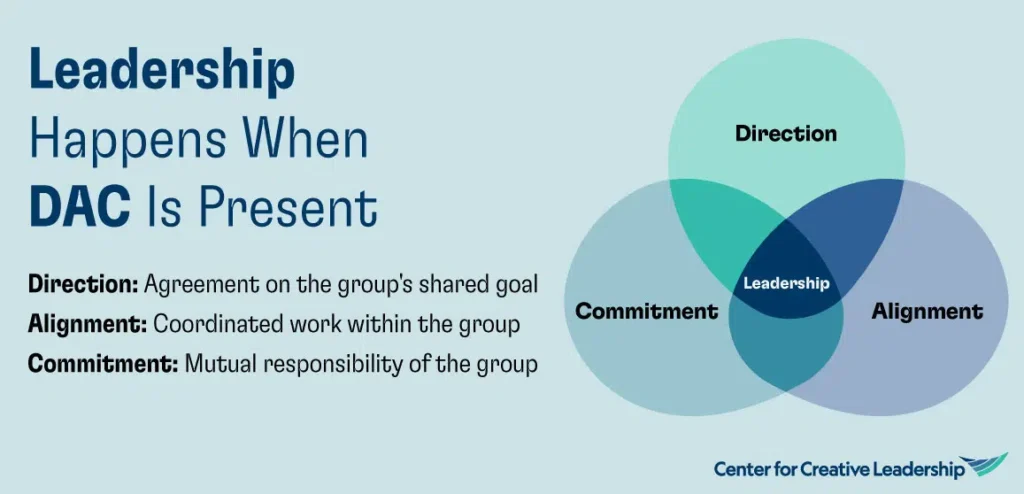
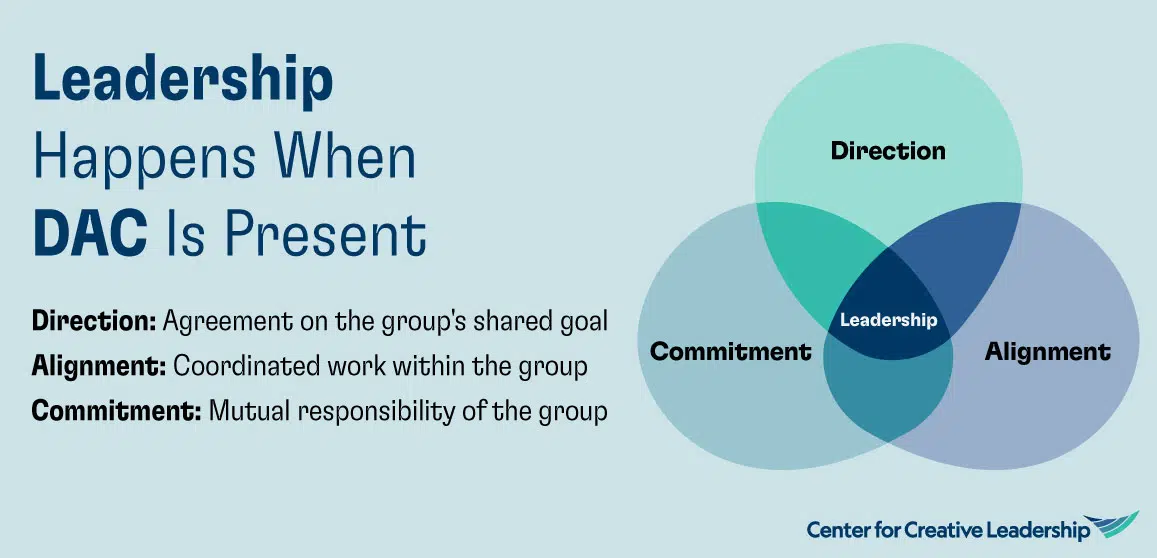
At the Center for Creative Leadership (CCL), extensive research has distilled the essence of leadership into three core, interconnected elements: Direction, Alignment, and Commitment (DAC). This framework, known as the Direction-Alignment-Commitment (DAC) model, moves beyond a singular focus on individual leaders or followers, instead emphasizing the tangible outcomes of effective leadership. When these three elements are demonstrably present, it signifies that leadership is actively occurring. The interactions, exchanges, and collective efforts of multiple individuals are what generate DAC. While organizational leaders play a crucial role in establishing the conditions for DAC to flourish, its creation is, by its very nature, a shared endeavor.
This perspective defines leadership not as a solitary act but as a social process, recognizing that everyone has the capacity to contribute to its outcomes. The DAC model highlights what effective leadership achieves, acknowledging that diverse leadership styles, personalities, and cultural backgrounds can all contribute to shared success. The emphasis is on the tangible results that emerge when individuals work in concert.
Direction: Charting the Course Together
Direction refers to a shared understanding and agreement within a group regarding its overall objectives. It answers the fundamental question: "Where are we going?" This collective agreement on desired outcomes serves as the compass for setting shared goals. When a clear, collective sense of direction is established, individual and group efforts are channeled effectively, maximizing impact. Team members understand which opportunities to pursue and which to decline, how to allocate resources, and how their specific contributions fit into the larger organizational tapestry.
Setting direction is more than simply announcing targets or articulating a vision; it involves purpose-driven leadership that cultivates clarity, inspires motivation, and fosters engagement. A compelling direction provides a unifying purpose that transcends individual tasks, imbuing the work with meaning and significance. Without clear direction, efforts can become fragmented, resources can be misspent, and teams may drift without a clear sense of purpose. Research from various organizational psychology studies consistently demonstrates a strong correlation between clearly communicated organizational goals and employee engagement, with organizations that articulate clear directions often reporting higher levels of job satisfaction and productivity.
Alignment: Synchronizing the Collective Effort
While Direction defines the destination, Alignment is concerned with the journey – specifically, how individuals and teams coordinate their efforts to reach that destination. Alignment ensures that each person understands their role and how it interplays with the work of their colleagues. It fosters a sense of coordination and synchronization, thereby reducing confusion and miscommunication. This leads to enhanced efficiencies, minimizing redundant tasks, duplication of effort, and unnecessary checks and cross-checks.
Achieving and maintaining alignment presents significant challenges in today’s distributed work environments, characterized by remote and hybrid teams spread across different locations and time zones. The inherent difficulties in collaborating across geographical and temporal divides can lead to feelings of isolation, reduced contribution, and confusion regarding individual roles and overarching progress. Effective leadership in such contexts demands a dual focus on both interpersonal relationships and task execution. Intentionally building trust, fostering open communication, and promoting interdependence are critical for creating robust alignment. Studies by firms like Gartner have indicated that organizations with strong alignment, particularly in hybrid work models, experience improved employee collaboration and project success rates.

Commitment: Cultivating Shared Responsibility
Commitment signifies a willingness to prioritize the success of the collective, recognizing that individual achievements are intrinsically linked to the group’s overall success. It fosters a belief that all members will contribute the necessary effort to ensure the group’s prosperity, characterized by a balanced dynamic of giving and receiving. When an environment of minimal effort or resistance is replaced by a genuine sense of shared purpose and collective endeavor, the need for constant managerial oversight diminishes. Team members are more inclined to go the extra mile, driven by an increased sense of accountability and a shared ownership mentality. This fosters support for change, facilitates the achievement of shared goals, and enables profound cultural transformations.
Commitment, however, cannot be mandated; it must be cultivated. Effective leaders understand the importance of respecting individual differences and strive to comprehend their employees’ experiences. By creating inclusive environments where diverse perspectives are valued and contributions are recognized, leaders foster a sense of belonging, which is a cornerstone of genuine commitment. Research published in the Journal of Applied Psychology has consistently shown that perceived organizational support and a sense of belonging are strong predictors of employee commitment and retention.
The Impact of a Refined Leadership Definition
Adopting a shared understanding of leadership’s meaning and importance can significantly enhance its quality and consistency across an organization. With this clarity, leaders and teams can more effectively assess what is functioning well and what requires improvement, enabling targeted actions to optimize collaboration and achieve critical objectives. By viewing leadership as an outcome to be achieved through the interplay of Direction, Alignment, and Commitment, organizations can more readily diagnose challenges and re-establish momentum.
Diagnosing Leadership Challenges Through DAC
Identifying weaknesses in Direction, Alignment, or Commitment is the first step toward improvement. Signs of unclear direction might include a lack of consensus on goals, frequent changes in priorities, or a sense of drifting. Poor alignment can manifest as conflicting efforts, communication breakdowns, or a lack of clarity regarding roles and responsibilities. Low commitment often presents as disengagement, reluctance to contribute beyond basic requirements, or a pervasive "us versus them" mentality.
Engaging multiple viewpoints is crucial for an accurate assessment. A candid dialogue about the current state of DAC within a team or organization, facilitated by an environment of psychological safety, allows for a more comprehensive understanding of strengths and weaknesses. This inclusive approach ensures that the diagnosis is not limited by a single perspective but reflects the collective experience.
Addressing DAC Deficiencies with Targeted Actions
The specific actions required to address identified issues will vary depending on the unique context of the team, project, or situation. For instance, if Direction and Commitment are strong but Alignment is weak, the focus would shift to optimizing processes and systems. Conversely, if Commitment and Direction are the primary pain points, efforts would concentrate on fostering a shared sense of purpose and collective responsibility.
While there are no universal quick fixes, incremental changes can yield significant improvements. These might include clarifying roles and responsibilities through detailed job descriptions and project charters, implementing cross-functional training to enhance understanding of interdependencies, or establishing regular feedback mechanisms to foster open communication. For example, a team struggling with alignment might benefit from implementing project management software that provides real-time visibility into task progress and dependencies, thereby synchronizing efforts. Similarly, fostering commitment might involve recognizing and celebrating team achievements, empowering individuals with greater autonomy, and ensuring that efforts are aligned with a clear and compelling organizational purpose.
Investing in Leadership at All Levels
When every individual within an organization understands the essence of leadership and how to contribute to DAC, the collective capacity for leadership expands. This leads to a cascade of positive outcomes, including enhanced innovation, greater agility in responding to change, improved employee engagement and retention, and a more robust organizational culture.
The Relational Nature of Leadership Development
This relational understanding of leadership has profound implications for development initiatives. It underscores the importance of building leadership capacity not just for those in formal leadership positions or identified as "high-potential," but for the entire collective – teams, workgroups, and the organization as a whole. Effective leadership across all levels is not an innate trait but a learned and practiced skill, requiring intentional investment.
Organizations can begin by acknowledging the unique starting points of individuals, fostering self-awareness, and cultivating essential leadership skillsets and mindsets. Simultaneously, fostering a deeper understanding of leadership within teams and groups can create a powerful ripple effect throughout the entire organization.
Amplifying Leadership Potential Through Comprehensive Development
Providing timely and relevant learning opportunities for all employees – from entry-level contributors to senior executives – is paramount for unlocking organizational performance, engagement, and retention. This involves encouraging exemplary leadership behaviors and making development accessible. Leaders who consistently exhibit integrity, self-awareness, courage, respect, compassion, and resilience create smoother and more effective leadership processes.
However, knowledge alone is insufficient. Research consistently shows that individuals are more committed and engaged when they perceive clear career paths, ample opportunities for professional and personal growth, and robust support systems. Leadership development equips individuals to navigate change and builds collective resilience in the face of complex challenges. Unfortunately, access to such opportunities remains inequitable for many. A significant percentage of emerging professionals report feeling that leadership development opportunities are not equitably distributed, highlighting a systemic issue that needs to be addressed.
Promoting equitable access requires actively dismantling historical systemic exclusion and implementing present-day practices that ensure fair opportunities. A multifaceted approach, incorporating various leadership programs, courses, and tools, can be tailored to meet an organization’s specific training and retention objectives, thereby enhancing the accessibility of leadership development.
Growing Teams Collaboratively
When building high-performing teams, the focus should extend beyond individual talent to encompass the collective dynamic. While individual capabilities are crucial, they represent only one facet of team effectiveness. An effective team fosters Direction, Alignment, and Commitment, reflecting that leadership is fundamentally about people collaborating to achieve shared results. Instead of developing individuals in isolation, organizations can foster collective growth within teams. By establishing strong DAC, team members can work more cohesively, enhance their outputs, and expand their collective impact.
Scaling for Organization-Wide Influence
Imagine the transformative impact of a shared understanding of leadership across an entire organization, where a unified vision, language, and behavioral framework are directly linked to critical business imperatives. If Direction, Alignment, and Commitment were consistently strong and vibrant, rather than aspirational concepts, the results would be profound. Implementing and scaling leadership development enterprise-wide broadens access to learning, provides equitable opportunities for growth, cultivates new capabilities across the organization, and fosters the social processes essential for effective leadership.
Organizational investments in leadership development have repeatedly demonstrated significant returns, including increased profitability, enhanced employee engagement, improved customer satisfaction, and greater innovation. While delivering high-impact development at scale can be challenging, organizations can supplement internal training with content and support from external experts and proven leadership development providers to achieve widespread benefits.
Creating a Societal Ripple Effect
As individuals, teams, and organizations deepen their understanding of leadership and cultivate greater Direction, Alignment, and Commitment, their leadership potential expands, creating a ripple effect that extends beyond their immediate spheres of influence. This impact can transform lives, not only within the organization but also in the wider communities they touch.
Addressing systemic societal or community challenges, often referred to as "wicked problems," requires collaborative efforts. The complexity and scale of these issues necessitate numerous individuals working together to uncover root causes and develop sustainable solutions. Embracing a more relational and collective definition of leadership unlocks the potential for transformational change, impacting individuals, teams, organizations, and ultimately, society at large.
Defining Leadership: A Personal and Organizational Imperative
With a research-based understanding of leadership as the outcome of Direction, Alignment, and Commitment – a framework that empowers individuals to achieve more together than they ever could alone – each person can define what effective leadership means for themselves and their respective organizations, groups, or communities. By identifying areas of strength and persistent challenges, individuals can take targeted and intentional actions to develop their own leadership capacity and empower others to do the same. The ultimate result is a greater realization of potential, accelerated progress, and the discovery of more effective solutions, achieved collectively.