The modern job market presents a striking paradox: while job seekers overwhelmingly desire a swift and transparent application process, the escalating integration of artificial intelligence tools by employers has inadvertently cultivated an environment of increased opacity, leading to a complex "arms race" between companies and potential employees. This dynamic is reshaping talent acquisition, compelling both sides to adapt to an increasingly automated, yet often impersonal, hiring landscape.
The Applicant’s Quest for Clarity and Efficiency
At its core, the candidate experience hinges on clarity, speed, and meaningful feedback. Data consistently illustrates that job seekers are deterred by cumbersome, protracted application forms. An Employ, Inc. report from last year highlighted a prevailing sentiment among workers: the ideal job application process should be concise, ideally taking less than 30 minutes to complete. This preference stems from a recognition of the significant time investment required for each application, particularly in a competitive market where multiple applications are often necessary.
Beyond mere length, the absence of crucial information, such as salary ranges, acts as a significant barrier. A recent report by Monster revealed that approximately six out of ten workers would not even consider applying for a job that failed to disclose a salary range in its posting. This statistic underscores a fundamental shift in applicant expectations, driven by a desire for transparency and a practical need to assess the viability of a role without committing extensive time to an opaque process. The legislative push for pay transparency, with laws now active in several U.S. states and cities—including New York, California, and Colorado—has further solidified this expectation, aiming to reduce wage gaps and foster equity.
However, even with the advent of pay transparency laws, employers can misstep. A Cornell University study recently indicated that overly wide pay ranges in job postings could inadvertently discourage certain demographics, particularly women, from applying. This reluctance is partly attributed to a belief that they might struggle to negotiate a higher salary within such a broad band, highlighting the nuanced challenges employers face in implementing transparency effectively. The spirit of these laws is to provide genuine clarity, not just a compliant range that offers little concrete information.
The AI Revolution in Talent Acquisition: Promises and Perils

The emergence and rapid adoption of artificial intelligence tools in human resources have fundamentally altered the hiring ecosystem. Driven by a need to manage an ever-increasing volume of applications and to streamline recruitment processes, companies have invested heavily in AI-powered solutions. These tools range from sophisticated Applicant Tracking Systems (ATS) that filter resumes based on keywords and criteria, to AI-driven video interview analysis, and even predictive analytics designed to assess candidate fit and potential.
A Brief Chronology of AI in Hiring:
- Early 2000s: Basic Applicant Tracking Systems (ATS) emerge, primarily functioning as digital databases for resumes and application forms, offering rudimentary keyword matching.
- 2010s: ATS platforms become more sophisticated, incorporating basic machine learning for resume parsing and initial candidate scoring, aiming to automate the initial screening phase.
- Mid-2010s to Present: The explosion of advanced AI and machine learning capabilities. Companies begin to integrate natural language processing (NLP) for more nuanced resume analysis, AI-powered chatbots for candidate engagement, and algorithms for video interview assessment. The promise is increased efficiency, reduced human bias (by standardizing evaluation), and faster time-to-hire.
- Late 2010s to Present: Concerns about algorithmic bias, data privacy, and the "black box" nature of some AI tools gain prominence, leading to calls for greater transparency and ethical guidelines in AI deployment within HR. Regulatory bodies begin to consider oversight.
- Early 2020s: The "AI arms race" fully takes hold, as job seekers begin to leverage AI tools (e.g., ChatGPT for cover letters, resume optimization software) to navigate and potentially game employer AI systems, further complicating the hiring landscape.
The initial promise of AI was compelling: to sift through thousands of applications with unprecedented speed, identify the most qualified candidates objectively, and free up recruiters for more strategic tasks. However, this technological leap has introduced unintended consequences, primarily the increased opacity of the hiring process. Candidates often submit applications into a digital void, with little understanding of how their profiles are being evaluated or why they might be rejected.
The "Arms Race" and Its Dehumanizing Effect
This lack of transparency, coupled with the sheer volume of applicants per role, has triggered what many industry experts describe as an "AI arms race." On one side, employers deploy increasingly complex AI algorithms to identify and filter candidates. On the other, job seekers, feeling disconnected and uncertain about how to pass these digital gatekeepers, resort to tactics like optimizing their resumes with keywords, sometimes even using AI to generate application materials.
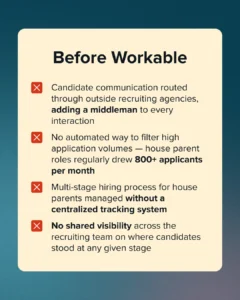
The most prominent manifestation of this arms race is the "spray and pray" approach adopted by many job seekers. Faced with an opaque system and often receiving no feedback on their applications, individuals apply to as many jobs as possible, hoping that sheer volume will eventually yield an interview. Monster’s recent report explicitly linked this behavior to the opacity of the hiring process. This strategy, while understandable from a job seeker’s perspective, places immense stress on hiring teams. They are inundated with a deluge of applications, many of which may not genuinely match the requested skills, further straining resources and paradoxically slowing down the human element of the process.
This dynamic creates a vicious cycle: employers use AI to manage volume, job seekers respond with more volume (often AI-assisted), leading to more reliance on AI by employers, and so on. The consequence is often a dehumanized process where genuine connections are lost, and candidates feel like mere data points.

Broader Implications: Impact on Diversity, Equity, and Inclusion (DEI)
The role of AI in fostering or hindering Diversity, Equity, and Inclusion (DEI) is a critical concern. Proponents of AI in HR often argue that algorithms can reduce unconscious human bias by evaluating candidates based solely on predefined criteria. However, the reality is far more complex. AI systems are only as unbiased as the data they are trained on. If historical hiring data reflects existing biases (e.g., a preference for candidates from certain universities or with specific demographic profiles), the AI will learn and perpetuate those biases, potentially exacerbating inequalities rather than mitigating them.
Algorithmic bias can manifest in subtle yet pervasive ways, leading to qualified candidates being unfairly screened out. This has prompted a growing demand for "ethical AI" in HR, advocating for transparency in algorithm design, regular auditing for bias, and a human-in-the-loop approach to ensure fairness and accountability. Regulatory efforts, such as New York City’s Local Law 144, which requires bias audits for automated employment decision tools, represent early steps towards addressing these critical issues.
The Evolving Role of HR Professionals
Amidst this technological transformation, the role of human resources professionals is undergoing a significant evolution. No longer simply administrative gatekeepers, HR teams are increasingly tasked with navigating the complexities of AI implementation, ensuring ethical deployment, and, crucially, preserving the human element in talent acquisition. This involves:
- Strategic Oversight of AI: Understanding how AI tools function, their limitations, and potential biases, and making informed decisions about their integration.
- Candidate Experience Design: Crafting a holistic candidate journey that leverages AI for efficiency while providing sufficient transparency, feedback, and human interaction to foster a positive experience.
- Data Interpretation and Action: Moving beyond raw data to derive actionable insights from AI analytics, identifying areas for improvement in recruitment strategies, and addressing potential biases.
- Advocacy for Transparency: Championing clear communication about job expectations, compensation, and the hiring process itself to build trust with candidates.
- Training and Development: Equipping recruiters and hiring managers with the skills to work effectively alongside AI, understanding when to trust algorithmic recommendations and when to apply human judgment.
Seeking Solutions: Rebalancing the Scales
Addressing the paradox of modern hiring requires a multi-faceted approach, balancing the efficiency offered by AI with the fundamental human desire for fairness, clarity, and connection.

For Employers:
- Streamline Thoughtfully: While AI can assist, companies must critically evaluate their application processes to eliminate redundancy and unnecessary hurdles. Focus on collecting essential information upfront and allowing for optional, supplementary details later.
- Embrace Genuine Transparency: Go beyond mere compliance with pay transparency laws. Provide clear, well-defined salary ranges and be prepared to discuss compensation openly. Be transparent about the use of AI in the screening process, informing candidates what to expect.
- Provide Feedback: Even automated, timely feedback can significantly improve the candidate experience. A simple notification that an application has been received, is under review, or has been moved forward or rejected, reduces uncertainty and frustration. The Monster report specifically noted that job seekers would be more selective in their applications if they received more feedback, speaking to an ongoing desire for clarity.
- Audit AI for Bias: Regularly conduct bias audits on AI tools used in hiring to ensure they are not inadvertently discriminating against certain groups. Prioritize ethical AI development and deployment.
- Focus on Human Connection: Integrate human touchpoints throughout the hiring journey. This could involve personalized communications, pre-screening calls with recruiters, or offering opportunities for candidates to ask questions.
- Invest in Recruiter Training: Equip recruiters with the skills to effectively use AI tools, interpret their outputs, and intervene when human judgment is necessary to ensure fairness and identify exceptional talent that might be overlooked by algorithms.
For Job Seekers:
- Strategic Application: While the "spray and pray" approach is tempting, a more strategic focus on roles that genuinely align with skills and interests, coupled with tailored applications, can yield better results.
- Leverage Networks: Networking remains a powerful tool, often bypassing the initial AI screening layers and providing a direct path to human decision-makers.
- Understand AI Basics: Gaining a basic understanding of how ATS and AI screeners work can help job seekers optimize their resumes and cover letters more effectively without resorting to generic, keyword-stuffed content.
Policy and Regulatory Frameworks:
Governments and regulatory bodies have a crucial role to play in establishing guidelines for the ethical and transparent use of AI in employment. This includes mandating bias audits, requiring disclosure of AI use, and potentially setting standards for algorithmic fairness. Such regulations can provide a much-needed framework to ensure that technology serves humanity, rather than diminishing it.
Conclusion
The convergence of evolving candidate expectations, the legislative push for transparency, and the transformative power of artificial intelligence has created a pivotal moment in talent acquisition. The current "AI arms race," characterized by opacity and a high volume of mismatched applications, is unsustainable in the long run. The future of hiring demands a more nuanced approach: one that harnesses the undeniable efficiencies of AI while rigorously upholding principles of transparency, fairness, and a genuinely human-centric candidate experience. Employers who successfully navigate this complex terrain—by streamlining processes, providing clear communication, auditing their AI, and empowering their HR teams—will be best positioned to attract and secure the talent vital for future success. The ultimate goal must be to create a hiring ecosystem where technology amplifies human potential, rather than obscures it.