
A people-first workplace, where an organization’s employees’ skills, aspirations, and potential are not just acknowledged but actively integrated into the very fabric of how work is shaped and decisions are made, represents a significant ambition for many businesses. This ethos fosters a culture where leaders, from managers to HR professionals, proactively invest in their workforce, recognizing their inherent capabilities and fostering an environment of growth. While the intention to cultivate such an environment is widespread, the practical execution often falls short, primarily due to a historical deficit in workforce visibility. Traditional data infrastructures have largely been ill-equipped to provide the granular, dynamic insights necessary to translate these values into tangible employee experiences. This is where the transformative power of AI-powered talent intelligence is emerging as a critical enabler, offering a path to bridge the persistent gap between organizational aspirations and employee realities.
The aspiration to be a "people-first" organization is a noble one, resonating with contemporary workforce expectations and the growing understanding that human capital is a company’s most valuable asset. Companies increasingly recognize that employee engagement, retention, and overall productivity are directly linked to how well they understand and nurture their people. However, achieving this ideal is often more complex than it appears. While strong values, well-meaning intentions, and dedicated managers can certainly move the needle, their impact is ultimately constrained by the limitations of existing data systems. Many organizations operate with a fragmented and outdated view of their workforce. Job descriptions might reflect roles as they existed years ago, performance reviews, while important, often capture a single snapshot rather than a continuous developmental trajectory, and crucial skills data is frequently siloed across disparate systems, if it is captured at all.
The inherent challenge lies in the dynamic nature of the modern workforce itself. Roles are constantly evolving, new capabilities are emerging at an unprecedented pace, and employees are continually acquiring new skills and experiences. These developments often occur outside the purview of traditional organizational systems, leaving a significant blind spot for leadership. This lack of visibility can have profound consequences, leading to disengagement and, ultimately, the departure of valuable talent.
The Consequences of Unseen Potential: When an employee’s growing expertise goes unnoticed, they may begin to question their value and whether their contributions are truly seen by leadership. Generic or infrequent growth conversations can lead to emotional disengagement, as employees feel their career aspirations are not being genuinely addressed. Perhaps one of the most damaging scenarios arises when internal opportunities are consistently filled by external candidates, even if those candidates are less qualified than existing employees who possess the requisite skills but lack the visibility to showcase them. This can prompt even the most loyal employees to explore external opportunities, seeking environments that better recognize and reward their potential.
Supporting this observation, iHire’s 2025 Talent Retention Report highlights a significant driver of voluntary departures: a lack of growth or advancement opportunities. Nearly 19% of employees who voluntarily quit cited this as their primary reason. This data underscores a critical need for organizations to proactively identify and cultivate internal talent pipelines. Consider a common scenario: a company launches a well-intentioned "people-first growth initiative," encouraging managers to champion internal mobility and broadcasting these opportunities company-wide. However, if the underlying technology infrastructure remains unchanged, an employee who has recently developed valuable, in-demand skills – such as proficiency in AI-adjacent technologies – may have no systematic way to surface these new capabilities to leadership. Consequently, a hiring manager, unaware of this employee’s evolving skill set, might overlook them for an open role that represents a natural next step in their career. Months later, that employee might accept an offer from a competitor that had the foresight to recognize and leverage their newly acquired expertise. In such instances, the intention was sound, but the operational infrastructure failed to support its realization.
The AI-Powered Transformation: AI-powered talent intelligence is emerging as a pivotal solution to this pervasive challenge. It aims to preserve the human-centric aspects of HR while equipping leaders with the comprehensive visibility they have long needed, but struggled to achieve, at the scale and speed demanded by today’s dynamic workforces. This technology provides a real-time, dynamic view of the workforce, revealing existing skill sets across the organization, tracking the evolution of roles, identifying emerging skill gaps, and pinpointing employees who possess adjacent capabilities ideally suited for new opportunities. Essentially, it shifts workforce data from a historical rearview mirror to a forward-looking lens, offering insights into the present and the immediate future.
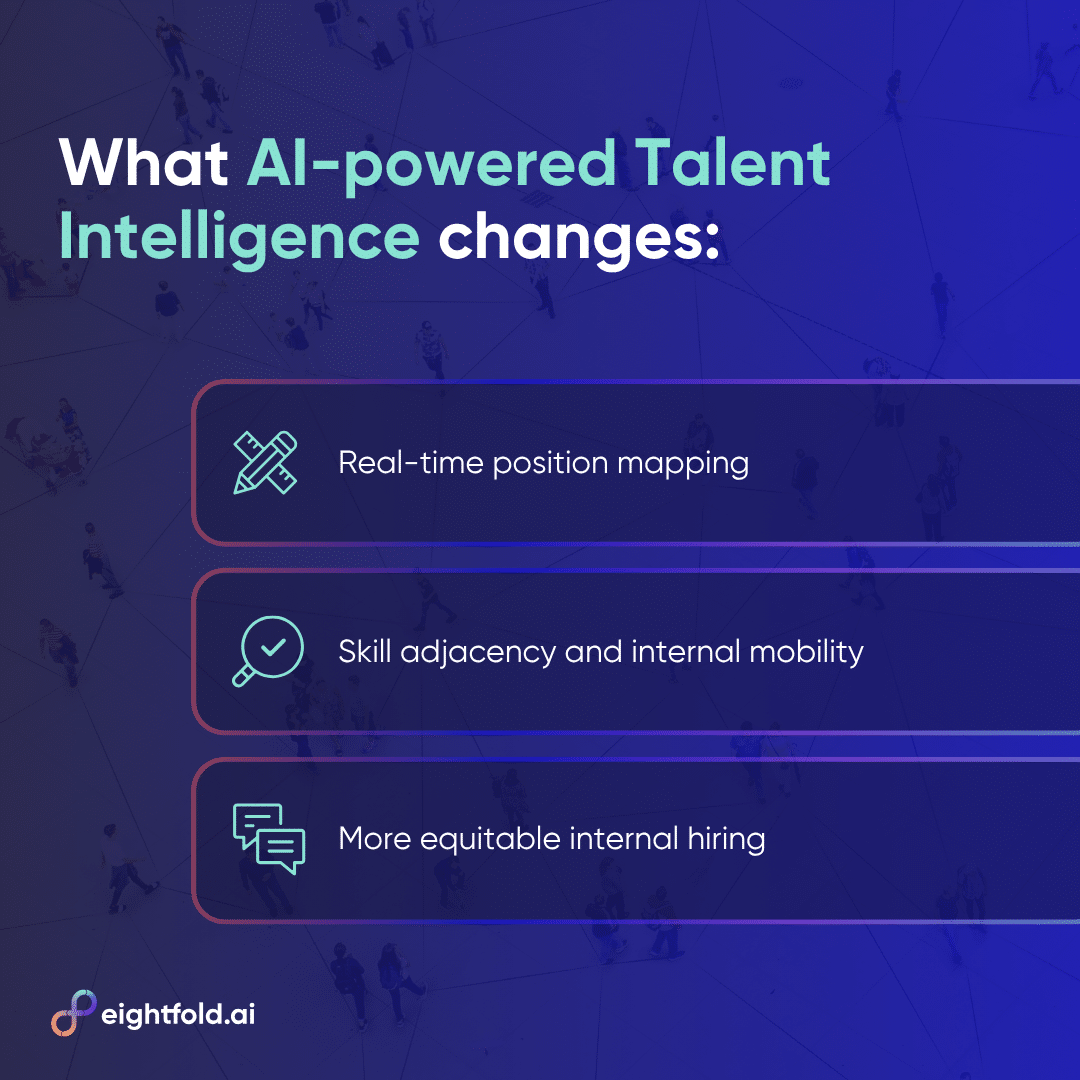
Real-Time Position Mapping: Adapting to Evolving Roles
The nature of many job roles has undergone a dramatic transformation in recent years. A marketing analyst position today, for instance, bears little resemblance to its counterpart from just three years ago. Skills such as prompt engineering, AI-assisted content analysis, and the oversight of automation processes are now integral to the role. Yet, job descriptions may still lag behind, describing a function primarily centered on traditional tasks like spreadsheet management and segmentation reports. AI-powered position mapping addresses this discrepancy by continuously tracking how roles are evolving in real time. This ensures that both employees and leaders remain aligned on the current demands and requirements of their work. For employees, this provides much-needed clarity and a realistic understanding of their role’s trajectory. For organizations, it facilitates more effective hiring, more insightful development conversations, and ultimately, improved talent retention.
Skill Adjacency and the Strategic Empowerment of Internal Mobility
One of the most significant contributions of AI-powered talent intelligence is its ability to uncover career pathways that would otherwise remain invisible. Consider a customer support specialist who possesses strong communication skills and is progressively gaining experience with AI tools. Intuitively, there’s a clear and natural progression toward a product operations role. However, without the data-driven insights provided by talent intelligence, this connection might never be made. When internal mobility is grounded in robust, real-time skills data, it ceases to be a matter of chance or employee initiative alone. Instead, it transforms into a strategic organizational capability, enabling proactive talent development and deployment. This empowers employees to see tangible growth opportunities within their current organization, fostering loyalty and reducing the likelihood of seeking external advancement.
Enhancing Equity in Internal Hiring Processes
In traditional hiring paradigms, internal roles often tend to be filled by the most visible employees, irrespective of whether they are the most qualified. Skills-driven hiring, facilitated by AI talent intelligence, fundamentally alters this dynamic. A hiring manager might discover that an employee they have minimal direct interaction with already possesses a significant portion of the capabilities required for an open role. This match would likely not have been surfaced through a traditional résumé update, internal networking efforts, or even a standard performance review. The result is a hiring process that is not only faster and more accurate but also demonstrably fairer, ensuring that opportunities are awarded based on merit and demonstrable skills.
The Inseparable Link Between Business Case and People Case
While the discourse around people-first workplaces often resides in the realm of organizational values and employee well-being, the business case for adopting AI-powered talent intelligence is equally compelling and inextricably linked to the human element. When employees perceive clear internal career pathways, their propensity to stay with the organization increases significantly, leading to improved retention rates and the preservation of invaluable institutional knowledge. Furthermore, when internal hiring decisions are informed by comprehensive skills intelligence, the time-to-fill for open positions is often shortened, as candidates who already possess a deep understanding of the business can be identified more rapidly. Leaders armed with a clear view of their workforce’s capabilities are better positioned to redeploy talent swiftly as business priorities shift, fostering organizational resilience rather than resorting to reactive scrambling when circumstances change. Collectively, these outcomes contribute to a workforce that is more engaged, more skilled, and more strategically aligned with the evolving needs and direction of the business.
Cultivating People-First as a Practice, Not Merely a Promise
Looking ahead, the organizations poised for sustained success in fostering a positive culture will not be those with the most impressive policy documents or the most inspiring mission statements. Instead, they will be the companies that possess the ability to truly see their people – their skills, their potential, and their growth trajectories – and to act upon this understanding in meaningful and timely ways. Thoughtfully implemented AI-powered talent intelligence makes this level of insight and action attainable. When skills data is clean, connected, and integrated seamlessly into existing workflows through AI-driven tools, leaders and managers can transition from relying on intuition to leveraging actionable insights, resulting in measurable and impactful outcomes. This crucial alignment closes the critical gap between an organization’s stated values and the lived experiences of its employees, transforming the concept of a people-first culture from an abstract promise into a tangible reality, and fostering a level of retention that endures.
The growing emphasis on operationalizing skills-based hiring was a central theme at recent industry events, including the Cultivate conference held May 11-13 in Napa Valley, California. The Groove, a notable player in the talent management space, featured discussions on practical strategies for implementing these forward-thinking approaches. Bonnie Dowler, Chief People Officer at The Groove, has been a vocal advocate for these methodologies, emphasizing the need for tangible, data-driven approaches to talent management. Speaking on the importance of such initiatives, Dowler has often highlighted that "the future of work is built on understanding the capabilities of our people, not just their past roles. AI-powered talent intelligence is the key to unlocking that understanding and creating truly equitable and dynamic career paths within organizations." Her insights underscore the critical role of technology in enabling a genuine people-first culture, moving beyond aspiration to actionable practice.
The implications of this shift are far-reaching. Companies that embrace AI-powered talent intelligence are not only better equipped to retain their existing workforce but also to attract new talent by demonstrating a clear commitment to employee growth and development. The ability to accurately assess skills and potential can lead to more effective succession planning, reducing the disruption caused by leadership transitions. Furthermore, in an era where agility and adaptability are paramount, organizations that can readily identify and deploy talent with the right skills are inherently more resilient to market fluctuations and unexpected challenges. The integration of AI in talent management is, therefore, not merely a technological upgrade but a strategic imperative for businesses seeking to thrive in the competitive landscape of the 21st century.







