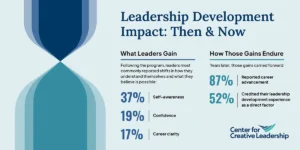
The conclusion of a recent leadership program was met with commendable metrics: strong completion rates, high participant satisfaction scores, and enthusiastic endorsements from attendees. Yet, a lingering question from the HR leader who championed the initiative persisted, echoing a sentiment gaining traction across the Middle East’s corporate landscape: "How do we know it’s truly changing the organization?" This query underscores a critical pivot in how businesses in the region are approaching talent development, moving beyond the tangible outputs of training sessions to the less quantifiable, yet far more impactful, outcomes of sustained organizational transformation.
Across the Middle East, a substantial investment is being channeled into a diverse array of leadership development initiatives. These include the establishment of comprehensive leadership academies, executive coaching engagements, sophisticated assessment tools, and meticulously crafted learning journeys. The overarching ambition is to cultivate a cadre of leaders equipped to adeptly navigate an increasingly complex global business environment, spearhead transformative change within their organizations, foster deep employee engagement, and translate strategic vision into tangible action. However, the true measure of success, as highlighted by the HR leader’s persistent question, is not merely the participation in these programs, but their demonstrable impact once participants return to their day-to-day roles. The real test lies in whether these leaders are actively applying their newly acquired skills, whether managers are becoming more effective coaches, whether cross-functional collaboration is improving, and whether the ability to influence stakeholders has demonstrably shifted. These are the subtle yet profound changes that ultimately fortify the very fabric of an organization, building a robust and resilient leadership pipeline.
This fundamental shift signifies a broader evolution in how leadership capabilities are being cultivated in the Middle East: the crucial transition from fostering individual learning to embedding that learning as a core organizational capability. The days of viewing leadership development as a discrete event, a box to be ticked upon program completion, are giving way to a more integrated and continuous approach that prioritizes the long-term impact on organizational performance.
The Critical Post-Program Phase: Bridging the Gap Between Learning and Application
A well-designed leadership program can undoubtedly enhance self-awareness and equip participants with a valuable toolkit of new skills and perspectives. However, its ultimate value is realized only when these learnings are effectively transferred to the workplace. The critical juncture occurs when the leader transitions back into their operational environment.
Consider the art of coaching. A manager might participate in a program that deepens their theoretical understanding of effective coaching techniques. True capability, however, is forged not in the classroom, but in the crucible of real-world application. This involves engaging in actual coaching conversations, experimenting with different approaches, actively seeking and integrating feedback, engaging in reflective practice, and consistently honing their skills through repeated application. This iterative process is the essence of "learning transfer" – the vital mechanism by which knowledge gained in a developmental setting is integrated into daily work, ultimately shaping behavior.
Therefore, the focus must expand to encompass a granular examination of how leaders are demonstrating changed behaviors, identifying the environmental factors that support the sustainability of these new practices, and understanding the mechanisms through which this learning permeates and influences the wider organization. This nuanced perspective moves beyond simply measuring attendance and satisfaction to understanding the tangible, behavioral shifts that contribute to organizational growth.
Insights from Saudi Arabia: Navigating Leadership Transformation in a Dynamic Landscape
While leadership transformation is a widespread phenomenon across the Middle East, recent research emanating from Saudi Arabia offers a particularly insightful lens through which to examine the evolving leadership paradigms in the region. The Kingdom is currently undergoing a period of unprecedented economic and social restructuring, driven in large part by its ambitious Vision 2030 agenda. This national transformation necessitates a corresponding evolution in leadership styles and competencies, placing new demands on managers and executives alike.
A comprehensive study conducted in Saudi Arabia, delving into the specific leadership shifts required to navigate these seismic changes, provides valuable data on the current state of managerial capabilities. This research, which involved a quantitative survey of 417 middle managers and in-depth qualitative interviews with 48 senior leaders, aimed to identify the critical competencies needed to effectively contribute to the Kingdom’s overarching transformation goals.
The findings of this study revealed a notable unevenness in the development of core leadership behaviors across the surveyed population. While participants demonstrated a strong theoretical understanding of essential leadership functions, their practical application often lagged behind their stated confidence levels. For instance, in areas such as strategic thinking and fostering innovation, managers often expressed high levels of self-assurance, yet their daily practices did not always fully embody these principles. Similarly, the ability to effectively manage change and inspire teams showed variations, indicating a need for more consistent development and reinforcement.
These findings underscore a critical reality: the development of leadership capability is not uniform. In several key areas, there exists a discernible gap between expressed confidence and actual practice. Closing this distance is paramount and requires a sustained, multi-faceted approach. This includes providing consistent opportunities for practical application, delivering timely and constructive feedback, establishing robust reinforcement mechanisms, and ensuring that these newly adopted behaviors are integrated into the everyday workflows of leaders. Learning lays the crucial foundation, but it is through consistent, deliberate application that true leadership capability is cultivated and embedded within an organization.
The Continuum of Development: From Individual Learning to Organizational Strength
For too long, organizations have predominantly relied on metrics such as program participation rates, completion percentages, accumulated learning hours, and post-program satisfaction surveys to gauge the success of their leadership development efforts. While these indicators provide valuable insights into what transpired during the program, they offer a limited view of its true impact. The events and outcomes that unfold after the program concludes are arguably of far greater significance.
A more holistic and effective framework for understanding this developmental journey can be visualized as a continuum:
Learning → Behavior Change → Leadership Capability → Organizational Capability
Learning transfer serves as the indispensable bridge connecting these stages. When a leader actively applies a newly acquired skill in their work, receives constructive feedback on its execution, uses that feedback to refine their approach, and subsequently influences colleagues to adopt similar behaviors, the impact begins to ripple outwards, extending far beyond the individual. This is the transformative process through which individual leadership development coalesves into a powerful, collective organizational capability.
A New Horizon for Talent Development in the Middle East
This evolving understanding of leadership development presents a compelling opportunity for HR and talent development professionals across the Middle East to reimagine their roles and strategic contributions. Instead of viewing leadership development as a series of isolated, standalone programs, the emphasis is shifting towards designing integrated learning journeys that are intrinsically aligned with the specific, evolving capabilities an organization requires to thrive. This strategic recalibration necessitates a focused shift in attention at each stage of the developmental continuum:
- Learning: Moving beyond passive knowledge acquisition to active skill-building and experiential learning. This involves incorporating simulations, case studies, and practical exercises that mirror real-world challenges.
- Behavior Change: Creating supportive environments that encourage the application of new skills and provide opportunities for practice and reinforcement. This includes fostering a culture of feedback and psychological safety, where experimentation and learning from mistakes are encouraged.
- Leadership Capability: Ensuring that newly adopted behaviors are consistently applied, refined, and become ingrained as habitual leadership practices. This requires ongoing coaching, mentoring, and performance management that actively reinforces desired leadership behaviors.
- Organizational Capability: Embedding these enhanced leadership practices throughout the organization, creating a sustainable pipeline of capable leaders and fostering a culture that continuously develops talent at scale. This involves knowledge sharing, peer-to-peer learning, and the integration of leadership development into the broader talent management ecosystem.
This integrated approach empowers organizations to build development into the very flow of their daily operations, fostering a more robust and sustainable internal capability. While external expertise remains valuable for specialized interventions and research-backed insights, the focus is increasingly on building the organization’s own capacity to develop its leaders effectively and consistently.
Cultivating Enduring Capability Within the Organization
Leaders throughout the Middle East are presently navigating a landscape characterized by rapidly changing industries, increasingly diverse workforces, complex stakeholder ecosystems, and ambitious national and organizational objectives. The development initiatives they undertake must directly reflect and address these multifaceted realities.
Programs and resources that provide access to research-backed leadership development frameworks can play a pivotal role in this endeavor. For instance, comprehensive platforms can equip HR and talent teams with the tools and resources necessary to design and curate tailored learning journeys for various leadership tiers within their organizations. Such initiatives are instrumental in extending the impact of development beyond individual programs, reinforcing learning over sustained periods, and crucially, building a more robust internal capacity to develop leaders at scale.
The overarching opportunity lies in facilitating the seamless transition of learning from the individual leader to their immediate teams, then cascading across the entire organization, ultimately culminating in the tangible enhancement of overall organizational capability. For businesses actively contributing to the economic and social transformation of the Middle East, the strategic imperative of building this deep-seated internal capability holds the potential for an impact that far transcends the scope of any single leadership program. It signifies a commitment to building a future-ready workforce capable of sustained innovation and growth.
The Lasting Legacy: Building Capability That Endures
As the conversation around leadership development continues to evolve, the pertinent question should not be merely about program completion, but about the enduring impact on organizational strength. The focus must shift to: "What capability have we demonstrably built, and how will we ensure its continuous growth and adaptation?"
The true value of leadership development is evident not just in the immediate aftermath of a training session, but in the sustained impact observed long after the classroom experience has concluded. This impact is manifested in the quality of conversations leaders engage in, the strategic decisions they make, the high-performing teams they cultivate, and crucially, the future leaders they develop within their own spheres of influence.
For organizations committed to elevating their leadership capabilities at scale, a strategic partnership can be instrumental. Engaging with expert consultants can facilitate a deeper exploration of how comprehensive development frameworks and tailored learning journeys can be integrated to build robust internal capacity. This collaborative approach fosters a more sustainable and impactful model for leadership development, one that is intrinsically linked to the long-term success and strategic objectives of the organization.
Ultimately, the strength of leadership today directly underpins the capacity of organizations to achieve their ambitious goals tomorrow. By prioritizing the cultivation of lasting, embedded leadership capabilities, businesses in the Middle East are not merely investing in their current workforce, but are laying the essential foundation for sustained success and transformative impact in the years to come.