As the global economy navigates a complex and often contradictory landscape, the balance of power in the labor market has demonstrably shifted, with significant repercussions for employee morale, engagement, and mental health. Following a period often dubbed the "Great Resignation" and intense "talent wars" where workers held considerable leverage, employers have, by early 2026, regained a dominant position. This shift, driven by a confluence of economic headwinds, technological advancements, and evolving corporate strategies, has led some organizations to adopt tactics and foster cultures that have proven detrimental to their workforces. The initial optimism of a worker-centric future has given way to a more pragmatic, and for many, disheartening reality, characterized by increased layoffs, mandates for return-to-office, and a perceived disregard for employee development and well-being.
The Reversal of Fortune: From Talent Wars to Employer Dominance
The early 2020s marked an unprecedented era for employees. Fuelled by a tight labor market, widespread remote work adoption during the pandemic, and a collective re-evaluation of work-life priorities, workers found themselves in a powerful bargaining position. Companies across industries, desperate to attract and retain talent, enhanced compensation packages, expanded benefits, offered unprecedented flexibility, and invested heavily in employee experience initiatives. This period saw a proliferation of innovative perks, increased focus on diversity, equity, and inclusion, and a genuine, albeit sometimes superficial, commitment to employee mental health. Terms like "quiet quitting" emerged, signaling a workforce more discerning about their commitment and boundaries.
However, as 2025 progressed into 2026, the economic landscape underwent a significant transformation. Inflationary pressures, rising interest rates, and geopolitical uncertainties began to cool various sectors, leading to a more cautious corporate environment. The initial fervor of post-pandemic hiring sprees waned, replaced by a renewed emphasis on cost-cutting and efficiency. This pivotal shift saw the pendulum swing back decisively, placing power firmly in the hands of employers. The once-robust demand for labor softened, particularly in industries that had experienced hyper-growth during the pandemic, such as technology, e-commerce, and logistics.
Economic Headwinds and Their Ripple Effects
The current economic climate is far from uniform. While certain niche sectors, primarily driven by artificial intelligence, renewable energy, and advanced manufacturing, continue to exhibit robust growth and demand for specialized skills, many traditional industries face significant challenges. The broader economy, while showing signs of resilience in some metrics, remains selective, creating a bifurcated job market. This uneven growth means that job seekers in contracting or stagnant sectors face fierce competition, while those in high-growth areas might still command premium salaries, albeit with increasing pressure to perform.
A pervasive consequence of this selective growth has been a discernible rise in layoffs across various industries. Major tech companies, which had aggressively expanded their workforces during the pandemic, initiated multiple rounds of significant reductions throughout 2024 and 2025. This trend soon spread to other sectors like media, finance, and even some manufacturing segments, often attributed to economic slowdowns, restructuring, or the increasing adoption of automation and AI. These mass layoffs have instilled a deep sense of job insecurity among employees, eroding trust and fostering a climate of fear. Workers, witnessing colleagues depart, often feel compelled to accept less favorable terms or increased workloads to secure their positions.

Compounding the anxiety of job insecurity is the persistent burden of financial stress. Rising costs of living, particularly for housing, food, and energy, have outpaced wage growth for many, leading to a significant squeeze on household budgets. High inflation, coupled with elevated interest rates on loans and mortgages, means that discretionary spending is curtailed, and the ability to save for the future is diminished. A recent survey highlighted that financial stress is a primary driver of declining employee engagement, as workers find it increasingly difficult to focus on their professional responsibilities when grappling with personal economic anxieties. This creates a vicious cycle where stressed employees are less engaged, potentially impacting their performance and further exacerbating their job insecurity.
The Erosion of Employee Morale and Engagement
The cumulative effect of these economic and corporate shifts has been a palpable decline in workforce morale and engagement. A March 2026 report by Gallup, a leading authority on workplace analytics, painted a stark picture of a workforce that is "restless but largely stuck." The report indicated that employee engagement had dipped to its lowest point since the organization began tracking it quarterly in 2022. This finding suggests that despite widespread dissatisfaction, many employees feel trapped in their current roles due to a lack of viable alternatives in a tightening job market. They are present physically, but their emotional and intellectual investment has waned, a phenomenon closely related to "quiet quitting" but now driven more by resignation than deliberate boundary-setting.
This disengagement is further illuminated by insights from Glassdoor, which, in its November 2025 analysis of worker reviews, noted an increasing prevalence of negative sentiment. Words such as "misaligned," "miscommunication," "hypocrisy," and "distrust" appeared with alarming frequency. "Misaligned," in particular, saw a significant spike, becoming a key descriptor of the contemporary workplace experience. This terminology underscores a profound disconnect between employees and their organizations, suggesting a chasm between stated company values or leadership rhetoric and the lived reality of the workforce. Employees perceive a lack of transparency, a failure of leadership to genuinely understand their concerns, and a fundamental breakdown in the psychological contract between employer and employee.
The Leadership Disconnect: A Chasm of Expectations
The concept of "misalignment" extends beyond general sentiment to a critical disconnect in leadership perception. A recent report from Hogan Assessments highlighted a troubling lack of overlap between the behaviors leaders most frequently exhibit and those most valued by their employees. While leaders often prioritize strategic execution, innovation, and bottom-line results, employees overwhelmingly expressed a desire for leaders who demonstrate strong communication, integrity, accountability, sound decision-making, and effective guidance.
This divergence creates a significant challenge. When employees perceive their leaders as failing to embody these core values, it breeds cynicism and erodes trust. For instance, a mandate for return-to-office might be communicated as essential for "collaboration and culture," yet employees might perceive it as a lack of trust in their productivity or a cost-saving measure, especially if no tangible benefits to their daily work are evident. Similarly, calls for increased efficiency or adaptability without corresponding investments in employee development or recognition can be seen as hypocritical. The absence of clear, empathetic, and consistent communication from leadership exacerbates feelings of being undervalued and unheard, contributing to the "restless but stuck" mentality.
Tactical Shifts: Layoffs, RTO, and the Upskilling Gap

The regained leverage has emboldened employers to implement strategies that prioritize organizational objectives, sometimes at the expense of employee preferences. Frequent rounds of layoffs have become a stark reality, serving as a constant reminder of job insecurity and the transactional nature of employment. While companies argue these measures are necessary for agility and competitiveness, the human cost is immense, leading to survivors’ guilt among those who remain and a generalized fear that anyone could be next.
The push for a mandatory return-to-office (RTO) has been another contentious point. After years of successful remote or hybrid work, many companies have insisted on employees spending more days in the physical office. While employers cite benefits like enhanced collaboration, stronger company culture, and better mentorship, employees often view these mandates as a retraction of hard-won flexibility, leading to increased commuting times and costs without a clear benefit to their productivity or well-being. This often feels like a breach of trust, especially for those who demonstrated high performance while working remotely.
Furthermore, a concerning trend is the failure to prioritize upskilling and reskilling initiatives, as highlighted by KPMG’s Adaptability Index. In an era of rapid technological change, particularly with the acceleration of AI, continuous learning is not just a benefit but a necessity for career longevity. When employers neglect to invest in employee development, it leaves workers feeling unprepared for future roles, diminishes their marketability, and signals a lack of long-term commitment from the organization. This exacerbates the feeling of being "stuck," as employees perceive limited opportunities for growth within their current companies and insufficient preparation to seek new roles externally.
The Mental Health Toll on the Workforce
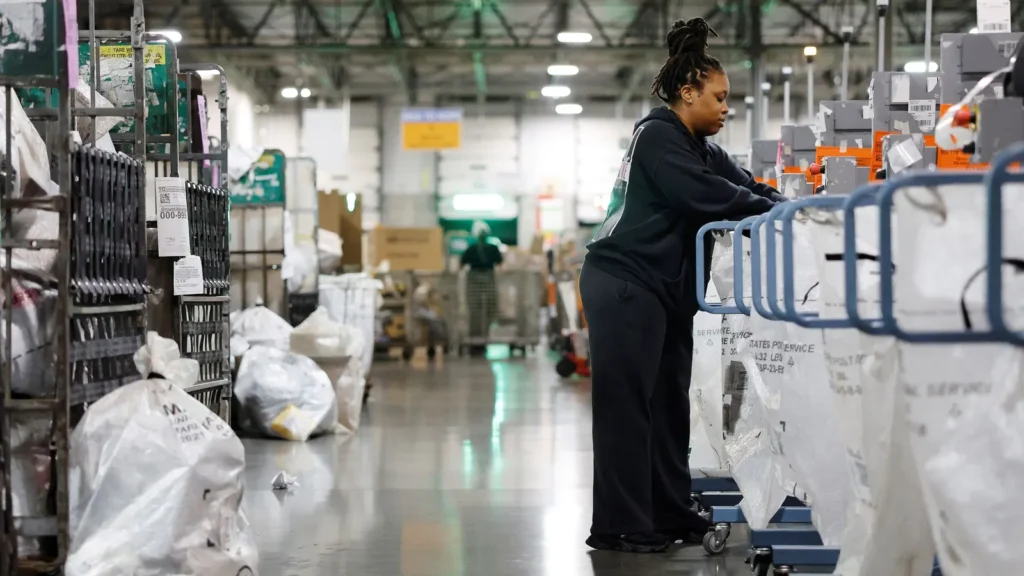
The confluence of job insecurity, financial stress, increased workloads, and a perceived lack of support or understanding from leadership has taken a severe toll on the mental health of the workforce. Data from various mental health surveys indicate a significant uptick in symptoms of anxiety, depression, and burnout among employees. The image of an employee working diligently at a mail processing center, as captured in December 2025, subtly illustrates this strain; increased workload was cited by Monster’s survey as a top reason for negatively affected mental health.
Employees are caught in a difficult bind: they feel pressured to perform more with less, constantly fear for their jobs, and face mounting financial pressures, all while feeling disengaged and undervalued by their employers. This environment fosters chronic stress, which can lead to a range of physical and psychological health issues, impacting not only individual well-being but also overall productivity and creativity within organizations. The long-term implications of a chronically stressed and disengaged workforce are dire, potentially leading to higher turnover rates once the job market stabilizes, decreased innovation, and a less resilient talent pool.
Expert Perspectives and Calls for Balance
Labor economists and HR strategists are increasingly vocal about the need for employers to reconsider their approach. Dr. Anya Sharma, a leading labor market analyst, noted in a recent seminar, "While economic cycles dictate shifts in power, a sustainable and thriving workforce cannot be built on fear and disengagement. Companies that neglect employee well-being now will pay a heavier price in the long run through attrition, reduced innovation, and a damaged employer brand." She emphasizes that the current employer-centric environment presents an opportunity for organizations to differentiate themselves by prioritizing genuine care and transparent communication, rather than simply exploiting their newfound leverage.

Employee advocacy groups are also calling for greater attention to worker rights and mental health support. "The ‘restless but stuck’ phenomenon is a cry for help," stated a spokesperson for the Workers’ Rights Alliance. "Employers have a moral and ethical responsibility to foster environments where employees feel secure, valued, and empowered, even during economic downturns. Ignoring this will lead to a deeper crisis of trust and loyalty." These groups advocate for policies that enhance job security, promote fair compensation, and provide accessible mental health resources, arguing that a healthy workforce is intrinsically linked to a healthy economy.
Long-Term Implications for Business and Society
The current dynamics carry significant long-term implications. For businesses, a disengaged and demoralized workforce directly translates to reduced productivity, higher error rates, and a stifled capacity for innovation. Employee loyalty, already fragile in a rapidly changing world, will further erode, leading to significant challenges in talent retention once economic conditions improve. The "forever layoffs" approach, where companies shed employees frequently without adequate re-skilling, risks creating a permanent underclass of workers struggling to adapt to new market demands, while simultaneously fostering a negative public image for the companies involved.
Societally, a widespread decline in employee mental health and increased financial stress can have cascading effects. It can strain public health services, contribute to social inequality, and even impact political stability. The erosion of trust in corporate leadership and institutions, as evidenced by terms like "hypocrisy" and "distrust," has broader implications for civic engagement and social cohesion.
Looking Ahead: Navigating an Evolving Landscape
As the job market continues to evolve, employers face a critical choice. While the immediate economic climate may grant them significant leverage, a sustainable future necessitates a more balanced approach. Investing in transparent communication, fostering a culture of empathy, prioritizing meaningful employee development, and providing robust mental health support are not merely philanthropic gestures but strategic imperatives. Companies that recognize the long-term value of a resilient, engaged, and well-supported workforce, even amidst economic uncertainty, will be better positioned to navigate future challenges and emerge stronger. The period of early 2026 serves as a potent reminder that while power may shift, the fundamental human need for purpose, respect, and security in the workplace remains constant. Ignoring this reality risks not only organizational failure but also a broader societal cost.