For decades, the standard metric for corporate success in professional development was defined by the spreadsheet: how many employees enrolled in a program, how many hours they spent in a classroom, and the percentage of staff who reached the "100% complete" mark on a Learning Management System (LMS). As the global economy navigates the complexities of 2026, a fundamental shift has occurred in the corporate landscape. Business leaders are no longer satisfied with completion rates; they are demanding evidence of competence. The question has moved from "What did our employees learn?" to "What are our employees now capable of doing?" This transition from course-based learning to skills-based learning represents a pivotal evolution in human capital management, prioritizing tangible performance over theoretical exposure.
The Decline of the Traditional Course Catalog
The traditional course-based model, which dominated the corporate world from the late 20th century through the early 2020s, was built for a slower, more predictable era. These programs offered a structured and consistent way to deliver knowledge across large organizations, but they suffered from a fatal flaw: they were often static. By the time a comprehensive 10-module course on a new software or management methodology was developed, vetted, and deployed, the technology or market conditions it addressed had frequently moved on.
In the 2026 workplace, the pace of change has rendered the annual training cycle obsolete. Organizations have discovered that a course may teach a concept, but only a skill-based approach ensures that an employee can apply that concept under pressure in a real-world scenario. The disconnect between "training completed" and "task mastered" has become a significant bottleneck for productivity. Consequently, companies are dismantling their massive, generic course libraries in favor of modular, agile learning experiences that focus on specific, high-impact capabilities.
The Drivers of Change: AI and the Half-Life of Skills
Two primary forces are accelerating this move toward a skills-first strategy: the ubiquity of Artificial Intelligence (AI) and the rapidly shrinking "half-life" of technical knowledge.
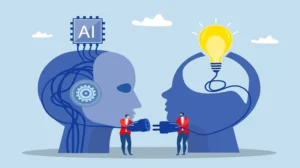
According to the World Economic Forum’s Future of Jobs Report 2025, the integration of AI into nearly every facet of the workflow has shifted the value proposition of human labor. As routine administrative and analytical tasks are automated, the premium on uniquely human skills—such as critical thinking, complex problem-solving, and emotional intelligence—has skyrocketed. Organizations are finding that traditional courses are often too rigid to teach these nuanced, behavioral competencies effectively. Instead, these skills require iterative practice, feedback loops, and real-world application.
Furthermore, the lifespan of technical skills is shorter than ever. Research suggests that the average half-life of a learned skill is now approximately five years, and in highly technical fields, it can be as low as two and a half years. This means that a degree or a certification earned five years ago may now be functionally irrelevant. Leading organizations, as noted in the LinkedIn Workplace Learning Report 2025, are responding by investing in "continuous upskilling" ecosystems. These systems allow employees to acquire micro-skills in real-time, ensuring the workforce remains adaptable to the latest technological breakthroughs.
Defining the Skills-Based Architecture
A skills-based learning strategy differs from traditional training in its starting point. Rather than asking what subject an employee should study, the organization identifies the specific outcomes required for a role to be successful.
For instance, a traditional approach might mandate a "Communication 101" course for all entry-level associates. A skills-based approach, however, identifies the specific components of communication necessary for that role, such as "Active Listening in Client Discovery," "Concise Technical Writing," or "Conflict De-escalation." Learning is then tailored to these specific needs. This granular approach ensures that every minute spent learning is directly applicable to the employee’s daily responsibilities.
This architecture typically involves four key components:
- Skill Mapping: Aligning organizational goals with the specific competencies required to achieve them.
- Assessment: Using AI-driven tools and peer reviews to determine an employee’s current proficiency level.
- Targeted Development: Providing "just-in-time" resources—such as short videos, simulations, or mentorship sessions—rather than long-form courses.
- Verification: Requiring the employee to demonstrate the skill in a practical setting to earn a digital badge or "skill point."
Supporting Data and Economic Context
The economic rationale for this shift is backed by significant data. A 2025 study by global consultancy firms indicated that companies utilizing skills-based hiring and training are 63% more likely to achieve their financial targets than those relying on traditional educational proxies like degrees or course completions.
The LinkedIn Workplace Learning Report 2025 further emphasizes that 82% of Global 2000 companies have now prioritized "skills-first" strategies for their talent pipelines. This is not merely a preference for internal training; it is transforming the hiring market. Major employers are increasingly removing degree requirements from job descriptions, focusing instead on verified skills. This has created a "skills economy" where the currency is what a person can do today, not what they studied a decade ago.
Industry Reactions and Statements
The move toward skills-based learning has drawn praise from both HR tech innovators and corporate executives. Sarah Jenkins, Chief Learning Officer at a leading global financial institution, recently stated during a 2026 industry summit: "We realized that our employees were ‘over-trained’ but ‘under-skilled.’ They were spending 40 hours a year in our LMS, but our internal performance data didn’t show an equivalent rise in productivity. By switching to a skills-based model, we reduced training time by 30% while seeing a 15% increase in project delivery speed."
Similarly, technology analysts suggest that the rise of "Learning Experience Platforms" (LXPs) has been a major enabler. Unlike the old LMS, which acted as a filing cabinet for courses, modern LXPs act as a GPS for careers. They analyze an employee’s current skills, look at the skills required for their next promotion, and suggest the exact "learning nuggets" needed to bridge the gap.
The Role of Technology in Scaling Competence
Technology is the engine behind the skills-based revolution. In 2026, AI is no longer just a subject to be learned; it is the tool that facilitates learning. Adaptive learning platforms now use machine learning to customize content for each individual. If two employees are learning "Data Visualization," the platform will recognize if one is already proficient in Excel and skip the basics, while providing the other with foundational support.
Furthermore, Virtual Reality (VR) and Augmented Reality (AR) have moved from novelties to essential training tools. For physical or high-stakes roles—such as surgery, electrical engineering, or emergency response—VR allows employees to practice and demonstrate skills in a safe, simulated environment. This "demonstrated capability" is far more valuable than a passing score on a multiple-choice quiz at the end of a traditional course.
Broader Impact and Future Implications
The implications of this shift extend beyond the corporate office. The move to skills-based learning is forcing a re-evaluation of higher education and professional certification bodies. Universities are increasingly partnering with corporations to offer "micro-credentials" that focus on specific industry needs, recognizing that a four-year degree is no longer a sufficient end-point for education.
For the individual worker, this shift offers both a challenge and an opportunity. The challenge lies in the necessity of lifelong learning; the "once-and-done" approach to education is dead. However, the opportunity is significant: employees who proactively develop in-demand skills can navigate the job market with greater agility, regardless of their formal educational background.
In the long term, the skills-based movement is expected to foster a more inclusive workforce. By focusing on what people can do rather than where they went to school or what courses they have checked off a list, organizations can tap into a broader, more diverse talent pool. This "meritocracy of skill" is likely to become the defining characteristic of the global labor market as we move toward 2030.
Conclusion
As organizations look toward the end of the decade, the distinction between "learning" and "doing" will continue to blur. Courses will not disappear entirely—they remain effective for onboarding, compliance, and foundational knowledge—but they will no longer be the primary yardstick for growth. The competitive advantage in 2026 belongs to the agile organization: the one that can identify a shifting market need and rapidly equip its workforce with the specific skills to meet it. In this new era, the most valuable asset an employee can possess is not a certificate of completion, but a proven portfolio of capabilities that drive real-world results.