The Evolution of Talent Management: From Roles to Competencies
The release of this guide arrives at a pivotal moment for human resources and organizational development. For decades, the standard corporate model has relied on the "job description" as the primary unit of work. This model assumes that a person’s value is defined by their previous titles and formal education. However, the volatility of the current market—driven by artificial intelligence, automation, and shifting consumer demands—has rendered many traditional job descriptions obsolete within months of their creation.
The "Skills-First" movement represents a departure from this legacy thinking. It posits that an organization is a collection of capabilities rather than a collection of roles. When a company views its workforce through the lens of skills, it gains the agility to reallocate talent to the highest-priority projects regardless of departmental silos. The 360Learning guide provides a detailed roadmap for this transition, emphasizing that the most successful organizations of the next decade will be those that can map their internal skill supply against the real-time demands of their business strategy.
Chronology of the Shift Toward Skills-Based Architectures
The transition toward the skills-first enterprise has been decades in the making, catalyzed by several distinct waves of economic and technological change. Understanding this chronology is essential for leaders looking to implement the strategies outlined in the 360Learning guide.
The first significant shift occurred in the late 1990s and early 2000s with the "War for Talent." During this period, organizations focused heavily on "A-players" and prestigious academic credentials. Success was measured by the ability to attract elite graduates from top-tier institutions. However, this model began to show cracks during the digital transformation of the 2010s, as traditional degrees often failed to keep pace with the emergence of specialized software engineering, data science, and digital marketing requirements.
By 2020, the COVID-19 pandemic acted as a massive accelerant. The sudden need for remote work and rapid digital pivots forced companies to recognize that their employees possessed "hidden" skills that were not listed in their official job descriptions. Employees who were hired for administrative roles suddenly became digital collaboration experts; sales teams became remote relationship managers.
In the post-pandemic era, from 2022 to the present, the "Great Resignation" and subsequent labor shortages forced a final realization: the supply of external talent is insufficient to meet demand. This has led to the current era—the "Skills-First Era"—where the focus has shifted from external acquisition to internal "upskilling" and "reskilling." The 360Learning guide is a direct response to this historical trajectory, providing the formal methodology for an evolution that has been building for over twenty years.
Quantifying the Skills Gap: Supporting Data and Economic Context
The urgency behind 360Learning’s new guide is supported by a wealth of industry data indicating a widening chasm between available talent and organizational needs. According to research from the World Economic Forum, more than 50% of all employees worldwide will need reskilling by 2025 due to the adoption of new technology. Furthermore, the "half-life" of a learned skill is now estimated to be only five years, meaning that the knowledge acquired at the start of a career may be entirely irrelevant a decade later.
Financial data also underscores the necessity of a skills-first approach. The cost of hiring a new employee can be three to four times the position’s salary when factoring in recruitment fees, onboarding time, and lost productivity. Conversely, a study by Deloitte found that skills-based organizations are 63% more likely to achieve high levels of performance than those that rely on traditional job-based structures. They are also 57% more likely to be innovative and 98% more likely to retain high-performing employees.
The 360Learning guide leverages these statistics to demonstrate that a skills-first strategy is not merely a human resources trend but a financial imperative. By building a "Skills-First Enterprise," companies can reduce their dependence on the volatile external labor market and create a self-sustaining ecosystem of talent development.
![The Skills-First Enterprise: A Leader's Guide To Building Talent That Lasts [eBook Launch]](https://cdn.elearningindustry.com/wp-content/uploads/2026/05/The-Skills-First-Enterprise_-A-Leaders-Guide-To-Building-Talent-That-Lasts-eBook-Launch.jpg)
The Core Framework: Building Talent That Lasts
The guide outlines a multi-step blueprint for transitioning to a skills-based Learning and Development (L&D) strategy. This framework is designed to be actionable for C-suite executives and HR directors alike.
- Skill Mapping and Inventory: The first step involves moving beyond the resume. Organizations must use data-driven tools to audit the existing skills within their workforce. This includes technical proficiencies, "soft" skills like leadership and communication, and adjacent skills that could be easily developed into high-demand competencies.
- Transitioning from Job Descriptions to Skill Profiles: The guide encourages leaders to deconstruct job roles into specific tasks and the skills required to perform them. This allows for more precise hiring and more effective internal mobility.
- Collaborative Learning Ecosystems: 360Learning emphasizes the importance of social and collaborative learning. Instead of top-down training, the guide suggests that the most effective way to spread skills is through peer-to-peer knowledge sharing, where internal experts document and teach their specialized workflows to colleagues.
- Continuous Feedback Loops: A skills-first enterprise requires constant adjustment. The guide details how to implement real-time performance data to identify emerging skill gaps before they become critical bottlenecks to growth.
Stakeholder Perspectives and Industry Reactions
While the guide is a primary resource from 360Learning, its release reflects a broader consensus among industry analysts and corporate leaders. Chief Learning Officers (CLOs) across the Fortune 500 have increasingly voiced the need for such frameworks.
Inferred reactions from the L&D community suggest that the primary challenge is not the "why" but the "how." Many leaders express concern regarding the complexity of re-engineering legacy HR systems that were built around rigid job codes. Analysts suggest that 360Learning’s focus on "expert strategies" and "actionable frameworks" is intended to lower this barrier to entry, providing a practical methodology for what has previously been an abstract concept.
Furthermore, employees themselves are showing a preference for skills-based employers. Modern workers, particularly those in the Millennial and Gen Z demographics, prioritize professional development and career mobility. A skills-first enterprise offers these workers a clear path to growth that is not dependent on waiting for a specific managerial vacancy, but rather on their own ability to acquire and demonstrate new competencies.
Broader Implications for the Future of Work
The implications of the strategies detailed in "The Skills-First Enterprise" extend far beyond the walls of individual corporations. On a societal level, the widespread adoption of skills-based talent management could fundamentally alter the relationship between education and employment.
If companies begin to prioritize demonstrated skills over four-year degrees, it could lead to a surge in micro-credentialing and vocational training, making high-paying roles more accessible to individuals from diverse socioeconomic backgrounds who may not have had access to traditional elite education. This democratizing effect is a significant secondary benefit of the skills-first movement, aligning corporate growth with broader social equity goals.
From a technological standpoint, the rise of the skills-first enterprise will necessitate a new generation of HR technology. We can expect to see increased integration of AI-driven "skills engines" that can automatically suggest internal candidates for projects based on their digital footprints and past performance. 360Learning’s guide positions the organization at the forefront of this technological shift, advocating for a future where technology serves to highlight human capability rather than replace it.
Conclusion: The Path Forward for Leaders
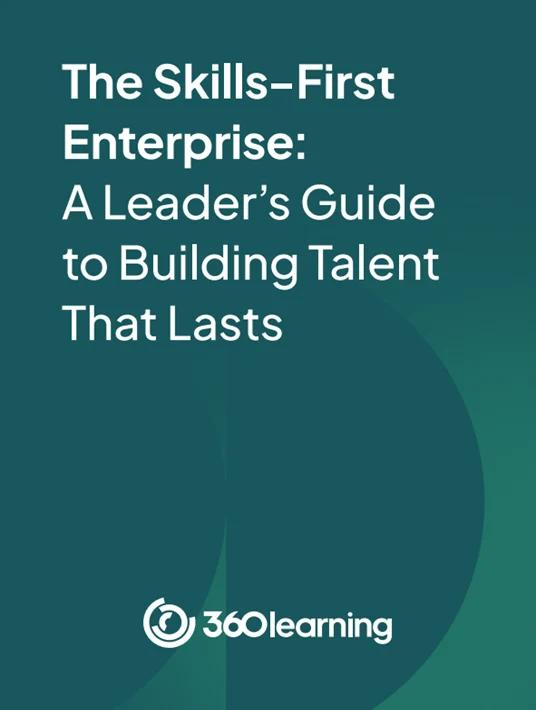
The 360Learning guide, The Skills-First Enterprise: A Leader’s Guide To Building Talent That Lasts, serves as both a warning and a manual for the modern executive. The message is clear: the era of "hiring your way out of a problem" is ending. The volatility of the global market and the scarcity of specialized talent make the traditional recruitment model unsustainable.
By centering on skills, organizations can build a more resilient, adaptable, and cost-effective workforce. The transition requires a departure from outdated practices and a commitment to rethinking talent management from the ground up. However, for those leaders willing to embrace this shift, the reward is an organization that is not just surviving the current talent crisis, but is fundamentally built to last in an unpredictable future.
The guide is currently available for download through 360Learning’s digital platforms, offering a comprehensive set of tools for any organization ready to move beyond the limitations of job-based hiring and toward a more agile, skills-based future. In an economy where adaptability is the ultimate competitive advantage, the ability to cultivate and leverage internal talent will be the defining characteristic of the decade’s most successful enterprises.